
The cited sources present Agilaz as a legendary human figure within the Germanic heroic corpus: the Old Norse poem Völundarkviða and the Thidreks saga record him as Egil, brother of the smith‑hero Völund (Wayland). Material culture attestations of the name occur on the Franks Casket (Old English Ægil) and the Pforzen buckle (Alamannic Aigil). The reconstructed Proto‑Germanic form *Agilaz is used by scholars to indicate the common name‑type across these traditions. The provided sources do not supply a narrative birth or supernatural origin beyond these attestations.
The provided sources give no physical or costume description for Agilaz/Egil. In the cited materials he is identified by name, kinship (brother of Völund), and role (archer) but no bodily details, clothing, or iconographic attributes are documented in the excerpts supplied.
Attested principally as an archer and a legendary hero. Secondary summaries (Wikidata, Wikipedia) designate him a 'legendary archer of Germanic mythology' and the saga/poetic contexts name him among the kin and companions of Völund. The supplied sources do not document any specific supernatural powers, notable magical feats, or detailed deeds beyond his role as an archer within those narratives.
Weaknesses
- otherNo attested weaknesses — the provided sources supply no traditions of warding, vulnerabilities, or protective practices for Agilaz/Egil.
Wards
- otherNo attested wards — the provided sources contain no apotropaic practices or rituals directed at Agilaz/Egil.
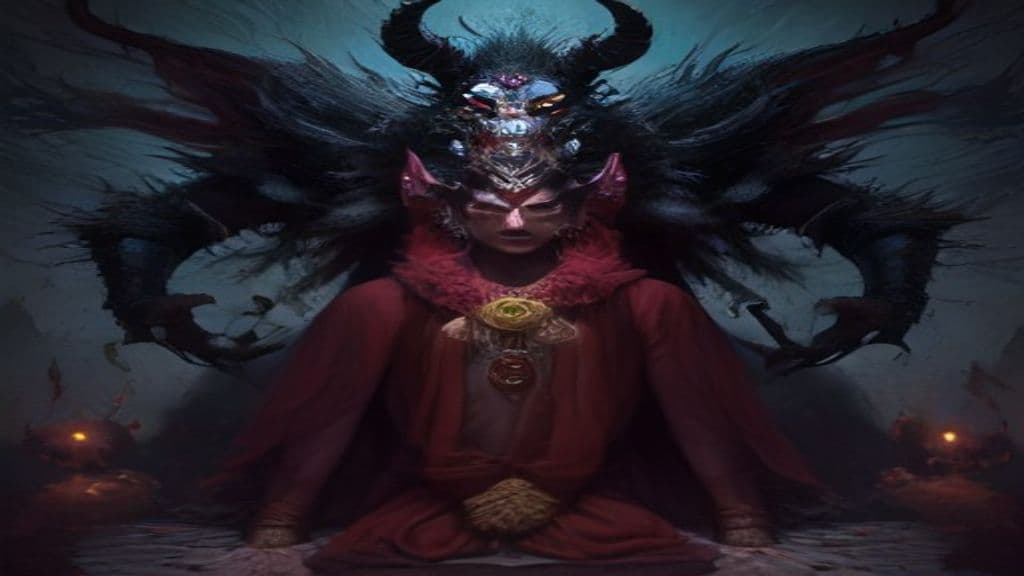
Rakshasa (Himalayan variants)
A Himalayan reception of the pan-Indian rakshasa motif: hostile or disruptive non‑human beings known from Sanskrit epic and Puranic literature, here noted where Himalayan sources and discussions intersect with the broader epic tradition. The supplied sources do not document distinct, well‑attested Himalayan folklore variants; the entry therefore presents primarily the epic/legendary profile as transmitted into Himalayan contexts in general references.
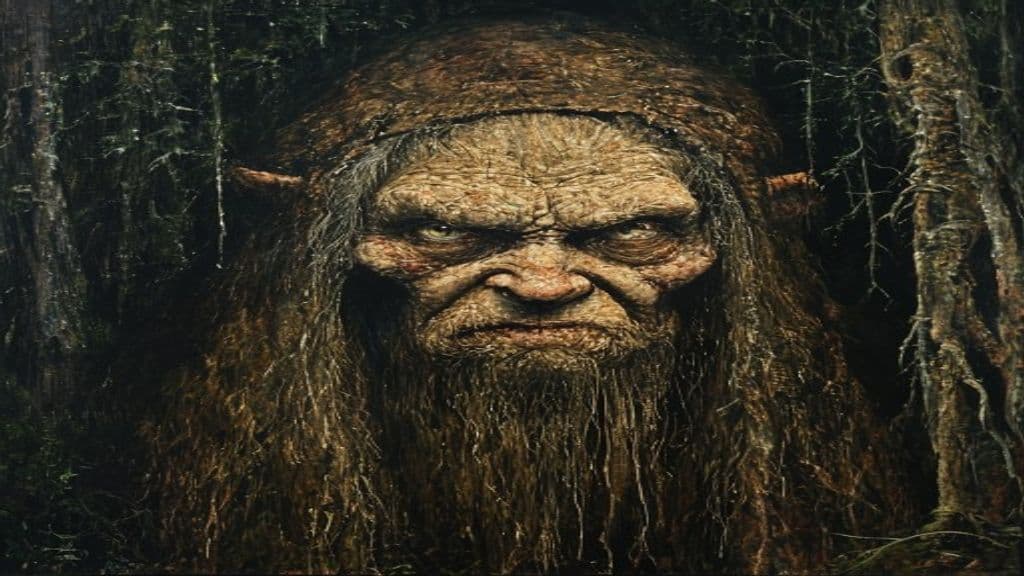
Baba Yaga
Baba Yaga is an ambivalent female figure of East Slavic folktale tradition, depicted variously as a fearsome, child-eating crone or as a helpful, maternal donor. She is associated with the deep forest, a hut described as standing on chicken legs, and the motific accoutrements of a mortar and pestle.
Abraun
Abraun is an attested name in German-language plant-legend scholarship (Der abraun, ein beitrag zur pflanzensagenkunde, 1916) and a short database entry (Wikidata) labels it as a spirit from German mythology. Surviving accessible documentation is extremely limited: the principal academic treatment is a 1916 contribution to pflanzensagenkunde (plant-saga studies), but the excerpts available here contain only bibliographic metadata and do not record tales, descriptions, or rituals.
Adils
Adils (Old Norse Aðils; also Eadgils, Adillus, Athisl, Adhel) is a semi‑legendary sixth‑century Swedish king attested in Old Norse saga material and later medieval traditions. He appears in saga episodes as a storied royal figure involved in warfare, court acts, and marriage suits rather than as a supernatural being.
Agnarr Geirröðsson
Agnarr Geirröðsson is a mortal prince attested only in the Poetic Edda poem Grímnismál; he aids Odin (disguised as Grímnir) during Geirröðr's torture and, after Odin reveals himself and King Geirröðr dies, Agnarr succeeds as king.
Agne
Agne (also attested Agni, Hogne, Agni Skjálfarbondi) is a semi-legendary king of Sweden in Old Norse saga tradition, preserved in the Ynglingatal corpus and prose expansions such as Snorri Sturluson's Ynglinga saga. He is portrayed as a mighty and famous warrior-king whose campaign in Finland, marriage to Skjalf, and death by hanging form a remembered episode connected to local place-names and a burial mound.
Alaisiagae
A group of Germanic female deities attested in Roman Britain, worshipped by continental auxiliary troops at a shrine near Vercovicium (Housesteads) on Hadrian's Wall. Epigraphic evidence records dedications to named members (Beda, Fimmilena, and in other lists Baudihillia and Friagabis) alongside Mars Thincsus and the numen of the emperor; modern scholarship interprets them variously as war/victory goddesses, as goddesses associated with assembly/justice, or as part of Matronae‑type fertility/ancestor cults.
Alberich
In Germanic heroic legend, Alberich is a dwarf associated with elven qualities and power. (Note: 1. Power tier: Reduce to Ancient as Alberich's abilities are not described beyond being a dwarf with elven qualities. 2. Origin story: Clarify that Alberich is mentioned in multiple Germanic texts, bu)
Alcis
A pair of youthful brother-deities worshipped by the Naharvali, attested only in Tacitus' Germania (c. 98 CE). They were venerated in a sacred grove under the care of a priest in female attire and are compared by Roman ethnography to the Graeco‑Roman Dioscuri (Castor and Pollux).
Alf and Alfhild
Alf and Alfhild are legendary human figures from Old Norse/early Scandinavian narrative tradition preserved principally in Saxo Grammaticus' Gesta Danorum. The tale presents Alf as a Danish prince and Alfhild as a Geatish princess who becomes a shieldmaiden and leader of a fleet of female raiders; their story includes combat, recognition, marriage, and later dynastic conflict.
Algaut
Algaut (also rendered Algöt or Algaut Gautreksson) is a semi-legendary Geatish king of West Götaland recorded in Scandinavian saga and genealogical tradition. Saga summaries (via Snorri Sturluson's Heimskringla as reported in later compilations) record that he was the father of Gauthild and was burnt to death by his son-in-law, the Swedish king Ingjald Ill-ruler.
Allerleirauh
Allerleirauh is the eponymous heroine of a Brothers Grimm fairy tale (Grimm no. 65; ATU 510B) who flees an enforced-marriage crisis by disguising herself in a mantle of many furs, takes menial service in another court, and later reveals her identity through three magnificent dresses and token objects to secure recognition and marriage.
Almáttki áss
Almáttki áss is an epithet-attested divine figure invoked in an Icelandic legal oath recorded in Landnámabók (Hauksbók 268). In the sole attestation the phrase functions as an invoked áss (god) described with the adjective almáttki ('almighty') and serves as the divine guarantor or witness for an oath sworn on a temple ring. Scholarly sources debate whether the epithet refers to a named Norse god (Thor, Ullr, Odin, or Týr) or is a Christianizing formulation by a later author.
Alp
A German-speaking folkloric figure associated with nocturnal disturbance of sleepers. Historically tied to the broader Germanic family of 'elves' and treated variously as an eerie nature-being in medieval glosses and as a male nocturnal spirit in later folk accounts that sits on sleepers' chests and causes nightmares (Alptraum) and 'elf-pressure' (Alpdruck).
Community Record
- [1]Egil, brother of Völund — Wikipedia. Wikipedia, 'Egil, brother of Völund'wiki
- [2]Agilaz (Wikidata entry Q11481956). Wikidata entry Q11481956 summaryother
- [3]Thingiverse / Archive item 'Chubby archer (Fixed) (3763587)'. Archive.org item referencing 'archer' material (contains no additional attestations for Agilaz beyond confirming the role 'archer')other