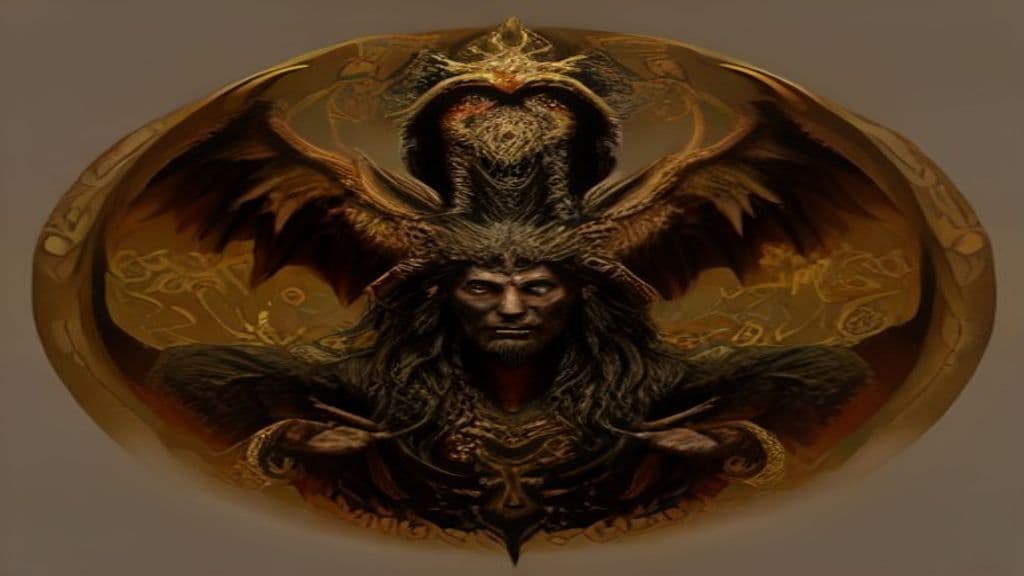
The balaur has no single cosmogonic origin recorded in the supplied sources; rather, the term and figure emerge from layered regional traditions. Linguistic proposals link the word to Albanian terms for snakes (boljë/bollë, buljar) and to hypothetical Thracian/Illyrian roots (*bell-/ *ber- meaning 'beast/monster'), while similar Slavic forms along the Adriatic (blavor, blaor, blavur) suggest either borrowing or common Balkan substrate. Scholarly opinion represented in the sources treats etymology as disputed and the creature as the product of cross‑cultural folkloric contact rather than a single origin myth.
Balauri are recurrently described as monstrous serpents or many‑headed dragons; typical accounts give three heads but variants report seven or twelve. Some descriptions add wings and a golden appearance (as noted by Lazăr Șăineanu). They are sometimes said to be large enough to dwell in wells or lakes and capable of flight, using the rainbow as a path when moving through the air. The balaur thus combines hydra‑like multiheadedness, serpentine form, and occasional draconic attributes such as wings and golden scales.
In the folklore corpus balauri are ravenous predators and abductors, commonly taking young maidens or princesses and occupying the antagonist role in hero tales where figures like Făt‑Frumos or saints (e.g., Saint George) slay them. They guard treasures and princesses in lairs and are credited in some traditions with producing precious stones from their saliva. Folk taxonomy distinguishes water‑, land‑, and air‑dwelling types; air‑dwelling balauri are implicated in a mythic meteorology where their aerial fights cause storms (uprooting trees, tossing objects) and certain serpentine types are said to draw moisture into clouds to make rain. A minority/variant tradition reports that Solomonari (weather‑controlling sorcerers) ride or control dragons; while these dragons are often called zmei, some sources assert that they are balauri and that control is effected by a 'golden rein' (Romanian: un frâu de aur).
Weaknesses
- otherslain by hero or saint (narrative motif)
Wards
- othercontrolled by a Solomonar's 'golden rein' (variant tradition)

Aradia
Aradia is a name and motif appearing in late-19th-century folklorist literature (notably Charles G. Leland's Aradia, or the Gospel of the Witches) and in Italian, Sardinian, and adjacent regional folklore where cognate names (Arada, Araja, Erodiade/Irodiada) are attached to a nocturnal female host associated with Diana/Herodias. Sources portray Aradia variously as a messianic teacher of witchcraft (Leland) and as part of a tradition of night-flying female spirits and regional fairy-queen figures (folklore surveys).
Căpcăun
A monstrous antagonist in Romanian folktales, the căpcăun is typically depicted as a dog-headed ogre who kidnaps and eats people (especially children and young women). It functions narratively as an embodiment of evil alongside other Romanian monsters such as the zmeu and balaur.
Făt‑Frumos
Făt‑Frumos is the archetypal heroic youth in Romanian folktales: a princely, handsome knight-hero who undertakes superhuman trials, travels between the human world and the tarâmul celălalt, and restores order by defeating monstrous foes.
Ileana Cosânzeana
Ileana Cosânzeana is a central feminine figure in Romanian folklore, presented variously as an idealized beautiful princess and as a powerful fairy. She commonly appears as the heroic object of quests (kidnapped by a Zmeu and rescued by Făt‑Frumos) and is associated with healing, floral/vegetal motifs, and astral/seasonal imagery in variant traditions.
Mara (Iza)
Mara (Iza) is a geographic feature — a left-bank tributary of the river Iza in northern Romania. The supplied sources document it as a physical river with measured length, basin area, and a noted tributary; no supernatural or folkloric being named "Mara (Iza)" is attested in the provided materials.
Moroi
A moroi is a revenant or undead spirit in Romanian and neighbouring Central/Eastern European folklore associated with failed birth/death rites and nocturnal harm. Traditions variously describe it as a phantom, a kind of vampire or ghost, or the spirit of an unbaptized infant or malformed child born of supernatural conception.
Pricolici
A Romanian folkloric revenant that combines lupine characteristics with vampiric, post-mortem hostility; typically represented as a wolf- or dog-like attacker associated with violent deaths, werewolves, and other harmful undead in rural tradition.
Slavic dragon
A class of serpent‑like supernatural beings in Slavic oral tradition and epic literature, often associated with snakes, water, weather, and liminal places. Regional vernaculars (e.g., Russian zmei, Polish smok/żmij, Romanian zmeu) describe variants that range from multi‑headed, regenerating monsters to humanoid or ambivalent figures who may help or court humans.
Solomonari
Solomonari are weather-controlling magic-workers in Romanian folklore, described as human practitioners trained at a secret school who ride dragons (zmeu or balaur) and cause rain, thunder, or hail. They appear in 19th‑century ethnographic accounts from Transylvania, Bukovina, and adjacent Romanian regions and are associated with an institutionalized craft of magic (Scholomance/Şolomanţă) in several variants.
Strigoi
The vampire of Romanian folklore — either a living witch (strigoi viu) or an undead blood-drinker (strigoi mort). The source tradition from which the literary vampire emerged.
Sânziană
Sânziene are Romanian seasonal fairies associated with the June 24 Sânziene festival and the Galium verum flower; they bless crops and health, enable potent magic on midsummer night, and can punish humans (especially men) who see them. Their cult is tied to rural Carpathian customs, floral crowns, bonfires, and divinatory crown-throwing over houses.
Ura (not attested as a folkloric entity)
The sources consulted do not document a supernatural being named 'Ura.' The string "Ura" appears across place-names, language names, an English disambiguation page, a Romanian common noun (ură = 'hate'), and as part of a contemporary VTuber stage name, but none of these sources presents a traditional mythic or folkloric agent called Ura.
Community Record
- [1]Balaur (Wikipedia). Wikipedia: Balaurwiki
- [2]Balaur (Wikidata). Wikidata: Q18511081wiki
- [3]Ce qu'ont vu nos ancêtres, Voyage sur une ligne de vie (archive). Archive: Ce qu'ont vu nos ancêtres, Voyage sur une ligne de vieother
- [4]Balaur V1 (Whalebite) (archive). Archive: Balaur V1 (Whalebite)other