
Within Aztec cosmology, women who died in childbirth were understood to have died in a valorized, battle-like experience; their deaths conferred a distinctive posthumous role. These women became Cihuateteo, a select group of the honored dead paired with male warrior spirits. They reside in Cihuatlampa, the west, and were assigned the daily cosmic duty of guiding the sun from noon into sunset (and in some accounts possibly through the underworld until sunrise). Their origin is therefore not a single narrative birth-myth but a social-theological transformation tied to the conceptual equation of childbirth with martial valor.
Iconography and descriptions vary but commonly render the Cihuateteo as fearsome, often martial female figures. Artistic traits recorded in sources include aggressive poses with clenched, claw-like fists, bared teeth and gums, unkempt or swirling orange hair, and clothing details such as skirts fastened with snake belts. Representations also employ postpartum imagery in divergent ways—some works emphasize pendulous breasts and folds that evoke failed or interrupted motherhood, while others depict taut stomachs or exposed breasts and prominent nipples—symbolic treatments that highlight the connection to childbirth rather than a single uniform anatomy. Site-specific images (e.g., El Zapotal) may add elements such as staffs bearing heads or flayed skins.
Sources describe a dual set of functions and folkloric behaviors. Cosmically, Cihuateteo were honored with the office of assisting the sun—guiding it into the west from noon until sunset and, in some suggestions, bearing it through the underworld. Folklorically, on five named days of the Aztec calendar (1 Deer, 1 Rain, 1 Monkey, 1 House, 1 Eagle) they were believed to descend to the human world and act as nocturnal, potentially dangerous spirits: haunting crossroads, and—according to belief—stealing children, provoking madness or seizures, and inducing men to adultery. These hostile activities are reported as cultural attributions made about them on those days rather than as empirically described ongoing behaviors.
Weaknesses
- conditioncommunity propitiation and shrines
- conditionguarding of the corpse to prevent relic theft
Wards
- ritualroadside shrines (appeasement)
- othermother-and-child protective figurine (hollow ceramic rattle held by the laboring mother)
- conditionarmed guarding of a woman who died in childbirth (protecting the body and potent remains)
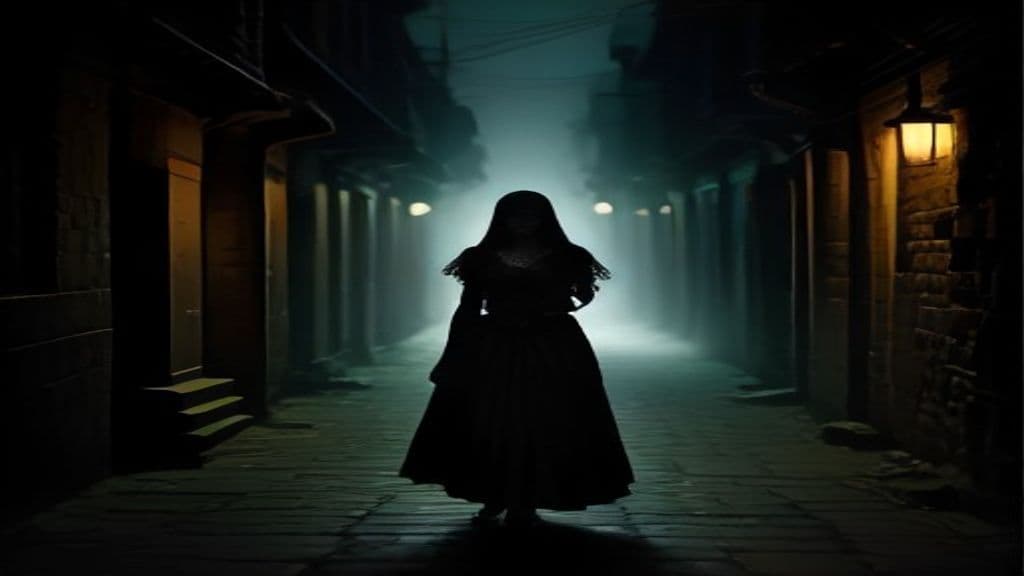
Stree
A vengeful female spirit from Chanderi who abducts men during festival nights. Warded off by the inscription 'O Stree, kal aana' — her legend, still practised on walls across Madhya Pradesh, inspired the 2018 Bollywood horror-comedy.

La Llorona
The Weeping Woman of Mexican folklore — the ghost of a mother who drowned her children and now wanders rivers and lakes, weeping for them and taking other children she finds at night.
Acolnahuacatl
Acolnahuacatl is a name attested in central Mexican sources both as a historical Tepanec ruler of Azcapotzalco and, in several modern compilations and trivia lists, as a minor chthonic or underworld-associated figure (often given the variant Acolmiztli). The evidence in the provided material is divided: the historical/genealogical reading is supported by standard reference entries, while the deity reading appears mainly in secondary online god-lists and quizzes and is not substantiated by detailed primary ritual or mythic texts in the supplied set.
Ahuiateteo
Ahuiateteo (Āhuiatēteoh; also rendered Mācuīltōnalequeh) are a quintet of Aztec deities associated with excess, pleasure, and the dangers that accompany over‑indulgence. They appear in calendrical and codical contexts, are invoked in divinatory practice, and are thematically linked to pleasures (feasting, drinking, gambling, sex, music) and the misfortunes that follow excess.
Ahuitzotl
Ahuitzotl is both the personal name of the eighth tlatoani (ruler) of Tenochtitlan (reigned ca. 1486–1502) known for military expansion and monumental rebuilding, and an onomastic term in Nahuatl for an aquatic animal/legendary creature (commonly glossed 'water thorny' and often associated with an otter or water opossum). The sources treat these registers—historical ruler and animal-name—as related but distinct uses of the same Nahuatl lexeme.
Ahuizotl
Ahuizotl is identified in the provided sources as an Aztec mythological creature; the same lexical form also names an historical Aztec emperor (Ahuitzotl). The available materials for this entry are limited to modern reference pages and a small set of artistic and popular-culture uses of the name, and do not contain primary indigenous mythic accounts or detailed ethnographic descriptions.
Amimitl (Opochtli)
A Mexica/Aztec deity associated with fishing, hunting, and water-related technologies; identified in sources with the better-documented figure Opochtli, "The Left," who functions as a specialized patron of implements and as a representative or attendant of the rain god Tlaloc. A temple in the Tira de la Peregrinación has been interpreted by a scholar as possibly belonging to a figure labeled Amimitl, but that identification is uncertain.
Atlacoya
Atlacoya is named in modern compilations as a figure from Aztec tradition associated with drought; some modern databases alternately classify the name under water-deity categories. The supplied sources do not provide primary-codex citations, iconography, etymology, or detailed ritual texts.
Atlahua
Atlahua is an Aztec water-associated deity attested in colonial and modern summaries as a water god described as a fisherman and archer, identified in sources as a blue/aspectual form of Tlaloc and invoked in contexts of deaths in water.
Atlaua
Atlaua (also recorded as Atlahua, Ahtlahua, Atlahoa, Atlavâ) is an Aztec water deity described in the provided sources as a water god, fisherman and archer who was worshiped at multiple temples and was prayed to by the Aztecs when there were deaths in water.
Aztec Creator-Brothers
A quaternity of primordial divine offspring in Aztec (Mexica) myth who dwell in the highest heaven Ilhuicatl-Omeyocan as children of Omecihuatl and Ometecuhtli. Identified in sources with fourfold aspects (conventionally four Tezcatlipocas / colored aspects such as Black, Red, White, Blue) they act as cosmological agents who create living beings, take turns ruling as the Sun in successive world-ages, and participate in sacrificial acts that sustain cosmic cycles.
Camaxtle (Mixcoatl)
Camaxtle (also spelled Camaxtli) identified with Mixcoatl is a Mesoamerican deity of the hunt who is associated with the Milky Way, the stars, and the heavens and served as a patron god for groups such as the Otomi and Chichimecs and as a central cult figure in Huejotzingo and Tlaxcala.
Centeōtl
Centeōtl is the Nahua/Aztec maize deity — the divine personification of maize, its growth, cultivation and role in human subsistence. The name (Cintli + teōtl) ties the deity to the maize ear; Centeōtl features centrally in planting and harvest rites, calendrical offices, and Aztec cosmological genealogy.
Centzon Tōtōchtin
A collective of Aztec pulque deities literally rendered 'Four Hundred Rabbits', the Centzon Tōtōchtin function within the pulque cult and are associated with pulque production, ritual use, regulated intoxication, and related night/lunar symbolism.
Community Record
- [1]Cihuateteo (Wikipedia). Wikipedia: 'Cihuateteo' article (accessed via provided research notes)wiki
- [2]Wikidata: Cihuateteo. Wikidata entry for Cihuateteo (referenced in research notes)other
- [3]Mother-and-Child Figurine (Cleveland Museum archival record). Cleveland Museum / archive object record describing a hollow mother-and-child figurine with internal rattle and notes linking it to childbirth protection and the Cihuateteoother
- [4]Mother-and-Child Figurine (alternate archive record). Alternate archival record of the Cleveland Museum mother-and-child figurine referenced in research notesother