
According to Tolkien's internal mythology summarized in the sources, the Dwarves were crafted by the Vala Aulë in secret during the Years of the Trees because Aulë was impatient for the coming of the Children of Ilúvatar. Aulë made the Seven Fathers of the Dwarves and hid them in stone; Ilúvatar was aware and sanctified them and granted them being. They awoke after the Elves and before Men and were given their own tongue, Khuzdul, by Aulë. Each of the Seven Fathers founded one of the principal Dwarf-clans; Durin I is the eldest and progenitor of the Longbeards (Durin's line).
Canonical descriptions in the supplied sources are limited but consistent in portraying Dwarves as a people derived from Germanic/Norse dwarf traditions: generally shorter and stouter than Elves and Men (reflected in Sindarin exonyms such as Naugrim, 'Stunted People'), often long-bearded (males especially), and bearing the signs of labor and craft in their person — sturdy, stocky physiques suited to mining, smithing, and masonry. Textual summaries emphasize their association with stone and mountain-dwelling rather than providing precise measurements.
Dwarves are unrivalled in mining, smithing, metalworking, masonry, and the crafting of jewels and artefacts; they build vast underground halls and produce famous works (for example the great halls of Khazad-dûm and the mithril-coat). They are long-lived (living to ages on the order of centuries), slow to breed, and socially characterized by strong memory — retaining injuries and benefits across generations — and fierce martial prowess: described as among the most redoubtable warriors of the Speaking Peoples. In the wake of Sauron's artifice, seven Rings were given to Dwarf-lords, which increased greed and wrath but did not bend them to Sauron's dominion; many of these Rings were later reclaimed by Sauron or otherwise removed.
Weaknesses
- conditionslow reproduction / small female population
- conditionsusceptibility to avarice when given Rings (the Seven Rings increased greed and wrath)
- otherinterracial enmities and feuds (long memories of injuries can produce persistent political and military vulnerabilities)
Wards
None recorded.
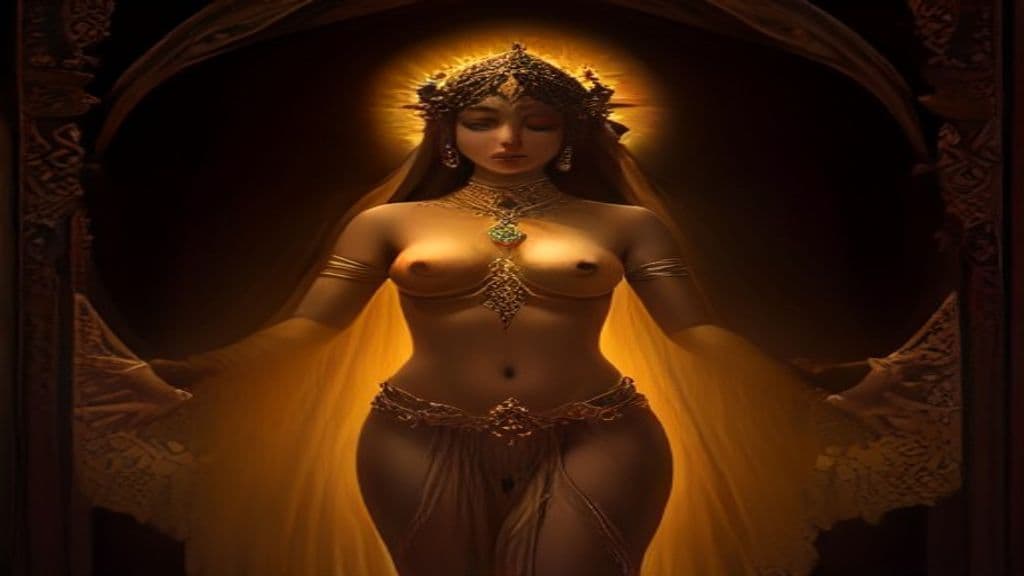
Apsara
Celestial dancers and water nymphs of Hindu cosmology — beautiful semi-divine beings who dance at the court of Indra and, by his command, descend to earth to distract sages from excessive asceticism.
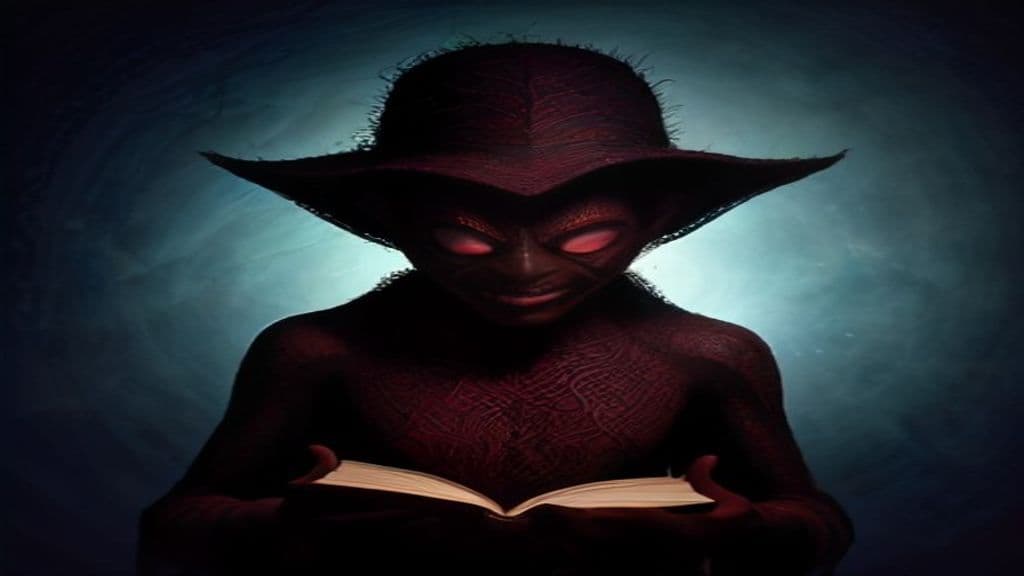
Anansi
The spider trickster god of Akan folklore — cunning, mischievous, and wise. Keeper of stories and teacher of human beings, brought through the slave trade into Caribbean and African-American tradition.
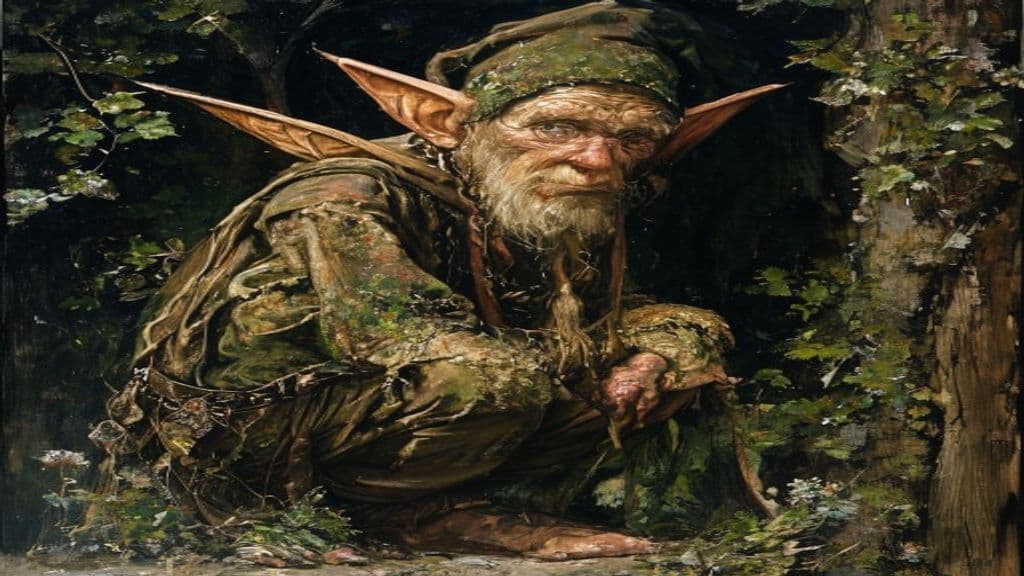
Elf
An elf is a humanoid supernatural being from Germanic folklore, especially prominent in North Germanic (Norse/Icelandic) myth and in later early-modern Scottish and Scandinavian belief. Elves are typically depicted as magically powerful and unusually beautiful, ambivalent toward humans and capable of helping or harming them.
*Perkʷūnos
*Perkʷūnos is the reconstructed Proto-Indo-European thunder‑god hypothesized by comparative linguistics and mythology. Scholarly reconstructions portray him as a storm or thunder figure associated with fructifying rain and as the combatant who fights a multi‑headed water‑serpent to release life‑giving waters; no direct attestations from the Proto‑Indo‑European period survive and the figure is inferred from later Indo‑European traditions.
*Péh₂usōn (reconstructed)
Péh₂usōn is a hypothetical Proto‑Indo‑European pastoral guardian reconstructed by comparative scholars from parallels in Greek and Vedic traditions. Proposed as a Graeco‑Aryan ancestor‑figure, the reconstruction describes a protector of flocks, roads, and travellers rather than an attested historical cultic personality.
3-D Man
3-D Man is a Marvel Comics superhero identity associated with a 1950s-era origin in which the body of Chuck Chandler can materialize in three-dimensional existence when activated by his brother Hal via a pair of glasses. The mantle was later assumed by Delroy Garrett (formerly Triathlon) in modern continuity.
5 Ronin
5 Ronin is a 2011 Marvel Comics five-issue limited series that reimagines five Marvel superhero archetypes as rōnin (masterless samurai) in a fictionalized post‑Sekigahara feudal Japan. The work places Wolverine, Hulk, Punisher, Psylocke, and Deadpool analogues into period roles to explore displacement, revenge, and identity in an era of political upheaval.
57 Mnemosyne
57 Mnemosyne is a large main-belt asteroid (S-type) discovered in 1859 and named after the Greek Titaness Mnemosyne. It is a non-sentient astronomical body studied for its orbital and rotational properties and has been used in dynamical measurements related to Jupiter.
A Elbereth Gilthoniel
An Elvish hymn in Sindarin addressed to Elbereth (Varda) from J. R. R. Tolkien's legendarium. Presented in The Lord of the Rings and later musical and dramatic adaptations, the hymn functions as devotional poetic language that evokes Elvish reverence for the star-kindler rather than an independent supernatural agent.
A.R.G.U.S.
A.R.G.U.S. is a fictional clandestine United States government agency in the DC Comics universe that investigates, contains, and manages superhuman, meta-human, and supernatural incidents and assets. Introduced in The New 52 continuity, it functions as an institutional actor providing intelligence, logistical support, covert task forces (notably Task Force X / the Suicide Squad), and a dedicated magic division across comics and media adaptations.
Abaddon
In Hebrew scripture Abaddon is primarily a noun meaning 'destruction' or a section/condition of the underworld paired with Sheol; in the New Testament Book of Revelation Abaddon is personified as an angelic figure (Greek Apollyon) described as the king of an army of locusts released from the abyss during the apocalypse.
Aban Yasht
The Aban Yasht is a hymn from the Persian tradition that praises Anahita, a goddess associated with water, fertility, and wisdom. It consists of 132 stanzas and is part of the 21 Yashts collection. (Note: - Power tier should be "Primordial" or possibly "Cosmic", given that it's a hymn of great spiritual significance and associated with a goddess. - The article incorrectly states that Anahita is associa)
Abath
No corroborated folkloric entity named "Abath" is documented in the provided sources. The string appears in the supplied material only as a surname/personal name in Aruban/Dutch-Caribbean archival records and as an unrelated taxonomic or encyclopedic hit; no mythic attributes, origin stories, rituals, or apotropaic practices for an entity called Abath are present in the documents reviewed.
Abatur
Abatur is an uthra (celestial emanation) in Mandaeism described as the 'father of the Uthras' and called the Ancient (ʿattīqā). He resides on the boundary between the World of Light and lower regions, functions as a judge who weighs souls (Abatur Muzania), and supplies instructions and materials to the demiurgic uthra Ptahil in accounts from the Diwan (Scroll) of Abatur.
Abatwa (Twa / Batwa)
Abatwa (also recorded as Twa, Batwa, Mutwa; singular forms Barhwa or Murhwa in some transcriptions) are indigenous hunter‑gatherer peoples of the Great Lakes region of Central Africa, historically identified as some of the earliest inhabitants of the area. The available sources treat them as human ethnic groups whose livelihoods, lands, and populations have been severely affected by conservation policies and modern violence.
Community Record
- [1]Dwarves in Middle-earth (Wikipedia). Wikipedia contributors, 'Dwarves in Middle-earth,' Wikipedia, The Free Encyclopediawiki
- [2]Dwarves — Encyclopedia article (ValarGuild / Bobmoco glossary material). Dwarves entry, Tolkien glossary resources compiled onlineother
- [3]Dwarves (ValarGuild articles). ValarGuild, 'Dwarves' (encyclopedic article)other
- [4]The Geology of Middle-earth (contextual geography of Dwarf regions). Paper on the geology of Middle-earth contextualizing Dwarf habitation (ValarGuild)other