
Within Haitian Vodou cosmology Erzulie Dantor is presented as a particular manifestation or incarnation of the broader Erzulie/Èzili complex of feminine spirits associated with love and womanhood. She is identified specifically as the main or a senior spirit of the Petro nanchon (family) of lwa, which in Vodou denotes a grouping of powerful, often forceful or protective spirits. Sources frame her identity relationally: she is the darker, maternal, Petro aspect of Erzulie rather than an entirely separate deity. Ethnographic and documentary sources in the supplied material do not provide a single canonical mythic life-story or philological etymology of the name "Dantò/Dantor," and the name is used to signal this particular Petro embodiment of the Erzulie persona.
Documentary and encyclopedic sources describe Erzulie Dantor as dark-skinned and maternal in nature; this darker complexion and motherly temperament are repeatedly emphasized in descriptions. In Haitian material and folk art she is widely depicted in visual media, and several sources note that the stylistic variant of the Black Madonna of Czestochowa is often used in popular depictions of Erzulie Dantor, linking her image to a scarred, dark-faced Marian iconography in syncretic visual practice. Other popular-attributed accoutrements (e.g., knives, rum, cigarettes) appear in some blogs and popular summaries but are unevenly attested in the provided scholarly/encyclopedic entries and thus are recorded in the literature as folk attributions rather than uniformly canonical features.
As a senior Petro lwa and a manifestation of the Erzulie family, Erzulie Dantor is principally described as maternal and protective toward women and family lines; Petro associations in Vodou often connote forceful or stern protective powers. The supplied sources characterize her role in general terms—protector, maternal agent, and a prominent presence in ritual and popular devotion—but do not supply a systematic catalogue of specific magical powers (such as named healing or exorcistic formulas). Popular and journalistic sources attach revolutionary and identity-protective meanings to her in collective memory (e.g., links to slave resistance or modern identity politics), but detailed doctrinal claims about discrete supernatural effects are not documented in the provided corpus.
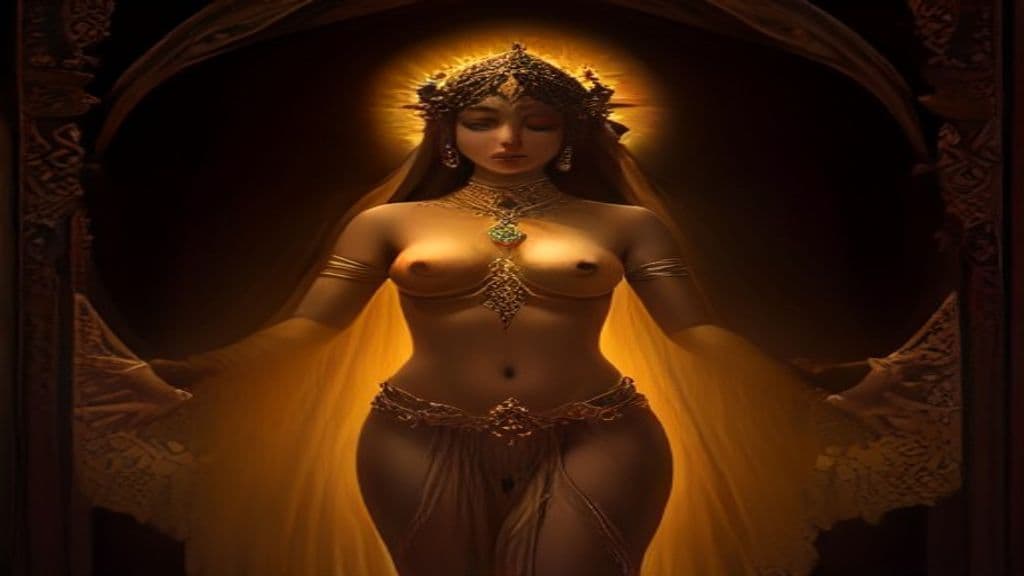
Apsara
Celestial dancers and water nymphs of Hindu cosmology — beautiful semi-divine beings who dance at the court of Indra and, by his command, descend to earth to distract sages from excessive asceticism.

La Llorona
The Weeping Woman of Mexican folklore — the ghost of a mother who drowned her children and now wanders rivers and lakes, weeping for them and taking other children she finds at night.
Adjassou-Linguetor
Adjassou-Linguetor is a loa in Haitian Vodou associated with spring water. The limited cited sources describe her as having protruding eyes and a bad temper; beyond these points, the available documentation (Wikipedia and Wikidata) is minimal.
Aganjú
Primordial Orisha associated with the sun, fire, and the untamed wilderness in Yoruba tradition. (Note: - Remove "untamed wilderness" from Power tier description as it's a trait associated with Lesser entities, not Primordial. - Add Appearance section based on source material (e.g., no specific descript)
Agwé
Agwé is a high-ranking lwa in Haitian Vodou associated with the sea, navigation, fishing, and certain funerary conveyances. He is portrayed as a naval officer who lives in a palace beneath the sea, commands attendant spirits, and is propitiated with maritime offerings and ceremonies.
Anansi
The spider trickster god of Akan folklore — cunning, mischievous, and wise. Keeper of stories and teacher of human beings, brought through the slave trade into Caribbean and African-American tradition.
Ayagunna (Yoruba Tradition)
A manifestation of Obatala, the Sky Father, embodying martial prowess and a desire for global peace through domination. (Note: - Power tier should be Greater (Ayagunna is described as manifesting the Sky Father's "fierceness" and having achieved global conquest). - Appearance needs clarification or deletion, as there is no ex)
Ayida Wedo
Ayida Wedo is a primordial rainbow-serpent loa of Haitian Vodou (with counterparts in Fon and Ewe vodun) associated with water, the rainbow, and the elemental forces; she often appears paired with Damballa as the dual cosmic serpent that assisted the creator in forming and upholding the world.
Ayizan
Ayizan is a racine (root loa) in Haitian Vodou and related West African-derived Vodoun traditions, functioning as the archetypal mambo (priestess) and a guardian of ritual order, initiation (kanzo), and the transmission of sacerdotal implements such as the asson. She is also associated with the marketplace and commerce and is syncretized with the Catholic Saint Clare.
Baron Samedi
A principal lwa of Haitian Vodou who serves as master of the dead and psychopomp, head of the Gede family; associated with cemeteries, crossroads, resurrection/healing, and licentious, comic behavior.
Bisimbi (Simbi)
Bisimbi (singular Simbi) are water and nature spirits in Bakongo (Kongo) traditional religion. They are associated with waters and natural sites in the Kongo-speaking region and are attested to continue, with transformation, in Atlantic diaspora spiritual systems such as Lowcountry Hoodoo and Cuban Palo.
Bizango
Bizango refers to secret societies in Haiti associated with Vodou practice and rural social governance. Sources portray them as local arbiters with contested reputations, variously remembered as community enforcers, makers of ritual objects, and — in folklore and some ethnographic accounts — practitioners of coercive or secretive magical acts.
Bloody Bones
Bloody Bones (also Rawhead, Rawhead-and-Bloody-Bones) is a vernacular bogeyman figure originating in Britain and carried into regional North American traditions; it functions chiefly as a cautionary monster used to frighten children from danger and ill speech, typically associated with deep water or dark household recesses.
Br'er Rabbit
Br'er Rabbit is an African-American folktale trickster — an anthropomorphic rabbit/hare who survives and triumphs by cunning rather than strength. Originating in oral traditions of enslaved Africans in the American South and related Caribbean communities, the character features in story cycles that teach, entertain, and comment on social relations.
Community Record
- [1]Ezili Dantor - Wikipedia. Wikipedia: Ezili Dantorwiki
- [2]Wikidata: Ezili Dantor. Wikidata: Q5423293wiki
- [3]Vevé Ezili Dantor (Archive). Archive.org: Vevé Ezili Dantorother
- [4]The Greatest Woman In History (Archive reference to Black Madonna syncretism). Archive.org video referencing Black Madonna and Erzulie Dantor stylistic linksother
- [5]Our Lady the Blessed Virgin Mary - Marian Apparitions (Archive). Archive.org: Marian iconography referenced in relation to Erzulie Dantorother
- [6]Haitian Vodou art - Wikipedia. Wikipedia: Haitian Vodou art (documents folk-art presence of Erzulie Dantor)wiki
- [7]Double Feature: Haitian Folk Art of the Vodou Spirit Erzulie Dantor – O'Neill School Art Committee. O'Neill School Art Committee blog on Haitian folk art representations of Erzulie Dantorfolk
- [8]Spirit Work: Blesseed Virgin of the Bright Hill (Black Madonna / Erzulie Dantor note). Spirit Work: discussion linking Black Madonna iconography to Erzulie Dantor depictionsfolk
- [9]Black Madonna of Czestochowa becomes lesbian defender Erzuli Dantor. QSpirit article noting popular syncretic identification and modern cultural readingsfolk
- [10]Erzulies Voodoo - About Haitian Vodou - Haitian Vodou History & Beliefs. Erzulies.com: overview of Erzulie family and Dantor as Petro manifestationfolk
- [11]ERZULIE DANTOR - the Haitian Goddess of Women (Godchecker). Godchecker entry summarizing popular attributes of Erzulie Dantorfolk