
Sources present regional variation rather than a single canonical origin. Some scholars interpret the southern Sámi name Horagalles as a loan from Old Norse Þórr Karl or related Scandinavian forms (e.g., Torsmannen), while eastern names Tiermes/Tiirmes may reflect an older local sky‑god concept or substrate; these etymological proposals are offered in the literature but remain contested. In eastern Sámi narratives the thunder figure appears in cosmogonic and eschatological roles (for example teaching early humans skills and, in some accounts, being capable of world‑destruction by shooting a celestial reindeer).
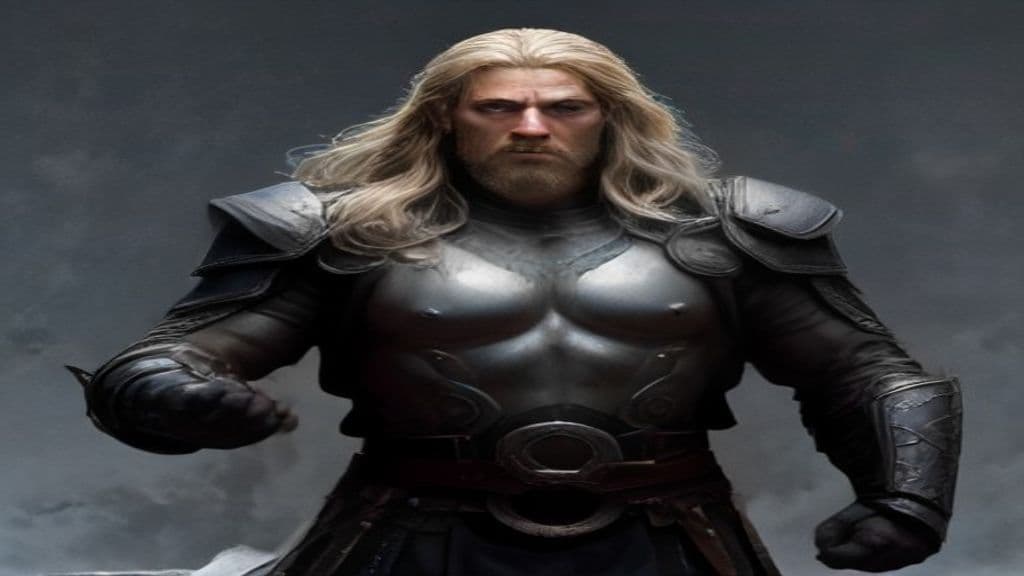
Represented in wooden idols often fitted with a nail or spike and a piece of flint in the head. He is depicted holding a hammer—named Wetschera, Aijeke Wetschera, or Ajeke veċċera ('grandfather's hammer')—and on some shaman drums appears with a sledgehammer in one hand and a cross‑hammer in the other or is symbolized by two crossed hammers. The rainbow is described in some accounts as his bow. Local cult paraphernalia include staged mounts for idols and, in at least one Inari account, a birch tree cult object (a tree set upside down) associated with the figure.
Produces thunder and lightning and controls weather, rain, oceans and lakes; lightning is sometimes described as fiery arrows and the rainbow as his bow. Drum iconography records a paired‑hammer motif whereby one hammer makes thunder and lightning and the other withdraws them to prevent harm. He punishes 'hurtful demons' or mountain/troll spirits—destroying them with lightning, shooting them with his bow, or dashing out their brains with his hammer. He protects Sámi people and their animals but sources also state the thunder god 'was also capable of hurting the Sámi and their sacred sites.' Noaidi (shamans) could connect with him by drumming and yoiking to request aid (for example to release reindeer from spells or to harm enemies).
Weaknesses
- otherno explicit weaknesses recorded in provided sources
Wards
- ritualnoaidi mediation (drumming and yoiking)
- othercult care at local sites (offerings such as reindeer antlers and metal objects)
Beaivi
Beaivi is the Sámi Sun and sun-being: the same term names both the celestial body and the personified solar deity. Central to seasonal rites in Sápmi, Beaivi is petitioned for the return of spring, warmth, fertility (especially of reindeer), and for recovery from mental illness and sun-related ailments.
Beaivi-nieida
Beaivi-nieida (also given as Biejjenniejte) is identified in the cited source as a female solar figure in Sámi shamanism, translated as 'Daughter of the Sun' or 'Sun Maiden'. The available entry provides only a name, literal translation, and one-line identification within Sámi religious context.
Bieggolmai / Bieggagállis
Bieggolmai (also attested as Bieggagállis) is named in available sources as the wind god of Sámi shamanism. The cited material identifies the entity's role with wind but provides no further mythic narratives, rituals, or descriptive detail.
Hiiden Hirvi
Mythical moose from Finnish tradition that must be hunted by skiing. (Note: - Power tier: Greater (given its classification as a mythical entity that requires special skills to hunt, it's likely more powerful than a Minor Spirit) - Weaknesses: specify what the source material)
Hulder (Huldra)
The hulder (Norwegian huldra) is a class of Scandinavian 'hidden folk' — a forest-associated local spirit traditionally conceived as a race or kind rather than a single individual. They are counted among the rå (wardens/keepers) of particular natural places and are widely attested in Scandinavian toponyms and folk belief.
Juoksáhkká
Juoksáhkká (also Juksakka, Joeksaahka; lit. 'bow woman' — Stäukedne lit. 'bow mother') is a female household deity in Sámi shamanistic belief associated with childbirth, the development and protection of children, and immediate postnatal rites. She is one of the daughters of Máttaráhkká, located in the ground under the goahti (often at the back), and was reported among Sámi in the Scandinavian parts of Sápmi but not universally across all Sámi regions.
Jábmiidáhkká
Jábmiidáhkká (also Jabme-akka) is the female ruler of the Sámi underworld Jábmiidaibmu. She functions as gatekeeper and mediator for the dead, sometimes permitting them to affect the living and allowing captured souls to return in exchange for offerings; sacrificial burials of black animals are recorded as offerings to her.
Lieaibolmmai
Lieaibolmmai (also Leibolmai, Liejbbeålmáj, Leib-Olmai) is a Sami forest deity who rules wild animals and is petitioned by hunters for good fortune. He is associated specifically with alder trees and appears to humans in the form of a bear.
Máttaráhkká
Máttaráhkká is a Sámi mother figure associated with fertility, childbirth, and the giving of the physical body to a child. She is a domestic, chthonic presence said to dwell in the ground beneath the goahti and was traditionally petitioned by women during pregnancy; after Christianization she was often syncretized with the Virgin Mary.
Radien-attje
Radien-attje is a sky-centered, fertility-linked ruling figure in Southern and Western Sámi belief, portrayed as the cosmic ruler and giver of life who upholds the world via a world-pillar and receives the souls of the righteous. He functions as the senior member of a heavenly family and is propitiated with seasonal sacrifices to ensure fertility and the continued stability of the cosmos.
Radien-pardne
Radien-pardne (also Radien-bardne, Southern Sámi Raedienbaernie; also Raediengiedte/Radienkiedde) is a deity in Sámi religion described as the active son who carries out the orders of his passive father, Radien-attje. He forms part of a divine triad with Radien-attje and Raedieahkka; scholars have compared this trio to the Christian configuration of God the Father, Jesus, and the Virgin Mary (comparative framing from the sources).
Raedieahkka
Raedieahkka (also attested as Radien-akka) is a goddess in Sámi mythology who, together with her consort Radien-attje, is described in the cited sources as one of the two principal divinities responsible for creating the world and the human soul. She is named as the mother of Rana Niejta and Raediengiedte.
Community Record
- [1]Horagalles - Wikipedia. Wikipedia article 'Horagalles'wiki
- [2]Horagalles - Wikidata. Wikidata item Q5902515other
- [3]FUD20 (page excerpt on Sámi beliefs). Finnugor research volume pages referencing Sámi thunder figure names and attributesacademic
- [4]Mythology Stackexchange discussion: 'Why does Horagalles have a nail on his head?'. Community Q&A discussing iconography and sourcesother
- [5]Dagdrivarn Bildstam Horagalles. Image and discussion of Horagalles iconography (hammer, nail, flint)other
- [6]TheCollector — 'How the Sami Survived at the Edge of the Viking World'. Popular article discussing Sámi–Norse contacts and interpretive context for namesother