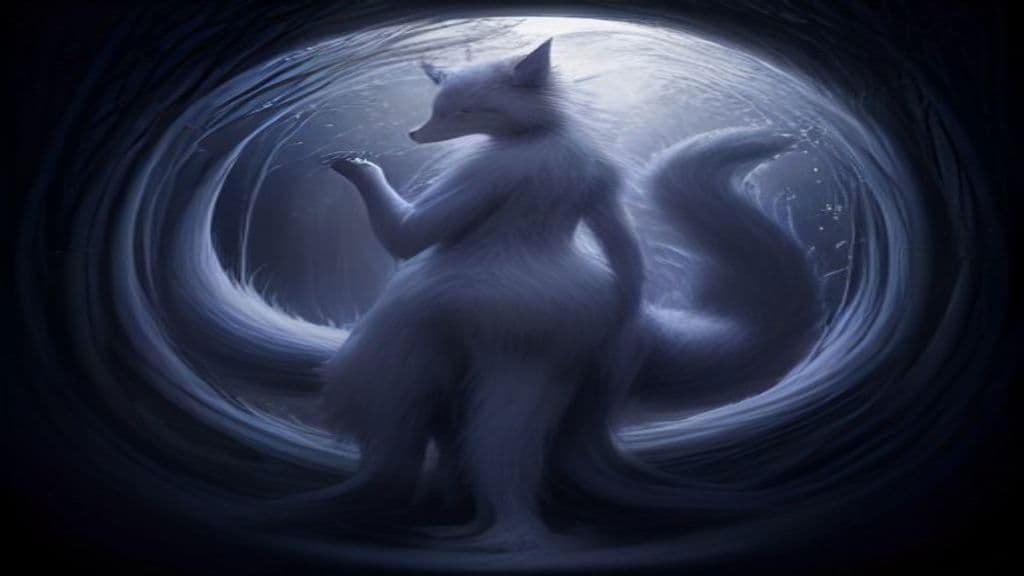
In Shinto belief, foxes become magical after living for 100 years. Each century adds a tail. A nine-tailed fox is a being of immense age and power. Inari, the kami of rice and prosperity, employs white kitsune as divine messengers.
A fox that grows additional tails with age. Can take human form, typically appearing as a beautiful woman, scholar, or old man. In human form, a shadow may reveal fox ears or a tail.
Shapeshifting into any human form. Illusion casting vivid enough to confuse entire villages. Possession. Foxfire (kitsune-bi) — floating blue-white lights. Can read minds and predict the future at high power levels.
Weaknesses
- substanceDog's presence repels them
- conditionCannot maintain illusions if their true shadow is seen
Wards
- ritualPrayer at Inari shrine for protection from malevolent fox spirits
5 Ronin
5 Ronin is a 2011 Marvel Comics five-issue limited series that reimagines five Marvel superhero archetypes as rōnin (masterless samurai) in a fictionalized post‑Sekigahara feudal Japan. The work places Wolverine, Hulk, Punisher, Psylocke, and Deadpool analogues into period roles to explore displacement, revenge, and identity in an era of political upheaval.
Abumi-guchi
A Japanese yōkai classed as a tsukumogami: an animated stirrup (abumi) depicted in Sekien Toriyama's Gazu Hyakki Tsurezure Bukuro. Traditional accounts say it is formed from a stirrup that belonged to a soldier who fell in battle and that it waits where the stirrup lies for its dead owner to return.
Abura-akago
An Edo-period yōkai depicted as an oil‑licking infant or a ball of flame. First recorded in illustrated compendia (notably Toriyama Sekien's Konjaku Gazu Zoku Hyakki), the Abura-akago is tied to tales of oil‑stealing fires and functions in part as an etiological warning about wasting or stealing oil.
Abura-sumashi
A yōkai spirit from the Amakusa region of Kumamoto Prefecture, Japan, said to inhabit mountain passes. Traditionally explained as the ghost of a person who stole oil, it appears to surprise travelers and is represented in modern media with a straw-coat body and a potato- or stone-like head.
Aburabō / Abura-bōzu / Aosaginohi (traditions)
Two distinct Japanese traditions appear under related flame imagery: Aosaginohi/Aosagibi is presented as a will-o'-the-wisp type luminous night phenomenon interpreted as reflections from herons; aburabōzu (abura bōzu, "oil monk") appears in a separate anecdote as a reported fire-breathing apparition in a 12th-century Yasaka Shrine tale. The sources treat them as separate portrayals rather than a single unified being.
Acala
Acala (Sanskrit: अचल, 'The Immovable') is a wrathful protective deity (dharmapala) in Vajrayāna and East Asian esoteric Buddhism, classed among the Wisdom Kings (Vidyārāja). He functions as a ritual focus for visualization and mantra practice intended to remove obstacles and bind or destroy hostile forces.
Agaru
Agaru (attested historically as Agarum) appears in the supplied sources as a Bronze Age Near Eastern toponym—often identified with Failaka Island—and as a modern personal or media name. The provided material contains no evidence that Agaru is a supernatural being in any traditional cosmology.
Ajisukitakahikone
Ajisukitakahikone is a kami in Japanese mythic literature (Kojiki/Nihon Shoki). He appears in the transfer-of-rule cycle between heaven and earth, is described as a son of Ōkuninushi, associated with the Kamo cult (called Kamo no ōmikami in some modern museum/catalog entries), and features in narratives that explain landscape formation and meteorological genealogy.
Aka Manto
Aka Manto (赤マント, "Red Cloak") is a Japanese urban legend and schoolyard ghost-story about a masked, cloaked figure who appears in public or school toilet stalls and forces occupants to choose between colored toilet paper; each choice in the tale produces a violent supernatural consequence. The legend is part of modern popular folklore recorded in school contexts from the 1930s onward rather than a formal religious myth.
Akaname
Akaname is a Japanese yōkai associated with baths, bathtubs, toilets, and other places where scum and filth accumulate. Traditionally depicted as a child-like creature that licks grime, it functions in folklore as a cautionary figure tied to cleanliness; a few narrative variants cast it as dangerously predatory.
Akashaguma
Akashaguma is presented in the available sources as a child-like house guardian spirit in the Japanese yokai tradition, closely comparable to the regional zashiki-warashi. It is associated with domestic interiors (parlors or storage rooms) and with bringing prosperity to households where it dwells.
Akashita
Akashita (赤舌, lit. “red tongue”) is an Edo-period pictorial yōkai commonly represented as a hairy, clawed face emerging from dark clouds with a wide open mouth and a conspicuous red tongue. The figure appears in yōkai emaki and Toriyama Sekien’s Gazu Hyakki Yagyō; Sekien’s plate shows it atop a sluice, but the original pictorial tradition provides no explanatory caption. Later folklorists and popular writers (Shōwa and later) have variously interpreted the image as a punitive spirit linked to irrigation/floodgate justice or as a kidnapper in evening skies, though these narrative roles are post-hoc.
Community Record
- [1]The Fox and the Jewel. Smyers, Karen Ann. 1999. The Fox and the Jewel: Shared and Private Meanings in Contemporary Japanese Inari Worship. University of Hawaii Press.academic
- [2]Kwaidan. Hearn, Lafcadio. 1904. Kwaidan. Houghton Mifflin.literary