
Papa Legba derives from the West African orisha Eshu-Elegbara of the Yoruba and Fon peoples, brought to Haiti through the Atlantic slave trade. He is the first spirit to be saluted in every ceremony, because he alone holds the keys to the cosmic gate.
In Haitian Vodou he is often depicted as an old man on crutches, smoking a pipe, accompanied by a dog. Despite his worn appearance he is a god of immense power and wisdom.
An old man in a ragged hat, leaning on a walking stick or crutch, smoking a pipe. A small dog accompanies him. In his Yoruba origin (Eshu) he may appear younger and more mischievous, often with red and black clothing.
Opens and closes the gate between worlds — without his permission no other loa can answer prayers. Polyglot of all languages (divine and human). Stands at every crossroads, physical and metaphysical. Mischievous; teaches through tricks.
Weaknesses
- conditionCannot be approached without proper salutation — but is never truly hostile
Wards
- ritualOfferings of rum, tobacco, coffee, and grilled peanuts at the crossroads
- mantraPapa Legba, ouvri baryè pou mwen (Papa Legba, open the gate for me)
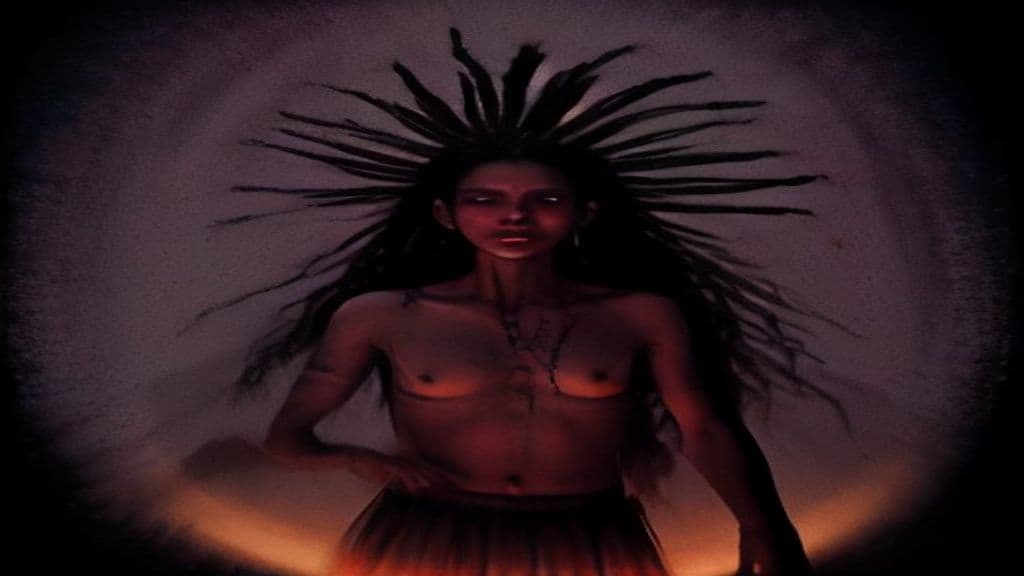
Abiku
In Yoruba tradition, the Abiku is a Primordial entity representing the spirits of children who die young. (Note: - Power tier: Primordial seems plausible but should be supported by additional source material confirming its cosmic or deity-level abilities. - Appearance: While the draft mentions spirits often appe)
Adjassou-Linguetor
Adjassou-Linguetor is a loa in Haitian Vodou associated with spring water. The limited cited sources describe her as having protruding eyes and a bad temper; beyond these points, the available documentation (Wikipedia and Wikidata) is minimal.
Aganjú
Primordial Orisha associated with the sun, fire, and the untamed wilderness in Yoruba tradition. (Note: - Remove "untamed wilderness" from Power tier description as it's a trait associated with Lesser entities, not Primordial. - Add Appearance section based on source material (e.g., no specific descript)
Agwé
Agwé is a high-ranking lwa in Haitian Vodou associated with the sea, navigation, fishing, and certain funerary conveyances. He is portrayed as a naval officer who lives in a palace beneath the sea, commands attendant spirits, and is propitiated with maritime offerings and ceremonies.
Aje (Iyami Aje)
Aje appears in the supplied sources only as part of the compound term "Iyami Aje," which the referenced Wikipedia disambiguation entry labels as a Yoruba concept of feminine power. No further details about its nature, practices, appearance, or rituals are present in the provided materials.
Ajogun
Ajogun are a class of malevolent spiritual forces in the Yoruba religious worldview that regularly interfere with human lives, responsible for death, disease, curses, loss, conflict and related misfortunes. They are described as the polar opposite of the benevolent Oriṣa, led by Iku (Death), and can be warded off or appeased through intercession by Eṣu and by observing Ifá divinatory counsel.
Anansi
The spider trickster god of Akan folklore — cunning, mischievous, and wise. Keeper of stories and teacher of human beings, brought through the slave trade into Caribbean and African-American tradition.
Ayagunna (Yoruba Tradition)
A manifestation of Obatala, the Sky Father, embodying martial prowess and a desire for global peace through domination. (Note: - Power tier should be Greater (Ayagunna is described as manifesting the Sky Father's "fierceness" and having achieved global conquest). - Appearance needs clarification or deletion, as there is no ex)
Ayida Wedo
Ayida Wedo is a primordial rainbow-serpent loa of Haitian Vodou (with counterparts in Fon and Ewe vodun) associated with water, the rainbow, and the elemental forces; she often appears paired with Damballa as the dual cosmic serpent that assisted the creator in forming and upholding the world.
Ayizan
Ayizan is a racine (root loa) in Haitian Vodou and related West African-derived Vodoun traditions, functioning as the archetypal mambo (priestess) and a guardian of ritual order, initiation (kanzo), and the transmission of sacerdotal implements such as the asson. She is also associated with the marketplace and commerce and is syncretized with the Catholic Saint Clare.
Baron Samedi
A principal lwa of Haitian Vodou who serves as master of the dead and psychopomp, head of the Gede family; associated with cemeteries, crossroads, resurrection/healing, and licentious, comic behavior.
Bisimbi (Simbi)
Bisimbi (singular Simbi) are water and nature spirits in Bakongo (Kongo) traditional religion. They are associated with waters and natural sites in the Kongo-speaking region and are attested to continue, with transformation, in Atlantic diaspora spiritual systems such as Lowcountry Hoodoo and Cuban Palo.
Community Record
- [1]Tell My Horse. Hurston, Zora Neale. 1938. Tell My Horse: Voodoo and Life in Haiti and Jamaica. J.B. Lippincott.folk
- [2]Divine Horsemen. Deren, Maya. 1953. Divine Horsemen: The Living Gods of Haiti. McPherson.academic