
In Dreaming narratives the Rainbow Serpent is an ancestral creator-being that emerged from beneath the ground and, by moving through the land, formed major physical features such as ridges, mountains and gorges. It is one of the great spirits or totems active during creation (The Dreaming/Tjukurrpa/Jukurrpa), and many local groups possess their own named ancestral serpents whose actions found and encoded aspects of country. The English phrase "Rainbow Serpent" is an anthropological umbrella term, coined in modern scholarship, that groups a variety of distinct local beings and stories rather than a single unified origin tale.
Generally serpentiform and of immense proportions—large enough that its emergence and movement are said to have formed large-scale landforms. It commonly inhabits deep permanent waterholes. Regional variants show variation: some accounts describe a single-headed serpent, Arnhem Land Yurlunggur may possess a divided or double body; some traditions give it a crest, mane, or beard; others liken it to giant carpet snakes or link it to other animals in particular stories. Gendered depictions vary across groups (male, female, bigender, hermaphroditic, or unspecified), and some feminine forms are portrayed with breasts.
Creators of landscape: credited with moulding barren earth into ridges, gorges and mountains by emerging and pushing through the ground. Control over water and weather: associated with permanent waterholes, springs and rain; rainbows are frequently read as the Serpent moving between water sites. Fertility and life-giving functions: viewed as a giver of life through its association with water and sometimes connected to fecundity symbolism. Regulator and enforcer: when disturbed or offended it can bring great chaos and destructive consequences. Regional variation means not all local ancestral beings in this family are explicitly described as snakes or as literally the visible rainbow.
Weaknesses
None recorded.
Wards
- substancerainbow quartz (iridescent crystal) — associated with rituals involving the Rainbow Serpent
- substancemother-of-pearl / certain iridescent seashells — used in rituals involving the Rainbow Serpent
- conditionavoidance / respect for known Rainbow Serpent water-sites (cultural precaution noted in sources)
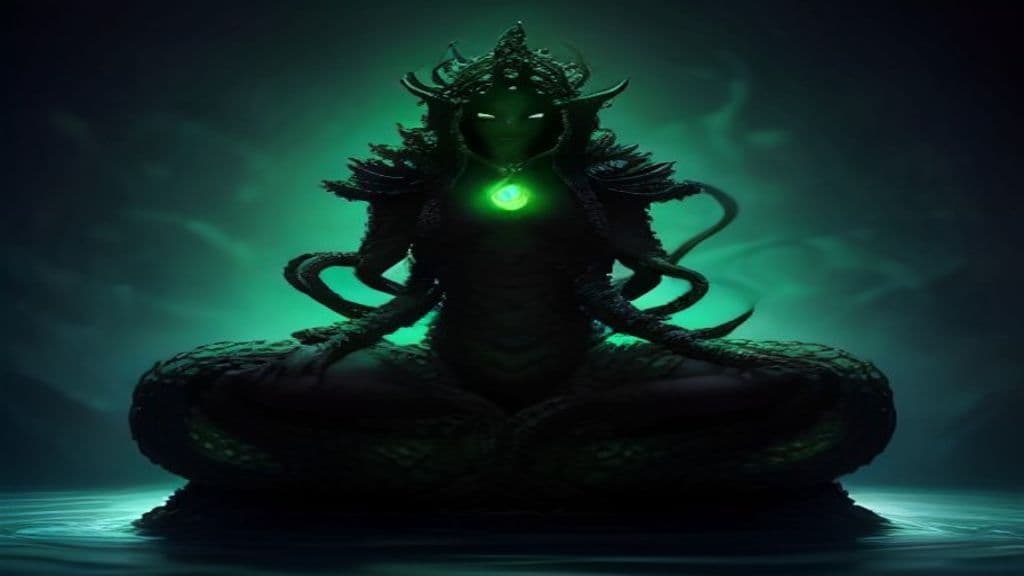
Naga
Divine serpent beings of Hindu, Buddhist, and Jain cosmology — powerful guardians of water, earth, and underground treasures. Revered as deities in South and Southeast Asia.
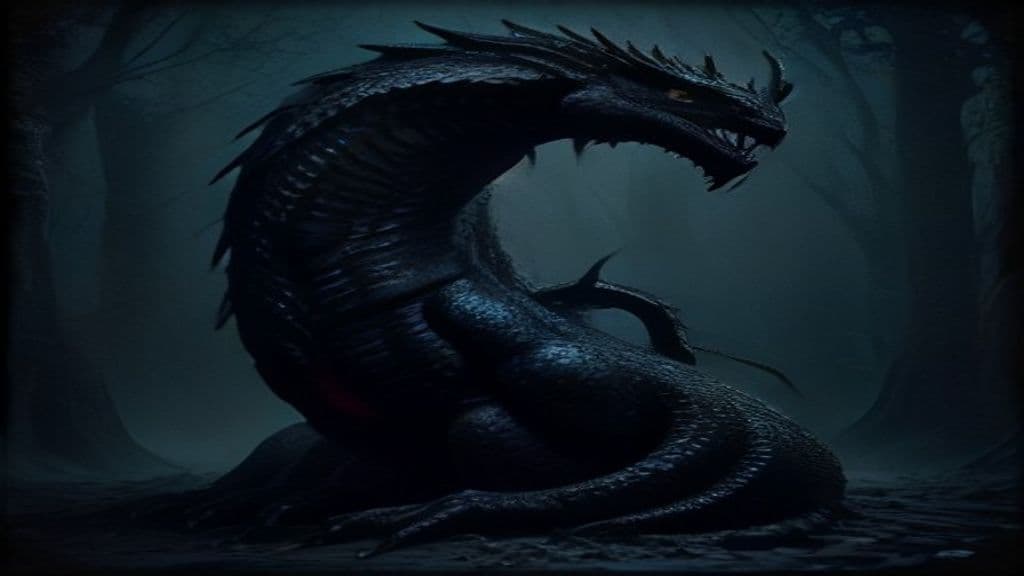
Níðhöggr
The corpse-gnawing dragon coiled around the roots of Yggdrasil, ceaselessly chewing the World Tree — and destined to survive Ragnarök and carry the dead on its wings.
Adnoartina
Adnoartina is a Dreamtime ancestral lizard-being in Dieri tradition associated with the creation of red ochre (yamparnu) and the formation/sanctification of landscape features such as Uluru. The being’s actions in ancestral time explain the origin of sacred pigment and sustain ritual practices and social journeys to ochre sources.
Akenta
Akenta is attested in the provided sources only as a proper name appearing in several unrelated contexts (a listing of South Australian groups, commercial wine branding, a health company, and a parliamentary text). The sources do not describe Akenta as a supernatural being, and no mythic attributes, appearance, powers, or rituals are recorded.
Anjea
Anjea is an Australian Aboriginal fertility spirit described as the custodian of human souls between incarnations who fashions new human bodies from earth and returns them to mothers. She is attested in secondary sources summarizing Aboriginal mythology as a figure linking death, the interval between lives, and rebirth.
Arkaroo
Arkaroo is a primordial ancestral serpent of the Dreaming associated with the northern Flinders Ranges (Ikara/Wilpena Pound) in South Australia. In local creation narratives it drank the waters of Lake Frome, carved valleys by reclining in the mountains, and left waterholes where it rested; the being is commemorated in place-names and rock art at sites such as Arkaroo Rock.
Baiame
Baiame is a principal creator/ancestral Sky Father in the Dreaming traditions of several south‑eastern Australian Aboriginal peoples. He is credited with shaping landscape, instituting law and ceremony (notably the first bora initiation), and returning to the sky while remaining present in sacred sites and rock art.
Barraiya
Barraiya is named in a single recorded account as a god in Australian Aboriginal mythology who fashioned the first vagina with a spear so that the being Eingana could give birth. The attestation presents Barraiya in a creator role connected to the origin of human birth.
Blue Mountains panther
A reported large feline/phantom cat alleged to inhabit the Blue Mountains region west of Sydney, Australia. Treated in local belief and contemporary folklore as an outsized cat—often described as panther-sized—sustained by repeated eyewitness reports, occasional physical traces, and periodic investigations rather than by scientific confirmation.
Bunyip
A class of Aboriginal Australian water-being from southeastern Australia associated with swamps, billabongs, creeks, riverbeds and waterholes. Bunyip stories warn people away from dangerous waters and in some traditions enforce resource-use norms and child safety.
Buttons (pantomime)
Buttons is a stock theatrical character in British and Australian Cinderella pantomimes, typically a male household servant who helps Cinderella, expresses affection for her, and provides comic and emotional engagement with the audience. The role is conventional to stage pantomime practice rather than a supernatural being.
Cleone
Cleone is attested in the provided sources primarily as a feminine given name, a literary character/title (notably Robert Dodsley's 1758 tragedy), a subject of poetry (Henry Kendall), and a California place name. The supplied materials do not provide evidence of Cleone functioning as a folkloric supernatural being; a Wikipedia disambiguation line mentions a mythological Naiad named Cleone but no supporting primary or descriptive sources are present in the provided set.
Daramulum
Daramulum is a southeastern Australian Aboriginal sky-hero and ancestral figure associated with the major creator Baiame and with an emu-wife. He is embedded in rock‑art, sky knowledge (constellation identification), and initiation ritual practice, notably as a presence voiced through the bullroarer.
Gwion Gwion
A regional tradition/style of painted anthropomorphic rock art from the north‑west Kimberley region of Western Australia, characterized by finely rendered human figures with ornamentation. The tradition (also known by local names such as Kiro Kiro/Giro Giro) is archaeologically significant and the subject of debate over age and authorship.
Community Record
- [1]Rainbow Serpent — Wikipedia. Wikipedia contributors, 'Rainbow Serpent', Wikipedia, The Free Encyclopedia.wiki
- [2]Rainbow Serpent — Wikidata Q50733371. Wikidata entry Q50733371, 'Rainbow Serpent'.wiki
- [3]Archive references mentioning 'Rainbow Serpent' (contextual items). Internet Archive item referencing the phrase 'Rainbow Serpent' in ancillary contexts; used only for corroboration of modern usage in non-ethnographic materials.other
- [4]Archive references mentioning 'Rainbow Serpent' (contextual items). Internet Archive item referencing the phrase 'Rainbow Serpent' in ancillary contexts; not an ethnographic source.other
- [5]Archive references mentioning 'Rainbow Serpent' (contextual items). Internet Archive item referencing the phrase 'Rainbow Serpent' in ancillary contexts; not an ethnographic source.other