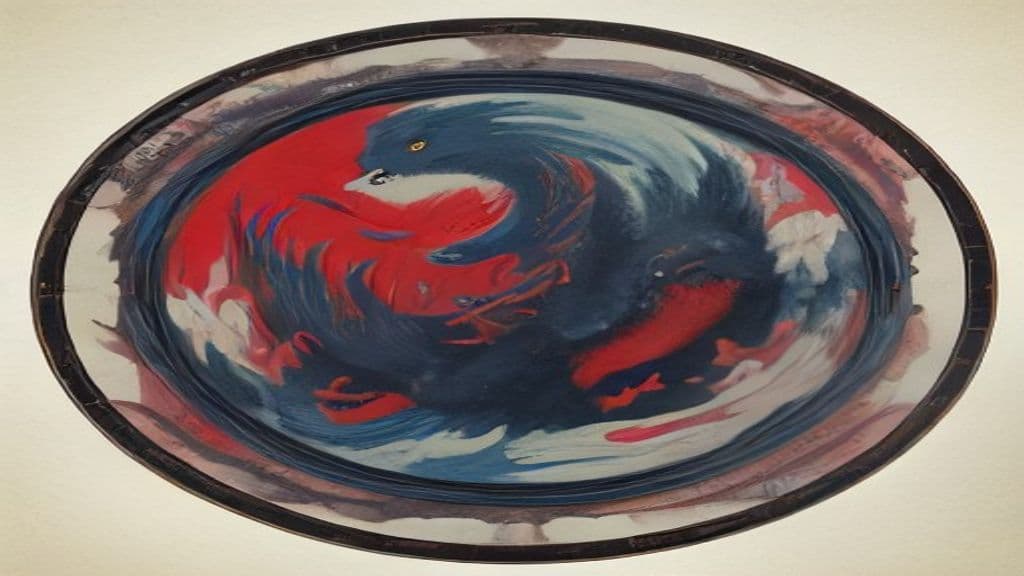
The entity is attested in the Japanese yōkai/bestiary tradition via Toriyama Sekien's Konjaku Hyakki Shūi (as cited in Kappapedia), where it is recorded under the reading toodai ki / toodaki (灯台鬼). Wikidata also links the term to appearances in narrative material such as the Tale of the Heike and other stories (as noted in the supplied excerpts). Beyond these cataloguing and indexing attestations, modern secondary sources and fiction rework the motif: a Monster Wiki entry presents a folkloric-style origin in which a human is transformed by dark magic into a candlestick-like cursed spirit, while Tezuka Osamu's manga Duke Goblin employs a Todaiki image as a giant lighthouse demon within a prophetic dream sequence. The supplied materials do not provide a single canonical medieval origin narrative or a detailed primary-source origin myth.
Primary documentary evidence in the supplied material is classificatory and pictorial rather than descriptive prose. Kappapedia's citation of Sekien records the term with the characters 灯台鬼 and labels it 'Demon with a candlestick,' indicating a hybrid of a lamp/lighthouse/candlestick and a demonic figure in Sekien's plate. The Monster Wiki describes a 'twisted humanoid version of a candlestick' that may be immobile and mute. Tezuka's usage characterizes it as a 'giant lighthouse demon' in a dream. No further consistent visual details (colors, exact anatomy, scale beyond 'giant' in one fiction) are provided in the supplied excerpts.
Accounts in the supplied sources disagree or emphasize different roles rather than a consistent set of powers. Sekien's inclusion in Konjaku Hyakki Shūi places the Tōdaiki among catalogued supernatural beings but the supplied citation gives no explicit powers. The Monster Wiki frames it as a cursed spirit transformed from a human by dark magic and often rendered immobile and mute, used as an ornament by sorcerers or evil spirits (this narrative detail appears only in that modern secondary source). Tezuka's Duke Goblin uses the motif as a visionary or prophetic monstrous figure in a dream sequence. The supplied material does not document traditional abilities such as possession, disease-causing, or weather control, so specific powers remain uncertain in these sources.
3-D Man
3-D Man is a Marvel Comics superhero identity associated with a 1950s-era origin in which the body of Chuck Chandler can materialize in three-dimensional existence when activated by his brother Hal via a pair of glasses. The mantle was later assumed by Delroy Garrett (formerly Triathlon) in modern continuity.
5 Ronin
5 Ronin is a 2011 Marvel Comics five-issue limited series that reimagines five Marvel superhero archetypes as rōnin (masterless samurai) in a fictionalized post‑Sekigahara feudal Japan. The work places Wolverine, Hulk, Punisher, Psylocke, and Deadpool analogues into period roles to explore displacement, revenge, and identity in an era of political upheaval.
A Elbereth Gilthoniel
An Elvish hymn in Sindarin addressed to Elbereth (Varda) from J. R. R. Tolkien's legendarium. Presented in The Lord of the Rings and later musical and dramatic adaptations, the hymn functions as devotional poetic language that evokes Elvish reverence for the star-kindler rather than an independent supernatural agent.
A.R.G.U.S.
A.R.G.U.S. is a fictional clandestine United States government agency in the DC Comics universe that investigates, contains, and manages superhuman, meta-human, and supernatural incidents and assets. Introduced in The New 52 continuity, it functions as an institutional actor providing intelligence, logistical support, covert task forces (notably Task Force X / the Suicide Squad), and a dedicated magic division across comics and media adaptations.
Abin Sur
Abin Sur is a fictional extraterrestrial Green Lantern from the planet Ungara in DC Comics. A former history professor turned Green Lantern of Space Sector 2814, he discovered and investigated a prophecy tied to the "Blackest Night," died wounded on Earth and chose Hal Jordan as his ring-successor, and was later reanimated as a Black Lantern in the Blackest Night storyline.
Absolute Green Lantern (tradition)
A modern comic-book reinterpretation in DC's Absolute Universe in which a giant green lantern-shaped vessel appears above Evergreen, Nevada, generates an impenetrable green dome, judges townspeople and sends the judged into the Lantern to await further adjudication in OA (Omega‑Alpha). The story reframes Green Lantern mythos as cosmic/religious horror with an "Enlightenment Spectrum" of flames (Qard, Rao, Sur, Aur) stewarded by Oans such as Abin Sur.
Absorbing Man
A fictional Marvel Comics character (Carl "Crusher" Creel) whose body acquires the physical properties of materials or energies he touches. Debuting in Journey into Mystery #114 (March 1965), created by Stan Lee and Jack Kirby, he is presented as a mortal supervillain/occasional antihero who challenges heroes such as Thor, Hulk, Spider-Man, and the Avengers.
Abumi-guchi
A Japanese yōkai classed as a tsukumogami: an animated stirrup (abumi) depicted in Sekien Toriyama's Gazu Hyakki Tsurezure Bukuro. Traditional accounts say it is formed from a stirrup that belonged to a soldier who fell in battle and that it waits where the stirrup lies for its dead owner to return.
Abura-akago
An Edo-period yōkai depicted as an oil‑licking infant or a ball of flame. First recorded in illustrated compendia (notably Toriyama Sekien's Konjaku Gazu Zoku Hyakki), the Abura-akago is tied to tales of oil‑stealing fires and functions in part as an etiological warning about wasting or stealing oil.
Abura-sumashi
A yōkai spirit from the Amakusa region of Kumamoto Prefecture, Japan, said to inhabit mountain passes. Traditionally explained as the ghost of a person who stole oil, it appears to surprise travelers and is represented in modern media with a straw-coat body and a potato- or stone-like head.
Aburabō / Abura-bōzu / Aosaginohi (traditions)
Two distinct Japanese traditions appear under related flame imagery: Aosaginohi/Aosagibi is presented as a will-o'-the-wisp type luminous night phenomenon interpreted as reflections from herons; aburabōzu (abura bōzu, "oil monk") appears in a separate anecdote as a reported fire-breathing apparition in a 12th-century Yasaka Shrine tale. The sources treat them as separate portrayals rather than a single unified being.
Acala
Acala (Sanskrit: अचल, 'The Immovable') is a wrathful protective deity (dharmapala) in Vajrayāna and East Asian esoteric Buddhism, classed among the Wisdom Kings (Vidyārāja). He functions as a ritual focus for visualization and mantra practice intended to remove obstacles and bind or destroy hostile forces.
Community Record
- [1]Todaiki Candlestick Oni (Kappapedia blog citing Toriyama Sekien). Kappapedia — entry citing Toriyama Sekien's Konjaku Hyakki Shūi for 'toodaiki, toodai ki 灯台鬼' labeled as 'Demon with a candlestick.'other
- [2]Todaiki | Monster Wiki | Fandom. Monster Wiki — 'A Todaiki is a horrific cursed spirit from Japanese folklore that was once human but has been transformed via dark magic into a twisted humanoid version of a candlestick. Often rendered immobile and mute...used as macabre ornaments by sadistic sorcerers or evil spirits.'wiki
- [3]Tōdaiki (Wikidata entry). Wikidata — lists the Tōdaiki as a 'yōkai from the "Tale of the Heike" and other stories' (as represented in the supplied excerpt).other
- [4]Duke Goblin|MANGA|TEZUKA OSAMU OFFICIAL. Tezuka Osamu official site — describes a prophetic dream containing a 'Todaiki (giant lighthouse demon)' in the Duke Goblin manga (as noted in the supplied excerpt).literary
- [5]Konjaku Hyakki Shūi (general reference). Konjaku Hyakki Shūi — Toriyama Sekien's Edo-period bestiary, the work cited in the supplied materials as the pictorial source for Tōdaiki's listing.academic
- [6]Duke Goblin (Wikipedia page referencing the work in which Todaiki appears). Wikipedia — summary noting the Duke Goblin work in which Tezuka uses the Todaiki motif (as referenced in the supplied materials).other