
Urarina narratives include multiple deluge or flood variants that function as origin myths. In one variant a creator figure Kuanra responds to lack of fish by sending his son, Kuanra Kajlaui, who spears fish to provision people. In another deluge variant, on the occasion of a cassava-beer festival, the daughter of the ayahuasca-god urinates and produces a flood that 'gives rise to the chthonic world of spirits.' A separate flood tale records a man saved by climbing an Erythrina elei tree while his family are transformed into nonhuman forms (wife into a termite nest, sons into birds). These narratives place mythic action in the riverine landscapes central to Urarina life.
The provided sources do not supply consistent or detailed physical descriptions for the named mythic actors (Kuanra, Kuanra Kajlaui, the ayahuasca-god or his daughter). Descriptions in the available materials emphasize their actions within mythic episodes rather than morphological traits.
The mythic actors are attributed agency in large-scale transformations and provision: Kuanra functions as a creator/culture-hero figure who can send his son to restore resources (spearing fish), and in a deluge myth the ayahuasca-god's daughter, by urination during a cassava-beer festival, causes a flood that brings into being a chthonic realm of spirits. More generally, Urarina cosmology locates powerful effects in ritual contexts and in relation to ritual substances (ayahuasca and Brugmansia), with shamans mediating human relations with these nonhuman agents.
Weaknesses
None recorded.
Wards
- substanceayahuasca and Brugmansia suaveolens (ritual media/means of engagement)
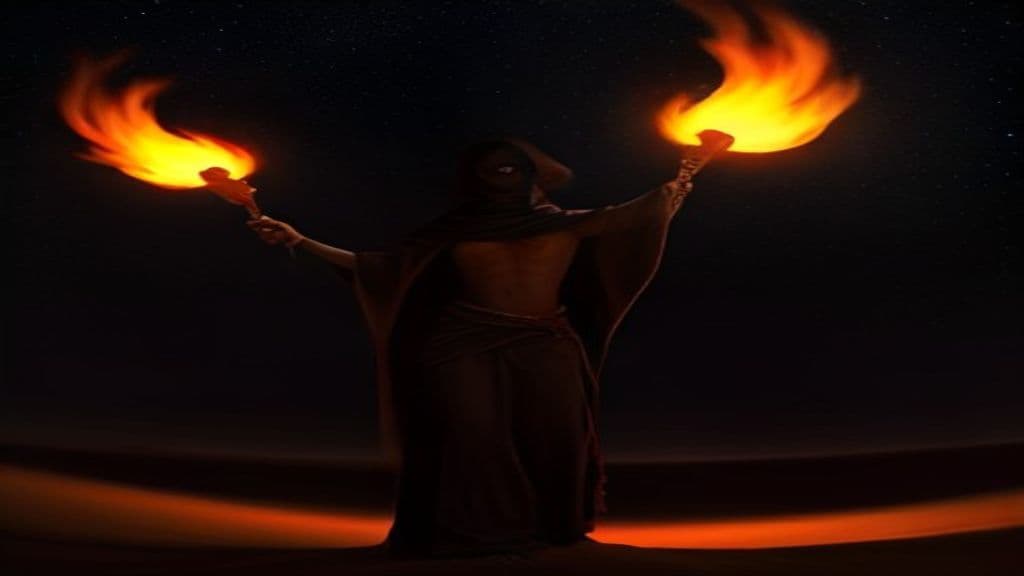
Djinn
The class of supernatural beings created from smokeless fire in Islamic cosmology — a parallel civilization to humanity, capable of belief or unbelief, with their own prophets, society, and judgment before God.

Jann
The weakest class of djinn in Islamic tradition, associated with desert winds and taking the form of snakes or whirlwinds, dwelling in empty wilderness and posing little threat to those who know the proper invocations.
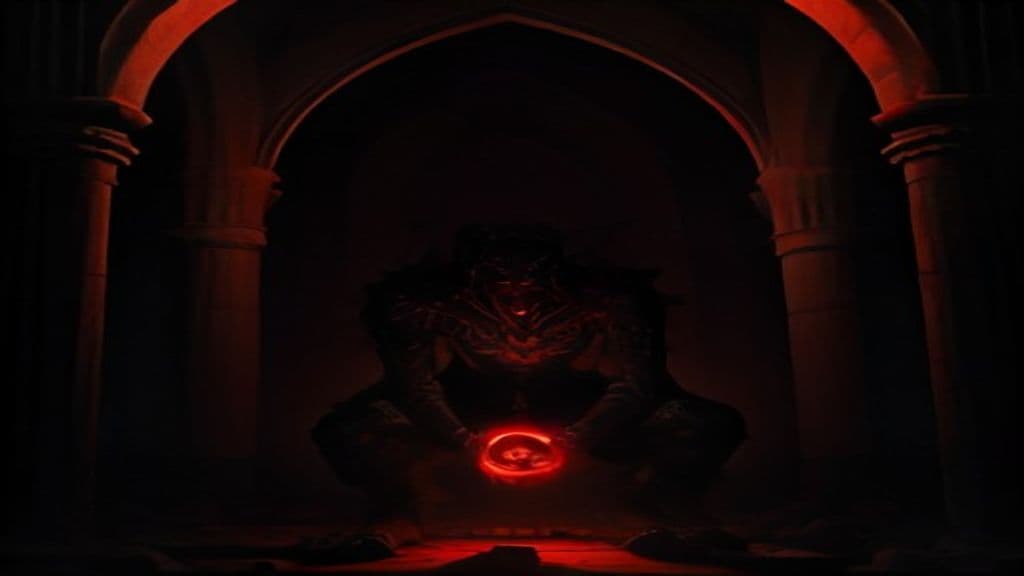
Shaitan
A class of corrupted djinn who follow Iblis and dedicate themselves to leading humans astray — distinct from Iblis himself, the Shayatin are a species of evil djinn who whisper doubts and temptations into the minds of the living.

Yaksha
Nature spirits of Hindu, Buddhist, and Jain cosmology — guardians of forests, treasures, and wilderness. Ambivalent beings, capable of great benevolence to the respectful and terrible harm to the greedy.
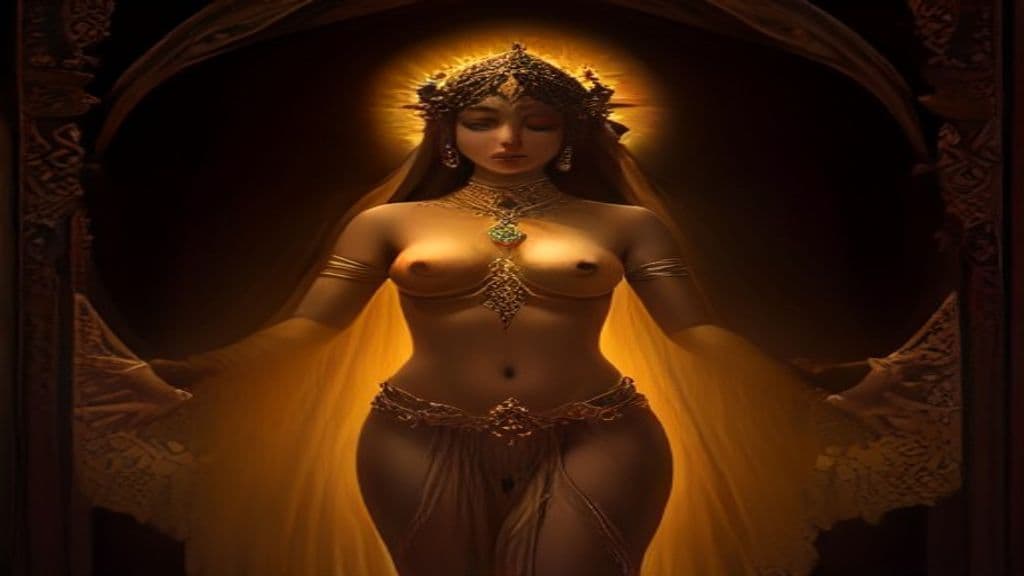
Apsara
Celestial dancers and water nymphs of Hindu cosmology — beautiful semi-divine beings who dance at the court of Indra and, by his command, descend to earth to distract sages from excessive asceticism.
Achuar nonhuman persons (including kuntiniu nukuri)
In Achuar cosmology many animals, plants, and other nonhuman beings are persons with human-like souls who communicate and form long-term, kin-like relationships with people. A specifically named class are the game guardians called kuntiniu nukuri ('game mothers'), whose relations with hunters shape hunting success and ethical obligations.
Agnen
Agnen is an evil spirit in Amazonian Tupinambá mythology known from a concise account in which he devours one of the Twins in the myth of the Twins before being beaten by the surviving twin.
Aguara
Aguara is a mythological fox figure in Ava Guaraní and Chané oral traditions who functions primarily as a trickster and cultural agent; traditions describe him as both malignant and a cultural hero and associate him with the constellation Scorpius.
Amahuaca
Amahuaca refers to an Indigenous people of the southeastern Amazon Basin (Peru and Brazil) and their Panoan language. The provided sources treat Amahuaca as a human ethnolinguistic group with documented history, language materials, and shamanic practices; there is no evidence in these sources that Amahuaca denotes a supernatural entity.
Antianeira
Antianeira (Ancient Greek: Ἀντιάνειρα, lit. 'a match for men') is a personal name borne by several mortal women in Greek mythic tradition. The name appears in variant genealogical and heroic contexts: as a possible mother of the Argonaut Idmon (in a tradition naming Apollo as father), as mother of the Argonauts Eurytus and Echion in other listings, and as an Amazon (also spelled Antianara) who in some accounts succeeds Penthesilea as queen and fights at Troy.
Asháninka
The Asháninka are an Arawakan-speaking Indigenous people of the central Amazon rainforests of Peru and parts of Acre in Brazil, organized in dispersed small residential groups with deep ancestral ties to riverine and interfluvial forest territories and a subsistence economy based on swidden agriculture, hunting, fishing and gathering.
Bora people
The Bora are an indigenous Amazonian people living in the upper Amazon basin (Peru, Colombia, Brazil). They speak the Bora language, maintain an animist worldview in which spirit presences permeate the environment, and have a deep ethnoecological knowledge of rainforest plants. Historical disruptions (notably the rubber boom) and contemporary pressures such as illegal logging have strongly affected their population and settlements.
Chicham spirit-soul traditions (Arutam, Nungüi)
Cluster of interrelated spirit and soul concepts in Chicham (Jivaro) cosmologies, most notably the personal protective soul arutam and the garden/mother spirit Nungüi; beliefs govern protection, sickness, agricultural fertility, shamanic practice, and socially regulated rituals such as killing to renew souls.
Chullachaqui
A legendary forest being of the Peruvian and Brazilian Amazon described as a small forest creature or 'demon' notable for having one or both feet deformed; traditionally invoked in lore about people becoming lost or frightened in the jungle.
Machine Elf
A modern, English-language label used in contemporary psychedelic discourse for visionary entities reported during DMT or ayahuasca experiences. The term appears across media, forum discussion, and artistic works rather than in a documented traditional cosmology.
Matsigenka spirits and demons
In Matsigenka ethnography, a class of active lesser supernatural beings—commonly rendered in English as "spirits and demons"—are held to influence everyday life, while remote creator gods are viewed as withdrawn. Shamans historically mediated with these beings; today many functions are performed by healers amid increasing Christianization and cultural change.
Matsés (animist tradition)
The Matsés are an Indigenous people of the Peruvian and Brazilian Amazon whose worldview is animist: there is no strict separation between physical and spiritual worlds, and animals, plants and trees are inhabited by spirits that shape health, hunting success and medicinal efficacy. The supplied sources document this distributed set of nonhuman persons and shamanic practices (including sapo frog medicine) rather than a single named supernatural entity.
Community Record
- [1]Urarina (Wikipedia). Wikipedia, 'Urarina' entrywiki
- [2]Urarina language (Wikipedia). Wikipedia, 'Urarina language' entrywiki
- [3]Flood Folklore: Urarina. CuriousTaxonomy, 'Flood Folklore: Urarina'folk
- [4]Indigenous peoples and environmental issues : an encyclopedia (archive). Edited volume, 'Indigenous peoples and environmental issues: an encyclopedia' (Archive.org)academic
- [5]Etnicidad y ecología (archive). Collected volume, 'Etnicidad y ecología' (Archive.org)academic
- [6]Urarina Digital Heritage Project (review). Review: Urarina Digital Heritage Projectother
- [7]Endangered Languages Archive: Urarina. ELAR, 'Urarina language and culture' collectionacademic