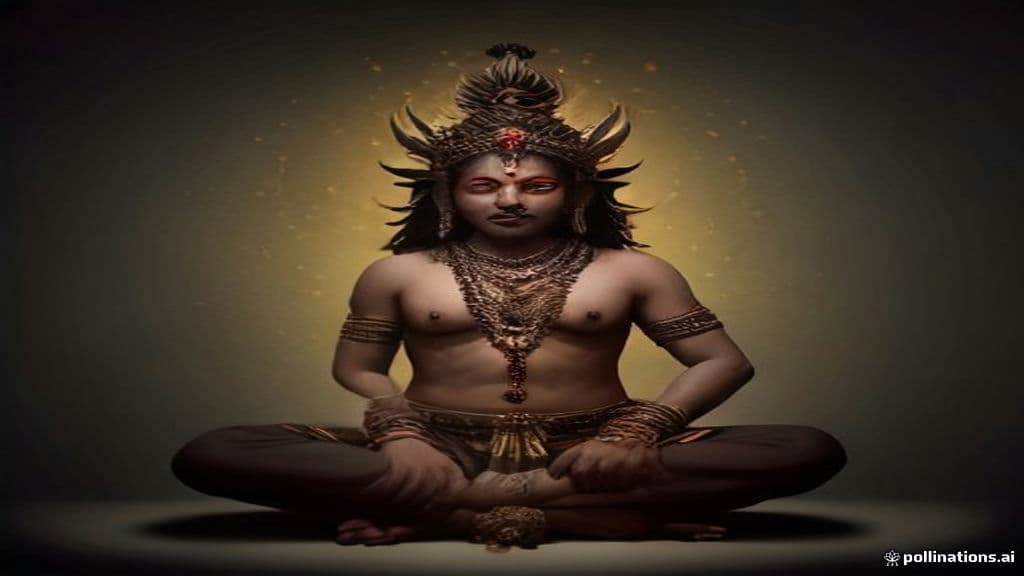
Within the tradition reflected by the sources, Rudra Abhisheka effects the liturgical consecration, propitiation, and honor of Śiva in his Rudra form through the ritual action of anointing the murti together with the canonical Rudrashtadhyayi adhyayas; the rite is presented as an act of worship and propitiation rather than as a documented therapeutic or exorcistic procedure in the provided materials.
Rudra Abhisheka is an instance of the broader category of abhisheka rites in Indian religio-ritual practice, in which a devotee pours a liquid offering on an image (murti) of a deity. The provided sources identify Rudra Abhisheka specifically with worship of Rudra/Śiva and with an eight-adhyaya corpus known as the Rudrashtadhyayi preserved in the Śukla Yajurveda recensional tradition. Ritual manuals and vidhi collections (e.g., texts titled Rudrabhisheka vidhi sangrahah or Laghu sanjnaka Rudrabhisheka Puja) are attested in archive listings, indicating that procedural prescriptions exist in manuscript and printed form. The sources available do not supply a verbatim liturgy, an exhaustive list of materials, or explicit practitioner qualifications, but they locate the ritual within Vedic/Shaiva liturgical frameworks where Vedic recitation and ritual procedure are emphasized.
- 01Prepare a murti or image of Śiva (the sources define abhisheka as pouring a liquid on a deity image; the provided materials do not supply detailed preparatory instructions or universal prerequisites).
- 02Gather the Rudrashtadhyayi texts (the eight adhyayas associated with Rudra Abhisheka as preserved in the Śukla Yajurveda); these adhyayas constitute the canonical textual core associated with the rite.
- 03Perform the central abhisheka action: pour a liquid offering on the murti (the general definition of abhisheka in the sources specifies pouring a liquid offering on a deity image as the fundamental rite).
- 04Recite or employ the Rudrashtadhyayi adhyayas in accordance with the ritual manual or vidhi being followed (the sources identify these eight adhyayas as associated with Rudra Abhisheka and indicate ritual manuals exist that provide procedures; the excerpts do not supply verbatim recitation order or formulations).
- 05Conclude the ritual according to the procedural instructions of the specific vidhi (the sources reference vidhi sangraha collections that contain detailed procedural material, which varies by manual and tradition).
Community Record
- [1]Abhisheka (Wikipedia). Wikipedia, 'Abhisheka' (definition of abhisheka as pouring a liquid offering on a murti).wiki
- [2]Rudrashtadhyayi Shukla Yajurvediya (archive listing). Archive listing: Rudrashtadhyayi Shukla Yajurvediya (notes that all eight adhyayas are known as Rudrashtadhyayee as per Śukla Yajurveda).other
- [3]Laghu sanjnaka Rudrabhisheka Puja / Rudrabhisheka vidhi sangrahah (archive listing). Archive listing referencing Rudrabhisheka vidhi sangrahah and related puja manuals (indicates existence of ritual procedure collections).other
- [4]Abhisheka Sooktagalu (archive listing). Archive collection referencing abhisheka-related material (general archival context).other