
Amabie is attested in mid-19th-century kawaraban and hand‑copied leaflets; a woodblock print dated 1846 records a sea‑dwelling creature that identified itself as an 'amabie' and delivered prophecy and a remedial instruction. Scholarly notes in the sources treat 'amabie' as a manifestation within a broader cluster of prophetic beings (amabiko / amahiko), and the name may be a variant or misspelling of those related forms rather than the origin of a discrete long tradition.
In the canonical 1846 woodblock it is depicted as a mermaid‑type being with long hair, scales from the neck down, a beak‑like mouth, and three legs (or three tail‑fins). Other amabiko/amabie corpus examples vary widely: some are three‑legged or have odd numbers of legs, some are quadruped or daruma/ape‑like, and at least one hand‑painted 1844 pamphlet shows an ape‑like, three‑legged, short‑haired bald form with human‑like eyes and ears. Iconographic elements noted across sources include luminous appearance at night in some accounts and occasional ape‑like vocal qualities.
Sources record prophetic speech (forecasting good harvests and warning of disease) and a remedial instruction: if disease spreads, people should draw a picture of the creature and show it to those who fall ill. Some variants are reported to cry with ape‑like voices at night and to glow in darkness. The beings appear in coastal or wet‑field contexts and function in the pamphlet record as portent‑bearers and distributors of an image‑based remedy.
Weaknesses
None recorded.
Wards
- symbolDrawn image of the Amabie
- ritualDistribution/circulation of the Amabie image via kawaraban, surimono, or hand‑copied pamphlets

Yuki-onna
The Snow Woman of Japanese folklore — a spirit born of blizzards who appears to travelers lost in snowstorms. Beautiful and lethal, she can show mercy or bring death depending on her mood.
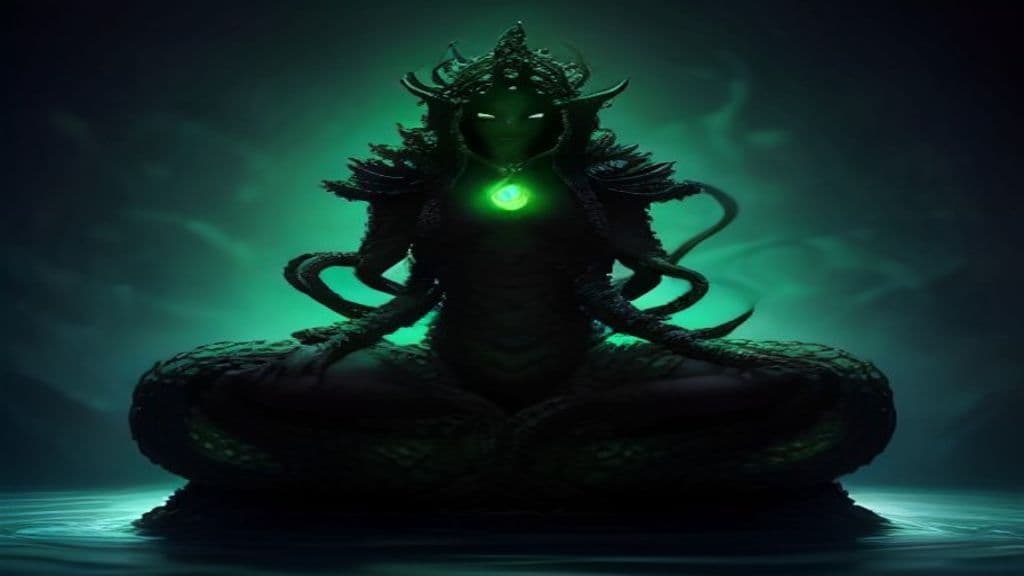
Naga
Divine serpent beings of Hindu, Buddhist, and Jain cosmology — powerful guardians of water, earth, and underground treasures. Revered as deities in South and Southeast Asia.
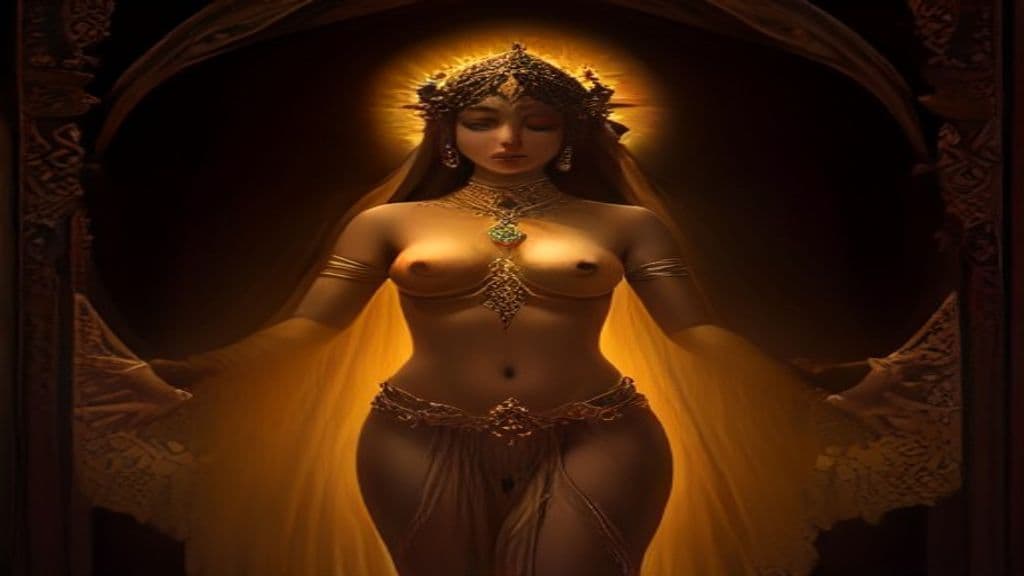
Apsara
Celestial dancers and water nymphs of Hindu cosmology — beautiful semi-divine beings who dance at the court of Indra and, by his command, descend to earth to distract sages from excessive asceticism.
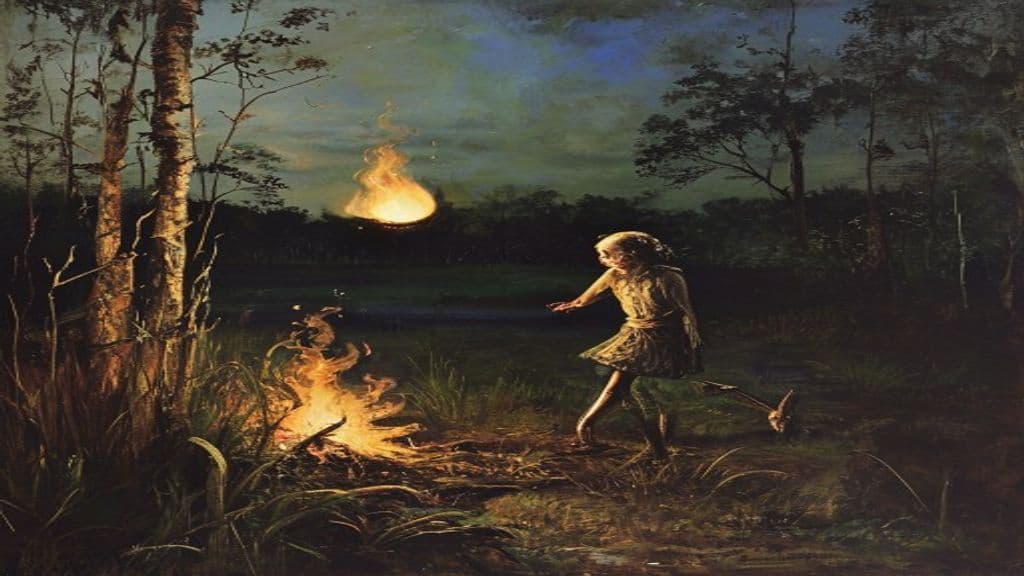
Will-o'-the-wisp
An atmospheric 'ghost light' — a small, mobile, lamp-like light seen at night over marshes, bogs, wet ground, or graveyards. In many cultures the phenomenon is interpreted as a supernatural being or manifestation (wandering nature-spirit, soul of the dead, transformed witch, or treasure-indicator); modern science offers chemiluminescent explanations for some occurrences.
5 Ronin
5 Ronin is a 2011 Marvel Comics five-issue limited series that reimagines five Marvel superhero archetypes as rōnin (masterless samurai) in a fictionalized post‑Sekigahara feudal Japan. The work places Wolverine, Hulk, Punisher, Psylocke, and Deadpool analogues into period roles to explore displacement, revenge, and identity in an era of political upheaval.
Abumi-guchi
A Japanese yōkai classed as a tsukumogami: an animated stirrup (abumi) depicted in Sekien Toriyama's Gazu Hyakki Tsurezure Bukuro. Traditional accounts say it is formed from a stirrup that belonged to a soldier who fell in battle and that it waits where the stirrup lies for its dead owner to return.
Abura-akago
An Edo-period yōkai depicted as an oil‑licking infant or a ball of flame. First recorded in illustrated compendia (notably Toriyama Sekien's Konjaku Gazu Zoku Hyakki), the Abura-akago is tied to tales of oil‑stealing fires and functions in part as an etiological warning about wasting or stealing oil.
Abura-sumashi
A yōkai spirit from the Amakusa region of Kumamoto Prefecture, Japan, said to inhabit mountain passes. Traditionally explained as the ghost of a person who stole oil, it appears to surprise travelers and is represented in modern media with a straw-coat body and a potato- or stone-like head.
Aburabō / Abura-bōzu / Aosaginohi (traditions)
Two distinct Japanese traditions appear under related flame imagery: Aosaginohi/Aosagibi is presented as a will-o'-the-wisp type luminous night phenomenon interpreted as reflections from herons; aburabōzu (abura bōzu, "oil monk") appears in a separate anecdote as a reported fire-breathing apparition in a 12th-century Yasaka Shrine tale. The sources treat them as separate portrayals rather than a single unified being.
Acala
Acala (Sanskrit: अचल, 'The Immovable') is a wrathful protective deity (dharmapala) in Vajrayāna and East Asian esoteric Buddhism, classed among the Wisdom Kings (Vidyārāja). He functions as a ritual focus for visualization and mantra practice intended to remove obstacles and bind or destroy hostile forces.
Agaru
Agaru (attested historically as Agarum) appears in the supplied sources as a Bronze Age Near Eastern toponym—often identified with Failaka Island—and as a modern personal or media name. The provided material contains no evidence that Agaru is a supernatural being in any traditional cosmology.
Ajisukitakahikone
Ajisukitakahikone is a kami in Japanese mythic literature (Kojiki/Nihon Shoki). He appears in the transfer-of-rule cycle between heaven and earth, is described as a son of Ōkuninushi, associated with the Kamo cult (called Kamo no ōmikami in some modern museum/catalog entries), and features in narratives that explain landscape formation and meteorological genealogy.
Aka Manto
Aka Manto (赤マント, "Red Cloak") is a Japanese urban legend and schoolyard ghost-story about a masked, cloaked figure who appears in public or school toilet stalls and forces occupants to choose between colored toilet paper; each choice in the tale produces a violent supernatural consequence. The legend is part of modern popular folklore recorded in school contexts from the 1930s onward rather than a formal religious myth.
Akaname
Akaname is a Japanese yōkai associated with baths, bathtubs, toilets, and other places where scum and filth accumulate. Traditionally depicted as a child-like creature that licks grime, it functions in folklore as a cautionary figure tied to cleanliness; a few narrative variants cast it as dangerously predatory.
Akashaguma
Akashaguma is presented in the available sources as a child-like house guardian spirit in the Japanese yokai tradition, closely comparable to the regional zashiki-warashi. It is associated with domestic interiors (parlors or storage rooms) and with bringing prosperity to households where it dwells.
Akashita
Akashita (赤舌, lit. “red tongue”) is an Edo-period pictorial yōkai commonly represented as a hairy, clawed face emerging from dark clouds with a wide open mouth and a conspicuous red tongue. The figure appears in yōkai emaki and Toriyama Sekien’s Gazu Hyakki Yagyō; Sekien’s plate shows it atop a sluice, but the original pictorial tradition provides no explanatory caption. Later folklorists and popular writers (Shōwa and later) have variously interpreted the image as a punitive spirit linked to irrigation/floodgate justice or as a kidnapper in evening skies, though these narrative roles are post-hoc.
Community Record
- [1]Amabie. Wikipedia: 'Amabie' article (summary of kawaraban and related pamphlet attestations, 1846 woodblock description)wiki
- [2]Amabie (Wikidata). Wikidata entry for Amabie (identifier and linked attestations)other
- [3]Drawing The Amabie (NWAC archive item). Archive item: contemporary drawing resources referencing the amabie image tradition (illustrates modern transmission of the image)other
- [4]Gegege no Kitaro (2007) Main Character Settei Sheets (archive). Archive item including modern media references to amabie imagery (contextual material in the provided corpus)other
- [5]DRAWING A THREE-LEGGED FISH!? | ZenPop! Stationery Unboxing (archive). Archive item showing contemporary popular engagement with the three‑legged fish imagery associated with amabie/amabiko corpusother