
Antimachus of Teos is presented in later ancient sources as an early or archaic epic poet associated with the Ionian city of Teos. In the reception history of Greek epic his name functions as a provenance-marker invoked by scholiasts and compilers to attribute or preserve lines and titles of otherwise fragmentary archaic poetry. Plutarch is reported in later tradition to place him at a very early date by stating he observed a solar eclipse in 753 BC, a chronological claim used by some ancient compilers to anchor poets to historical events; modern commentators treat such synchronization with caution. His recorded origin therefore is literary and testimonial rather than biographical: the extant record preserves only attributions, fragments, and later testimony rather than a secure life-narrative.
No physical description or biographical portrait survives in the cited sources. He is encountered only as a named authorial presence in quotations, scholia, and catalogues of epic fragments; the sources treat Antimachus as a poet-label rather than as a described individual with preserved appearance.
Antimachus's cultural 'abilities' are strictly literary: later authors attribute to him sententiae (moral or gnomic lines) and sometimes portions or whole titles of epic narrative. Sources indicate that the Epigoni, a sequel to the Theban legend, was at times ascribed to him; Clement of Alexandria preserves a sententia attributed to him (“From gifts, to mortals many ills arise”). Plutarch's testimony that he observed an eclipse is used in ancient chronography to place him in the early archaic period. Aside from these attributions in later testimonia and scholiastic tradition, no extraordinary or supernatural powers are ascribed.
Weaknesses
- otherNon-supernatural: fragmentary and uncertain textual survival
- otherSusceptible to conflation with later authors (notably Antimachus of Colophon)
Wards
- otherNot applicable — no apotropaic wards; figure is a historical/literary author
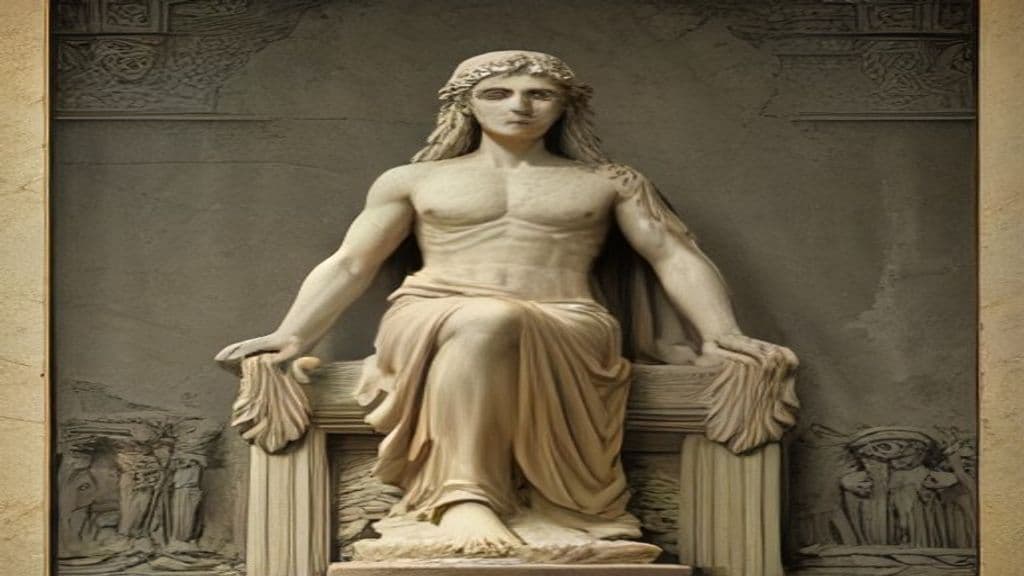
Antimachus
Antimachus is attested in the provided sources primarily as a classical Greek personal name borne by historical figures (notably Antimachus of Colophon, a poet and grammarian ca. 400 BC, and Antimachus I Theos, a Greco-Bactrian king). The name is also reused in modern contexts (a Wikidata taxon entry and small-press fictional/divinatory pages). The sources do not present Antimachus as a supernatural or folkloric entity.
*Péh₂usōn (reconstructed)
Péh₂usōn is a hypothetical Proto‑Indo‑European pastoral guardian reconstructed by comparative scholars from parallels in Greek and Vedic traditions. Proposed as a Graeco‑Aryan ancestor‑figure, the reconstruction describes a protector of flocks, roads, and travellers rather than an attested historical cultic personality.
Aba (disambiguation / name-form)
Aba is a polyvalent name-form attested across many unrelated contexts (place names, personal names, animal names, and brief mythological listings). The provided sources do not support a single, coherent supernatural entity called "Aba" and offer no descriptive or ritual material for such a being.
Abarbarea
Abarbarea is a name attested in classical Greek and Roman sources for freshwater nymphs (naiads). The name appears for at least two individual mythic figures — a naiad wife of Bucolion and a naiad counted among ancestors of the Tyrians — and Hesychius records plural forms that may indicate the name was also used as a class-name (Abarbareai / Abarbalaiai).
Abas
Abas (Ancient Greek: Ἄβας, gen.: Ἄβαντος) is not a single mythic being but a recurring personal name borne by multiple mortals and minor mythic figures in Greek epic and genealogical traditions — kings, founders, seers, warriors, attendants, a centaur, and a youth transformed by a goddess. The name is glossed in the sources as 'guileless' or 'good-hearted' and appears across Argive, Theban, Trojan, Euboean, and other local cycles.
Abderus
Abderus (Ancient Greek: Ἄβδηρος, romanized Ábdēros) is a mortal heroic figure in Greek myth closely associated with Heracles, remembered as the youth left in charge of the Mares of Diomedes who was killed by them. He functions as an eponymous local/divine-hero ancestor for the city of Abdera and received funerary commemoration and athletic agones at his tomb.
Abomination of Desolation
An apocalyptic prophetic phrase originating in the Book of Daniel designating a profaning thing or act that renders the Jerusalem Temple cult desolate; later reused in the Synoptic Gospels as an eschatological sign prompting urgent flight. The term denotes ritual/cultic impurity (Hebrew shiqquts) and is variously interpreted as pagan offerings or altar, a foreign cult statue, or (in some New Testament readings) an acting agent.
Absyrtus
Absyrtus (Ancient Greek: Ἄψυρτος) is a Colchian prince in the Greek Argonautic cycle, son of King Aeëtes and brother or half-brother of Medea. He appears in variant traditions either as a companion taken by Medea during her flight with Jason and murdered/dismembered to delay pursuit, or as a pursuer sent by Aeëtes who is overtaken and slain by Jason; his death functions as a key narrative device in the escape from Colchis.
Acacallis
Acacallis (Ancient Greek: Ἀκακαλλίς; also Acalle) is a mythological princess of Crete in Greek tradition, daughter of King Minos and Pasiphae. She functions primarily as a dynastic and etiological figure: in varying accounts she is mother, by gods such as Hermes (Mercury) or Apollo, of eponymous or founder-figures like Cydon (founder of Cydonia), Miletus, or Lydon/ Lydus.
Acacus
Acacus (Ancient Greek: Ἄκακος) is, in Arcadian Greek tradition, a mortal eponymous founder-king of Acacesium and is remembered as the foster-father who reared the infant Hermes (Mercury) in that local tradition. He is presented in genealogies as a son of Lycaon and functions as a local ancestral/onomastic figure rather than a supernatural spirit.
Academus
Academus (Greek: Akádemos / Hekádemos) is an Attic hero-eponym tied to a sacred grove (Akademeia) on the Cephissus near Athens. In myth he revealed where Helen was hidden to the Dioskouroi, an act said to have saved the city, and the place bearing his name became a long-lived sacred precinct, later the site of Plato's Academy.
Acamas
Acamas (Ancient Greek: Ἀκάμας) is a personal name recurrent in ancient Greek narrative traditions applied to multiple human characters (warriors, princes, suitors), once to a Cyclops, and once as a hound's name. Rather than a single supernatural entity, bearers of the name appear episodically across the Trojan War, Theseid, and Theban cycles as mortal actors whose deeds intersect with gods and fate.
Acantha
Acantha (Ancient Greek: Ἀκάνθα, 'thorn') is a late or secondary mythological figure known from modern retellings as a nymph transformed into the acanthus plant. The tale that she scratched Apollo and was changed into a spiny-leaved plant is not attested in surviving classical corpora and appears to be a modern compilation or invention rather than a firmly documented ancient myth.
Community Record
- [1]Antimachus of Teos — Wikipedia. Wikipedia entry 'Antimachus of Teos'.wiki
- [2]Antimachus (general) — Wikipedia. Wikipedia entry 'Antimachus' (notes on multiple poets of the name).wiki
- [3]Wikidata: Antimachus of Teos (Q577773). Wikidata entry for Antimachus of Teos.other
- [4]Clement of Alexandria, Stromata VI.2 (Logos Virtual Library). Clement of Alexandria, Stromata VI.2 — quotation attributing a sententia to Antimachus of Teos: 'From gifts, to mortals many ills arise.'literary
- [5]Ante-Nicene Fathers, Vol. II (online edition). English collection including Clement and related patristic testimonia.literary
- [6]The Lost Epic Stories of the Theban Cycle That Inspired Greek Tragedy — TheCollector. Modern summary discussing ascriptions within the Theban cycle, including occasional assignment of the Epigoni to Antimachus of Teos.other
- [7]Antimachus Colophonius – Bryn Mawr Classical Review (notes on confusion). Discussion of Antimachus of Colophon and issues of conflation with earlier figures of the same name.academic