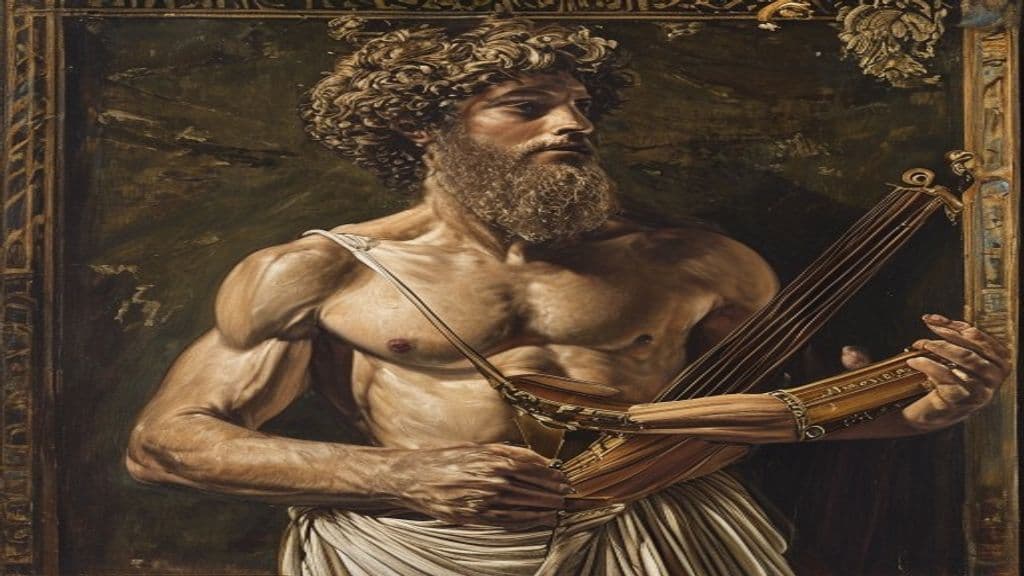
Apollo is presented in Greek myth as the son of Zeus and Leto and the twin brother of Artemis; within Greek religion he occupies an institutionalized role among the Olympian gods. He is the principal deity of Delphi (Apollo Pythios), where he functions as the oracular and purificatory god whose sanctuary and oracle are consulted for civic decisions. Apollo appears across civic, pastoral, and initiatory contexts—patron of town founding, lawgiving, and assemblies (connections attested in festivals and the Doric month Apellaios and apellaia offerings tied to youth initiation), protector of herds and streets (e.g., Apollo Agyieus), and a mediator of health both directly and through his son Asclepius. Comparative attestations (Hittite Apaliunas, Etruscan Apulu) and later identification with Helios/Sol show a long trajectory of adaptation and syncretism; the etymology of his name is uncertain and variously connected in scholarship and ancient glosses to pre-Greek forms and folk etymologies.
Apollo is iconographically represented as the ideal kouros: a beardless, athletic youth (ephebe) often shown as the most beautiful of the gods with long, uncut hair suggesting eternal youth. Common attributes in the sources include a lyre (signifying his role as god of mousikē and patron of music, poetry, and dance) and a bow and quiver of arrows (silver or golden), marking his association with archery and with sending or averting plague. In artistic and cult contexts these elements—youthful form, lyre, and bow—regularly identify him and evoke his combined cultural roles.
Apollo functions across multiple interlocking capacities in the supplied material: as an oracular and prophetic deity (patron of Delphi and the Delphic Oracle), as a deity of ritual purification, and as a god of medicine and healing (both directly and via his son Asclepius). He presides over music, song, dance, and poetry and is closely associated with the Muses, acting as their frequent companion and chorus leader in tradition. Apollo also plays protective civic and domestic roles (e.g., Alexicacus the 'averter of evil', and Agyieus protector of streets and house entrances), patronage of herdsmen and shepherds, and functions in town founding and lawgiving where oracular consultation secures civic decisions. The sources emphasize his ambivalence: he can deliver people from epidemics yet also inflict ill health and deadly plague with his arrows. From the fifth century BCE onward he is increasingly identified with solar figures (Helios/Sol) in later reception.
Weaknesses
None recorded.
Wards
- ritualinstallation of Apollo Agyieus at thresholds
- ritualinitiation offerings in apellai / apellaia (Apellaios month)
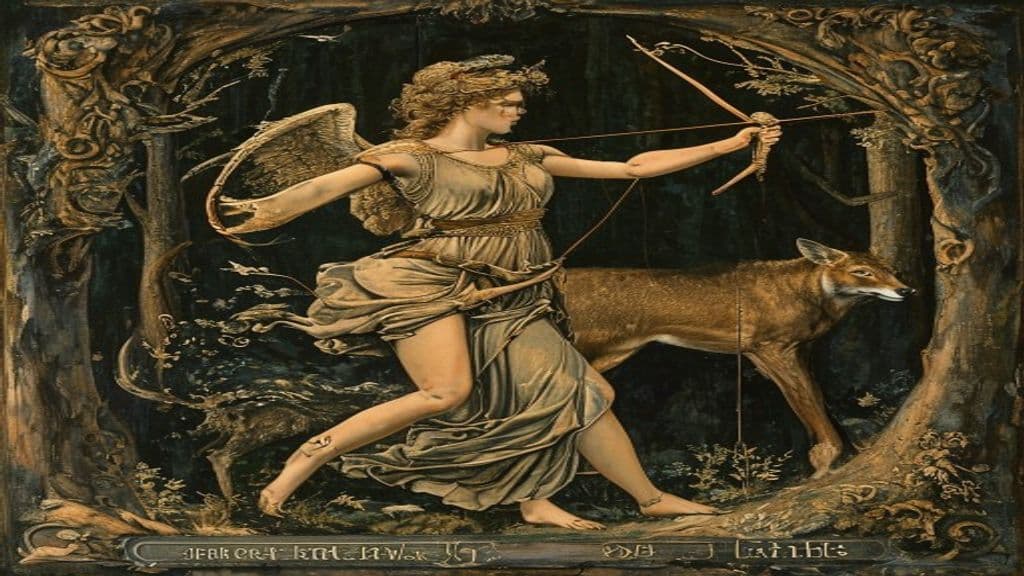
Artemis
Artemis is an ancient Greek goddess of hunting, the wilderness and wild animals, transitions (especially childbirth and puberty), vegetation, and chastity. Twin sister of Apollo and daughter of Zeus and Leto, she functions as a protector of young children and maidens while also capable of inflicting disease or punishment for transgressions against her sacred laws.
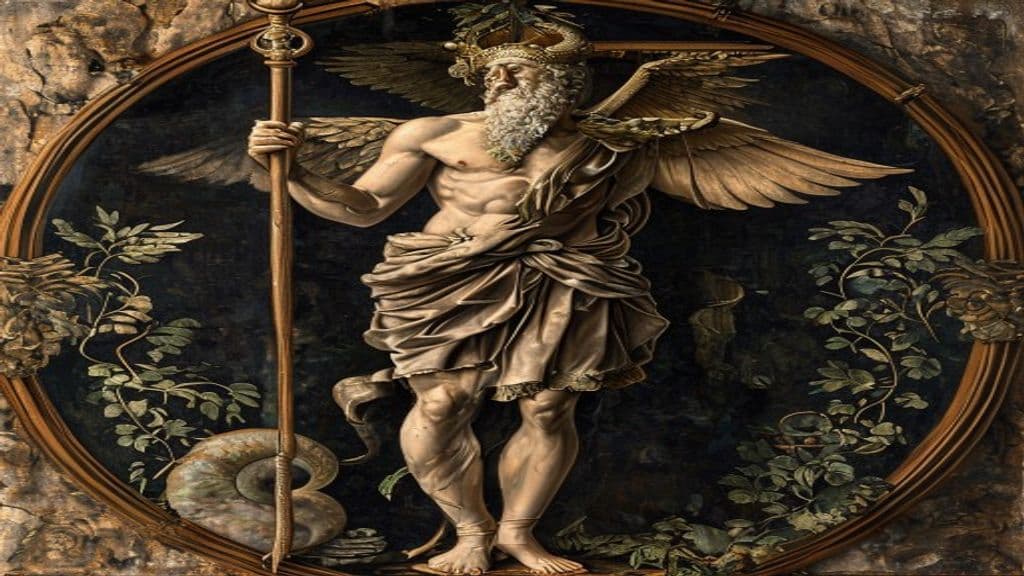
Asclepius
Asclepius is the ancient Greek divine figure and hero of medicine who personifies curing, medical expertise, and sanctuary-based therapeutic practice. Worshipped at major healing centers (notably Epidaurus), he functions as both mythic miracle-worker (including traditions of restoring life) and the patron-model for professional physicians and ritual healing procedures.
*Perkʷūnos
*Perkʷūnos is the reconstructed Proto-Indo-European thunder‑god hypothesized by comparative linguistics and mythology. Scholarly reconstructions portray him as a storm or thunder figure associated with fructifying rain and as the combatant who fights a multi‑headed water‑serpent to release life‑giving waters; no direct attestations from the Proto‑Indo‑European period survive and the figure is inferred from later Indo‑European traditions.
*Péh₂usōn (reconstructed)
Péh₂usōn is a hypothetical Proto‑Indo‑European pastoral guardian reconstructed by comparative scholars from parallels in Greek and Vedic traditions. Proposed as a Graeco‑Aryan ancestor‑figure, the reconstruction describes a protector of flocks, roads, and travellers rather than an attested historical cultic personality.
57 Mnemosyne
57 Mnemosyne is a large main-belt asteroid (S-type) discovered in 1859 and named after the Greek Titaness Mnemosyne. It is a non-sentient astronomical body studied for its orbital and rotational properties and has been used in dynamical measurements related to Jupiter.
Aba (disambiguation / name-form)
Aba is a polyvalent name-form attested across many unrelated contexts (place names, personal names, animal names, and brief mythological listings). The provided sources do not support a single, coherent supernatural entity called "Aba" and offer no descriptive or ritual material for such a being.
Abaddon
In Hebrew scripture Abaddon is primarily a noun meaning 'destruction' or a section/condition of the underworld paired with Sheol; in the New Testament Book of Revelation Abaddon is personified as an angelic figure (Greek Apollyon) described as the king of an army of locusts released from the abyss during the apocalypse.
Aban Yasht
The Aban Yasht is a hymn from the Persian tradition that praises Anahita, a goddess associated with water, fertility, and wisdom. It consists of 132 stanzas and is part of the 21 Yashts collection. (Note: - Power tier should be "Primordial" or possibly "Cosmic", given that it's a hymn of great spiritual significance and associated with a goddess. - The article incorrectly states that Anahita is associa)
Abarbarea
Abarbarea is a name attested in classical Greek and Roman sources for freshwater nymphs (naiads). The name appears for at least two individual mythic figures — a naiad wife of Bucolion and a naiad counted among ancestors of the Tyrians — and Hesychius records plural forms that may indicate the name was also used as a class-name (Abarbareai / Abarbalaiai).
Abas
Abas (Ancient Greek: Ἄβας, gen.: Ἄβαντος) is not a single mythic being but a recurring personal name borne by multiple mortals and minor mythic figures in Greek epic and genealogical traditions — kings, founders, seers, warriors, attendants, a centaur, and a youth transformed by a goddess. The name is glossed in the sources as 'guileless' or 'good-hearted' and appears across Argive, Theban, Trojan, Euboean, and other local cycles.
Abath
No corroborated folkloric entity named "Abath" is documented in the provided sources. The string appears in the supplied material only as a surname/personal name in Aruban/Dutch-Caribbean archival records and as an unrelated taxonomic or encyclopedic hit; no mythic attributes, origin stories, rituals, or apotropaic practices for an entity called Abath are present in the documents reviewed.
Abatur
Abatur is an uthra (celestial emanation) in Mandaeism described as the 'father of the Uthras' and called the Ancient (ʿattīqā). He resides on the boundary between the World of Light and lower regions, functions as a judge who weighs souls (Abatur Muzania), and supplies instructions and materials to the demiurgic uthra Ptahil in accounts from the Diwan (Scroll) of Abatur.
Abatwa (Twa / Batwa)
Abatwa (also recorded as Twa, Batwa, Mutwa; singular forms Barhwa or Murhwa in some transcriptions) are indigenous hunter‑gatherer peoples of the Great Lakes region of Central Africa, historically identified as some of the earliest inhabitants of the area. The available sources treat them as human ethnic groups whose livelihoods, lands, and populations have been severely affected by conservation policies and modern violence.
Abderus
Abderus (Ancient Greek: Ἄβδηρος, romanized Ábdēros) is a mortal heroic figure in Greek myth closely associated with Heracles, remembered as the youth left in charge of the Mares of Diomedes who was killed by them. He functions as an eponymous local/divine-hero ancestor for the city of Abdera and received funerary commemoration and athletic agones at his tomb.
Community Record
- [1]Apollo (Wikipedia). Wikipedia contributors, 'Apollo', Wikipedia, The Free Encyclopediawiki
- [2]Apollo (Wikidata). Wikidata entry Q665812wiki
- [3]Secret Invasion (archive references). Archive item referencing modern uses of the name 'Apollo'other
- [4]951 - Safe Place for Grogu | Mandaborian on Mandalorian Chapter 16 (archive). Archive item referencing modern uses of the name 'Apollo'other
- [5]Live with CHRIS SKY (archive). Archive item referencing modern uses of the name 'Apollo'other