
Sources summarize that in earlier strata of Armenian tradition Astłik is sometimes represented in a cosmological role — including traditions that describe her as involved in creation — but later theological restructuring places Aramazd as chief creator and narrows Astłik's functions to love, fertility and water. A single tradition mentioned in the surveyed material states she was Noah's daughter after the flood; this attestation is isolated in the provided corpus and is noted as an uncertain, singular tradition rather than a broadly corroborated origin motif.
The provided material emphasizes Astłik's exceptional, 'celestial' beauty and records a mythic anecdote in which she bathed in a stream (described in the source as often nude), attracting onlookers. Specific standardized iconographic attributes, costume details, or consistent visual markers are not documented in the supplied sources; her name's etymology links her to 'star' and later identification to the planet Venus, but that connection is linguistic/cosmological rather than a detailed appearance description in the available material.
Astłik is associated with love, beauty, fertility and water. Some summaries indicate an earlier role in creation which was later reinterpreted as the pantheon changed. A conserved mythic episode attributes to her the power to create a thick fog to preserve her privacy when villagers spied on her bathing; that fog became a named landscape feature (Msho Dasht) in the account provided. She is also described as the bride of the warrior god Vahagn, situating her in relational mythic roles within the Armenian pantheon.
Anushawan
In Armenian legendary history, Anushawan is a semi-mythological figure and grandson of the legendary king Ara the Handsome. (Note: 1. Power tier should be Lesser (local spirit) since there's no indication that Anushawan is a cosmic being or deity-level. 2. Add specific information about sensory cues, wards, and weaknesses from so)
Aralez (Aralezner)
Aralez (Aralezner in plural) are ancient Armenian dog-like spirit-beings traditionally credited with resurrecting fallen warriors by licking their wounds. Described in source material as part of the older strata of Armenian sacred imagination, they occupy a liminal role between animals, spirits, and ancient gods.
Astghik
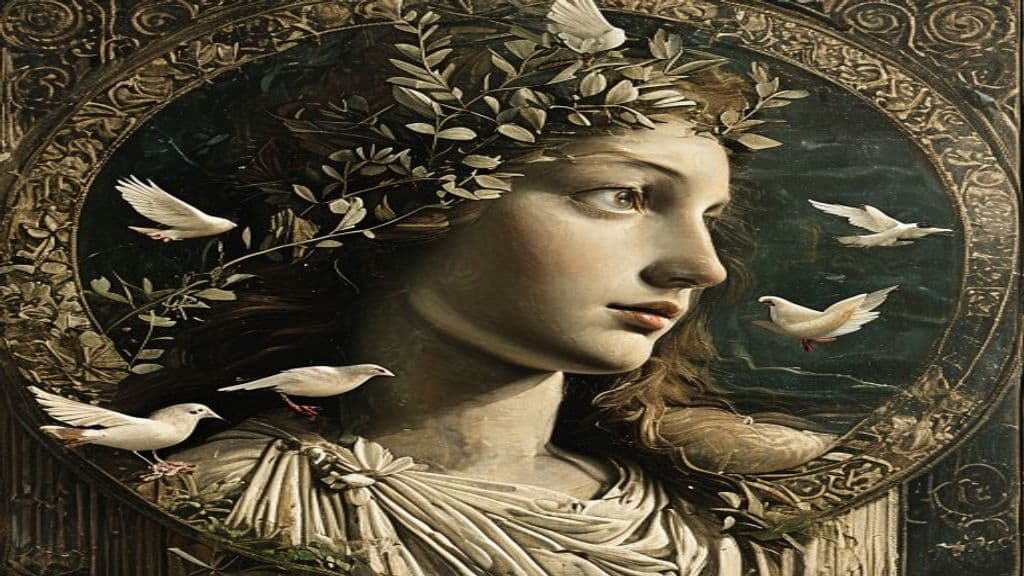
Astghik (older orthography Astłik) is a prominent goddess of pre-Christian Armenian religion, personifying beauty, love, fertility, and water. She is etymologically linked to the Old Armenian word for "star" and is described in sources as the bride of the warrior god Vahagn; later identifications connect her with Aphrodite and the planet Venus.
Azhdahak
Azhdahak (Old Armenian Աժդահակ, also spelled Ashdahak) is the Armenian form of the Avestan figure Azhi Dahaka. In Armenian reception the name refers to the same mythic adversary of Iranian tradition — an imprisoned serpent/dragon-type antagonist who, in Iranian accounts cited by Armenian sources, is bound (on Mount Damavand) and destined to break out at the end of time before being finally defeated.
Bartholomew the Apostle
Bartholomew is presented in the supplied sources as one of the Twelve Apostles of Jesus, an early Christian missionary and martyr whose life functions in Christian liturgical memory, regional founding traditions (notably Armenian), and in later apocryphal and visionary narratives that expand his missionary itinerary and miraculous acts.
Chuma (Chuma-kik)
No reliable evidence in the provided sources identifies a supernatural entity called 'Chuma' or 'Chuma-kik' in Armenian tradition. The available materials mention the string 'Chuma' in unrelated contexts (personal names, place names, a Slavic word for plague) but supply no folkloric data linking it to Armenian spirits or monsters.
Eleazar
Eleazar (Hebrew: אֶלְעָזָר, Eleazar/Elʿazar) is a biblical and historical personal name borne by several individuals in Hebrew tradition; chief among them is Eleazar son of Aaron, who succeeds his father as Israel's high priest and performs custodial and ritual functions in the Exodus, wilderness, and settlement narratives. He is treated as a human priestly office‑holder and is commemorated in some Christian liturgical calendars.
Hayk
Legendary patriarch and founder of the Armenian nation, considered an ancestral figure without supernatural powers. (Note: 1. Power tier should be set to "Primordial" since Hayk is considered an ancestral figure and a central part of Armenian mythology, implying a cosmic or foundational significance. 2. Sensory cues and w)
Khachkar Spirit (cross-stone guardian)
No primary or folkloric sources in the provided research identify a named supernatural 'Khachkar Spirit' or consistent guardian spirit associated with khachkars. What is documented in the supplied materials is the khachkar as a carved Armenian cross-stone monument (a material cultural object), including an archaeological example dated to 982 found in Wadi al-Natrun, Egypt, demonstrating Armenian presence outside Armenia.
Lake Van Monster
A purported large aquatic creature reported in and around Lake Van (eastern Turkey). The figure exists in modern popular reports (late 19th century accounts, a contested 1997 video, and local publicity such as a statue) and is linked in scholarship to older Armenian vishap (water-dragon) imagery that personifies sudden storms on the lake.
Nhang (Water Dragon)
Nhang, glossed in English as the "Water Dragon," is cited in English-language overviews as a water-associated monstrous figure within Armenian mythic tradition. The available sources note its classification only as a water-dragon label; no detailed native accounts, descriptions, or ritual material are provided in the supplied material.
Shirag
No reliable folkloric evidence in the provided sources supports the existence of a vampiric spirit or shahapet named Shirag. The lexical form appears in unrelated modern sources: as an Iranian village name, as part of a scientific genus name, and as an item in an Armenian music archive.
Community Record
- [1]Astłik (Astghik) — Wikipedia article. Wikipedia contributors. "Astłik." Wikipedia, The Free Encyclopedia.wiki
- [2]Armenian mythology — Wikipedia article. Wikipedia contributors. "Armenian mythology." Wikipedia, The Free Encyclopedia.wiki
- [3]Astghig Name Meaning & Origin — Name Doctor. Name-Doctor. "Astghig Name Meaning & Origin."other