
In the Atra-Hasis epic (an Akkadian composition with Sumerian antecedents, conventionally dated to the 18th century BCE) the gods, burdened with labor, create humans to bear work on their behalf. Allied upper and lower gods organise the world agriculturally; political tension among deities is resolved by manufacturing a first human couple to serve as a labor force. Humans then reproduce rapidly, provoking successive divine corrective measures—first plague, then famine—and finally a catastrophic deluge intended by the upper gods to destroy the imperfect artificial creatures. Atrahasis is the human priestly protagonist embedded in this narrative tradition and serves as the representative survivor/agent through which the story explains human origins and the reason for divine punishment.
The sources provided focus on Atrahasis's literary and social role rather than on any physical description. He is described as a priest and the human protagonist of the epic; no detailed bodily or iconographic attributes are recorded in the supplied summaries and fragments. Thus extant excerpts characterise him by vocation and narrative function rather than by visual traits.
The supplied materials attribute no supernatural powers to Atrahasis. His agency is human and priestly within the epic: he participates in the social-religious world—consulting or being consulted by gods, surviving the flood episode, and exemplifying the consequences of divine decisions. The narrative depicts human strategies (petitioning, offering, and—in summary—Enki's advice to bribe gods during outbreaks of plague or famine) rather than supernatural capacities exercised by Atrahasis himself.
Weaknesses
- otherNo supernatural vulnerabilities attested in the cited sources; Atra-Hasis is presented as a human figure rather than a spirit or deity.
Wards
- otherNo warding procedures, protective rituals, or countermeasures against Atra-Hasis are documented in the provided sources; the epic is literary rather than a manual for wards.

Anansi
The spider trickster god of Akan folklore — cunning, mischievous, and wise. Keeper of stories and teacher of human beings, brought through the slave trade into Caribbean and African-American tradition.

Enlil
Enlil is a principal deity of ancient Mesopotamia, originally preeminent in the Sumerian pantheon as a supreme lord who orders the world by separating heaven (An) from earth (Ki). His principal cult center was the E-kur temple at Nippur, and his cult practices focused on daily offerings and priestly care of his cult statue; mythic traditions portray him as both benefactor and punisher in the administration of cosmic and social order.
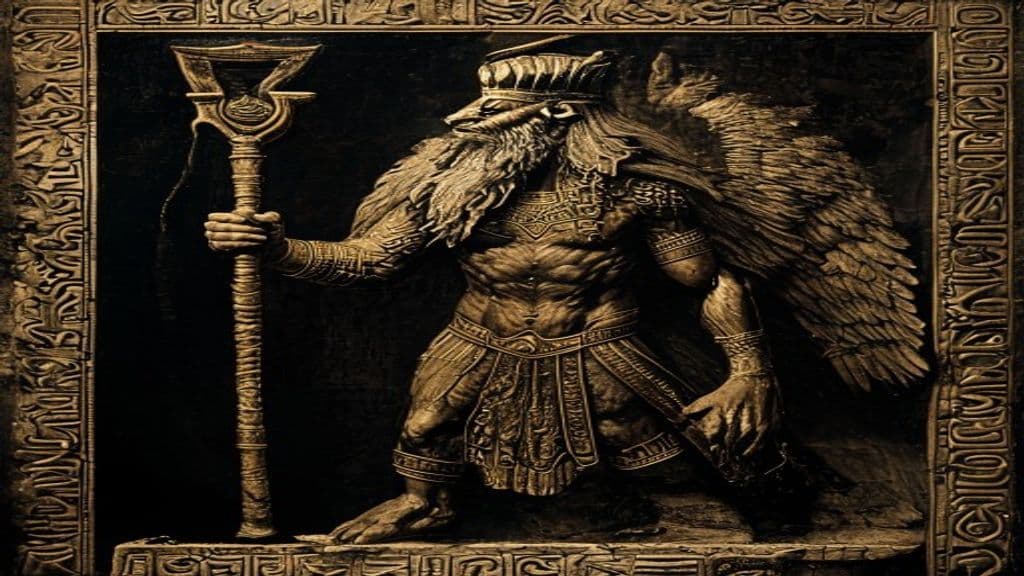
Enki (Ea)
Enki, also known by the Akkadian form Ea, is a major Mesopotamian deity associated with wisdom, crafts, magic and incantations, and the freshwater deep called the Abzû. Centered at the cult-city Eridu (temple E‑Abzû), he functions in myths as a crafty counsellor, culture‑hero and creator figure who aids humans and orders aspects of the world.
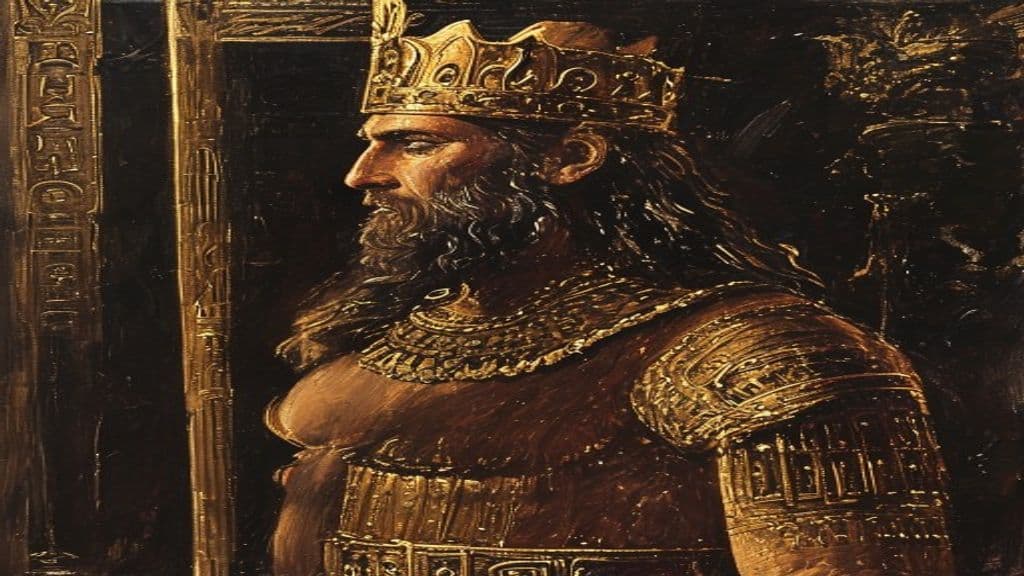
Gilgamesh
Gilgamesh is a semi-divine legendary king of the Sumerian city of Uruk who features as the protagonist of a pan‑Mesopotamian epic tradition. Portrayed in literary sources as a demigod of superhuman strength, he is both a historical monarch recorded in king lists and a later object of cultic veneration.
'Ain Samiya Goblet
Silver cup from the Middle Bronze Age I, discovered in a tomb at Ain Samiya. (Note: 1. Power tier should be "None", but add a note explaining that historical artifacts don't fit into the typical power tier classification. 2. Add a description of its appearance based on it being a sil)
A'annepada
A'annepada (Sumerian cuneiform 𒀀𒀭𒉌𒅆𒊒𒁕; also romanized Aanépàdda) is attested as a historical ruler of the First Dynasty of Ur, flourishing c. 2350 BC. He is recorded in dedicatory and foundation inscriptions as king of Ur and as son of Mesannepada, credited with temple-building and dedication to deities such as Ninhursag and Inanna.
Abu
Abu is a poorly understood Mesopotamian god attested in modern reference summaries. Secondary literature tentatively links him with vegetation and snakes and records that he was often paired with a deity written gu2-la2, but primary details about his cult, iconography, and myths are lacking in the cited sources.
Abzû
Abzû (Sumerian abzû; Akkadian Apsû) is the primordial freshwater abyss in Sumerian–Akkadian cosmology: the deep fresh waters that underlie and surround the earth, source of springs, rivers and ritual holy waters, and a creative principle whose mingling with the salt sea (Tiamat) figures in Mesopotamian cosmogony.
Abī-simtī
Abī-simtī (also rendered Abi-simti, Abisimti) is a named woman attested in third-millennium BCE Mesopotamian documentary and literary texts. She appears in administrative account records as a provider of animals and donor to temple cults and in Sumerian love-song literature as the named beloved/consort addressed by a royal speaker.
Adad
Adad (also Hadad, Haddad; Sumerian Iškur) is the storm- and rain-deity attested in ancient Mesopotamian and Canaanite religious contexts. Sources identify him as a principal weather god whose domain is storms and rainfall and whose name appears across multiple Near Eastern languages and sites, including Ebla (as Hadda, c. 2500 BCE).
Adapa
Adapa is a mythic figure from ancient Mesopotamian (Sumerian and Akkadian) literature: a mortal fisherman and temple sage of Ea at Eridu endowed with exceptional wisdom. He appears in a fragmentary tale in which he breaks the wings of the south wind and is summoned to the divine court; his name was later invoked in exorcistic and ritual contexts as an authoritative identity.
Adonis
Adonis is a mythic mortal youth in ancient Greek tradition, beloved by goddesses (notably Aphrodite and Persephone) whose death and seasonal return are the focus of the women’s midsummer festival Adonia. The cultic practices—planting short-lived 'gardens of Adonis' on rooftops, ritual lamentation, and casting an effigy and withered plants into the sea—symbolically link him to vegetation cycles and Near Eastern dying-and-regenerating god traditions.
Adrammelech
Adrammelech is attested in ancient Semitic textual tradition as a local god of 'Sepharvaim.' The name is commonly glossed as "Magnificent king." In modern times the name has been reused in diverse fictional, musical, and online contexts, but those are creative reworkings rather than continuations of the brief ancient attestation.
Aga of Kish
Aga of Kish (Aga, Agga, Akka) is an Early Dynastic Mesopotamian king recorded in the Sumerian King List, the Tummal Inscription, epigraphic objects, and the Sumerian poem "Gilgamesh and Aga." He functions in texts as a historical/legendary political actor who attempted hegemonic demands on Uruk and was ultimately captured and released by Gilgamesh.
Agasaya
Agasaya is presented in modern secondary sources as a little-attested Semitic war goddess who, according to some summaries, was later absorbed as the warrior aspect of the major Mesopotamian goddess Ishtar. The attestation in available materials is sparse and much inferences about her name, attributes, and later influence are explicitly marked speculative in those sources.
Agum II (Agum‑Kakrime)
Agum II (called Agum‑Kakrime in the inscriptionary tradition) is a Kassite-era Babylonian king known from the Agum‑Kakrime Inscription and later copies. He appears in Akkadian inscriptional and king-list traditions as a royal restorer who recovered and reinstalled the cult statue of Marduk and refurbished the É-sagila, presenting himself as a legitimate shepherd‑king and temple benefactor.
Community Record
- [1]Atra-Hasis - Wikipedia. Wikipedia, entry 'Atra-Hasis' (summary of the Akkadian epic, name gloss, dating, and relation to gods and Sumerian King List).wiki
- [2]Atrahasis Epic (online reproduction). Reproduction/synopsis of key lines describing the labour of the gods and the creation motif (excerpted lines such as 'When the gods instead of man Did the work...').other
- [3]Atrahasis Tablet I - Jewish and Christian Literature. Online presentation of Atrahasis Tablet I material used in comparative discussions of the flood narrative.literary
- [4]Discussion: Why hasn't this revised translation of Atra-Hasis gained traction?. Community discussion referencing modern translation history and reception of Atra-Hasis texts (used here only for transmission/contextual notes in the provided materials).other
- [5]IndependentObserver: Gilgamesh, Atrahasis and the Flood. Comparative discussion noting parallels between Atrahasis, Gilgamesh, and later flood traditions (included among provided sources).other
- [6]Flood Folklore: Babylonian — summary. Summary noting the pattern of three afflictions and Enki's advice to bribe the god causing the problem.other
- [7]Gilgamesh flood myth (contextual comparison). Comparative material situating the Atra-Hasis flood alongside Gilgamesh and Eridu Genesis traditions.wiki
- [8]Old Testament Parallels: laws and stories from the ancient Near East (collection). Comparative bibliography and essays referencing Mesopotamian flood traditions including Atra-Hasis.academic