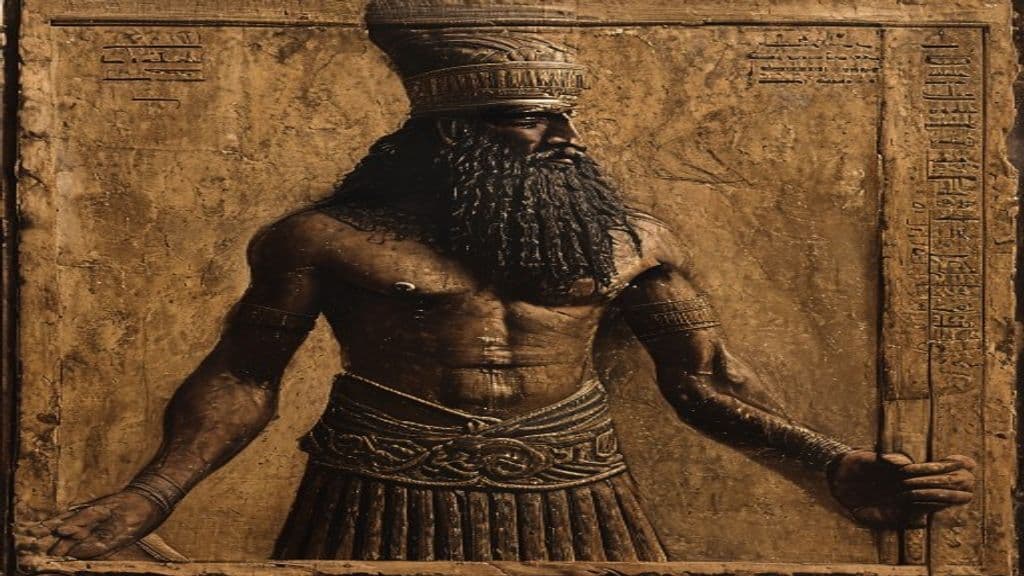
Surviving fragmentary tablets (Sumerian Me-Turan/Tell Haddad material, an Amarna copy, and Neo-Assyrian library copies) present Adapa as a post-diluvian mortal associated with the temple of Ea at Eridu. In the principal tale he is a fisherman whose boat is capsized by rough water; after an episode in which he 'broke the wings of the south wind' and prevented it from blowing for seven days, he is summoned to heaven and brought before Anu, passing gates guarded by Dumuzid and Gishzida. Some Sumerian compositions and king lists link Adapa to postdiluvian rulership and to legendary figures such as Alulim and Enmerkar. The tradition is fragmentary, with variant versions and later copies attesting long transmission but no single complete original text preserved in the supplied materials.
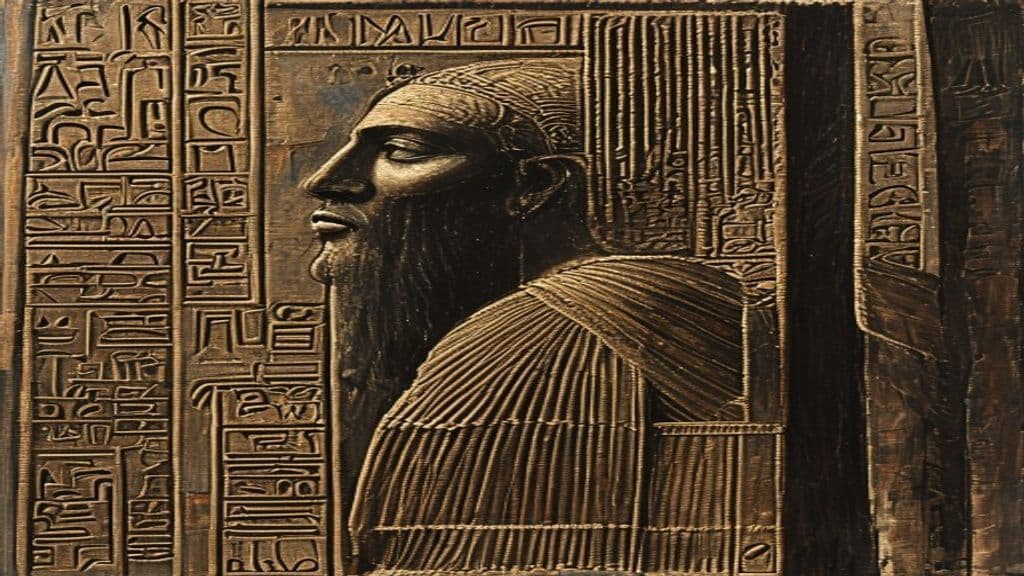
The surviving accounts depict Adapa as a human male—specifically a fisherman and a priestly sage serving in the temple of Ea at Eridu. Textual summaries emphasize his human, mortal status rather than non-human or monstrous form. Comparative wisdom traditions in Mesopotamia also include the Apkallu figure Uanna/Oannes, often represented as half-fish; some texts and scholars sometimes conflate or overlap the two traditions, but the sources at hand distinguish Adapa as a mortal fisherman-priest while noting debated conflation with the semi-divine Apkallu.
Primary attributes are exceptional wisdom and priestly skill, described as a gift from the god Ea (Enki). In mythic narrative Adapa performs a notable act—he 'broke the wings of the south wind,' stopping that wind for seven days—an episode presented as a one-time, narrated control of a natural force rather than an ongoing dominion. In ritual practice Adapa's authority functions performatively: exorcists and ritual specialists invoked the identity formula 'I am Adapa!' to claim his wisdom and legitimacy during incantations and rites. The texts do not attribute immortality to him; rather, he is portrayed as mortal who unknowingly refused offered food of life in the heavenly episode.
Weaknesses
- conditionmortality (no eternal life)
- othervulnerability to divine prohibition (in the tale Ea warns him not to eat or drink in heaven)
Wards
- mantraInvocation 'I am Adapa!' used by exorcists and ritual specialists to assume his authoritative identity
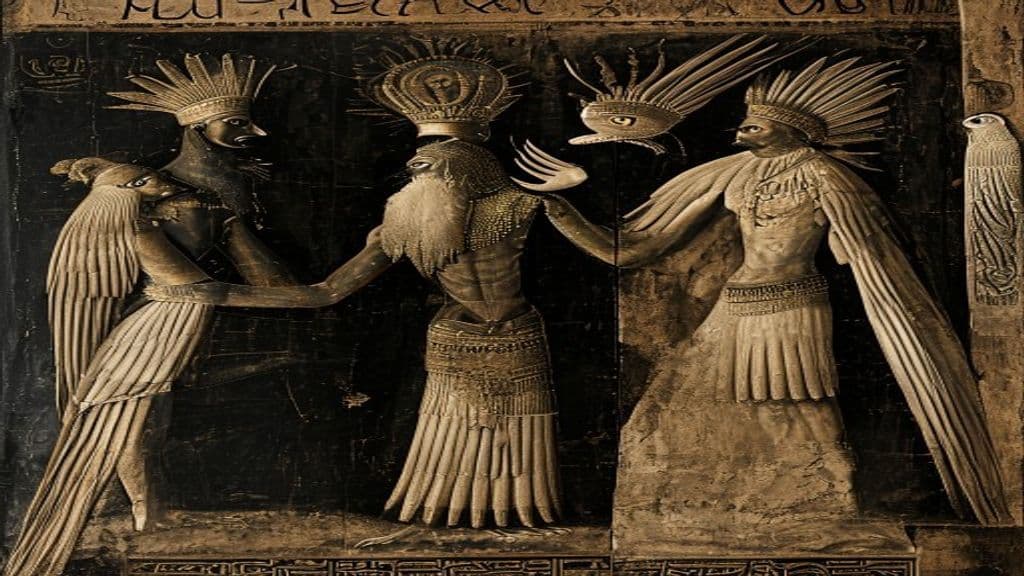
Apkallu (Abgal)
Apkallu (Akkadian; Sumerian: Abgal) are polyvalent Mesopotamian wisdom figures attested as mythic/semi-divine sages (notably a group of seven), as professional human experts (ummânu), and as apotropaic images used in household and cultic ritual. They are closely associated with the god Ea (Nudimmud) as transmitters of secret knowledge and are represented in diverse iconography including fish-man and bird-headed types.
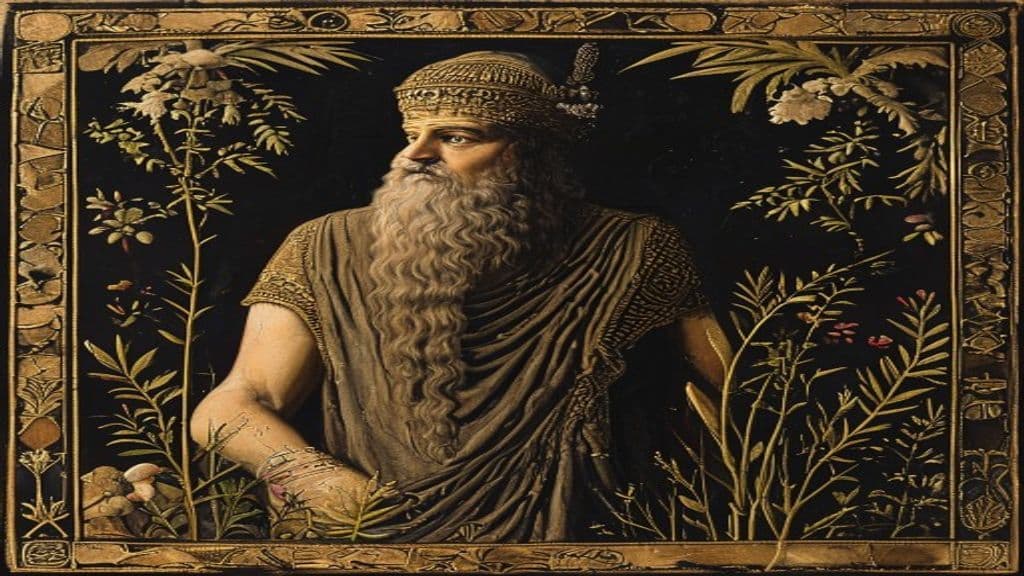
Dumuzid (Tammuz)
Dumuzid (Sumerian Dumuzi; Akkadian Duʾūzu/Dûzu; later Tammuz) is an ancient Mesopotamian deity associated with shepherding, plant fertility, and seasonal renewal. He functions as the primary consort of the goddess Inanna/Ishtar, an etiological figure for summer barrenness and autumnal return, and appears in king lists as an antediluvian/early ruler.
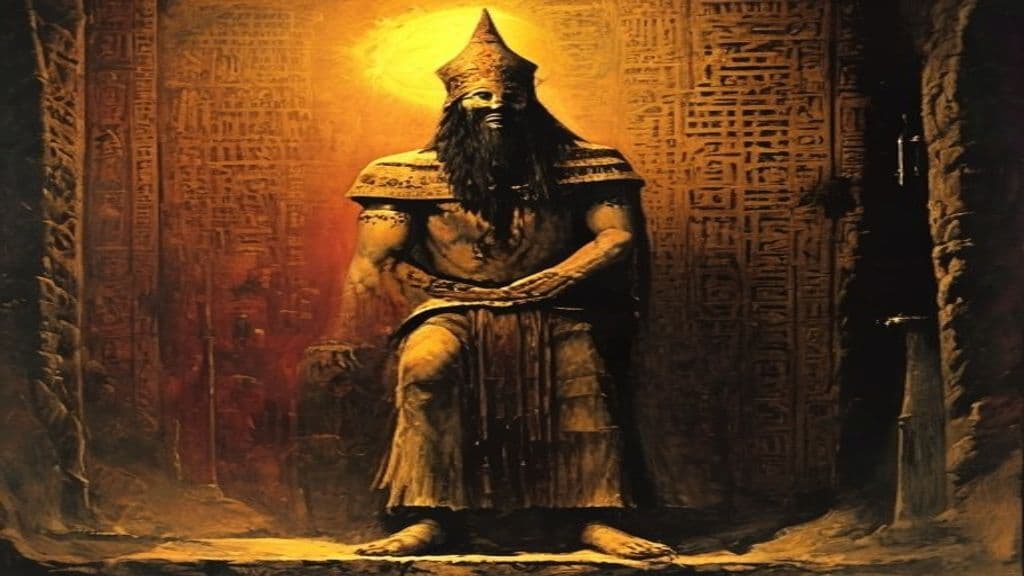
Enmerkar
Enmerkar is a Sumerian legendary king and culture-hero of Uruk (Unug), presented in the king-lists and in the Matter of Aratta poems as a ritual-priest king (en) and founder-figure who secures Inanna's favor, contests the distant city of Aratta, and is credited in narrative with instituting writing on clay tablets.
Alulim
Alulim is the legendary antediluvian 'first king' of Eridu in Mesopotamian tradition, presented in king lists and mythic compositions as the initial ruler appointed by the gods. He functions etiologically to explain the origin of kingship and, in late ritual texts, is invoked in agricultural incantations associated with driving off field pests.
'Ain Samiya Goblet
Silver cup from the Middle Bronze Age I, discovered in a tomb at Ain Samiya. (Note: 1. Power tier should be "None", but add a note explaining that historical artifacts don't fit into the typical power tier classification. 2. Add a description of its appearance based on it being a sil)
A'annepada
A'annepada (Sumerian cuneiform 𒀀𒀭𒉌𒅆𒊒𒁕; also romanized Aanépàdda) is attested as a historical ruler of the First Dynasty of Ur, flourishing c. 2350 BC. He is recorded in dedicatory and foundation inscriptions as king of Ur and as son of Mesannepada, credited with temple-building and dedication to deities such as Ninhursag and Inanna.
Abu
Abu is a poorly understood Mesopotamian god attested in modern reference summaries. Secondary literature tentatively links him with vegetation and snakes and records that he was often paired with a deity written gu2-la2, but primary details about his cult, iconography, and myths are lacking in the cited sources.
Abzû
Abzû (Sumerian abzû; Akkadian Apsû) is the primordial freshwater abyss in Sumerian–Akkadian cosmology: the deep fresh waters that underlie and surround the earth, source of springs, rivers and ritual holy waters, and a creative principle whose mingling with the salt sea (Tiamat) figures in Mesopotamian cosmogony.
Abī-simtī
Abī-simtī (also rendered Abi-simti, Abisimti) is a named woman attested in third-millennium BCE Mesopotamian documentary and literary texts. She appears in administrative account records as a provider of animals and donor to temple cults and in Sumerian love-song literature as the named beloved/consort addressed by a royal speaker.
Adad
Adad (also Hadad, Haddad; Sumerian Iškur) is the storm- and rain-deity attested in ancient Mesopotamian and Canaanite religious contexts. Sources identify him as a principal weather god whose domain is storms and rainfall and whose name appears across multiple Near Eastern languages and sites, including Ebla (as Hadda, c. 2500 BCE).
Adonis
Adonis is a mythic mortal youth in ancient Greek tradition, beloved by goddesses (notably Aphrodite and Persephone) whose death and seasonal return are the focus of the women’s midsummer festival Adonia. The cultic practices—planting short-lived 'gardens of Adonis' on rooftops, ritual lamentation, and casting an effigy and withered plants into the sea—symbolically link him to vegetation cycles and Near Eastern dying-and-regenerating god traditions.
Adrammelech
Adrammelech is attested in ancient Semitic textual tradition as a local god of 'Sepharvaim.' The name is commonly glossed as "Magnificent king." In modern times the name has been reused in diverse fictional, musical, and online contexts, but those are creative reworkings rather than continuations of the brief ancient attestation.
Aga of Kish
Aga of Kish (Aga, Agga, Akka) is an Early Dynastic Mesopotamian king recorded in the Sumerian King List, the Tummal Inscription, epigraphic objects, and the Sumerian poem "Gilgamesh and Aga." He functions in texts as a historical/legendary political actor who attempted hegemonic demands on Uruk and was ultimately captured and released by Gilgamesh.
Agasaya
Agasaya is presented in modern secondary sources as a little-attested Semitic war goddess who, according to some summaries, was later absorbed as the warrior aspect of the major Mesopotamian goddess Ishtar. The attestation in available materials is sparse and much inferences about her name, attributes, and later influence are explicitly marked speculative in those sources.
Agum II (Agum‑Kakrime)
Agum II (called Agum‑Kakrime in the inscriptionary tradition) is a Kassite-era Babylonian king known from the Agum‑Kakrime Inscription and later copies. He appears in Akkadian inscriptional and king-list traditions as a royal restorer who recovered and reinstalled the cult statue of Marduk and refurbished the É-sagila, presenting himself as a legitimate shepherd‑king and temple benefactor.
Ahhazu
Ahhazu (Aḫḫāzu / Akhkhazu) is a Mesopotamian illness-causing spirit associated especially with jaundice and related febrile disorders. It appears in Sumerian–Akkadian lexical lists and in Babylonian magical and anti-witchcraft corpora (notably Maqlû and Utukkū Lemnūtu) as a named agent to be ritually confronted by exorcists and physician-magicians.
Community Record
- [1]Adapa (Wikipedia summary as provided). Wikipedia, 'Adapa' article (summary and cited modern scholarship as synthesized in research notes)wiki
- [2]Me-Turan / Tell Haddad tablets; Amarna and Ashurbanipal copies (attestations summarized). Summary of primary textual attestations: Sumerian Me-Turan/Tell Haddad tablets (c. 19th–16th c. BC), Amarna copy (c. 14th c. BC), Neo-Assyrian Ashurbanipal library copies (7th c. BC); as reported in the provided notesliterary
- [3]Sanders (2017) on ritual invocation. As cited in provided notes: Sanders (2017) reported that exorcists would state 'I am Adapa!' in ritual textsacademic
- [4]Secondary archive materials (contextual summaries). Archive item cited in research notes for contextual materialother