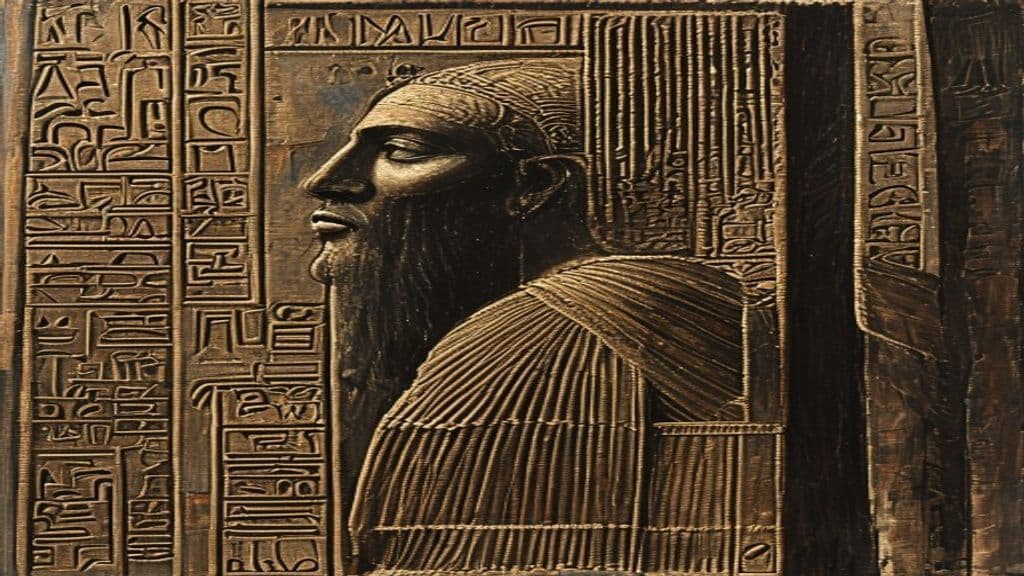
In Sumerian literary tradition Alulim is presented as the antediluvian first ruler installed at Eridu. The Eridu Genesis fragment names the major gods An, Enlil, and Enki as the appointing divinities who choose Alulim for the 'shepherdship of the entirety of the many people,' making him an etiological figure for the institution of kingship. The Sumerian King List places him explicitly before the flood with proverbially vast reign-lengths (examples attested in different tablets include 28,800 years in the King List and 36,000 years in the Ballad of Early Rulers), marking him as a denizen of mythic, antediluvian time rather than recorded history.
No consistent anthropomorphic or physical description of Alulim survives in the attested sources. The name occurs in Sumerian spellings (A₂-lu-lim / A-lu-lim, cuneiform 𒀉𒇻𒅆) and an Akkadianized variant Alulu; a separate variant Ayalu appears in the Uruk List of Kings and Sages and may relate to the Sumerian word ayyalu ('deer' or 'stag'). Jeremiah Peterson has suggested a grammatical ambiguity in the Eridu Genesis fragment that could render the form as a descriptor rather than a personal name, so Alulim in some contexts functions as a conceptual or typal figure rather than an individuated portrait. Late Neo-Babylonian ritual texts personalize him with narrative traits (enjoyment of milk, ghee, and beer; an aversion to 'queen Nisaba' as a metonym for grain) but the primary sources do not provide bodily attributes or iconography.
Primary: within Sumerian and Akkadian literary tradition Alulim's role is institutional—he is the first ruler appointed by the gods to shepherd people and thereby serves as the mythic origin of kingship. Secondary / late ritual attributions: Neo-Babylonian incantations against field pests invoke Alulim as an ancient king 'from before the deluge' who is credited in those texts with the ability to expel insects using a wand and with weeding the fields of the god Nergal; the same late texts present him paradoxically as created/deployer of insects in some formulations while also driving them off. The sources also record late narrative details (dietary likes and dislike of 'queen Nisaba'). The attested evidence confines his operational role largely to textual and ritual invocation rather than a catalogue of broader supernatural powers.
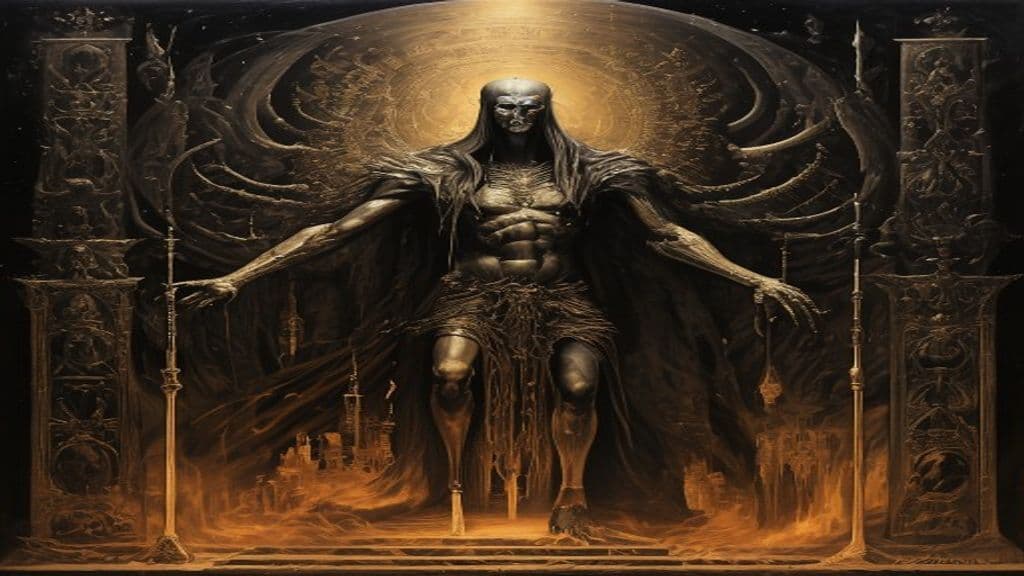
Nergal
Nergal is a major Mesopotamian deity associated with war, disease, inflicted death, and rulership of the underworld. Principal cult center at Kutha (temple E‑Meslam), he appears in hymns and myths (e.g., the Epic of Erra, "Nergal and Ereshkigal") and is sometimes equated with or called Erra or Meslamtaea.

Nisaba
Nisaba is an ancient Sumerian goddess chiefly associated with writing, the scribal arts, wisdom, and grain. Attested from the Fara (Early Dynastic) period onward, she functions as the divine patron and legitimizer of literacy, accounting, and the institutional arts of tablets and archives, and later becomes identified with grain itself.
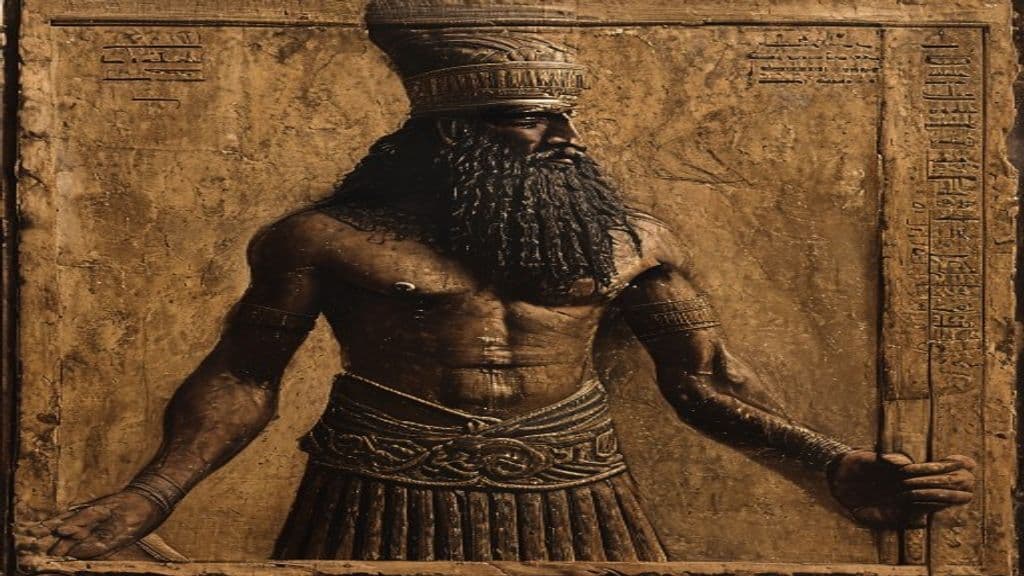
Adapa
Adapa is a mythic figure from ancient Mesopotamian (Sumerian and Akkadian) literature: a mortal fisherman and temple sage of Ea at Eridu endowed with exceptional wisdom. He appears in a fragmentary tale in which he breaks the wings of the south wind and is summoned to the divine court; his name was later invoked in exorcistic and ritual contexts as an authoritative identity.

Etana
Etana is a legendary early king of Kish in Mesopotamian tradition who, according to epic texts and the Sumerian King List, aided an eagle and was conveyed to the heaven of the god Anu to seek a 'plant of birth' enabling him to sire an heir. He functions as a culture-hero whose narrative situates kingship, divine favor, and animal intermediaries within Mesopotamian cosmology.
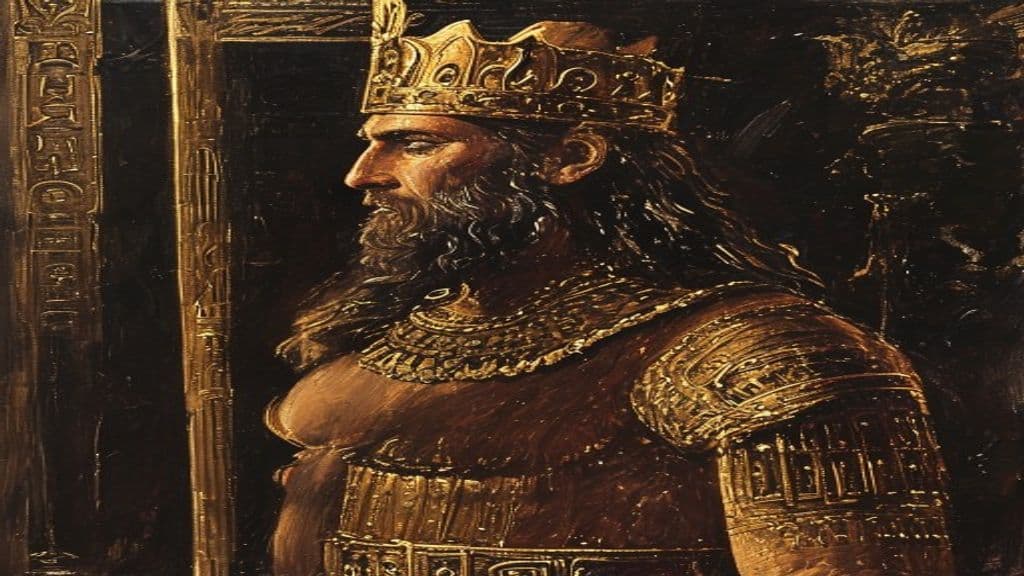
Gilgamesh
Gilgamesh is a semi-divine legendary king of the Sumerian city of Uruk who features as the protagonist of a pan‑Mesopotamian epic tradition. Portrayed in literary sources as a demigod of superhuman strength, he is both a historical monarch recorded in king lists and a later object of cultic veneration.
'Ain Samiya Goblet
Silver cup from the Middle Bronze Age I, discovered in a tomb at Ain Samiya. (Note: 1. Power tier should be "None", but add a note explaining that historical artifacts don't fit into the typical power tier classification. 2. Add a description of its appearance based on it being a sil)
*Péh₂usōn (reconstructed)
Péh₂usōn is a hypothetical Proto‑Indo‑European pastoral guardian reconstructed by comparative scholars from parallels in Greek and Vedic traditions. Proposed as a Graeco‑Aryan ancestor‑figure, the reconstruction describes a protector of flocks, roads, and travellers rather than an attested historical cultic personality.
A'annepada
A'annepada (Sumerian cuneiform 𒀀𒀭𒉌𒅆𒊒𒁕; also romanized Aanépàdda) is attested as a historical ruler of the First Dynasty of Ur, flourishing c. 2350 BC. He is recorded in dedicatory and foundation inscriptions as king of Ur and as son of Mesannepada, credited with temple-building and dedication to deities such as Ninhursag and Inanna.
Aba (disambiguation / name-form)
Aba is a polyvalent name-form attested across many unrelated contexts (place names, personal names, animal names, and brief mythological listings). The provided sources do not support a single, coherent supernatural entity called "Aba" and offer no descriptive or ritual material for such a being.
Ababil
Ababil (Arabic: أبابيل, romanized abābīl) are miraculous birds mentioned in the Qur'anic account of Surah Al‑Fil. In Islamic tradition they appear as a divinely sent avian host that defended the Kaaba by pelting an invading army with small clay stones; tradition places the event in the year traditionally given as 570 CE.
Abadir
Abadir is a polysemous name attested in distinct cultural contexts: a legendary founding saint and clan ancestor in eastern Ethiopia (Sheikh Abadir Umar Al‑Rida / Aw Abadir), a term applied to cone‑shaped cult stones in Phoenician religious description, and a personal name of a martyr (Abadir/Apater) in the Coptic Synaxarium. The attestations are independent usages of the same name rather than a single supernatural being.
Abarbarea
Abarbarea is a name attested in classical Greek and Roman sources for freshwater nymphs (naiads). The name appears for at least two individual mythic figures — a naiad wife of Bucolion and a naiad counted among ancestors of the Tyrians — and Hesychius records plural forms that may indicate the name was also used as a class-name (Abarbareai / Abarbalaiai).
Abas
Abas (Ancient Greek: Ἄβας, gen.: Ἄβαντος) is not a single mythic being but a recurring personal name borne by multiple mortals and minor mythic figures in Greek epic and genealogical traditions — kings, founders, seers, warriors, attendants, a centaur, and a youth transformed by a goddess. The name is glossed in the sources as 'guileless' or 'good-hearted' and appears across Argive, Theban, Trojan, Euboean, and other local cycles.
Abderus
Abderus (Ancient Greek: Ἄβδηρος, romanized Ábdēros) is a mortal heroic figure in Greek myth closely associated with Heracles, remembered as the youth left in charge of the Mares of Diomedes who was killed by them. He functions as an eponymous local/divine-hero ancestor for the city of Abdera and received funerary commemoration and athletic agones at his tomb.
Abdul Qadir Gilani
A historical 11th–12th century Hanbali jurist, preacher, and Sufi shaykh who became the eponym and principal early figure of the Qadiriyya tariqa; venerated in Sunni Sufi traditions as an Awliya (saint) and often given exalted hagiographical ranks such as Muḥi al‑Dīn and Ghawth.
Abel
Abel is the second son of Adam and Eve in the Genesis narrative, a shepherd whose accepted offering and subsequent murder by his brother Cain form the biblical account of the first death. Later interpretive traditions expand his role, treating him as an archetypal righteous victim, a postmortem avenging or adjudicating figure, and in some systems (notably Mandaean) identifying him with an angelic lightbeing.
Abomination of Desolation
An apocalyptic prophetic phrase originating in the Book of Daniel designating a profaning thing or act that renders the Jerusalem Temple cult desolate; later reused in the Synoptic Gospels as an eschatological sign prompting urgent flight. The term denotes ritual/cultic impurity (Hebrew shiqquts) and is variously interpreted as pagan offerings or altar, a foreign cult statue, or (in some New Testament readings) an acting agent.
Community Record
- [1]Alulim — Wikipedia. Wikipedia, 'Alulim' entry (summary of Sumerian King List, Eridu Genesis, Neo-Babylonian incantations, and reception)wiki
- [2]Alulim — Wikidata. Wikidata entry for Alulimwiki
- [3]Eridu — Wikipedia. Wikipedia, 'Eridu' (contextual information on Eridu as city of origins)wiki
- [4]Sexagesimal (context for large reign numbers). Sexagesimal number system reference (contextual for reign-length numeration)other
- [5]From Alulim to Zimudar – Jane Dougherty Writes. Blog post summarizing aspects of Alulim's attestation and receptionother
- [6]SaturnianCosmology — Kings list file (online text). Online transcription/collection referencing king-list numeration (used for comparative data in notes)other
- [7]WorldAtlas — Who Was The First King In The World?. Popular summary referencing early Mesopotamian first-king traditionsother