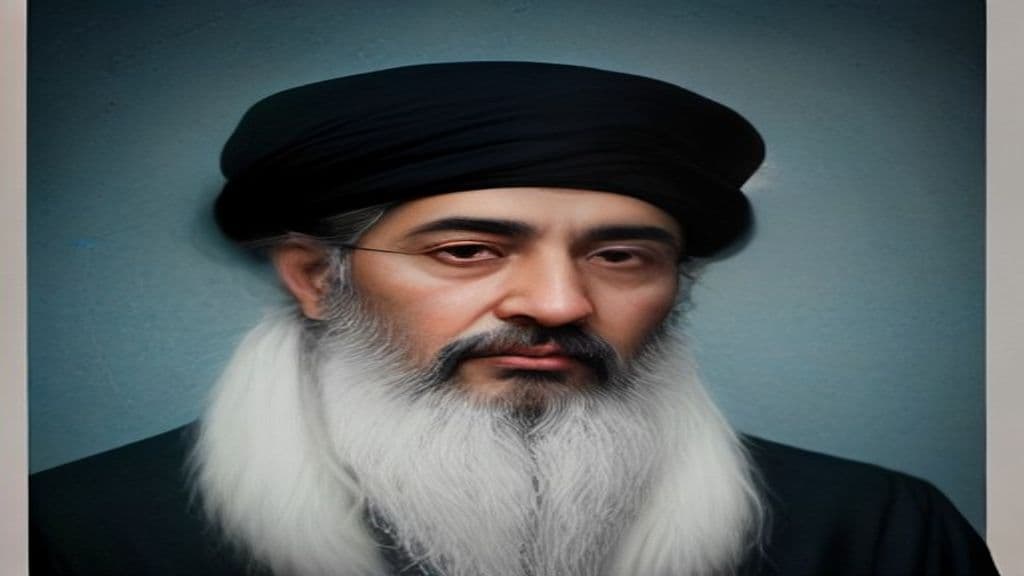
Born c. 1077/1078 (sources vary on exact birthplace; medieval claims differ but modern historians favor Gilan), he migrated to Baghdad in 1095. In Baghdad he studied jurisprudence and hadith (teachers named in sources include Abu Saeed Mubarak Makhzoomi and Ibn Aqil) and pursued Sufi spiritual training (with Abu'l‑Khair Hammad al‑Dabbas cited as a guide). Hagiographical and biographical traditions report a prolonged period of ascetic retreat—traditionally rendered as some twenty‑five years of wandering and seclusion in the deserts of Iraq—after which he returned to public teaching and preaching, reportedly resuming teaching in Baghdad around the early 12th century, establishing the Madrasa al‑Qadiriyya, producing a corpus of devotional and doctrinal works (e.g., Futuh al‑Ghayb, Al‑Ghunya, Jila' al‑Khatir), and dying in 1166. His shrine in Baghdad became a long‑standing locus of veneration (destroyed in 1508; rebuilt under Ottoman patronage by Suleiman in 1535) and his death anniversary (urs) is traditionally observed on 11 Rabi' al‑Thani.
The supplied sources do not provide a consistent historical physical description. Biographical and institutional materials emphasize his roles as jurist, teacher, and spiritual master rather than corporeal features. Later devotional imagery and shrine iconography exist in the popular record, but specific, reliable contemporaneous physical details are not attested in the provided materials.
Historically attested activities include teaching Hadith and Qur'anic exegesis, delivering lectures on spiritual discipline (ilm al‑Qulub), founding and directing a madrasa (Madrasa al‑Qadiriyya), writing a number of influential Sufi and devotional works, and exerting social influence as a moral and spiritual advisor to diverse followers and political figures. Hagiographical sources attribute to him very high spiritual stations in Sufi cosmology (honorifics such as Muḥi al‑Dīn, and the maqam of Ghawth, the succour), framing him as an efficacious intercessor and exemplar; such exalted spiritual claims are part of devotional tradition rather than verifiable historical acts in the supplied corpus.

Apsara
Celestial dancers and water nymphs of Hindu cosmology — beautiful semi-divine beings who dance at the court of Indra and, by his command, descend to earth to distract sages from excessive asceticism.

Marid
The most powerful class of jinn in Islamic tradition — beings of the sea, associated with the deep ocean, storms, and the granting of wishes at terrible cost. The classic genie of the Arabian Nights.

Vetala
A spirit that inhabits and reanimates corpses, possessing supernatural knowledge and the power to prophesy. One of the most feared beings in Shaiva tradition.

Naga
Divine serpent beings of Hindu, Buddhist, and Jain cosmology — powerful guardians of water, earth, and underground treasures. Revered as deities in South and Southeast Asia.

Baba Yaga
Baba Yaga is an ambivalent female figure of East Slavic folktale tradition, depicted variously as a fearsome, child-eating crone or as a helpful, maternal donor. She is associated with the deep forest, a hut described as standing on chicken legs, and the motific accoutrements of a mortar and pestle.
Ababil
Ababil (Arabic: أبابيل, romanized abābīl) are miraculous birds mentioned in the Qur'anic account of Surah Al‑Fil. In Islamic tradition they appear as a divinely sent avian host that defended the Kaaba by pelting an invading army with small clay stones; tradition places the event in the year traditionally given as 570 CE.
Abadir
Abadir is a polysemous name attested in distinct cultural contexts: a legendary founding saint and clan ancestor in eastern Ethiopia (Sheikh Abadir Umar Al‑Rida / Aw Abadir), a term applied to cone‑shaped cult stones in Phoenician religious description, and a personal name of a martyr (Abadir/Apater) in the Coptic Synaxarium. The attestations are independent usages of the same name rather than a single supernatural being.
Abel
Abel is the second son of Adam and Eve in the Genesis narrative, a shepherd whose accepted offering and subsequent murder by his brother Cain form the biblical account of the first death. Later interpretive traditions expand his role, treating him as an archetypal righteous victim, a postmortem avenging or adjudicating figure, and in some systems (notably Mandaean) identifying him with an angelic lightbeing.
Abraham (Ibrāhīm) in Islam
Ibrāhīm (Abraham) in Islam is a human prophet and messenger chosen by God, a paradigm of pure monotheism (hanīf), patriarchal ancestor to later peoples and prophets, and traditionally regarded as having helped establish the Kaʿbah with his son Ismāʿīl. He is called Khalīl Allāh ('Friend of God') and is central to rites commemorated in Hajj and Eid al‑Adha.
Abū Lahab
Abū Lahab (ʿAbd al-ʿUzzā ibn ʿAbd al-Muṭṭalib) is a historical Meccan figure — a paternal uncle of the Prophet Muḥammad and a Quraysh leader who opposed the Prophet; he is singled out and condemned in Qurʾān 111 (Sūrat al-Masad) and functions in Islamic textual memory as an exemplar of divine punishment for opposition.
Adam (ʾĀdam)
In Islamic theology Adam (Arabic: آدم, ʾĀdam) is presented as the first human being and the first prophet (nabī), created by God from earth/clay, granted life by God's spirit, placed in a paradisal Garden, taught knowledge (the "Names"), tested by divine command, tempted by Iblīs, and ultimately sent to live and die on Earth while remaining eligible for repentance and forgiveness.
Ahmed al-Badawī
Ahmed al-Badawī (Aḥmad al-Badawī, al-Sayyid al-Badawī) was a 13th-century Arab Sufi mystic and founder of the Badawiyyah order. Born in Fes to a Bedouin tribe and later settled in Tanta, Egypt, his tomb remains a major site of visitation and he is regarded as one of the most popular Sufi saints in Egypt (sources emphasize his historical sainthood and pilgrimage cult rather than detailed folkloric attributes).
Aicha Kandicha (Qandisa)
Aicha Kandicha (also romanized Qandisa/Qandisha) is a female mythological figure in Moroccan folklore described as a jinn-like seductress associated with water. She appears as a beautiful woman with hoofed lower limbs who dwells at rivers, springs, lakes and the sea and is said to use sexual allure to seduce men, sometimes driving them mad or killing them.
Aicha Qandicha
Aicha Qandicha is a female seductress spirit in northern Moroccan folklore, often associated with bodies of water and implicated in harmful encounters with men. She appears both as a wild liminal monster and as a named spirit incorporated into local ritual systems (Hamadsha, Zār, Buffi Sufi orders).
Al-Abyad
Al-Abyad (Arabic: al‑Abyad, "the White") appears in modern compilations and anecdotal references as a named jinn or epithet within Arabic/Islamic discourse on jinn. The corpus consists mainly of contemporary lists, forum posts, popular articles, and a polemical anecdote; no coherent classical origin myth or primary ritual tradition for Al-Abyad is attested in the supplied materials.
Al-Jānn
Al-Jānn (jann) is a pre-Adamite, ancestral category invoked in Arabic-Islamic exegetical, hadithic, mystical, and folkloric materials to designate an earlier class of sentient beings—progenitors of later jinn—said to be created of fire, to have once inhabited and sometimes ruled the earth, and to stand in a liminal ontological position between angels and humans.
Al-Mi'raj
A mythical creature from medieval Arabic literature, described as a one-horned hare or rabbit. (Note: * Power tier: Given the lack of information on abilities and powers, it's too early to assign a power tier. However, considering its classification as a "mythical creature" in medieval Arabic literatu)
Community Record
- [1]Abdul Qadir Gilani (Wikipedia). Wikipedia, 'Abdul Qadir Gilani' (accessed source material provided).wiki
- [2]Wikidata: Abdul Qadir Gilani. Wikidata entry for Abdul Qadir Gilani.other
- [3]Abdul Qadir Gilani Mosque, Jordan (Wikipedia). Wikipedia article on a modern mosque named after Abdul Qadir Gilani.wiki
- [4]Geography Al Baaz Al Ash Hab By Dr Jamal Uddin Gilani. Archive.org item referencing Gilani family geography and related material.other
- [5]Abdul Qadir Gilani and the Fruits of Paradise: From Serving the Guest. Essay discussing Abdul Qadir Gilani in a devotional/cultural context.other
- [6]Hazrat Abdul Qadir Jalani - meherbabatravels. Popular devotional biographical page on Abdul Qadir Jalani.other
- [7]Pearl Publishing House: Endowment of Divine Grace, Pref.. Publisher page referencing devotional literature related to Gilani.other
- [8]My Ancestral Past: Visiting the Gilanis in Iran | Sacred Footsteps. Blog-post discussing Gilan family origins and commemoration.other
- [9]Kids Kiddle: Abdul Qadir Gilani. Children's encyclopedia entry summarizing basic biographical facts.other