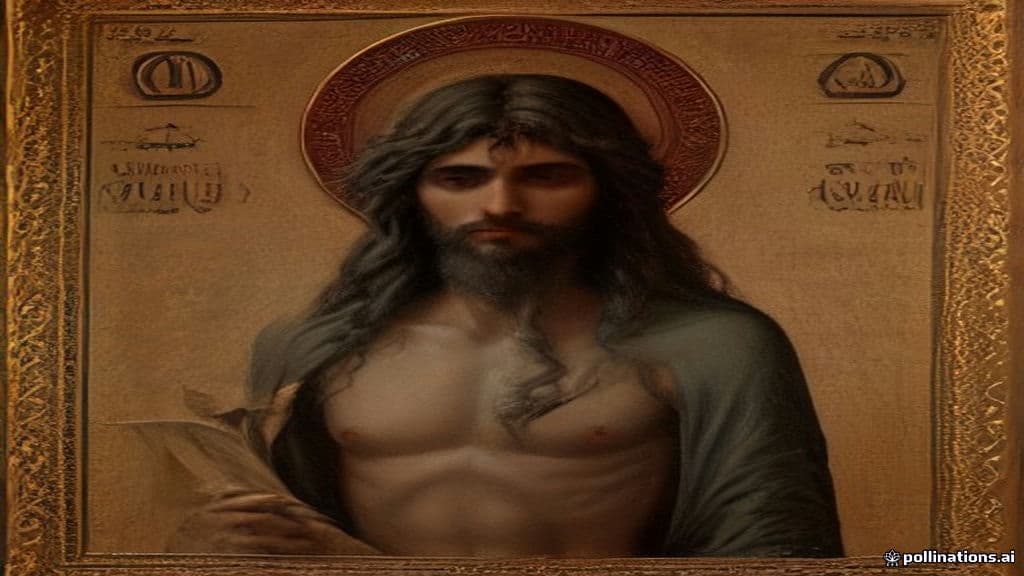
In the canonical Genesis account Abel is introduced as the second son of Adam and Eve and is described as a shepherd who offers the firstborn of his flock to God; God accepts Abel's offering but rejects Cain's, and Cain kills Abel (Genesis 4:1–8), making Abel the first recorded murder victim in biblical narrative. Subsequent interpretive and apocryphal writings extend his postmortem significance: the Book of Enoch portrays the soul of Abel as appointed chief among martyrs, crying for vengeance; the Testament of Abraham depicts Abel raised to a role as judge of souls; and Mandaean scriptures identify Abel with Hibil Ziwa, a lightworld uthra who combats the World of Darkness. These later traditions thus transform or reframe the Genesis human figure into roles within moral, eschatological, or cosmological schemes.
Primary scriptural sources provide no physical description of Abel beyond social details: he is the son of Adam and Eve and a shepherd who offered his flock. The supplied sources do not record consistent iconography or body features for Abel; later devotional contexts (relic placements, commemorations) refer to his burial or resting place but do not supply physical description. Thus in the available material Abel's appearance is described only by role (shepherd, son, slain righteous) not by corporeal traits.
The Genesis narrative attributes no supernatural powers to Abel; he is portrayed as a human worshipper and victim. Later traditions attribute active postmortem functions to him: the Book of Enoch describes Abel's soul as the chief of martyrs, vocally crying for vengeance; the Testament of Abraham presents him elevated to a judging role over souls; and Mandaean texts equate him with Hibil Ziwa, an uthra (lightworld being) who conquers the World of Darkness, thereby assigning him salvific and martial capacities within that cosmology. These ascriptions are tradition-specific and are not part of the original Genesis account.

Aaron
Aaron is a central human figure in Israelite sacred literature: the elder brother of Moses, the first high priest (progenitor of the Aaronide priesthood), and a spokesman/prophet who mediates between Israel and God in Exodus–Deuteronomy narratives. His role in the texts establishes hereditary priestly authority, ritual functions (sacrifices, blessing, use of Urim and Thummim), and institutional norms for Israelite cultic life.
Ababil
Ababil (Arabic: أبابيل, romanized abābīl) are miraculous birds mentioned in the Qur'anic account of Surah Al‑Fil. In Islamic tradition they appear as a divinely sent avian host that defended the Kaaba by pelting an invading army with small clay stones; tradition places the event in the year traditionally given as 570 CE.
Abaddon
In Hebrew scripture Abaddon is primarily a noun meaning 'destruction' or a section/condition of the underworld paired with Sheol; in the New Testament Book of Revelation Abaddon is personified as an angelic figure (Greek Apollyon) described as the king of an army of locusts released from the abyss during the apocalypse.
Abadir
Abadir is a polysemous name attested in distinct cultural contexts: a legendary founding saint and clan ancestor in eastern Ethiopia (Sheikh Abadir Umar Al‑Rida / Aw Abadir), a term applied to cone‑shaped cult stones in Phoenician religious description, and a personal name of a martyr (Abadir/Apater) in the Coptic Synaxarium. The attestations are independent usages of the same name rather than a single supernatural being.
Abadiu of Antinoe
Abadiu of Antinoe was a fourth‑century bishop of Antinoe (Antinoopolis, in Roman Egypt) commemorated as a martyr and saint in the Coptic Orthodox Church, with a feast day on 26 December. Sources record that he was killed during a theological dispute with Arian opponents and reference him in collections of Egyptian martyrs.
Abagtha
Abagtha (Hebrew: אבגתא, ’Ǎḇaḡṯā) is a named human court official in the Hebrew Bible’s Book of Esther, listed among seven chamberlains who ministered before King Ahasuerus and were commanded to bring Queen Vashti before the king. He is attested only in Esther 1:10 and is presented as an institutional palace attendant rather than a supernatural being.
Abanoub
Abanoub is a 4th‑century Egyptian Christian child martyr venerated in the Coptic tradition. Remembered for his public confession of Christ, miraculous healings associated with his passion, and the translation and veneration of his relics, his feast is observed on July 31 (Epip 24) and his cult centers include Nehisa and Samanoud.
Abaskhiron the Soldier
A Coptic Orthodox martyr venerated for refusing imperial idolatry during the Diocletian persecution; reputedly healed by the Archangel Michael, preserved in monastery relics, and commemorated on 14 June (7 Paoni).
Abdel Messih El-Makari
Abdel Messih El-Makari (1892–1963) was a Coptic Orthodox monk and priest venerated as a 20th‑century Coptic saint. Associated with the Monastery of Saint Samuel the Confessor and the Monastery of Saint Macarius (Scetes/Wadi El‑Natrun), he is remembered for humility, asceticism, charity, and reported spiritual gifts such as prescience, discerning of spirits, and healing.
Abdiel
Abdiel (Hebrew עֲבְדִּיאֵל) is primarily a theophoric Hebrew personal name meaning "servant of El/servant of God," attested once in the Hebrew Bible (1 Chronicles 5:15). In later literature—most notably John Milton's Paradise Lost—Abdiel is reimagined as a faithful seraph who opposes Satan's revolt. The provided sources do not treat Abdiel as an autonomous folkloric spirit type or record rituals or wards associated with the name.
Abdul Qadir Gilani
A historical 11th–12th century Hanbali jurist, preacher, and Sufi shaykh who became the eponym and principal early figure of the Qadiriyya tariqa; venerated in Sunni Sufi traditions as an Awliya (saint) and often given exalted hagiographical ranks such as Muḥi al‑Dīn and Ghawth.
Abiathar
Abiathar (Hebrew: אֶבְיָתָר, ʾEḇyāṯār) is a named human priestly figure in the Hebrew Bible. He is presented as a survivor of the Nob massacre who fled to David with priestly regalia, served as a priest and counselor in David's court, and was later deposed and sent to Anathoth by Solomon for supporting Adonijah.
Community Record
- [1]Abel — Wikipedia. Wikipedia article 'Abel' (accessed source notes provided).wiki
- [2]Abel — Wikidata. Wikidata entry Q318375 (label data).wiki
- [3]Gospel Vineyard 139 (sermon archive). Archive.org recording 'Gospel Vineyard 139' (listed among provided sources; excerpt not used for new factual claims beyond noting homiletic treatment).other