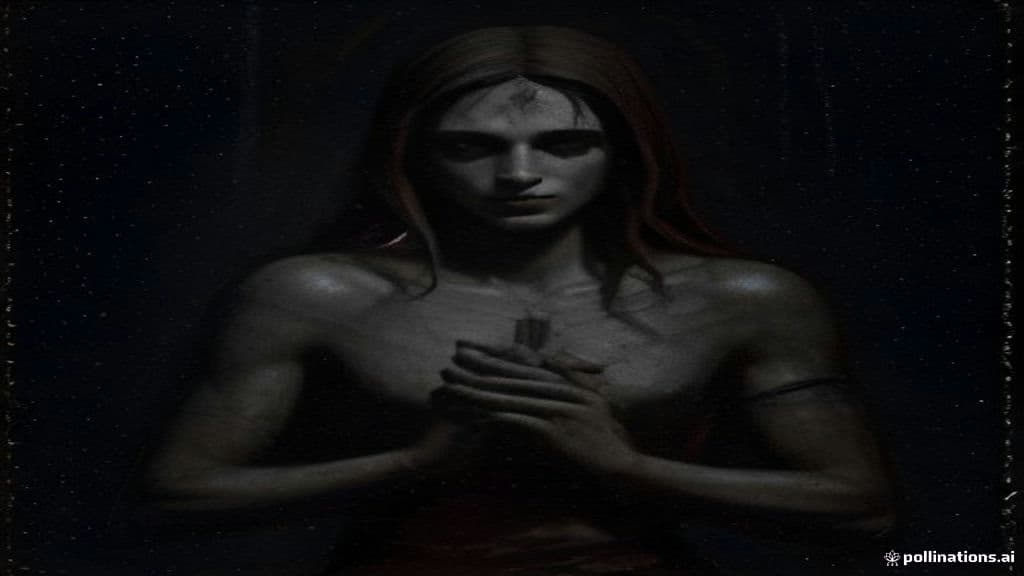
Attestations of Begoe are fragmentary. The principal narrative preserved in a 19th‑century compilation (Internet Sacred Text Archive, citing Mrs. Hamilton Gray's History of Etruria) recounts Begoe as a figure who "slew an ox simply by whispering in its ear the fearful name of the Highest." Beyond that anecdote, modern summaries and indices record Begoe as one of several orthographic variants attached to an Etruscan ritual/prophetic figure known from later references (Vegoia/Vegoe). Scholarly and popular sources note the scarcity of bilingual Etruscan documents and treat Begoe as a name preserved in lists and mythographic indices rather than as a fully attested narrative cycle.
No iconographic or descriptive physical details for Begoe are provided in the supplied sources. The available references supply only the name in textual lists and a single narrative action; no contemporaneous visual depictions or bodily descriptions are cited in the examined material.
The sole specific power recorded in the surviving anecdote is the capacity to cause an ox's death by whispering a sacred or "fearful" name into its ear, indicating efficacy of ritual speech or sacred nomenclature. A commentator included with the anecdote suggests this episode may be a symbolic report of lightning, but that is a modern interpretive remark rather than an independent attestation. Aside from the name‑variant linkage to Vegoia (a figure associated in other traditions with laws, divination and ritual knowledge), no further powers or behaviors are documented in the provided sources.

Aesar
Aesar is a term attested in comparative and antiquarian literature as a name or class-label applied to divine or semi‑divine beings in discussions of Etruscan religion. In the provided sources it appears chiefly in speculative comparisons with other pantheons (e.g., Norse Æsir, Irish 'Living Ones', Egyptian Asar/Osiris) and as a proposed Etruscan word meaning 'a god' in secondary commentary.
Aita
Aita is an Etruscan chthonic epithet of the older god Śuri (Suri), functioning as an underworld lord in late Etruscan iconography and funerary contexts. Appearing from about the 4th century BC, Aita shows strong influence from the Greek Hades and is depicted rarely in tomb paintings and grave goods.
Apollo
Olympian deity of ancient Greek religion associated with prophecy, healing, music, archery, purification, and civic order. Principal patron of the Delphic oracle, protector of youth and flocks, and ambivalently both healer and bringer of plague.
Apollo of Veii (Aplu)
A life-size late Archaic Etruscan terracotta cult statue of the deity Aplu (Etruscan Apollo) created for the acroterial program of the Portonaccio sanctuary at Veii, ca. 510–500 BCE; intended as an architectural cult image and narrative participant in a roofline group depicting Apollo and Heracles.
Apulu
Apulu (Etruscan: 𐌀𐌐𐌖𐌋𐌖; syncopated Aplu) is an epithet/aspect of the Etruscan fire god Śuri combining solar/sky and chthonic/volcanic functions. Attested in inscriptions, major sculpture (notably the Apollo of Veii) and small votive objects, Apulu is associated with sun and light, thunder and lightning, healing and plague, and the protection of divination.
Asius
Asius (Ancient Greek: Asios) is a personal name borne by several mortal leaders allied with Troy in Greek epic and mythographic tradition. The figures called Asius appear in leader-lists, genealogies, and battle narratives of the Trojan War cycle rather than as a distinct supernatural entity.
Aulus Vibenna
Aulus Vibenna (Etruscan Avile Vipina) is a remembered historical and legendary Etruscan aristocrat and military leader from Vulci, attested in mid-1st millennium BCE inscriptions and tomb painting. He appears in votive dedications (a bucchero chalice) and in the François Tomb fresco cycle alongside his brother Caelius and companions such as Mastarna (identified with Servius Tullius in later tradition).
Caelius Vibenna
Caelius Vibenna (Etruscan Caile Vipina) is presented in the supplied tradition as an Etruscan noble and legendary leader associated with a circle of companions; he appears in Etruscan tomb painting (notably the François Tomb at Vulci) and in later Roman antiquarian tradition as an ancestral or eponymous figure tied to the Caelian Hill of Rome. The corpus treats him as a human aristocratic/heroic figure rather than a supernatural being.
Calu
Calu is an Etruscan theonym/epithet denoting the chthonic, dark aspect of the fire-underworld god Śuri; the name was also used as a synonym for the underworld itself. Iconography and cultic language associate Calu with darkness and lupine (wolf) attributes and link the epithet to central-Italian wolf-ritual phenomena.
Charun
An Etruscan chthonic attendant and psychopomp depicted in funerary art; Charun escorts the dead to the underworld and appears in grotesque, monstrous form often bearing a hammer. He is typically an underworld functionary rather than the sovereign ruler of the dead.
Culsu
Culsu is an attested name listed among Etruscan deities and legendary figures in modern compilations. Available sources provide only nominal attestation (the name and a modern label of 'goddess'); no independent ancient narratives, functions, iconography, or rituals are recorded in the supplied materials.
Etruscan Supernatural Entities
A pantheon of gods and goddesses heavily influenced by Greek and Roman mythology, worshipped by the Etruscan civilization. (Note: - Power tier: Primordial is not plausible given the described abilities (control over nature and influence over human affairs). A more accurate power tier would be Ancient, as these abilities are simi)
Community Record
- [1]Part One: Chapter VI--CARRADORA | Internet Sacred Text Archive. Internet Sacred Text Archive, Part One: Chapter VI—CARRADORA; cites Mrs. Hamilton Gray's History of Etruria for the anecdote that Begoe "slew an ox simply by whispering in its ear the fearful name of the Highest."literary
- [2]Vegoia (Wikipedia). Wikipedia entry on Vegoia: notes that Vegoia is also known by variants including Vegoe and that the name is also given as Begoe or Bigois.wiki
- [3]Etruscan phonology (reddit thread, paraphrase). Community discussion recording variant spellings (Vecu, Vecuvia, Vecui, Vegoe, Begoe or Bigois) and noting orthographic/phonological uncertainty in transmitted forms.other
- [4]Who's Who in Classical Mythology (archive listing). Reference index listing Begoe among classical/Etruscan proper names; used as a secondary index of fragmentary classical mythic figures.academic