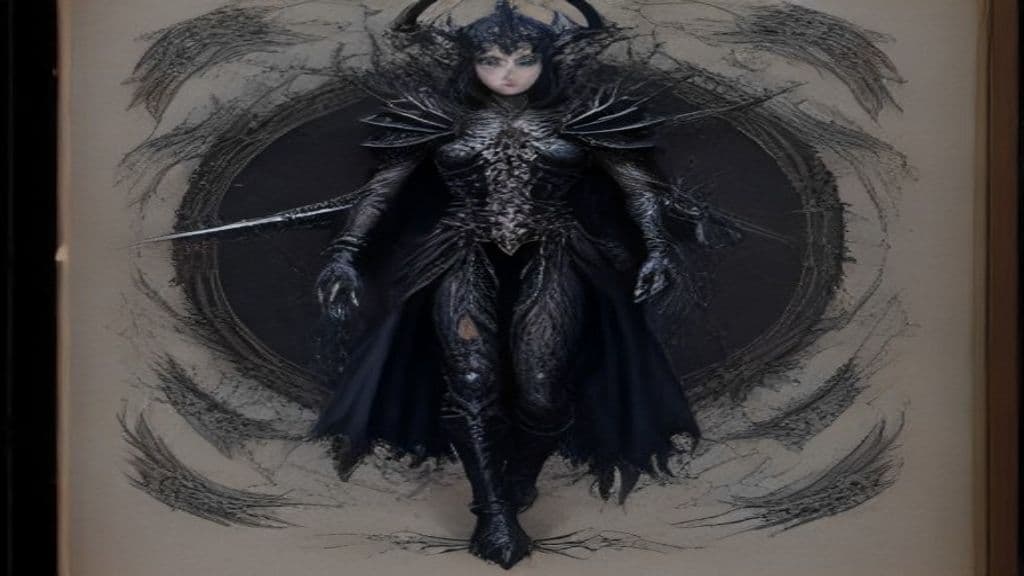
Botis is a product of the European grimoire corpus rather than a figure with an independent mythic origin in folk tradition. He is attested in multiple ritual manuals and demonological catalogues compiled in Renaissance and early modern Europe: most prominently the Ars Goetia section of the Lesser Key of Solomon and Johann Weyer’s Pseudomonarchia Daemonum, where he is catalogued with an office, functions, and a commanded retinue. Variant manuscript traditions preserve slightly different profiles (for example the Munich Manual treats him as Otius). The provided sources do not supply an etymology or a pre-grimoire origin narrative; instead Botis functions within the magico-theological worldview of the grimoires as an office-holding spirit that can be summoned and commanded by ritual technique.
Descriptions vary across the grimoire sources. In the Ars Goetia and Pseudomonarchia Daemonum summaries Botis is said to appear initially as a viper and then to assume a human form described in those accounts as sword-toting, fanged, and horned. By contrast, the Munich Manual (where he appears as Otius) is reported to give him a humanoid appearance from the outset. The Grand Grimoire does not detail his visual form but places him in a chain of command under Agaliarept. These variant attestations indicate a transformative or polymorphic iconography in the manuscript tradition rather than a single fixed depiction.
Across the cited grimoire summaries Botis is attributed with broad divinatory knowledge—he answers questions and "discusses matters past, present, and future"—and with social-magical functions, notably reconciling friends and foes and bringing favour from allies and enemies. He is also assigned command of subordinate spirits: the Ars Goetia / Pseudomonarchia entries credit him with ruling 60 legions of demons, while the Munich Manual attributes 36 legions; the Grand Grimoire lists him as subordinate to Agaliarept. Additional cosmogonic detail in some secondary sources (via Rudd) pairs him with an opposing Shem HaMephorash angel, Loviah, reflecting the grimoires’ dualistic mapping of spirit offices onto angelic counterparts. The supplied materials do not include ritual formulas, methods of binding, or operational limits beyond these catalogued functions.
Weaknesses
- otherNo specific weaknesses listed in provided sources
Wards
- ritualNo protective formulas, seals, or apotropaic wards for Botis are given in the supplied materials; the grimoire context implies control is achieved via conjurations and bindings found in the full ritual texts (not supplied)
Agaliarept
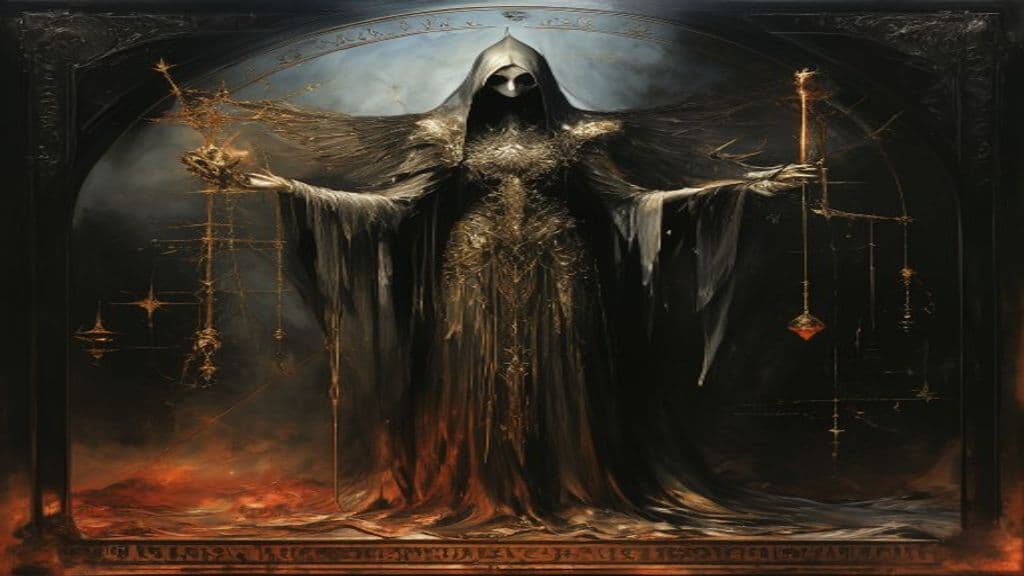
A named high-ranking spirit from post-medieval grimoire tradition, presented in the Grimoirium Verum and the Grand Grimoire as a commanding officer in a hierarchical host of spirits; credited with revealing secrets and commanding a legion, and cited in later printed occult imprints and modern fiction.

Jann
The weakest class of djinn in Islamic tradition, associated with desert winds and taking the form of snakes or whirlwinds, dwelling in empty wilderness and posing little threat to those who know the proper invocations.
57 Mnemosyne
57 Mnemosyne is a large main-belt asteroid (S-type) discovered in 1859 and named after the Greek Titaness Mnemosyne. It is a non-sentient astronomical body studied for its orbital and rotational properties and has been used in dynamical measurements related to Jupiter.
Aamon
Aamon (also Amon) is a named spirit in early modern Western grimoire tradition (Pseudomonarchia Daemonum; the Ars Goetia / Lesser Key of Solomon). He is presented as a high-ranking infernal officer (Marquis/Prince) who governs forty legions and is credited with knowledge of past and future and with affecting human relationships (reconciling or procuring feuds and favor).
Aaron
Aaron is a central human figure in Israelite sacred literature: the elder brother of Moses, the first high priest (progenitor of the Aaronide priesthood), and a spokesman/prophet who mediates between Israel and God in Exodus–Deuteronomy narratives. His role in the texts establishes hereditary priestly authority, ritual functions (sacrifices, blessing, use of Urim and Thummim), and institutional norms for Israelite cultic life.
Abaddon
In Hebrew scripture Abaddon is primarily a noun meaning 'destruction' or a section/condition of the underworld paired with Sheol; in the New Testament Book of Revelation Abaddon is personified as an angelic figure (Greek Apollyon) described as the king of an army of locusts released from the abyss during the apocalypse.
Abagtha
Abagtha (Hebrew: אבגתא, ’Ǎḇaḡṯā) is a named human court official in the Hebrew Bible’s Book of Esther, listed among seven chamberlains who ministered before King Ahasuerus and were commanded to bring Queen Vashti before the king. He is attested only in Esther 1:10 and is presented as an institutional palace attendant rather than a supernatural being.
Abdiel
Abdiel (Hebrew עֲבְדִּיאֵל) is primarily a theophoric Hebrew personal name meaning "servant of El/servant of God," attested once in the Hebrew Bible (1 Chronicles 5:15). In later literature—most notably John Milton's Paradise Lost—Abdiel is reimagined as a faithful seraph who opposes Satan's revolt. The provided sources do not treat Abdiel as an autonomous folkloric spirit type or record rituals or wards associated with the name.
Abel
Abel is the second son of Adam and Eve in the Genesis narrative, a shepherd whose accepted offering and subsequent murder by his brother Cain form the biblical account of the first death. Later interpretive traditions expand his role, treating him as an archetypal righteous victim, a postmortem avenging or adjudicating figure, and in some systems (notably Mandaean) identifying him with an angelic lightbeing.
Abiathar
Abiathar (Hebrew: אֶבְיָתָר, ʾEḇyāṯār) is a named human priestly figure in the Hebrew Bible. He is presented as a survivor of the Nob massacre who fled to David with priestly regalia, served as a priest and counselor in David's court, and was later deposed and sent to Anathoth by Solomon for supporting Adonijah.
Abiel
Abiel is attested in the supplied sources only as a male given name — borne by several historical American individuals and listed as two minor biblical figures. The provided materials contain no evidence presenting Abiel as a supernatural, mythological, or folkloric entity.
Abigail
Abigail is a female figure in the Hebrew Bible portrayed in 1 Samuel 25 as the intelligent and beautiful wife of Nabal who intervenes to prevent David from committing violence; later tradition regards her as one of the Tanakh's seven female prophets and as a model of beauty and wisdom.
Abijah of Judah
Abijah (also Abijam or Abiah) is presented in the biblical and later interpretive traditions as a short-reigning human king of Judah from the Davidic line. He is portrayed as a dynastic successor whose military actions (notably the battle at Mount Zemaraim) and moral evaluation in rabbinic literature are interpreted theologically in relation to the Davidic covenant.
Abimelech
Abimelech is a Hebrew personal name and occasionally a regnal title attested in the Hebrew Bible and later traditions. It appears as the name/title of Philistine rulers in the patriarchal narratives (the "king of Gerar" who interacts with Abraham and Isaac) and as the personal name of Abimelech son of Jerubbaal (Gideon) in Judges, a dynastic usurper whose brief rule ends in violent death.
Community Record
- [1]Botis - Wikipedia. Wikipedia: 'Botis' article summarizing grimoire entries (Ars Goetia, Pseudomonarchia, Munich Manual, Grand Grimoire; Rudd on angelic opposition)wiki
- [2]Botis - Thelemapedia. Thelemapedia entry summarizing grimoire material; fragmentary quoted text available in supplied notesother
- [3]Count/President Botis - 72 Demons of The Lesser Key of Solomon: The Ars Goetia. Archive recording/archive item referencing the Ars Goetia entry for Botis (secondary/derivative material in supplied list)other