
Buda is not presented as a single mythic founder figure but as a transmissible, socially-located power: a named capacity tied to envy and to particular social groups and occupations. Sources describe buda as a power held and wielded by those in a different social group (for example Beta Israel or metalworkers) and link its acquisition to lineage and artisan knowledge in folkloric interpretation; scholarly commentary frames this as a cultural diagnosis whereby specialized craft skill or social marginality is construed as deriving from an ambiguous or malign source. Geographically the concept is centred in Ethiopia and Eritrea and is also reported in related regional contexts (Sudan, Tanzania, and among Berber groups in Morocco).
The primary physical manifestation described in the sources is transformation into a hyena; buda-bearers are said to change into hyenas and to attack while concealing their human identity. The sources do not provide a standardized visual description of the human form of a buda-bearer beyond social and occupational markers—accusations commonly target members of Beta Israel or certain artisan/caste groups such as metalworkers (sometimes labelled with terms like tabib in related contexts).
Buda is credited with two linked harmful capacities: to inflict the effects commonly called the 'evil eye'—causing illness, misfortune, or other harm through envious gaze or magical influence—and to shapeshift into a hyena to attack victims covertly. Sources report that bearers are sometimes described as 'empowered by evil spirit' and that folkloric explanations connect the power's transmission to paternal lineage or artisanal origins; the literature treats buda as a real force that can be countered by religious and magical measures.
Weaknesses
- ritualExorcism invoked in the name of Jesus by an ordained Ethiopian Orthodox priest
- ritualProtective amulets/talismans (kitab) prepared by a debtera
- mantraInvocation of God's name (Christian context)
Wards
- otherKitab (amulet or talisman made by a debtera)
- mantraInvoking God's name
- ritualSeeking ordained priest intervention and exorcism in church settings

Yaksha
Nature spirits of Hindu, Buddhist, and Jain cosmology — guardians of forests, treasures, and wilderness. Ambivalent beings, capable of great benevolence to the respectful and terrible harm to the greedy.

Kappa
A water-dwelling imp of Japanese folklore with a bowl of water on its head. Mischievous but bound by strict codes of politeness; dangerous near rivers.
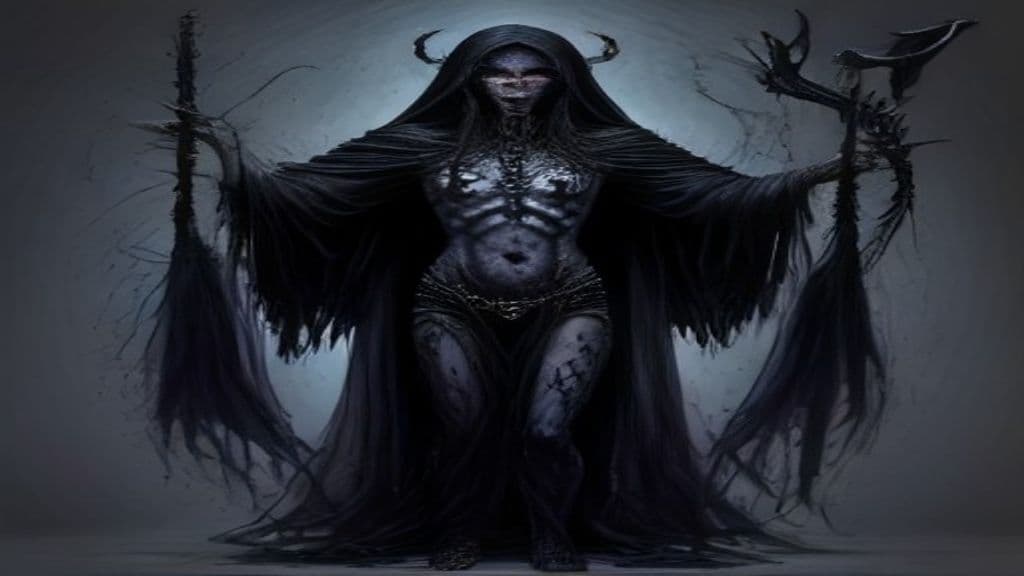
Ghoul
A ghoul is a demon-like or monstrous humanoid originating in pre-Islamic Arabian religion, traditionally associated with graveyards and the consumption of human flesh. The concept later entered broader folklore and has been widely reused and transformed in modern fiction and popular culture.
Abāmūn of Ṭoukh
Abāmūn of Ṭoukh is a Coptic Christian martyr attested in the Synaxarion of Mikhail of Atrib, commemorated with a feast day on 20 July (13 Abib). He is said to have been visited by the archangel Michael, traveled to Ansena where he was tortured and beheaded, was credited with working miracles, and whose body was wrapped by Julius of Aqfahs and returned to Toukh.
Adbar
Adbar is an Ethiopian belief concerning spirit possession that is discussed in scholarship and contemporary art alongside the wider regional phenomenon known as zār. These spirits are held to possess individuals (reported mostly among women), causing discomfort or illness; ritual practice aims to reconcile the spirit and the person rather than to eliminate the spirit.
Aicha Kandicha (Qandisa)
Aicha Kandicha (also romanized Qandisa/Qandisha) is a female mythological figure in Moroccan folklore described as a jinn-like seductress associated with water. She appears as a beautiful woman with hoofed lower limbs who dwells at rivers, springs, lakes and the sea and is said to use sexual allure to seduce men, sometimes driving them mad or killing them.
Aicha Qandicha
Aicha Qandicha is a female seductress spirit in northern Moroccan folklore, often associated with bodies of water and implicated in harmful encounters with men. She appears both as a wild liminal monster and as a named spirit incorporated into local ritual systems (Hamadsha, Zār, Buffi Sufi orders).
Almaqah
Almaqah was the principal national deity of the ancient Sabaean kingdom (Saba') in southwestern Arabia, venerated as a celestial tutelary god with strong dynastic, oracular, and vegetative associations. His main cultic center was the Awwam Temple near Marib; his worship extended into the northern Horn of Africa (Dʿmt, Aksum). Scholarly treatments debate whether his primary identification is lunar, solar, or syncretic.
Ananiel
Ananiel (Heb. עננאל; Greek Ανανιας) is a named angelic figure attested in the Book of Enoch tradition as one of the 20 leaders of the 200 Watchers, entrusted with aspects of vegetation and atmospheric phenomena; in later reception (notably a Coptic Orthodox tradition) he appears alternatively as one of seven holy archangels.
Antaeus
Antaeus (Greek: Ἀνταῖος; Berber: Anti) is a mythic giant of Greek and Berber narrative worlds, son of Poseidon and Gaia, whose invulnerability derives from direct contact with the earth. Found in accounts placing him in the interior of Libya or in local North African memory, he challenges travelers to wrestling matches and is defeated by Heracles when lifted off the ground and crushed.
Antaios / Antaeus (tradition)
Antaios (Greek Antaeus; Berber Anti) is a polyvalent name attested as (a) a mythic Berber/Greek figure famed for his wrestling encounter and defeat by Heracles, (b) a Hellenized rendering of an obscure archaic Egyptian deity called Antiwy/Antwey often depicted as paired falcons in early iconography, and (c) a modern German cultural magazine and publisher imprint; the provided sources treat these as distinct referents that share a common name rather than a single coherent supernatural being.
Apedemak
Apedemak is an indigenous Meroitic/Kushite deity primarily associated with martial power, royal legitimation, and aspects of fertility and life. He is attested in temple reliefs and hymnic material at southern Meroitic cult centres such as Musawwarat es‑Sufra, Naqa and Meroe, where he appears in diverse leonine and occasionally syncretic forms.
Ashenafi
Ashenafi is attested in the supplied sources only as an Amharic personal name (Amharic: አሸናፊ). The provided materials contain no evidence that 'Ashenafi' functions as a folk demon, evil spirit, or other supernatural entity in Ethiopian tradition.
Baal Ḥamon
Baal Ḥamon (Baal Hammon) is the chief god of ancient Carthage in the Punic religious framework, venerated as a male deity associated with weather, fertility of vegetation, and regarded as king among the gods. He is cultically paired with the principal female deity Tanit and is attested in archaeological and textual traditions as an authoritative lordly divine figure.
Barbary corsairs
Organized maritime raiders and state‑linked privateers operating from North African ports (notably Algiers, Tunis, Tripoli, and Salé) from medieval times into the 19th century; engaged in ship capture, coastal raids, and the seizure of captives for slave markets and ransom, and in some Muslim sources framed as a form of naval jihad.
Community Record
- [1]Buda (folklore) — Wikipedia. Wikipedia, 'Buda (folklore)'wiki
- [2]Wikidata entry for Buda. Wikidata: Q2905079other
- [3]Summary of exorcism practices (Amsalu Geleta, as cited). Quoted summary of Amsalu Geleta on Ethiopian Orthodox exorcism practices as reported in the Wikipedia articlewiki