
According to Greek mythic summaries, King Oeneus of Calydon failed to honour Artemis (Diana) in his rites—specifically omissions in harvest/offerings—which provoked the goddess to send a devastating wild boar as retribution. The animal was dispatched to ravage the region of Calydon, attacking people and cattle and preventing normal agricultural activities. The calamity prompted the calling of an extraordinary hunting-party of heroes, led by Meleager and including figures such as Atalanta, whose wounding of the beast and the subsequent dispute over its hide form central scenes in the episode.
Narrative summaries portray the creature as an especially savage wild boar distinguished by its destructive impact; one traditional summary describes it as having "bristles like arrows." Beyond these emphases on its ferocity and weapon-like bristles, sources do not provide a detailed zoological description, instead stressing the wake of death and destruction the animal leaves across fields and livestock.
The Calydonian Boar is depicted as a violently destructive animal capable of killing people and cattle and of disrupting sowing and harvest activities across the countryside. Its appearance is explicitly an act of divine agency—Artemis sent the animal in punishment—which situates its force as an extension of a goddess' wrath. In combat, the boar becomes fiercely aggressive: accounts report that hunters who sought it were driven into danger, the hunting party themselves becoming the hunted, and that prominent participants were wounded or killed; in many retellings Atalanta is credited with first wounding it with an arrow.
Weaknesses
- conditionconfrontation by organised heroic hunters
- conditionrestoration of proper ritual honour to Artemis/Diana (preventive)
Wards
- ritualproper inclusion of Artemis/Diana in harvest and offering rites
- otherassemble a hunting-party to kill the beast
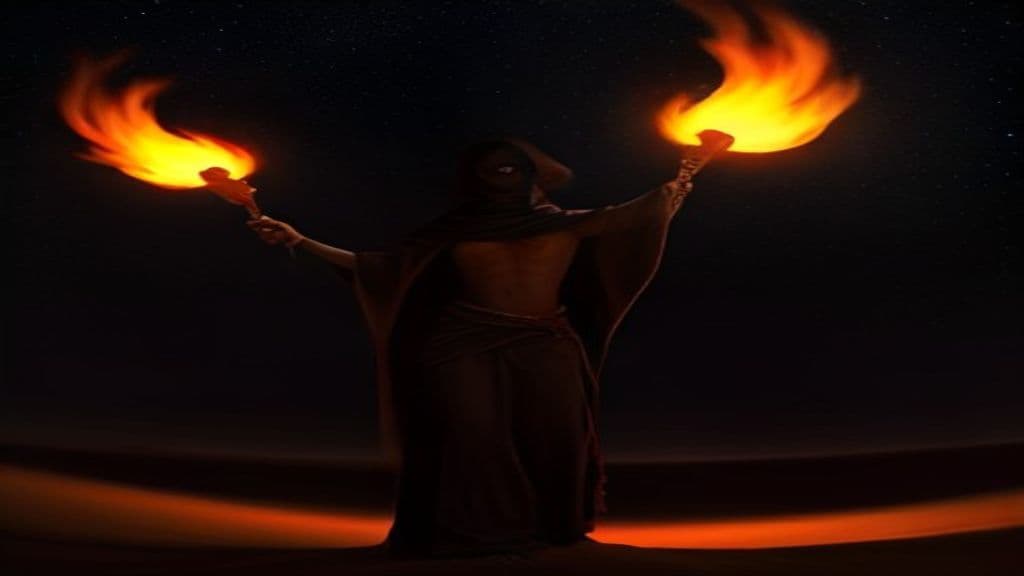
Djinn
The class of supernatural beings created from smokeless fire in Islamic cosmology — a parallel civilization to humanity, capable of belief or unbelief, with their own prophets, society, and judgment before God.
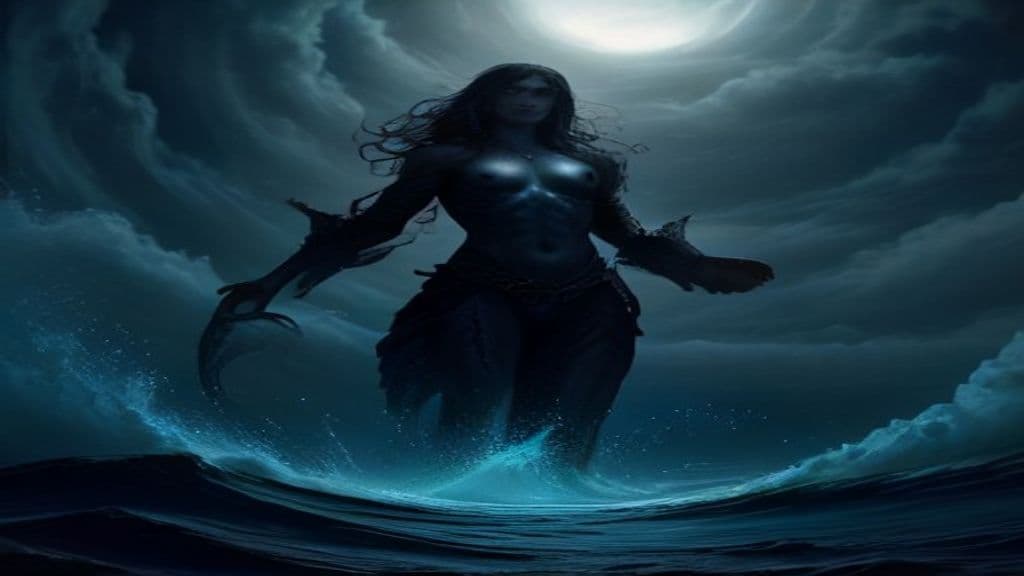
Marid
The most powerful class of jinn in Islamic tradition — beings of the sea, associated with the deep ocean, storms, and the granting of wishes at terrible cost. The classic genie of the Arabian Nights.

Naga
Divine serpent beings of Hindu, Buddhist, and Jain cosmology — powerful guardians of water, earth, and underground treasures. Revered as deities in South and Southeast Asia.
*Péh₂usōn (reconstructed)
Péh₂usōn is a hypothetical Proto‑Indo‑European pastoral guardian reconstructed by comparative scholars from parallels in Greek and Vedic traditions. Proposed as a Graeco‑Aryan ancestor‑figure, the reconstruction describes a protector of flocks, roads, and travellers rather than an attested historical cultic personality.
Aba (disambiguation / name-form)
Aba is a polyvalent name-form attested across many unrelated contexts (place names, personal names, animal names, and brief mythological listings). The provided sources do not support a single, coherent supernatural entity called "Aba" and offer no descriptive or ritual material for such a being.
Abarbarea
Abarbarea is a name attested in classical Greek and Roman sources for freshwater nymphs (naiads). The name appears for at least two individual mythic figures — a naiad wife of Bucolion and a naiad counted among ancestors of the Tyrians — and Hesychius records plural forms that may indicate the name was also used as a class-name (Abarbareai / Abarbalaiai).
Abas
Abas (Ancient Greek: Ἄβας, gen.: Ἄβαντος) is not a single mythic being but a recurring personal name borne by multiple mortals and minor mythic figures in Greek epic and genealogical traditions — kings, founders, seers, warriors, attendants, a centaur, and a youth transformed by a goddess. The name is glossed in the sources as 'guileless' or 'good-hearted' and appears across Argive, Theban, Trojan, Euboean, and other local cycles.
Abderus
Abderus (Ancient Greek: Ἄβδηρος, romanized Ábdēros) is a mortal heroic figure in Greek myth closely associated with Heracles, remembered as the youth left in charge of the Mares of Diomedes who was killed by them. He functions as an eponymous local/divine-hero ancestor for the city of Abdera and received funerary commemoration and athletic agones at his tomb.
Abomination of Desolation
An apocalyptic prophetic phrase originating in the Book of Daniel designating a profaning thing or act that renders the Jerusalem Temple cult desolate; later reused in the Synoptic Gospels as an eschatological sign prompting urgent flight. The term denotes ritual/cultic impurity (Hebrew shiqquts) and is variously interpreted as pagan offerings or altar, a foreign cult statue, or (in some New Testament readings) an acting agent.
Absyrtus
Absyrtus (Ancient Greek: Ἄψυρτος) is a Colchian prince in the Greek Argonautic cycle, son of King Aeëtes and brother or half-brother of Medea. He appears in variant traditions either as a companion taken by Medea during her flight with Jason and murdered/dismembered to delay pursuit, or as a pursuer sent by Aeëtes who is overtaken and slain by Jason; his death functions as a key narrative device in the escape from Colchis.
Acacallis
Acacallis (Ancient Greek: Ἀκακαλλίς; also Acalle) is a mythological princess of Crete in Greek tradition, daughter of King Minos and Pasiphae. She functions primarily as a dynastic and etiological figure: in varying accounts she is mother, by gods such as Hermes (Mercury) or Apollo, of eponymous or founder-figures like Cydon (founder of Cydonia), Miletus, or Lydon/ Lydus.
Acacus
Acacus (Ancient Greek: Ἄκακος) is, in Arcadian Greek tradition, a mortal eponymous founder-king of Acacesium and is remembered as the foster-father who reared the infant Hermes (Mercury) in that local tradition. He is presented in genealogies as a son of Lycaon and functions as a local ancestral/onomastic figure rather than a supernatural spirit.
Academus
Academus (Greek: Akádemos / Hekádemos) is an Attic hero-eponym tied to a sacred grove (Akademeia) on the Cephissus near Athens. In myth he revealed where Helen was hidden to the Dioskouroi, an act said to have saved the city, and the place bearing his name became a long-lived sacred precinct, later the site of Plato's Academy.
Acamas
Acamas (Ancient Greek: Ἀκάμας) is a personal name recurrent in ancient Greek narrative traditions applied to multiple human characters (warriors, princes, suitors), once to a Cyclops, and once as a hound's name. Rather than a single supernatural entity, bearers of the name appear episodically across the Trojan War, Theseid, and Theban cycles as mortal actors whose deeds intersect with gods and fate.
Acantha
Acantha (Ancient Greek: Ἀκάνθα, 'thorn') is a late or secondary mythological figure known from modern retellings as a nymph transformed into the acanthus plant. The tale that she scratched Apollo and was changed into a spiny-leaved plant is not attested in surviving classical corpora and appears to be a modern compilation or invention rather than a firmly documented ancient myth.
Community Record
- [1]Calydonian boar hunt (Wikipedia). Wikipedia: Calydonian boar huntwiki
- [2]Calydonian Boar - Biblical Cyclopedia. Biblical Cyclopedia: Calydonian Boarother
- [3]Calydonian Boar | A Book of Creatures. A Book of Creatures: Calydonian Boarfolk
- [4]Calydonian Boar - Wikidata. Wikidata: Calydonian Boar (classification as mythical creature)wiki
- [5]Atalanta - Alchetron. Alchetron: Atalanta (summary of role in the Calydonian boar hunt)other
- [6]Children of the dawn; old tales of Greece (archive listing). Children of the Dawn: table of contents listing 'Hunting the Calydonian boar'literary
- [7]Announcing The Calydonian Boar Hunt (Substack). Substack: Announcing The Calydonian Boar Hunt (modern retelling/contextualization)other
- [8]Old European culture: Calydonian boar (blog). Old European culture blog: Calydonian boar (contextual/interpretive write-up)folk
- [9]My Calydonian Boar Hunt (Tribwatch). Tribwatch: My Calydonian Boar Hunt (retelling/summary)other
- [10]New Blasters and Blades Podcast Interview About The Calydonian Boar hunt. Podcast interview referencing the Calydonian boar huntother