
In the materials provided the chudail/churel is described as a class of female revenant that arises after a woman's violent, unjust, or traumatic death (for example rape, murder, or mistreatment). Rather than a single named individual, the term denotes a recognizable type of supernatural female being whose return is culturally framed as response or reparation for unresolved transgression; modern cinematic plots (e.g., the film Chudail No. 1) dramatize the revenant returning to possess and avenge her death when human institutions fail.
Folkloric and cinematic descriptions commonly depict the chudail as a woman with long, scruffy hair and feet turned backwards — visual markers widely recognized in South Asian portrayals. Cinematic and regional variations exist: films and popular media adapt the figure’s look for horror, comic, or sympathetic effect, so appearance can vary by production and local storytelling.
Across folklore commentary and film summaries the chudail is portrayed as a vengeful agent who haunts or attacks those responsible for her death, can possess living persons (film example: the vengeful ghost possesses a wife to kill perpetrators), and disrupts social life (marriages, relationships, community order). Academic analyses emphasize that haunting, possession, and targeted vengeance are common portrayals in both folk narratives and contemporary cinema rather than a single canonical power-set.

Shakchunni
Bengali ghost of a married Brahmin woman who died before her husband — identifiable by her white sari and conch-shell bangles, she possesses living married women and refuses to relinquish domestic life.

Petni
The female equivalent of the Bengali bhoot — the ghost of a young woman who died unmarried or before fulfilling her expected life. The Petni is more volatile and less predictable than the Shakchunni (married woman's ghost), driven by the particular bitterness of a life foreclosed rather than interrupted.
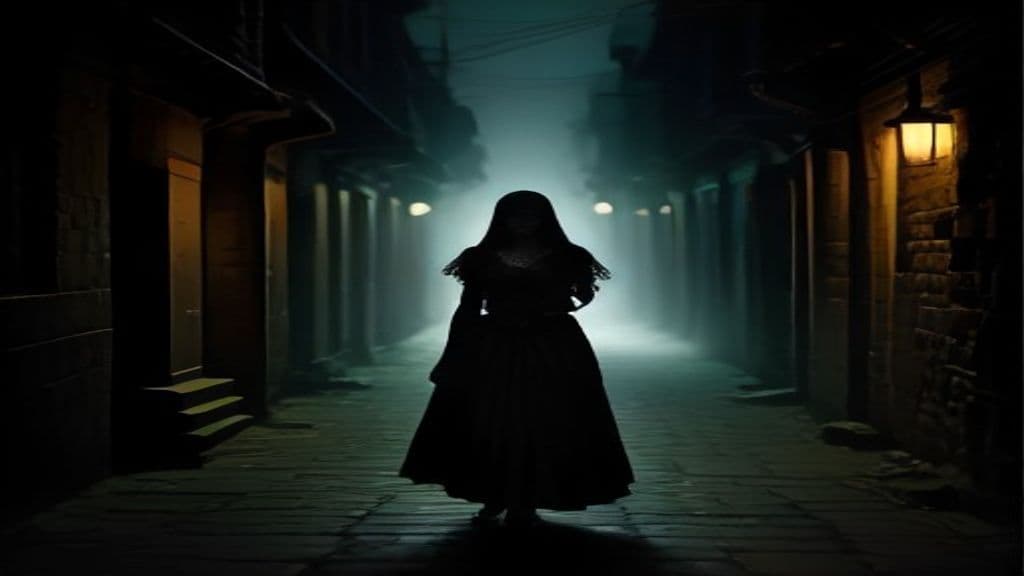
Stree
A vengeful female spirit from Chanderi who abducts men during festival nights. Warded off by the inscription 'O Stree, kal aana' — her legend, still practised on walls across Madhya Pradesh, inspired the 2018 Bollywood horror-comedy.

Churel (Chudail)
A South Asian female revenant or vengeful ghost associated with women who die cruelly or unpurified; often said to target male relatives and sometimes described as latching onto trees, producing a tree‑attached tree‑spirit variant in local tales.
Adi Vinayaka
Adi Vinayaka (Ādi Vināyaka; also called Nara Mukha Vinayaka) is a named iconographic and devotional form of the Hindu god Ganesha portraying the deity with a human head, described in sources as the form before the episode of decapitation by Shiva. It is rarely worshipped and appears in a small number of South Indian shrines and in devotional/musical repertoires.
Adjassou-Linguetor
Adjassou-Linguetor is a loa in Haitian Vodou associated with spring water. The limited cited sources describe her as having protruding eyes and a bad temper; beyond these points, the available documentation (Wikipedia and Wikidata) is minimal.
Aganjú
Primordial Orisha associated with the sun, fire, and the untamed wilderness in Yoruba tradition. (Note: - Remove "untamed wilderness" from Power tier description as it's a trait associated with Lesser entities, not Primordial. - Add Appearance section based on source material (e.g., no specific descript)
Agastya
Agastya (also Agathiyar/Agasti) is a revered Vedic and later-period Indian rishi (sage) figure credited in textual traditions as an inspired seer, ascetic, teacher, culture-founder, and attributed author of Vedic, Puranic and Tamil works; in South Indian tradition he is associated with origins of Tamil grammar and Siddha medicine and is identified astronomically with the star Canopus.
Agiya Baital
The fire-form of the Vetala — a cremation ground spirit of UP and Bihar that manifests as a wandering flame rather than a corpse-inhabitor, leading night travellers off roads and into marshland or flames with a dancing fire that seems always just ahead.
Agniveśa
Agniveśa is a legendary rṣi (sage) in the Ayurvedic textual tradition, traditionally credited as the pupil of Punarvasu Atreya and as the attributed author of the lost Agniveśa Saṃhitā / Agniveśatantra. Later Ayurvedic compilers, notably Charaka, are described in the sources as having compiled, edited, and modified material attributed to Agniveśa into texts such as the Charaka Saṃhitā.
Agwé
Agwé is a high-ranking lwa in Haitian Vodou associated with the sea, navigation, fishing, and certain funerary conveyances. He is portrayed as a naval officer who lives in a palace beneath the sea, commands attendant spirits, and is propitiated with maritime offerings and ceremonies.
Ahiravan (Mahiravan)
Ahiravan (also Mahiravan) is a rakshasa-king of Patala in Ramayana-derived narratives who abducts Rama and Lakshmana to sacrifice them to a goddess. Presented as a brother or trusted ally of Ravana in eastern Ramayana recensions, he is defeated and beheaded by Hanuman with divine aid.
Aiyanar
Aiyanar (Aiyaṉār, ஐயனார்) is a Tamil rural tutelary deity venerated chiefly in village contexts of Tamil Nadu and among Tamil communities in Sri Lanka. Portrayed as a martial guardian often mounted on a horse or elephant and accompanied by attendant spirits, he functions primarily to protect village boundaries, people, and livestock and has later been syncretized with the Sanskritic Sastha tradition.
Aiyyanar
Aiyyanar (also spelled Aiyanar) is a Tamil rural village deity venerated in South India and Sri Lanka, primarily among rural Tamil communities. He is associated in material culture with large, colorful roadside and temple statues often shown with companions and mounted on horses or elephants, and functions as a local protective/patronal figure within village devotional practice.
Akṣayakumāra
Akṣayakumāra appears in the Ramayana as the youngest son of Rāvaṇa and a warrior sent to oppose Hanuman in the Ashoka Vatika episode; described as about sixteen, he fights bravely from a chariot and is killed by Hanuman.
Alakh Niranjan
A doctrinal and devotional formula in the Nath-yogi tradition denoting the unseen, unblemished ultimate reality (Nirguna Brahman/Atman). Used as a salutational invocation, theological name, and signifier of realised Self rather than a personified supernatural being.
Community Record
- [1]Chudail No. 1 (film) — Wikipedia. Wikipedia, 'Chudail No. 1' (film summary noting the vengeful ghost possesses Vicky's wife and murders the goons)wiki
- [2]Churel — Wikipedia. Wikipedia, 'Churel' (entry listing regional occurrence and variant names Petni and Shakchunni)wiki
- [3]From Chudail to Devi: Analysing Death, Evil, and Monstrous Femininity in Bulbbul. Revenant journal article (academic commentary describing the chudail as 'a woman with scruffy long hair and backwards-turned feet' and analyzing its function in cultural discourse on gendered violence)academic
- [4]How Is The Representation Of 'Chudail' In Bulbbul Different From Bhool Bhulaiyaa's Monjolika?. Feminism in India article (popular-analytical commentary on modern cinematic representations and the figure's relation to social critique)other
- [5]Stree 3 in Hyderabad: Is a ‘chudail’ roaming around near RGIA? - Telangana Today. News article referencing contemporary popular uses of the chudail motif in media and local discourseother