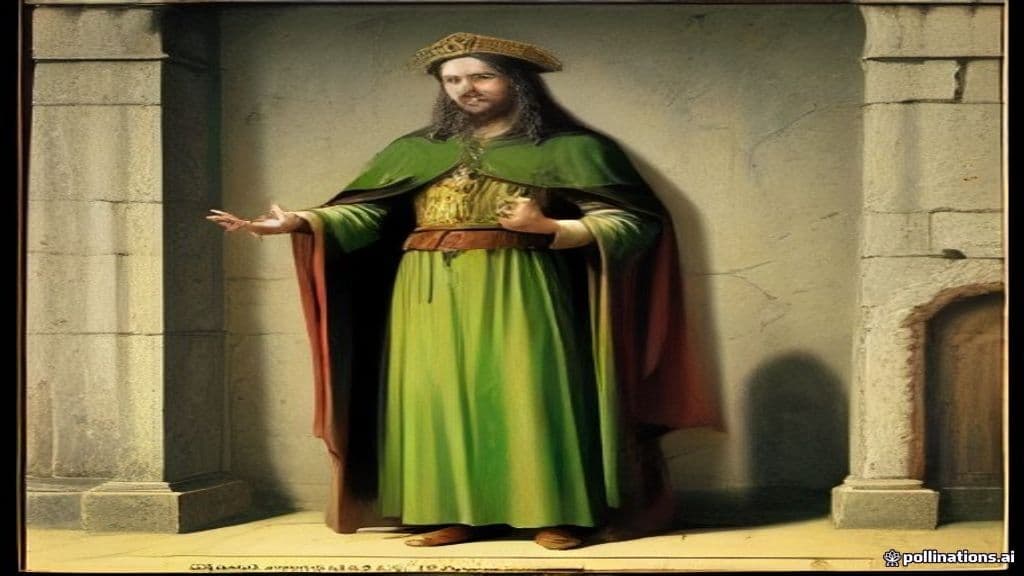
Cledaucus appears in the constructed regnal sequences of medieval pseudo‑history exemplified by Geoffrey of Monmouth's Historia Regum Britanniae and its vernacular and later manuscript transmissions (for example Wace's Roman de Brut and subsequent compilers). Within that literary‑chronological framework, he functions as one node in a continuous lineage of rulers created to nationalize and moralize British pasts; the supplied sources present him only as an entry in those lists rather than as a developed mythic founder with an independent origin narrative.
No contemporary or medieval description of Cledaucus's physical appearance is provided in the supplied materials. He is attested solely by name in regnal lists and narrative sequences; consequently the sources give no details of dress, physiognomy, iconography, or portraiture.
The provided sources do not ascribe any supernatural powers, specific behaviors, legal reforms, military exploits, or moral attributes to Cledaucus. His role in the texts is strictly as a dynastic/regnal entry — a predecessor to Clotenus and successor to Eliud — without narrated deeds or capabilities in the excerpts supplied.
Abdiel
Abdiel (Hebrew עֲבְדִּיאֵל) is primarily a theophoric Hebrew personal name meaning "servant of El/servant of God," attested once in the Hebrew Bible (1 Chronicles 5:15). In later literature—most notably John Milton's Paradise Lost—Abdiel is reimagined as a faithful seraph who opposes Satan's revolt. The provided sources do not treat Abdiel as an autonomous folkloric spirit type or record rituals or wards associated with the name.
Abiel
Abiel is attested in the supplied sources only as a male given name — borne by several historical American individuals and listed as two minor biblical figures. The provided materials contain no evidence presenting Abiel as a supernatural, mythological, or folkloric entity.
Abigail
Abigail is a female figure in the Hebrew Bible portrayed in 1 Samuel 25 as the intelligent and beautiful wife of Nabal who intervenes to prevent David from committing violence; later tradition regards her as one of the Tanakh's seven female prophets and as a model of beauty and wisdom.
Accolon
Accolon is a mortal knight of the Arthurian court, presented in the Post-Vulgate Merlin tradition and Malory's Le Morte d'Arthur as Morgan le Fay's paramour and instrument in a plot to supplant King Arthur; his tale centers on enchanted weapons (Excalibur and its scabbard), love-manipulation, and a tragic duel with Arthur.
Acionna
Acionna is a local Gallo-Roman water goddess attested by a single votive inscription found at a spring in the Orléanais region. The inscription, discovered by Jollois in 1822 and datable by style to the 2nd century CE, dedicates a portico and ornaments "AUG(ustae) ACIONNAE" and was recovered from the Fontaine de l'Étuvée in Orléans; archaeological work in 2007 uncovered remains of a Gallo-Roman temple and a section of an aqueduct at the site.
Adsullata
Adsullata is attested as a Continental Celtic river goddess associated with the River Savus (modern Sava) in the Roman province of Noricum. Later traditions record her presence in Brittany as a goddess of hot springs and present her as an antecedent or origin-form of the Anglo‑Celtic sun goddess Sul.
Afaon fab Taliesin
Afaon fab Taliesin is a medieval Welsh warrior-counsellor, named as a son of the bard Taliesin and recorded among Arthur’s retinue in Welsh tradition. He appears in the Welsh Triads and in the tale Breuddwyd Rhonabwy (The Dream of Rhonabwy) as a notable martial figure and proverb-speaker rather than as a supernatural being.
Aglovale
Aglovale (also Agloval, Aglovan, Aglovaus, Acglavael) is a human knight of Arthurian romance, presented as the eldest legitimate son of King Pellinore and a Knight of the Round Table in the Vulgate/Post‑Vulgate cycles, Malory, and later adaptations. He brings his long‑lost brother Perceval to Camelot, takes part in military actions (including slaying Agrippa in one account), and his death is related in varying ways across traditions (accidental at Gawain's hand, deliberate murder by Orkney kin, or killed during Lancelot's rescue of Guinevere).
Agolant
Agolant is a literary Saracen king who appears as a recurring antagonist in medieval and Renaissance epic cycles (Matter of France). He functions as a human royal opponent to Charlemagne and his peers, supplying martial episodes, genealogical connections, and the transfer of legendary arms and horses in chansons de geste and later Italian romances.
Agravain
Agravain is a literary knight of Arthurian romance cycles: one of the sons of King Lot of Orkney, a member of the Round Table, and a recurring figure in French and English medieval prose and verse. He is portrayed as a skilled but morally problematic courtly knight whose jealousy, malice, and intra-familial violence drive key narrative conflicts (notably the slaying of Lamorak and the exposure of Guinevere).
Agrestes
Agrestes is a legendary pagan king of Camelot appearing in accounts of the 13th‑century Arthurian Vulgate Cycle. Presented as a human antagonist to the Christian mission associated with Joseph of Arimathea (or his son Josephus), his violent persecution of converts is followed by madness, self‑destruction, and the subsequent consolidation of Christianity in Camelot.
Albanactus
Albanactus is a legendary eponymous founder-king in medieval pseudo-historical chronicles (not a supernatural being). In Geoffrey of Monmouth’s narrative he is the youngest son of Brutus who receives Alba/Albany as his share, rules briefly, and is killed by Humber, king of the Huns; the figure serves as a medieval reverse-etiology to explain the name of the land and to support later political claims.
Community Record
- [1]Cledaucus — Wikipedia. Wikipedia: Cledaucus — summary noting Welsh name Clydog and placement in regnal lists with date 215 BC.wiki
- [2]Appendix: Kings of Britain (Geoffrey of Monmouth). Geoffrey of Monmouth's regnal lists as reproduced in the Appendix to the Journal of Celtic Studies materials (regnal sequences showing Cledaucus among neighboring kings).literary
- [3]Appendix: Kings of Britain (Mary Jones transcription). Transcription of Geoffrey-derived regnal lists showing the placement of Cledaucus between Eliud and Clotenus/Cletonus.literary
- [4]Pseudohistorical Kings of Britain (discussion). Discussion of pseudo‑historical regnal names; contains speculative suggestion that Cledaucus/Clotenus 'perhapse an eponym of the river Clyde' (marked uncertain in the source).literary
- [5]Pseudohistorical Kings of Britain (Mary Jones transcription). Alternate transcription and commentary on pseudo‑historical kings listing Cledaucus among successive rulers.literary
- [6]Clotenus — Wikipedia. Entry for Clotenus/Cletonus referenced as successor to Cledaucus in the same regnal traditions.wiki
- [7]Wace, Roman de Brut (discussion). Discussion of Wace's vernacular rendering of Geoffrey's regnal material; demonstrates transmission and variant spellings in medieval redactions.literary