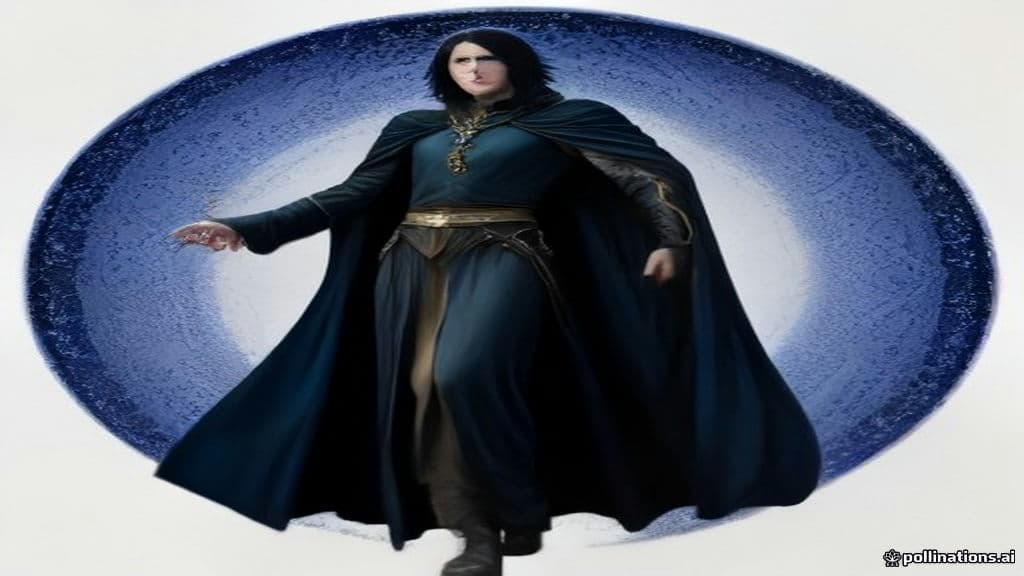
In the Post-Vulgate Suite de Merlin as transmitted into Thomas Malory's Le Morte d'Arthur (and related medieval vernacular sources such as the French Huth Merlin), Accolon appears as a knight of Arthur's court who becomes the lover of Morgan le Fay. Morgan, desiring to make him king and to remove Arthur (and in some variations her husband Urien), involves him in a scheme: Accolon accompanies Arthur and others on a hunt, is put aboard Morgan's fairy boat and later awakened in a field where Morgan furnishes him with the real sword Excalibur and its scabbard while Arthur is given a counterfeit. Under Morgan's enchantment and promise of power, Accolon fights Arthur in single combat — each unaware of the other's identity — gains the upper hand while holding Excalibur, but Nimue (the Lady of the Lake) intervenes and magically causes Excalibur to fly from Accolon's hand; Accolon is mortally wounded by Arthur and dies four days later, after which Morgan steals and discards the scabbard. These plot elements are attested in the Post-Vulgate/Malory material and are the primary source basis for the Accolon episode.
Medieval summaries and the supplied sources do not provide a detailed physical description of Accolon. He is consistently presented as a chivalric knight—often styled in English tradition as 'Sir Accolon of Gaul'—armed and armored in the manner of a courtly warrior of Arthurian romance. No specific iconographic traits (height, hair color, facial marks, or distinctive heraldry) are preserved in the cited summaries; later novelistic retellings characterize him according to each author's needs but do not contribute a canonical medieval physical portrayal.
Accolon possesses no intrinsic supernatural powers in the primary medieval tradition; his noted capacities are those of a competent knight and a tragic lover. His martial effectiveness in the central episode derives from ordinary knightly skill augmented by possession of magical objects supplied by Morgan—specifically the true Excalibur and its scabbard, which grant him a decisive advantage and near-invulnerability while he wields them. Narratives emphasize his susceptibility to Morgan's seduction—he is 'loved so madly' by her and thus open to manipulation—and his agency is framed within the interpersonal and political intrigues of Arthurian court rather than as an independent magical force. Modern retellings sometimes reframe his motives or political alignment (for example, as a pagan ally in some versions) but do not attribute original inherent sorcery to him.
Weaknesses
- conditionDependence on enchanted artifacts supplied by Morgan
- conditionSusceptibility to Morgan le Fay's seduction and promises ('loved him so madly')
- otherVulnerability to counter-magic and intervention by other supernatural agents (e.g., Nimue removing Excalibur)
Wards
- otherIntervention by another supernatural agent (Nimue's removal of Excalibur)
Abandinus
Abandinus is a locally attested Romano‑Celtic theonym known from a single inscribed bronze feather (votive object) dedicated at Godmanchester (the Roman fort Durovigutum) in Cambridgeshire. Scholars interpret him as a local god or male spirit tied to a specific place and possibly associated with a nearby spring or stream; this association is tentative and based on etymological readings of the name.
Abarta (Ábartach)
Abarta (also Ábartach) is a figure of Irish myth who, in surviving accounts, tricks Fionn mac Cumhaill's warriors by giving them a supernatural grey horse that bears them into the Otherworld. Sources variably identify him as a member of the Tuatha Dé Danann or as a Fomorian; after the incident he is compelled to release the captured warriors and is refused entry to the Fianna.
Abcán (Abhcán)
Abcán (modern spelling Abhcán) is a named dwarf poet and musician of the Tuatha Dé Danann in Irish myth. He appears in a small number of narratives as a musician whose art has soporific power and as the ferryman who brings the goddess Ruad from the Otherworld to the human world.
Abdiel
Abdiel (Hebrew עֲבְדִּיאֵל) is primarily a theophoric Hebrew personal name meaning "servant of El/servant of God," attested once in the Hebrew Bible (1 Chronicles 5:15). In later literature—most notably John Milton's Paradise Lost—Abdiel is reimagined as a faithful seraph who opposes Satan's revolt. The provided sources do not treat Abdiel as an autonomous folkloric spirit type or record rituals or wards associated with the name.
Abhean
Abhean is a named poet of the Tuatha Dé Danann in medieval Irish literature, described as a poet in particular of Lugh and recorded as having been killed by Óengus before Midir in a poem by Fland Mainistreach preserved in the Lebor Gabála Érenn.
Abiel
Abiel is attested in the supplied sources only as a male given name — borne by several historical American individuals and listed as two minor biblical figures. The provided materials contain no evidence presenting Abiel as a supernatural, mythological, or folkloric entity.
Abigail
Abigail is a female figure in the Hebrew Bible portrayed in 1 Samuel 25 as the intelligent and beautiful wife of Nabal who intervenes to prevent David from committing violence; later tradition regards her as one of the Tanakh's seven female prophets and as a model of beauty and wisdom.
Abnoba
Abnoba is a Gaulish theonym and toponym attested in Roman-era sources and inscriptions: a localized deity associated with woods, springs and the sources of rivers (notably the Danube) and simultaneously the name applied to a mountain or mountain range in the Black Forest/Baar/Odenwald region. Roman altars equate her with Diana, reflecting syncretic cult practice in frontier provinces.
Achall
Achall is an eponymous mortal woman in the Ulster Cycle of early Irish literature whose grief-induced death is given as the origin of the hill-name Achall (identified with the modern Hill of Skryne). She appears as a genealogical and etiological figure tied to Tara and later legendary events at the hill, rather than as a recurring supernatural agent.
Achtland
Achtland is a figure from Irish tradition who, according to the surviving account, was a mortal woman famed for rejecting mortal suitors who married a member of the Tuatha Dé Danann and crossed into the síde to become immortal as his wife.
Acionna
Acionna is a local Gallo-Roman water goddess attested by a single votive inscription found at a spring in the Orléanais region. The inscription, discovered by Jollois in 1822 and datable by style to the 2nd century CE, dedicates a portico and ornaments "AUG(ustae) ACIONNAE" and was recovered from the Fontaine de l'Étuvée in Orléans; archaeological work in 2007 uncovered remains of a Gallo-Roman temple and a section of an aqueduct at the site.
Adar Llwch Gwin
Legendary large, intelligent birds from Welsh tradition said to understand human speech and obey their master's commands; best known for tearing their master Drudwas ap Tryffin to pieces when bound by a literal order in an Arthurian battle narrative. The term later came to be applied to raptors and metaphorically to brave men in medieval Welsh poetry.
Community Record
- [1]Accolon — Wikipedia. Wikipedia contributors, 'Accolon', Wikipedia, The Free Encyclopedia.wiki
- [2]Accolon — Wikidata Q1088823. Wikidata entry Q1088823 for Accolon.other
- [3]VOA1 The Hits — June 17, 2017 (archive reference to modern name usage). Voice of America transcript (incidental modern mention of the surname 'Accolon'); not a source for the medieval character.other