
Decarabia appears as an entry in goetic catalogues derived from the Ars Goetia / Lesser Key of Solomon and related lists of spirits (the roster of some 69–72 named entities). The manuscript tradition contains variant spellings (Decarabia, Carabia) and differing attributions of rank and title across editions (e.g., differences between the Lesser Key of Solomon and the Pseudomonarchia Daemonum). The supplied sources do not record a narrative origin or etymology for the name; instead the figure functions within the corpus as one numbered intelligenced to be addressed in ritual.
Primary goetic manuscripts and canonical summaries provided in the sources give little consistent corporeal description for Decarabia; the grimoire-context entries emphasize function and rank rather than a fixed iconography. Later occult commentaries and modern popular-culture adaptations supply varied visualizations — for example some fandom/game sources describe a pentagram-star form or a man on request — but these are derivative reinterpretations rather than direct quotations of original ritual texts. Because manuscript traditions differ and modern treatments diverge, appearance is variable across sources.
Across the supplied sources Decarabia is repeatedly credited with practical, specialist knowledge — notably described as knowing the virtues of all herbs and precious stones — placing him in the common goetic pattern of spirits who provide usable knowledge to petitioners. Many modern summaries also describe him as commanding thirty legions and give him the title of (Great) Marquis; manuscript variants and alternative catalogs differ on title and exact attributions, so such rank is not uniform across all editions. Beyond being solicited for knowledge and services during evocation, the provided materials do not document independent mythic narratives of activity.
Weaknesses
- otherNo specific weaknesses recorded in supplied sources; primary goetic texts and provided commentaries do not enumerate unique vulnerabilities for Decarabia. General risks noted in the ritual context include the usual hazards of evocation (loss of control, wrath of spirits, ritual failure) which the manuals advise guarding against via standard ceremonial safeguards.
Wards
- ritualStandard goetic protective apparatus (ritual circle, banishing rites such as the Lesser Banishing Ritual of the Pentagram, and controlled evocation procedures)
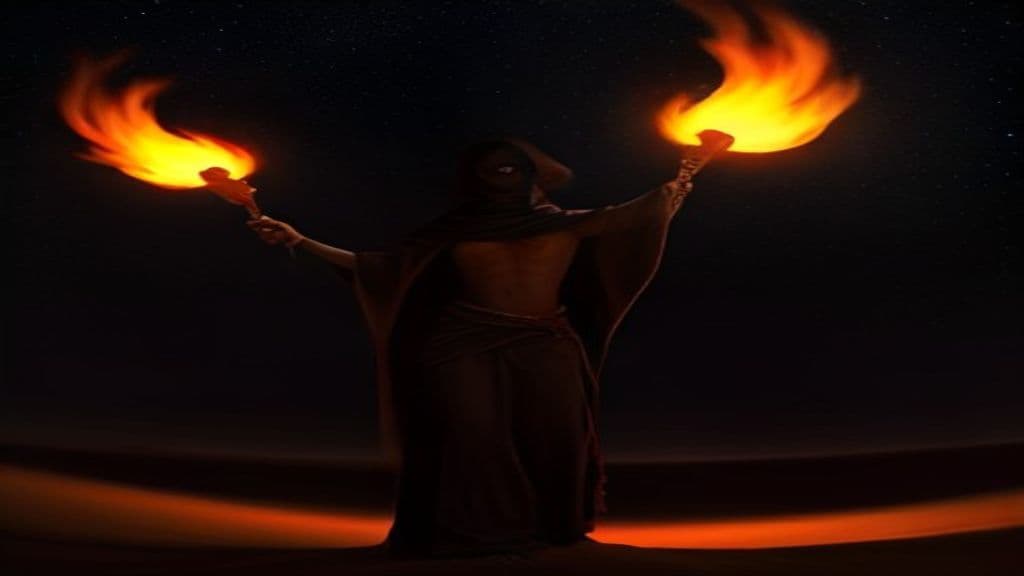
Djinn
The class of supernatural beings created from smokeless fire in Islamic cosmology — a parallel civilization to humanity, capable of belief or unbelief, with their own prophets, society, and judgment before God.

Jann
The weakest class of djinn in Islamic tradition, associated with desert winds and taking the form of snakes or whirlwinds, dwelling in empty wilderness and posing little threat to those who know the proper invocations.
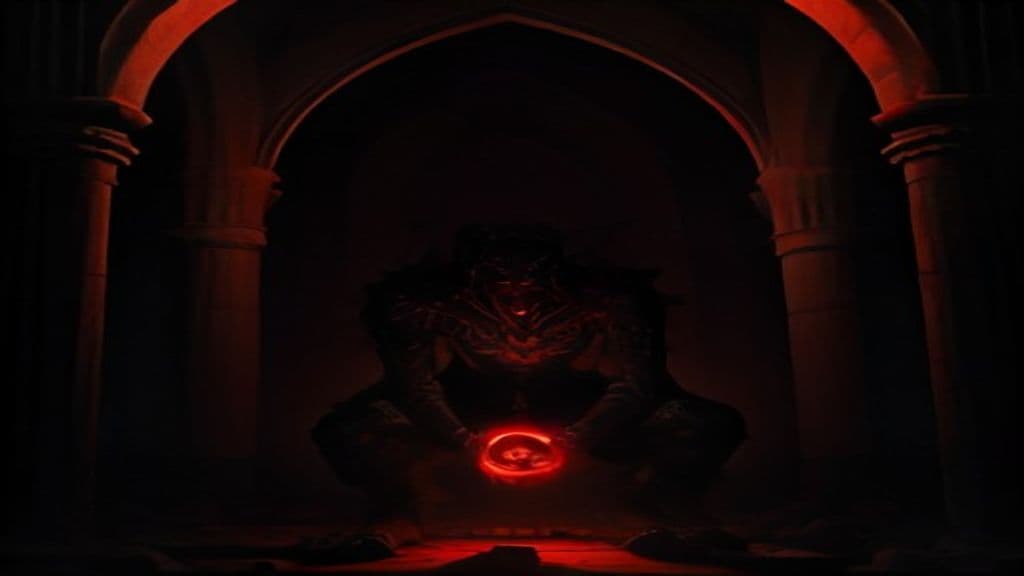
Shaitan
A class of corrupted djinn who follow Iblis and dedicate themselves to leading humans astray — distinct from Iblis himself, the Shayatin are a species of evil djinn who whisper doubts and temptations into the minds of the living.
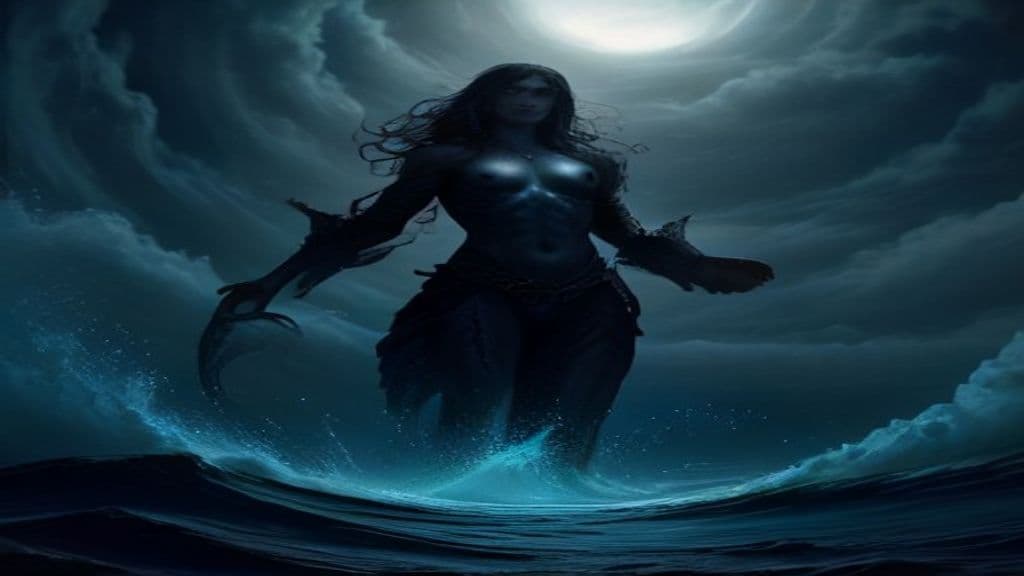
Marid
The most powerful class of jinn in Islamic tradition — beings of the sea, associated with the deep ocean, storms, and the granting of wishes at terrible cost. The classic genie of the Arabian Nights.
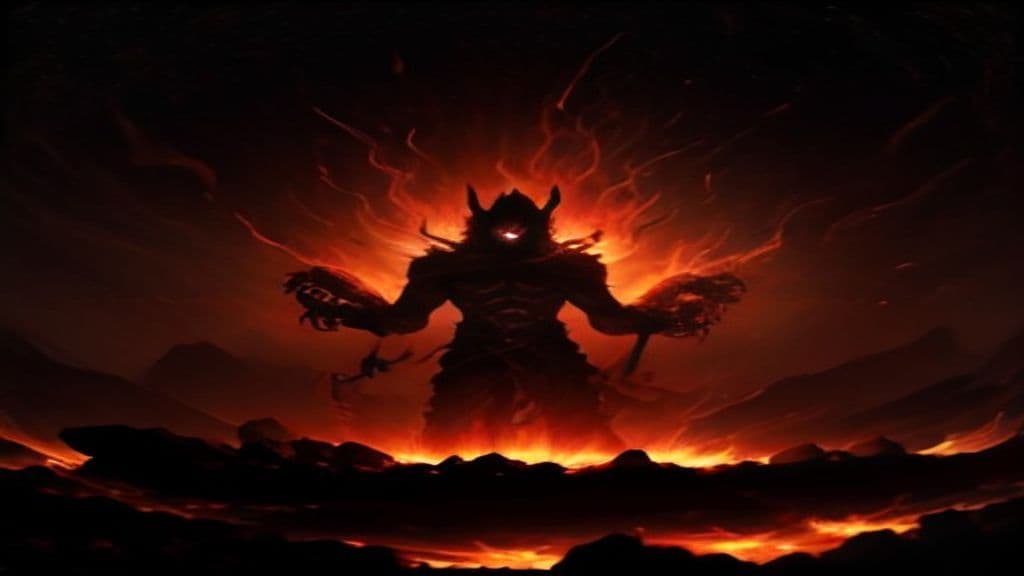
Ifrit
One of the most powerful classes of jinn in Islamic and pre-Islamic Arab tradition — a fire-born being of immense strength and cunning, capable of great works of engineering and terrible violence.
3-D Man
3-D Man is a Marvel Comics superhero identity associated with a 1950s-era origin in which the body of Chuck Chandler can materialize in three-dimensional existence when activated by his brother Hal via a pair of glasses. The mantle was later assumed by Delroy Garrett (formerly Triathlon) in modern continuity.
5 Ronin
5 Ronin is a 2011 Marvel Comics five-issue limited series that reimagines five Marvel superhero archetypes as rōnin (masterless samurai) in a fictionalized post‑Sekigahara feudal Japan. The work places Wolverine, Hulk, Punisher, Psylocke, and Deadpool analogues into period roles to explore displacement, revenge, and identity in an era of political upheaval.
57 Mnemosyne
57 Mnemosyne is a large main-belt asteroid (S-type) discovered in 1859 and named after the Greek Titaness Mnemosyne. It is a non-sentient astronomical body studied for its orbital and rotational properties and has been used in dynamical measurements related to Jupiter.
58 Concordia
58 Concordia is a fairly large main-belt asteroid orbiting the Sun, discovered in 1860 and named after the Roman goddess Concordia. Astronomical sources classify it as a C-type (carbonaceous) body with a multi-year orbital period and measurable rotation and pole orientations.
9MOTHER9HORSE9EYES9
An anonymous Reddit screen name and online persona used by the author of the Interface series, a multipart speculative-horror narrative posted in short installments across Reddit in 2016. The name functions as the signature of an authorial identity and as a focal label for a fandom that created archives, a subreddit, and a wiki documenting the story and its fictional phenomena (notably entities called "flesh interfaces").
A.R.G.U.S.
A.R.G.U.S. is a fictional clandestine United States government agency in the DC Comics universe that investigates, contains, and manages superhuman, meta-human, and supernatural incidents and assets. Introduced in The New 52 continuity, it functions as an institutional actor providing intelligence, logistical support, covert task forces (notably Task Force X / the Suicide Squad), and a dedicated magic division across comics and media adaptations.
Aamon
Aamon (also Amon) is a named spirit in early modern Western grimoire tradition (Pseudomonarchia Daemonum; the Ars Goetia / Lesser Key of Solomon). He is presented as a high-ranking infernal officer (Marquis/Prince) who governs forty legions and is credited with knowledge of past and future and with affecting human relationships (reconciling or procuring feuds and favor).
Aaron
Aaron is a central human figure in Israelite sacred literature: the elder brother of Moses, the first high priest (progenitor of the Aaronide priesthood), and a spokesman/prophet who mediates between Israel and God in Exodus–Deuteronomy narratives. His role in the texts establishes hereditary priestly authority, ritual functions (sacrifices, blessing, use of Urim and Thummim), and institutional norms for Israelite cultic life.
Abaddon
In Hebrew scripture Abaddon is primarily a noun meaning 'destruction' or a section/condition of the underworld paired with Sheol; in the New Testament Book of Revelation Abaddon is personified as an angelic figure (Greek Apollyon) described as the king of an army of locusts released from the abyss during the apocalypse.
Abagtha
Abagtha (Hebrew: אבגתא, ’Ǎḇaḡṯā) is a named human court official in the Hebrew Bible’s Book of Esther, listed among seven chamberlains who ministered before King Ahasuerus and were commanded to bring Queen Vashti before the king. He is attested only in Esther 1:10 and is presented as an institutional palace attendant rather than a supernatural being.
Abdiel
Abdiel (Hebrew עֲבְדִּיאֵל) is primarily a theophoric Hebrew personal name meaning "servant of El/servant of God," attested once in the Hebrew Bible (1 Chronicles 5:15). In later literature—most notably John Milton's Paradise Lost—Abdiel is reimagined as a faithful seraph who opposes Satan's revolt. The provided sources do not treat Abdiel as an autonomous folkloric spirit type or record rituals or wards associated with the name.
Abel
Abel is the second son of Adam and Eve in the Genesis narrative, a shepherd whose accepted offering and subsequent murder by his brother Cain form the biblical account of the first death. Later interpretive traditions expand his role, treating him as an archetypal righteous victim, a postmortem avenging or adjudicating figure, and in some systems (notably Mandaean) identifying him with an angelic lightbeing.
Community Record
- [1]List of demons in the Ars Goetia (Wikipedia). Wikipedia entry on demons listed in the Ars Goetia, noting manuscript variants and differences in numbering and ranking.wiki
- [2]Decarabia (Wikidata). Wikidata item for Decarabia.wiki
- [3]DECARABIA (Abraxas) - Great Marquis Demons of Hell : The Lesser Key of Solomon (archive). Archive material associated with Lesser Key of Solomon entries for Decarabia / grimoire-derived listings.other
- [4]Aleister Crowley's Illustrated Goetia - DuQuette & Hyatt (archive). DuQuette & Hyatt, Illustrated Goetia — table of contents and chapters referenced for ritual framework and standard protective apparatus.other
- [5]Decarabia | Thelemapedia. Thelemapedia summary entry noting Decarabia's attribute of knowing the virtues of herbs and precious stones and listing within goetic roster.wiki
- [6]Ars Goetia - All The Tropes. Summary note on the Lesser Key of Solomon and the numbered group of spirits (69–72 demons depending on edition).other
- [7]Decarabia | Megami Tensei Wiki (Fandom). Modern popular-culture adaptation describing a pentagram-star appearance and man-form on request; used here only as an example of later derivative iconography rather than primary grimoire text.wiki
- [8]Decarabia Demon Names List (HellHorror). Popular summary list reflecting modern attributions and rankings for Decarabia.other