
The Erlkönig, as presented in the provided materials, originates in Johann Wolfgang von Goethe's ballad "Erlkönig" (composed for the Singspiel Die Fischerin, 1782) and functions within that poem as the interlocutor and assailant of a child. The supplied sources do not provide a prior mythic origin or an ethnographic account that situates the figure in older, named folk rites; instead the entity is transmitted and understood primarily through Goethe's literary text and its musical settings (notably Schubert) and subsequent commentary, which label the character a 'king of the fairies' or a demonic fairy-king without offering a systematic prehistory.
The poem gives only a single explicit visual cue: the child asks, "Den Erlenkönig mit Kron' und Schweif?" (literally, the Erlkönig with crown and train/tail), indicating perception of a crown and a trailing garment or appendage. Beyond that line the supplied sources do not provide a detailed physical description; later summaries and commentary infer a courtly, kingly aspect ("king of the fairies"), but such trappings are interpretive extensions rather than additional descriptive details in the texts provided.
In Goethe's ballad the Erlkönig speaks directly to the child, offering enticements — "Du liebes Kind, komm, geh mit mir! / Gar schöne Spiele spiel' ich mit dir; / Manch' bunte Blumen sind an dem Strand, / Meine Mutter hat manch gülden Gewand" — and claims female attendants who will "wiegen und tanzen und singen dich ein." When persuasion fails he threatens force: "Und bist du nicht willig, so brauch' ich Gewalt." The child subsequently reports being touched ("jetzt faßt er mich an"), and by the time the father reaches home "In seinen Armen das Kind war tot," linking the presence or action of the Erlkönig to the child's death. The poem also stages the encounter so that the father's sensory interpretations (a streak of mist, the wind in dry leaves, the grey willows) differ from the child's perceptions, leaving ambiguous whether the cause is purely supernatural assault, a psychosomatic fatal fright, or an interplay between uncanny perception and natural phenomena.
Weaknesses
- otherNo weaknesses recorded in supplied sources
Wards
- otherNo protective rituals or warding formulas are provided in the supplied sources
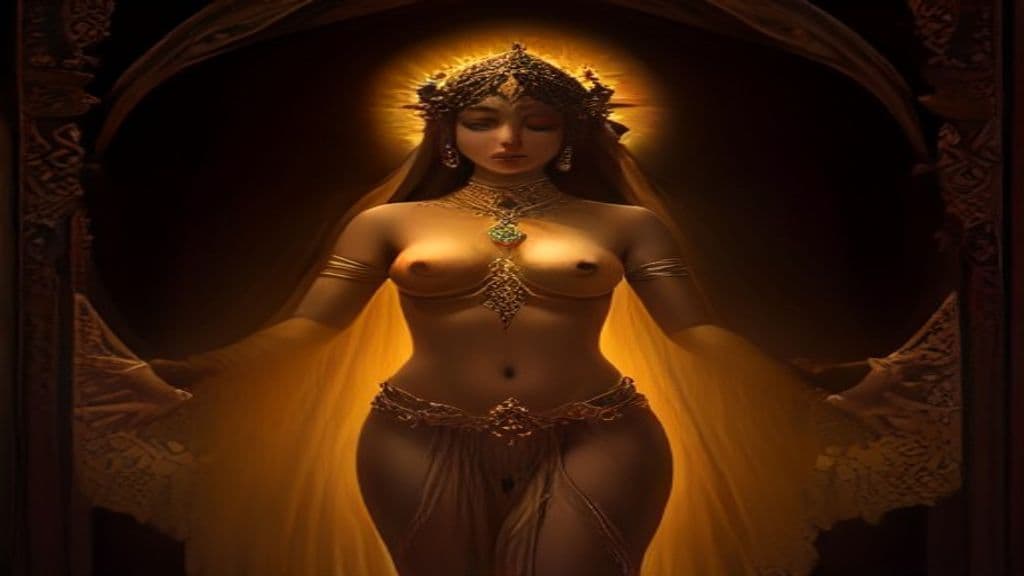
Apsara
Celestial dancers and water nymphs of Hindu cosmology — beautiful semi-divine beings who dance at the court of Indra and, by his command, descend to earth to distract sages from excessive asceticism.
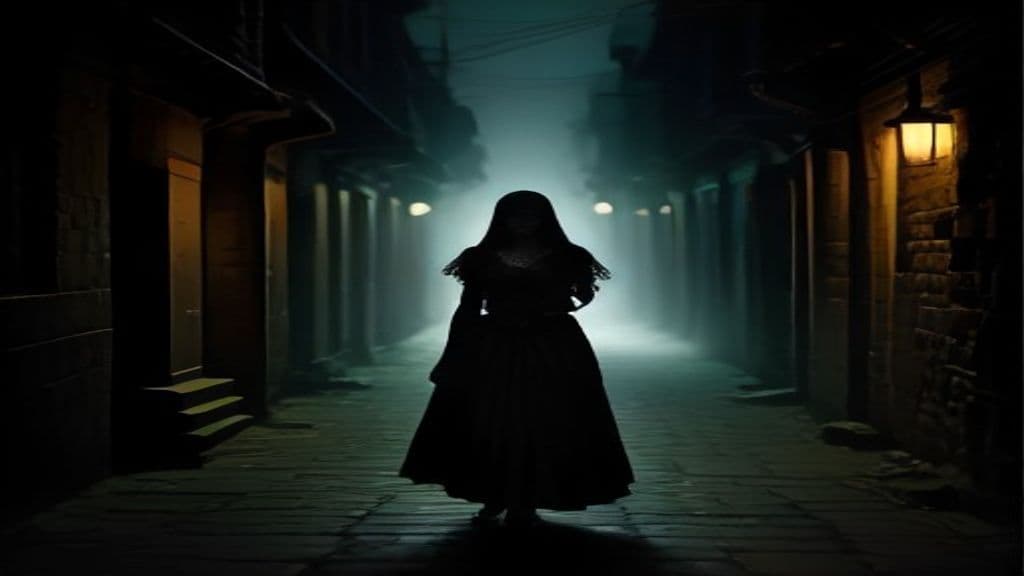
Stree
A vengeful female spirit from Chanderi who abducts men during festival nights. Warded off by the inscription 'O Stree, kal aana' — her legend, still practised on walls across Madhya Pradesh, inspired the 2018 Bollywood horror-comedy.

Rusalka
Water spirits in Slavic folklore — the spirits of young women who died by drowning or suicide, bound to rivers and lakes. Beautiful and dangerous, they can bewitch men to their deaths.

Banshee
A female spirit of Irish and Scottish folklore whose wail heralds an impending death in a family of Gaelic descent. Not a cause of death — a witness to it.

La Llorona
The Weeping Woman of Mexican folklore — the ghost of a mother who drowned her children and now wanders rivers and lakes, weeping for them and taking other children she finds at night.
Abraun
Abraun is an attested name in German-language plant-legend scholarship (Der abraun, ein beitrag zur pflanzensagenkunde, 1916) and a short database entry (Wikidata) labels it as a spirit from German mythology. Surviving accessible documentation is extremely limited: the principal academic treatment is a 1916 contribution to pflanzensagenkunde (plant-saga studies), but the excerpts available here contain only bibliographic metadata and do not record tales, descriptions, or rituals.
Adils
Adils (Old Norse Aðils; also Eadgils, Adillus, Athisl, Adhel) is a semi‑legendary sixth‑century Swedish king attested in Old Norse saga material and later medieval traditions. He appears in saga episodes as a storied royal figure involved in warfare, court acts, and marriage suits rather than as a supernatural being.
Agilaz (Egil)
Agilaz (reconstructed Proto-Germanic) — commonly recorded in medieval sources as Egil or Ægil — is a legendary archer attested in Germanic heroic tradition. He appears as the brother of Völund (Wayland/Weland) in the Old Norse poem Völundarkviða and in the Thidreks saga, and his name is also inscribed on early medieval objects (Franks Casket, Pforzen buckle). The attested material presents him as a named heroic human archer within saga and inscriptional contexts rather than as a recurrent supernatural species.
Alaisiagae
A group of Germanic female deities attested in Roman Britain, worshipped by continental auxiliary troops at a shrine near Vercovicium (Housesteads) on Hadrian's Wall. Epigraphic evidence records dedications to named members (Beda, Fimmilena, and in other lists Baudihillia and Friagabis) alongside Mars Thincsus and the numen of the emperor; modern scholarship interprets them variously as war/victory goddesses, as goddesses associated with assembly/justice, or as part of Matronae‑type fertility/ancestor cults.
Alberich
In Germanic heroic legend, Alberich is a dwarf associated with elven qualities and power. (Note: 1. Power tier: Reduce to Ancient as Alberich's abilities are not described beyond being a dwarf with elven qualities. 2. Origin story: Clarify that Alberich is mentioned in multiple Germanic texts, bu)
Alcis
A pair of youthful brother-deities worshipped by the Naharvali, attested only in Tacitus' Germania (c. 98 CE). They were venerated in a sacred grove under the care of a priest in female attire and are compared by Roman ethnography to the Graeco‑Roman Dioscuri (Castor and Pollux).
Alf and Alfhild
Alf and Alfhild are legendary human figures from Old Norse/early Scandinavian narrative tradition preserved principally in Saxo Grammaticus' Gesta Danorum. The tale presents Alf as a Danish prince and Alfhild as a Geatish princess who becomes a shieldmaiden and leader of a fleet of female raiders; their story includes combat, recognition, marriage, and later dynastic conflict.
Allerleirauh
Allerleirauh is the eponymous heroine of a Brothers Grimm fairy tale (Grimm no. 65; ATU 510B) who flees an enforced-marriage crisis by disguising herself in a mantle of many furs, takes menial service in another court, and later reveals her identity through three magnificent dresses and token objects to secure recognition and marriage.
Alp
A German-speaking folkloric figure associated with nocturnal disturbance of sleepers. Historically tied to the broader Germanic family of 'elves' and treated variously as an eerie nature-being in medieval glosses and as a male nocturnal spirit in later folk accounts that sits on sleepers' chests and causes nightmares (Alptraum) and 'elf-pressure' (Alpdruck).
Alraune
Alraune is the German folkloric figure identified with the humanoid-shaped mandrake (Mandragora officinarum) and the eponymous female character in Hanns Heinz Ewers's 1911 novel. In folklore the mandrake/Alraune is associated with love philtres, fertility, and a medieval gallows-origin legend; in literature the name labels a woman artificially conceived from a criminal's semen, whose emotional life and actions dramatize the folk moral about such origins.
Altgermanische Religionsgeschichte
A historical survey of Germanic religious history, providing an overview of the pantheon of gods and goddesses. (Note: - Power tier is not applicable to historical surveys - The article should reflect that it's a historical survey, not an entity with abilities or appearance - Consider adding information on the signifi)
Amleth
Amleth (Old Norse: Amlóði; Latinized Amlethus) is a legendary medieval Scandinavian prince and saga-hero best known from Saxo Grammaticus' Gesta Danorum. He is a human protagonist whose story centers on feigned madness, cunning survival, exile to Britain, marriage, wealth-gathering, and eventual vengeance against his father's murderer; the tale later inspired the character of Shakespeare's Hamlet and numerous adaptations.
Community Record
- [1]Erlkönig - Wikipedia. 'Erlkönig' is a poem by Johann Wolfgang von Goethe. It depicts the death of a child assailed by a supernatural being, the Erlking, a king of the fairies.wiki
- [2]Der Erlkönig (archive recording page). Archive recording of Goethe's 'Der Erlkönig' and related performances referenced in the provided materials.literary
- [3]LEGGERO INVISIBLE (LIGHT INVISIBLE) (archive). Archive item listed among provided materials referencing musical/literary reception of the poem.other
- [4]Erlkönig [German ballade][Japanese version] (archive). Archive media of Goethe's 'Erlkönig' illustrating the poem's textual and performative transmission.literary