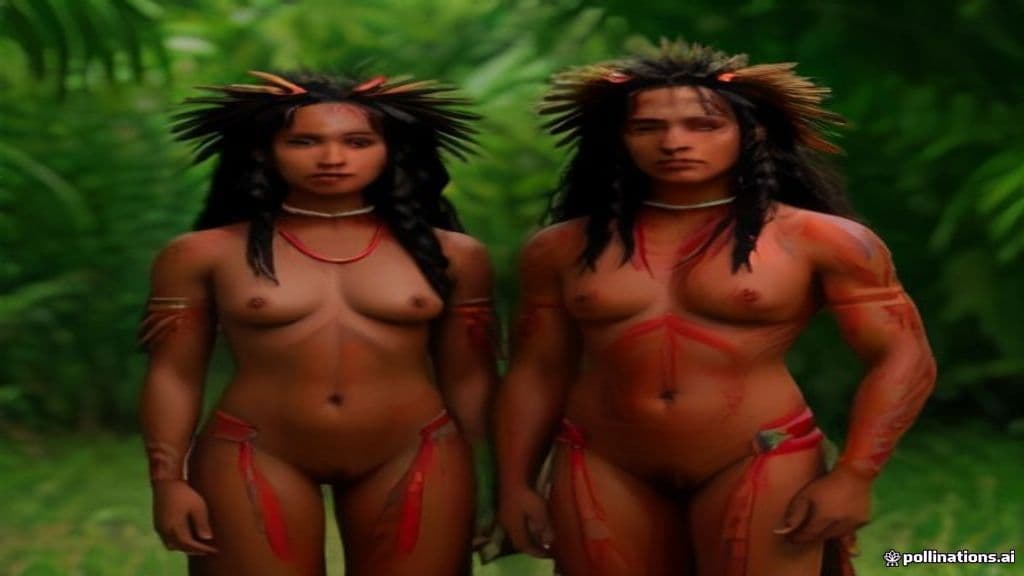
Not applicable as a mythic origin: fakafifine is a Niuean lexical and social category rather than a mythological being. The term is derived from Niuean morphological elements (faka- + -fifine) and is used in modern cultural and community contexts to describe an indigenous gender identity.
Sources do not provide a standardized physical description. Descriptions emphasize feminine gender expression and social presentation rather than fixed physical traits. Fakafifine individuals are understood to inhabit feminine presentation and roles within Niuean and pan‑Pacific gender-diverse communities; specific styles of dress or appearance are not prescribed in the available materials.
Fakafifine denotes social roles and behaviors rather than supernatural powers. Documented behaviors and social functions include feminine gender expression, participation in community and cultural life, engagement in activism and advocacy for Pasifika gender diversity (for example, noted practitioners and activists such as Phylesha Brown-Acton), mutual support and mentorship within Pacific gender networks, and navigation of identity in diaspora contexts.
Abaia
Abaia is a singular, enormous freshwater eel spirit from Melanesian tradition (notably Fiji, the Solomon Islands, and Vanuatu) that dwells in lake depths and protects all aquatic life; when humans harm lake creatures it responds by creating waves, storms, or floods that drown transgressors.
Agunua
Agunua is the chief cosmic-serpent deity of San Cristobal (Makira) in the Solomon Islands, worshiped as a creator and nourisher and associated with the sea. In some accounts the name Hatuibwari is treated as an alternate form emphasizing a dragon-like composite appearance.
Aitu (Māori)
Malevolent spirits in Māori tradition, often taking the form of plants or animals and associated with trouble-making and mischief. (Note: - Power tier should be Greater, not Lesser (Aitu being lesser gods in some cultures, but also associated with deity-level abilities) - Abilities: Add detail about their role as patrons of specific vil)
Aiwohikupua
Aiwohikupua is a personal name attested once in the supplied corpus of collected Hawaiian-language narrative material. The available sources provide only a short fragmentary occurrence of the name and no corroborating description, role, or attributes.
Akava'ine
Akava'ine is a Cook Islands Māori social and gender category for people assigned male at birth who live or present as women or otherwise occupy a gender-variant/transgender role. The term (Cook Islands Māori) literally means "to behave as a woman" and has both historical ethnographic mentions of gender-variant individuals in the Cook Islands and a contemporary use (since the 2000s) among Cook Islands Māori, including diaspora communities.
Akua
Akua is the Hawaiian common noun for a god, deity, or divine being; in the provided sources it functions as a lexical category applied to indigenous Hawaiian deities and as the translation-term for the Christian God in Hawaiian-language liturgy and scripture.
Ascalapha odorata (Hawaiian)
A nocturnal moth associated with death or misfortune in Hawaiian tradition, possibly tied to Central and South American folklore. (Note: - Summary should note that Ascalapha odorata's association with death/misfortune is found in Central and South American folklore, not explicitly mentioned in Hawaiian tradition. - Power tier: Primordi)
Atanua
Atanua is the Marquesan (Polynesian) goddess of the dawn who, in local cosmogony, is the consort of Atea and mother of the first man; she is also credited in the surviving summary accounts with creating the seas as the result of a miscarriage.
Atea
Atea is a primordial creator-associated being in multiple Polynesian traditions (Marquesas, Tuamotu, and Māori) closely associated with light and the ordering of the cosmos. Variants depict Atea as a self-originating giver of light, a progenitor who fathers gods and humans, or as the cosmic universe that is sex-differentiated into Heaven and Earth in one reported account.
Atua (Māori Deity)
In Māori mythology, Atua are supernatural beings believed to have created the world and all living things. They are considered rulers of the spiritual realm with powers over nature, fertility, and human destiny. (Note: 1. Power tier: Based on the abilities described (controlling nature, fertility, and human destiny), Atua likely belong to the Primordial power tier, not Greater. 2. Weaknesses: Add a specific weakness)
Avatea
Avatea (also spelled Vatea in some sources) is a primordial parent figure in Mangaian (Cook Islands) mythology, described as a lunar deity and god of light whose eyes were thought to be the Sun and the Moon, and who is called the father of gods and men in the island's origin narrative.
Baloma
In Trobriand Islanders' belief as reported by Bronisław Malinowski, baloma are the spirits of deceased lineage members who act to produce new members of a matrilineal line; they are credited with impregnating women (often described as occurring while bathing in the sea) and thereby sustaining matrilineal descent.
Community Record
- [1]Fakafifine. Wikipedia, 'Fakafifine' entrywiki
- [2]Wikidata: fakafifine. Wikidata item Q107427210wiki
- [3]Hands and feet: A reflection on Polynesian navigation—a Niue Fakafifine community practitioner perspective in Aotearoa-New Zealand. Phylesha Brown-Acton, 'Hands and feet: A reflection on Polynesian navigation—a Niue Fakafifine community practitioner perspective in Aotearoa-New Zealand', Te Kaharoa (article)academic
- [4]Fa'afafine, fakaleitī, fakafifine — understanding the Pacific's alternative gender expressions. Archived resource on Pacific alternative gender expressionsother
- [5]Fa'afafine, fakaleitī, fakafifine — understanding the Pacific’s alternative gender expressions (exhibit). LGBT Religious Archives exhibit entryother
- [6]Phylesha Brown-Acton (Wikipedia). Wikipedia entry for activist Phylesha Brown-Acton (notes association with MVPFAFF+ and Pacific gender diversity advocacy)wiki