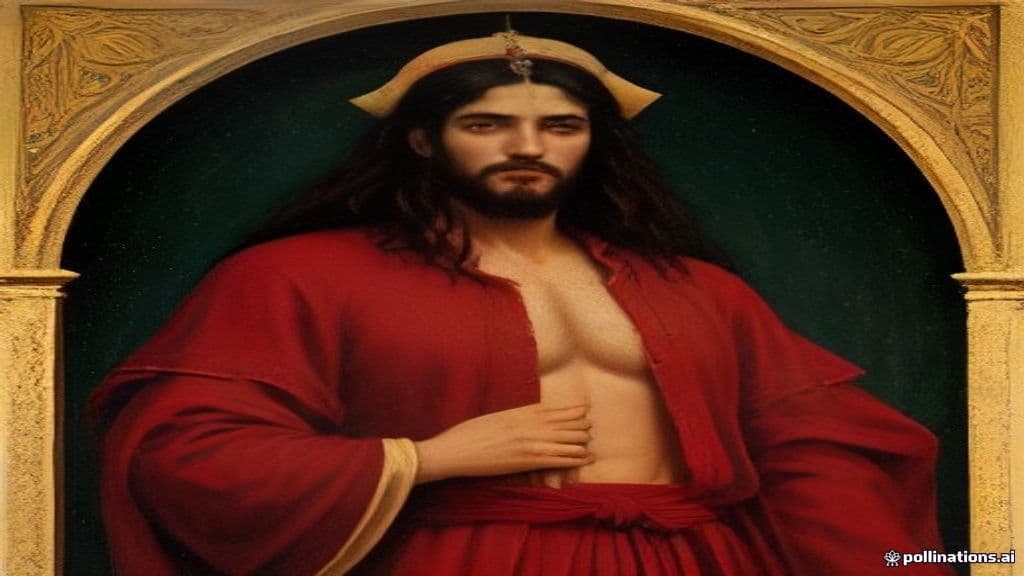
Filippo Argenti is attested as a historical Florentine of the Adimari family and a member of the Black Guelph faction in 13th-century Florence. His literary afterlife originates in Dante Alighieri’s Divine Comedy (Inferno, Canto VIII), where Dante locates him among the wrathful punished in the river Styx. The surname 'Argenti/Argente' is linked in anecdotal accounts to an origin-story detail — allegedly having his horse shod with silver — and genealogical notes associate him with the Adimari (Cavicciuoli branch) in civic memory. Dante’s placement is a poetic-moral judgment within a Christian allegorical topography rather than a verifiable historical claim about the dead.
Biographical and anecdotal sources describe Filippo as a very tall, burly man famed for his 'iron fists' and a choleric, haughty temperament (Boccaccio’s Decameron and biographical summaries). In Dante’s Inferno he is depicted in the episode among the wrathful on the Styx: he accosts Dante and then, when attacked by the other wrathful, is described as turning 'his teeth against himself' and biting fiercely. The poem emphasizes his violent gestures and fury in that episode rather than detailed physiognomy.
In historical and biographical sources Filippo’s 'abilities' are reputational: a violent temper, quarrelsomeness, and involvement in Florentine political conflicts (Black Guelph faction). In Dante’s poem his agency is limited to aggressive speech and violent gesturing as a damned soul among the wrathful; he accosts the pilgrim and is then attacked by fellow damned, after which he bites himself. The sources provide no indication of supernatural powers, occult influence, or ongoing folk agency beyond his literary role.
Weaknesses
- othernone attested in sources
Wards
- othernone attested in sources
Admeto (Admetus)
Admeto is the legendary King of Thessaly from classical myth as transmitted into European opera (notably Handel's Admeto, HWV 22). Portrayed as a mortal tragic protagonist, his fate in the narrative is determined by divine oracular decree and by the actions of other mythic figures (Alceste, Apollo, Hercules) rather than by any innate supernatural power.
Aggi and Ebbi (lexical occurrences)
Aggi and Ebbi are not attested as folkloric beings in the supplied sources; they appear only as isolated word-forms in an Italian poetic excerpt and as capitalized letter-strings in a puzzle/solution transcript. No mythic identity, powers, or rituals are documented for these tokens in the provided materials.
Agolant
Agolant is a literary Saracen king who appears as a recurring antagonist in medieval and Renaissance epic cycles (Matter of France). He functions as a human royal opponent to Charlemagne and his peers, supplying martial episodes, genealogical connections, and the transfer of legendary arms and horses in chansons de geste and later Italian romances.
Akenta
Akenta is attested in the provided sources only as a proper name appearing in several unrelated contexts (a listing of South Australian groups, commercial wine branding, a health company, and a parliamentary text). The sources do not describe Akenta as a supernatural being, and no mythic attributes, appearance, powers, or rituals are recorded.
Alazṓn
Alazṓn (Ancient Greek: ἀλαζών) is a theatrical stock character of ancient Greek comedy who functions as an impostor or braggart: a figure who overestimates and theatrically misrepresents his own qualities and social status. As an archetype he generates comic situations, serves as the opponent of the eirôn, and recurs across Greek and Roman comedy, commedia dell'arte, and later drama.
Alichino
Alichino is a name used in two distinct literary contexts: in Dante Alighieri's Inferno it names one of the Malebranche devils assigned to guard the fifth bolgia of Hell; in Kouyu Shurei's manga Alichino it denotes a species of beautiful, wish-granting demons who prey on desperate humans in exchange for their souls.
Annowre (Elergia)
Annowre (also rendered Anouwre; Elergia in Italian La Tavola Ritonda) is a malignant enchantress in medieval Arthurian romance who attempts to seduce and bewitch King Arthur, typically through an enchanted ring and an entrapping tower or castle; she is ultimately overthrown and beheaded, her head displayed as proof of victory.
Aradia
Aradia is a name and motif appearing in late-19th-century folklorist literature (notably Charles G. Leland's Aradia, or the Gospel of the Witches) and in Italian, Sardinian, and adjacent regional folklore where cognate names (Arada, Araja, Erodiade/Irodiada) are attached to a nocturnal female host associated with Diana/Herodias. Sources portray Aradia variously as a messianic teacher of witchcraft (Leland) and as part of a tradition of night-flying female spirits and regional fairy-queen figures (folklore surveys).
Badalisc
The Badalisc is a local ritual creature of Val Camonica (Andrista, Cevo) in northern Italy: an animal‑like masked figure captured in the woods at Epiphany, led into the village, and used as a mouthpiece for a satirical public speech that names communal misdeeds before being released back to the woods.
Barbariccia
Barbariccia is one of the Malebranche devils in Dante Alighieri's Inferno (Canto 22), portrayed as a corporal enforcer and a subordinate commander who supervises other devils in Bolgia Five of the Eighth Circle (the Malebolge). The name is Italian and literally means "curly beard."
Beatrice Portinari
Beatrice (Bice) di Folco Portinari appears in Dante Alighieri's works as the personified embodiment of beatific love, divine grace, and theological vision who intercedes for and ultimately guides the pilgrim from human reason into Paradise. Historically she may be a Florentine woman documented in late 13th-century records, but the literary Beatrice is primarily a theological and allegorical figure within Dante's poetic cosmology.
Belacqua
Belacqua is a literary soul appearing in Dante Alighieri's Purgatorio (Canto IV), encountered in Ante‑Purgatory as a saved soul whose delayed repentance requires him to wait before beginning active purgation. He personifies sloth/indolence, functions as a comic, humanized figure in Dante's moral topography, and was identified by early commentators with the Florentine instrument‑maker Duccio di Bonavia.
Community Record
- [1]Filippo Argenti — Wikipedia. Wikipedia, 'Filippo Argenti'wiki
- [2]Inferno, Canto VIII (Digital Dante). Digital Dante, Inferno VIII (excerpt and commentary)literary
- [3]Dante's Inferno — Circle 5 (DanteWorlds). DanteWorlds, Circle 5 summary and questionsacademic
- [4]The Decameron — Ninth Day, Novel VIII (Boccaccio). Giovanni Boccaccio, Decameron (biographical anecdote referencing Filippo's temperament)literary
- [5]Argenti — Wikipedia (surname notes). Wikipedia, 'Argenti' (notes on surname and anecdotal origins)wiki
- [6]Studi danteschi (archive reference). Studi danteschi (commentarial material on Dante and historical figures)academic