
No continuous origin narrative survives for Fjörgyn or Fjörgynn in the cited materials. Instead the names appear in discrete attestations: the feminine Fjörgyn occurs in the Poetic Edda (Völuspá, where 'Fjörgyn’s son' is used as a kenning for Thor, and in Hárbarðsljóð as Thor's mother), while the masculine Fjörgynn is named in Snorri Sturluson's Prose Edda (Gylfaginning §9 and Skáldskaparmál §19) as the father of Frigg and is referenced in Lokasenna. Scholarly commentary suggests these names reflect an older Proto-Germanic/Proto-Indo-European lexical field for 'mountain' or 'wooded mountain' and may indicate an ancestral pairing or complementary earth-related concepts, but such reconstructions are theoretical and not recorded as narrative in the surviving Norse texts.
The sources provide no physical or iconographic descriptions of Fjörgyn or Fjörgynn. Attestations identify them by relational roles (mother of Thor; father of Frigg) and by usage as poetic synonyms for land, mountain, or earth. Thus, their 'appearance' in the corpus is primarily linguistic and genealogical: they are known through kennings, stanzaal references, and placement within divine family trees rather than by bodily attributes or visual portrayals.
No explicit powers, actions, or behavioral scripts are ascribed to Fjörgyn or Fjörgynn in the cited materials beyond their literary and genealogical functions. Fjörgyn functions as a poetic personification of the earth and features in kennings (e.g., 'Fjörgyn's son' for Thor). Fjörgynn is recorded as Frigg's father in Snorri's prose, a genealogical role. Scholarly hypothesis—based on etymology linking Proto-Germanic *fergunja to PIE roots associated with mountain and thunder deities (e.g., *Perkwunos)—proposes an underlying association with thunder or weather figures, but this is conjectural and not directly attested in the surviving Norse texts cited here.
Weaknesses
- otherNo weaknesses attested in the cited sources
Wards
- otherNo protective wards or rituals attested in the cited sources
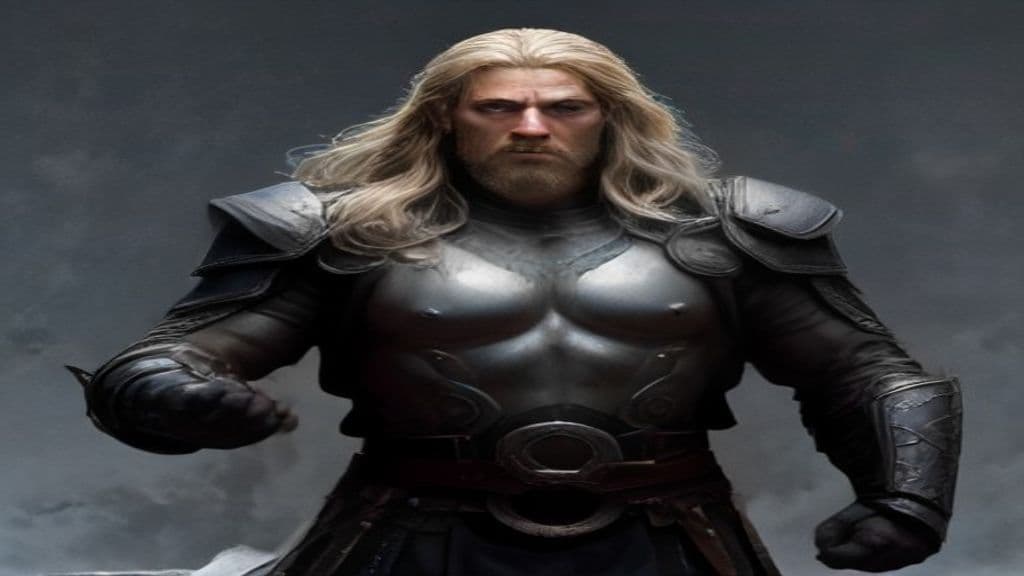
Thor (Þórr)
Thor (Old Norse Þórr) is a central god in the pre-Christian Germanic/Norse religious framework, primarily associated with thunder, storms, strength, protection, fertility, and the welfare of farmers. He is a hammer-wielding warrior who fights monstrous enemies (notably Jörmungandr) and is widely attested from Roman-era Germania through the Viking Age, with ongoing cultural presence in personal and place-names and weekday nomenclature (Thursday).

Frigg
Frigg is an Old Norse goddess of the Æsir, foremost among the pantheon as Odin's wife, associated with marriage, motherhood and foresight. She dwells in Fensalir and is attested across North and West Germanic traditions (Old Norse Frigg; Old English Frīg; Old High German Frīja; Lombardic Frea). Her name survives in the weekday Friday and persisted in Scandinavian folklore after Christianization.

Perun
The highest god in the Slavic pantheon, associated with law, war, thunderstorms, and fertility. (Note: - Power tier should be Ancient -> Primordial (as he is described as the "highest god" and his attributes are cosmic in scale) - Abilities should include control over mountains, as mentioned in the sou)
Adils
Adils (Old Norse Aðils; also Eadgils, Adillus, Athisl, Adhel) is a semi‑legendary sixth‑century Swedish king attested in Old Norse saga material and later medieval traditions. He appears in saga episodes as a storied royal figure involved in warfare, court acts, and marriage suits rather than as a supernatural being.
Agilaz (Egil)
Agilaz (reconstructed Proto-Germanic) — commonly recorded in medieval sources as Egil or Ægil — is a legendary archer attested in Germanic heroic tradition. He appears as the brother of Völund (Wayland/Weland) in the Old Norse poem Völundarkviða and in the Thidreks saga, and his name is also inscribed on early medieval objects (Franks Casket, Pforzen buckle). The attested material presents him as a named heroic human archer within saga and inscriptional contexts rather than as a recurrent supernatural species.
Agnarr Geirröðsson
Agnarr Geirröðsson is a mortal prince attested only in the Poetic Edda poem Grímnismál; he aids Odin (disguised as Grímnir) during Geirröðr's torture and, after Odin reveals himself and King Geirröðr dies, Agnarr succeeds as king.
Agne
Agne (also attested Agni, Hogne, Agni Skjálfarbondi) is a semi-legendary king of Sweden in Old Norse saga tradition, preserved in the Ynglingatal corpus and prose expansions such as Snorri Sturluson's Ynglinga saga. He is portrayed as a mighty and famous warrior-king whose campaign in Finland, marriage to Skjalf, and death by hanging form a remembered episode connected to local place-names and a burial mound.
Alf and Alfhild
Alf and Alfhild are legendary human figures from Old Norse/early Scandinavian narrative tradition preserved principally in Saxo Grammaticus' Gesta Danorum. The tale presents Alf as a Danish prince and Alfhild as a Geatish princess who becomes a shieldmaiden and leader of a fleet of female raiders; their story includes combat, recognition, marriage, and later dynastic conflict.
Algaut
Algaut (also rendered Algöt or Algaut Gautreksson) is a semi-legendary Geatish king of West Götaland recorded in Scandinavian saga and genealogical tradition. Saga summaries (via Snorri Sturluson's Heimskringla as reported in later compilations) record that he was the father of Gauthild and was burnt to death by his son-in-law, the Swedish king Ingjald Ill-ruler.
Almáttki áss
Almáttki áss is an epithet-attested divine figure invoked in an Icelandic legal oath recorded in Landnámabók (Hauksbók 268). In the sole attestation the phrase functions as an invoked áss (god) described with the adjective almáttki ('almighty') and serves as the divine guarantor or witness for an oath sworn on a temple ring. Scholarly sources debate whether the epithet refers to a named Norse god (Thor, Ullr, Odin, or Týr) or is a Christianizing formulation by a later author.
Alrek and Eirík
Alrek and Eirík (also rendered Alaric and Eric) are legendary Swedish kings from the Old Norse saga tradition who are presented as joint rulers and as members of the Ynglinga royal genealogies. They appear in saga narratives as sons and heirs of King Agni, famed for martial and athletic prowess, and as hosts who receive the hero Starkaðr after the sacrificial death of Vikar.
Alvaldi
Alvaldi (Old Norse: Alvaldi / Ölvaldi) is a jötunn in Norse mythic genealogies, attested chiefly as the father of the notable jötunn Þjazi and described in one source as exceedingly rich in gold. He survives in the record mainly as a familial antecedent and an etiological figure rather than as an active participant in preserved narratives.
Alvíss
Alvíss (Old Norse: 'All‑Wise') is a dwarf in Norse mythology who appears in the Poetic Edda poem Alvíssmál as a prospective husband for Thor's daughter Þrúðr. In the surviving narrative Thor tests Alvíss's wisdom through a lengthy question-and-answer session that lasts until sunrise, whereupon the dwarf is petrified by exposure to sunlight.
Amleth
Amleth (Old Norse: Amlóði; Latinized Amlethus) is a legendary medieval Scandinavian prince and saga-hero best known from Saxo Grammaticus' Gesta Danorum. He is a human protagonist whose story centers on feigned madness, cunning survival, exile to Britain, marriage, wealth-gathering, and eventual vengeance against his father's murderer; the tale later inspired the character of Shakespeare's Hamlet and numerous adaptations.
Ancient Kings of Finland
In early literary sources, the Ancient Kings of Finland are described as hypothetical or mythical monarchic systems associated with ancient Finland. (Note: 1. Power tier: Lower to Primordial (given the lack of specific abilities and behaviors) 2. Abilities and behaviors are described as 'generally vague', so this section should be reworded or removed 3. )
Community Record
- [1]Fjörgyn and Fjörgynn - Wikipedia. Wikipedia entry summarizing attestations and scholarly discussion of Fjörgyn and Fjörgynnwiki
- [2]The Poetic Edda: Völuspá (stanza references). Poetic Edda (Völuspá) occurrence of the kenning 'Fjörgyn's son' and other strophic attestationsliterary
- [3]Fjorgynn and Fjorgyn - Norse Mythology for Smart People. Popular scholarly summary of the names, attestations, and etymological discussionother
- [4]Prose Edda (Gylfaginning & Skáldskaparmál) — Snorri Sturluson (references). Snorri's Prose Edda: Fjörgynn attested as the father of Frigg in Gylfaginning §9 and Skáldskaparmál §19 (as reported in summaries and secondary sources)literary
- [5]Comparative etymology and PIE parallels (summary in secondary sources). Secondary-source summaries linking Old Norse Fjörgyn and Proto-Germanic *fergunja to cognates (Gothic fairguni, Old English firgen) and to proposed PIE root *per-kwun-iyā and comparanda such as Perkūnas/Perun; presented as scholarly hypothesisacademic
- [6]Jörð. Wikipedia, 'Jörð' articlewiki
- [7]Wikidata: Fjörgyn. Wikidata entry for Fjörgynother