
No cosmogonic or narrative origin story for the Persian gul is recorded in the supplied etymological and lexical sources. The available material treats the term as a lexical item in Persian/Turkic (Persian غول, Turkish ğul) and documents its use as a name for a folkloric, devouring monster; it does not provide traditional mythic genealogy or origin myths (sources: Wordnik; TURKISH AND PERSIAN LOANS IN ENGLISH LITERATURE).
The supplied sources do not provide consistent or detailed traditional physical descriptions of the Persian gul. Lexical summaries label it an 'imaginary sylvan demon' but offer no morphology; modern fictional portrayals vary widely but are not recorded here as traditional Persian descriptions (sources: Wordnik; Tropedia/Fandom; loanword studies).
From the documented lexical entry, the defining behavior attributed to the gul is that it 'is supposed to devour men and animals.' Beyond this core predatory behavior, the supplied materials do not provide a consistent catalogue of other powers (sources: Wordnik; loanword study). Modern literary uses expand the label to many varieties of flesh‑eating or macabre creatures, but those are later cultural developments rather than direct evidence for traditional Persian abilities (sources: Tropedia/Fandom; TURKISH AND PERSIAN LOANS IN ENGLISH LITERATURE).
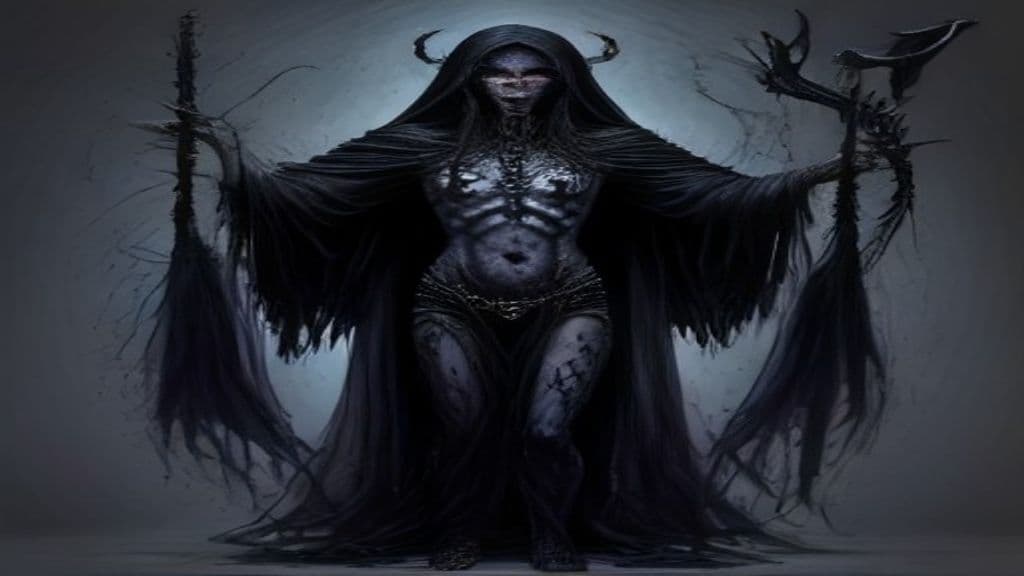
A'ra
No reliable sources in the supplied material establish A'ra as a distinct supernatural entity. The token "A'ra" appears in the dataset as (a) part of general references to pre-Islamic Arabian deities, (b) a modern Korean female given name (A-ra/아라), and (c) an Arabic toponym (A'ra, one village merged into Ar'ara).
Ab-Zohr
Ab-Zohr is the culminating rite of the Zoroastrian Yasna service: a formal offering to the waters (Aban/Apas) that creates the consecrated liquid parahaoma and functions to purify, strengthen, and atone for damage done to waters. It is a ritual action rather than an independent supernatural being.
Aban (Āb/Ābān)
Aban (Avestan apas; Middle Persian āb/ābān) is the collective, sacred principle of the waters in Zoroastrian cosmology — both the element water and its personified hypostases (the Apas/Ahuranis). Aban functions as a primordial, life-giving creation, a calendrical and liturgical focus (day-name, month-name, Abanagan feast), and a ritual object of veneration (ape zaothra, Aban Yasht) rather than a malign force to be expelled.
Aban Yasht
The Aban Yasht is a hymn from the Persian tradition that praises Anahita, a goddess associated with water, fertility, and wisdom. It consists of 132 stanzas and is part of the 21 Yashts collection. (Note: - Power tier should be "Primordial" or possibly "Cosmic", given that it's a hymn of great spiritual significance and associated with a goddess. - The article incorrectly states that Anahita is associa)
Abgal
Abgal (Arabic: أبغال) is a pre‑Islamic local tutelary figure attested in the Palmyrene cultural sphere (c. 154–270 AD), primarily venerated by nomadic Arab groups in the Syrian desert. He appears in inscriptions and reliefs as one of a constellation of armed, mounted protective deities associated with caravan and nomadic protection, though no ritual texts survive in the cited sources.
Abtin
Abtin (Persian: آبتین), attested also as Athwya, is a mythic ancestral figure in Iranian tradition described in Avestan and later epic literature as one of a small set of formative human-like figures involved in preparing the corporeal world and as the father of the epic hero-king Fereydun in the Shahnama.
Abzar İyesi
A Turkic iyesi (possessive/guardian spirit) of the courtyard, outbuildings, and farmstead grounds; ambivalent in nature, it protects its domain but may harm livestock and cause mischief, often appearing in animal forms.
Adur Burzen-Mihr
Adur Burzen-Mihr is a consecrated Atash Behram — one of the three Great Fires of late antique Sasanian Zoroastrianism — historically associated with the farmer social estate and with a cultic location in northeastern Iran. Medieval texts (e.g., the Bundahishn) and later summaries record it as a major pilgrimage fire with legendary associations of protection and miraculous efficacy; its documentary history after the early Islamic period is unclear.
Adur Farnbag
Adur Farnbag is one of the three Great or Royal fires in the Zoroastrian ritual/topographical system of pre‑Islamic Iran. Presented in the sources as a continuously tended sacred fire housed in a temple, it is attested in secondary accounts as a focus of cultic activity, miracle stories, and association with elite ritual geography in the Parthian–Sasanian eras.
Adur Gushnasp
Adur Gushnasp (Middle Persian: Ādur ī Gušnasp; New Persian: Āzargušnasp) is a pre-Islamic Zoroastrian Great Fire — one of the three highest grade sacred temple fires (Atash Behram) of Sasanian-era Iran. Housed at the temple-site historically called Shiz (modern Takht-e Soleymān, Adurbadagan), it functioned as a continuously tended cultic fire, a pilgrimage destination, and a focal point of royal patronage and warrior-class identity.
Aeshma
Aeshma is the Zoroastrian hypostasis of wrath — a fiendish being who personifies rage and functions as an ontological opponent to Ahuric principles and ritual discipline. In scripture and later tradition he distracts worship, foments violence and drunkenness, can be driven off by prayer or by divine agents such as Sraosha and Mithra, and will be overthrown or flee at the final renovation.
Afrasiab
Afrasiab is the legendary king and arch-enemy of Iran in Iranian epic and Zoroastrian-influenced tradition. Attested from the Avestan Fraŋrasyan through Middle Persian and the Shahnameh, he functions as a powerful Turanian ruler associated with sorcery, subterranean dwellings, and opposition to Iranian heroes and divine agencies.
Community Record
- [1]ghoul - definition and meaning (Wordnik entry). Wordnik, entry summarizing etymology and sense: 'Persian غول (ğul) — an imaginary sylvan demon, supposed to devour men and animals.'wiki
- [2]TURKISH AND PERSIAN LOANS IN ENGLISH LITERATURE. Loanword study listing documenting transmission of Persian/Turkish lexical items (including gul/ghoul) into English literary history.academic
- [3]Our Ghouls Are Creepier | Tropedia | Fandom. Tropedia/Fandom summary noting modern fictional variability of 'ghoul' portrayals; cited here to indicate later literary developments distinct from traditional Persian descriptions.folk
- [4]Gul (Ghoul) - Wikipedia. Wikipedia entry for 'Gul (Ghoul)' (used as a general reference among the supplied materials).wiki