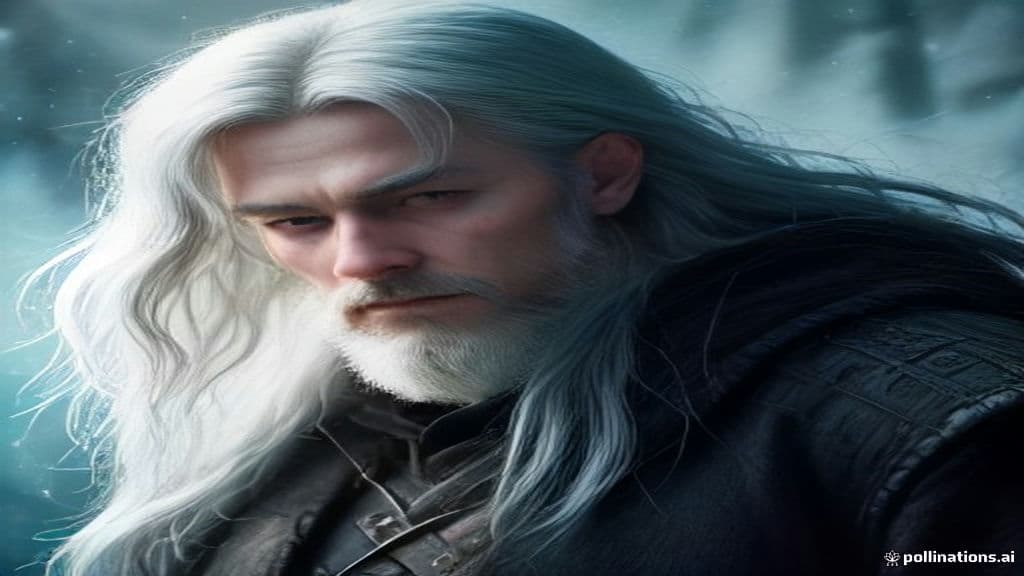
Hrólf Kraki is a legendary king in Norse folklore, from Denmark. Hrólf Kraki is a semi-legendary Danish king of early medieval Scandinavian and Anglo‑Saxon literary traditions. He is the protagonist of the Old Norse Hrolfs saga kraka and appears in materials connected to the Poetic Edda and Anglo‑Saxon memory (e.g., links with the Beowulf cycle). The figure is treated as a legendary/mortally vulnerable royal hero rather than as a purely supernatural being.
In the surviving sources Hrólf Kraki is presented as a semi‑legendary Danish king situated within the shared legendary past of Scandinavian and Anglo‑Saxon narrative memory. He appears as the central figure of Hrolfs saga kraka — classified among the fornaldarsögur (sagas of ancient times) — and is linked in scholarly and editorial treatments with characters and genealogies that overlap the Beowulf tradition. The dossier materials frame him as part of a heroic-kingly genealogy and the narrative web of the Poetic Edda and related heroic lays; the supplied sources do not provide a single coherent ethnographic 'origin myth' but consistently treat him as a storied royal ancestor within the mythic‑heroic corpus (Saga of King Hrolf Kraki; Beowulf and Hrolf Kraki references).
The sources provided do not include a detailed physical portrait; Hrólf is primarily identified by his role, epithet, and name‑variants (e.g., Kraki/Krage). Saga and saga‑related materials and later retellings emphasize his status and courtly setting — kingly regalia and a famed retinue (his hird and notable champions such as Bödvar Bjarki appear in saga contexts in fuller editions) — rather than precise bodily description. The epithet 'Kraki' (also rendered 'Krage') functions as an identifying epithet in the textual tradition, though the present sources do not supply a definitive etymology or literal description tied to appearance.
In the cited material Hrólf Kraki is characterized as a legendary king and heroic figure whose biography and deeds are recounted in saga and poetic contexts. The supplied notes do not attribute specific supernatural powers to him; instead the literature positions him as a leader and focal hero in episodes of martial leadership, courtly hospitality, and saga conflict. While fuller saga texts recount episodes involving his champions and magical or treacherous forces used against him, the extracts here only warrant describing Hrólf as a mortally vulnerable royal hero embedded in mythic‑heroic narrative rather than as a being with inherent supernatural abilities.
Weaknesses
- conditionmortal vulnerability (subject to treachery and battle)
Wards
None recorded.
3-D Man
3-D Man is a Marvel Comics superhero identity associated with a 1950s-era origin in which the body of Chuck Chandler can materialize in three-dimensional existence when activated by his brother Hal via a pair of glasses. The mantle was later assumed by Delroy Garrett (formerly Triathlon) in modern continuity.
5 Ronin
5 Ronin is a 2011 Marvel Comics five-issue limited series that reimagines five Marvel superhero archetypes as rōnin (masterless samurai) in a fictionalized post‑Sekigahara feudal Japan. The work places Wolverine, Hulk, Punisher, Psylocke, and Deadpool analogues into period roles to explore displacement, revenge, and identity in an era of political upheaval.
A Elbereth Gilthoniel
An Elvish hymn in Sindarin addressed to Elbereth (Varda) from J. R. R. Tolkien's legendarium. Presented in The Lord of the Rings and later musical and dramatic adaptations, the hymn functions as devotional poetic language that evokes Elvish reverence for the star-kindler rather than an independent supernatural agent.
A.R.G.U.S.
A.R.G.U.S. is a fictional clandestine United States government agency in the DC Comics universe that investigates, contains, and manages superhuman, meta-human, and supernatural incidents and assets. Introduced in The New 52 continuity, it functions as an institutional actor providing intelligence, logistical support, covert task forces (notably Task Force X / the Suicide Squad), and a dedicated magic division across comics and media adaptations.
Abin Sur
Abin Sur is a fictional extraterrestrial Green Lantern from the planet Ungara in DC Comics. A former history professor turned Green Lantern of Space Sector 2814, he discovered and investigated a prophecy tied to the "Blackest Night," died wounded on Earth and chose Hal Jordan as his ring-successor, and was later reanimated as a Black Lantern in the Blackest Night storyline.
Abraun
Abraun is an attested name in German-language plant-legend scholarship (Der abraun, ein beitrag zur pflanzensagenkunde, 1916) and a short database entry (Wikidata) labels it as a spirit from German mythology. Surviving accessible documentation is extremely limited: the principal academic treatment is a 1916 contribution to pflanzensagenkunde (plant-saga studies), but the excerpts available here contain only bibliographic metadata and do not record tales, descriptions, or rituals.
Absolute Green Lantern (tradition)
A modern comic-book reinterpretation in DC's Absolute Universe in which a giant green lantern-shaped vessel appears above Evergreen, Nevada, generates an impenetrable green dome, judges townspeople and sends the judged into the Lantern to await further adjudication in OA (Omega‑Alpha). The story reframes Green Lantern mythos as cosmic/religious horror with an "Enlightenment Spectrum" of flames (Qard, Rao, Sur, Aur) stewarded by Oans such as Abin Sur.
Absorbing Man
A fictional Marvel Comics character (Carl "Crusher" Creel) whose body acquires the physical properties of materials or energies he touches. Debuting in Journey into Mystery #114 (March 1965), created by Stan Lee and Jack Kirby, he is presented as a mortal supervillain/occasional antihero who challenges heroes such as Thor, Hulk, Spider-Man, and the Avengers.
Ace West
Ace West (Wallace Daniel "Ace" West) is a contemporary American comic-book character in DC Comics continuity, a young speedster who channels the metaphysical Speed Force and occupies legacy-hero roles such as Kid Flash and Ace. Introduced in New 52-era stories as a biracial reinterpretation of Wally West and later retconned in DC Rebirth as a distinct Wallace West, son of Daniel West (Reverse-Flash), he appears across present-day and alternate/future timelines and participates in team and sacrifice narratives tied to the Speed Force.
Acheron
Acheron is a mythological river of the Ancient Greek Underworld, portrayed in classical literature as a boundary or entrance to Hades across which the dead are conveyed. It is also a real river in Epirus whose landscape and nearby cult sites (notably a Necromanteion) were mapped onto the literary river; later Western authors use Acheron metonymically for Hell or the infernal realm.
Achilles and Patroclus
A central heroic dyad in the Homeric Trojan War tradition: two mortal Greek warriors whose close bond—portrayed as deep companionship in the Iliad—drives key events of the epic when Patroclus' death provokes Achilles' rage, return to battle, and the slaying of Hector.
Acoetes
Acoetes is a proper name applied to multiple mortal figures in classical Greco‑Roman mythic narratives. Most famously, an Acoetes is a fisherman who recognizes and testifies to the divinity of Bacchus/Dionysus and recounts how blasphemous sailors were transformed into dolphins; other bearers of the name appear as a Trojan genealogical figure (father of Laocoön), an aged former squire of Evander, and a frightened soldier in Statius' Thebaid.
Community Record
- [1]Hrólf Kraki - Wikipedia. Wikipedia, 'Hrólf Kraki' (entry summarizing saga and tradition associations)wiki
- [2]The Saga of King Hrolf Kraki - Introduction - About the Saga. UCLA Viking Exhibition, 'King Hrolf Kraki - Introduction - About the Saga' (description of saga status among fornaldarsögur)literary
- [3]Beowulf and Hrolf Kraki. UCLA Viking Exhibition excerpt linking Hrólf Kraki material to Beowulf and Anglo‑Saxon memoryliterary
- [4]Karl Simrock, Die Edda und Havamal (table of contents listing 'Hrolf Kraki'). Simrock's 1851 collection listing Hrolf Kraki among Eddaic and heroic materialsother
- [5]Hrolf Kraki's Saga (novel) — Poul Anderson. Modern novelization and retelling indicating continued cultural adaptationliterary
- [6]The Saga of King Hrolf Kraki - Jesse L. Byock edition (listing). Listing/edition reference for modern translation by Jesse L. Byockliterary