Norse Supernatural Beings

313 documented Norse supernatural beings from the Evil Eye grimoire, including 147 lesser and 56 greater in power tier.

page 1 of 6

Adils
Lesser

Adils

Adils (Old Norse Aðils; also Eadgils, Adillus, Athisl, Adhel) is a semi‑legendary sixth‑century Swedish king attested in Old Norse saga material and later medieval traditions. He appears in saga episodes as a storied royal figure involved in warfare, court acts, and marriage suits rather than as a supernatural being.

Agilaz (Egil)
Lesser

Agilaz (Egil)

Agilaz (reconstructed Proto-Germanic) — commonly recorded in medieval sources as Egil or Ægil — is a legendary archer attested in Germanic heroic tradition. He appears as the brother of Völund (Wayland/Weland) in the Old Norse poem Völundarkviða and in the Thidreks saga, and his name is also inscribed on early medieval objects (Franks Casket, Pforzen buckle). The attested material presents him as a named heroic human archer within saga and inscriptional contexts rather than as a recurrent supernatural species.

Agnarr Geirröðsson
Lesser

Agnarr Geirröðsson

Agnarr Geirröðsson is a mortal prince attested only in the Poetic Edda poem Grímnismál; he aids Odin (disguised as Grímnir) during Geirröðr's torture and, after Odin reveals himself and King Geirröðr dies, Agnarr succeeds as king.

Agne
Lesser

Agne

Agne (also attested Agni, Hogne, Agni Skjálfarbondi) is a semi-legendary king of Sweden in Old Norse saga tradition, preserved in the Ynglingatal corpus and prose expansions such as Snorri Sturluson's Ynglinga saga. He is portrayed as a mighty and famous warrior-king whose campaign in Finland, marriage to Skjalf, and death by hanging form a remembered episode connected to local place-names and a burial mound.

Ale the Strong
Greater

Ale the Strong

Ale the Strong (Old Norse: Áli hinn frækni; Latin: Olo Vegetus) is a legendary human king in medieval Scandinavian saga and chronicle tradition. Portrayed as a vigorous and fearsome warrior-king, he appears in Heimskringla, Gesta Danorum and the Codex Runicus cycle and is consistently slain by the hero Starkad.

Alf and Alfhild
Lesser

Alf and Alfhild

Alf and Alfhild are legendary human figures from Old Norse/early Scandinavian narrative tradition preserved principally in Saxo Grammaticus' Gesta Danorum. The tale presents Alf as a Danish prince and Alfhild as a Geatish princess who becomes a shieldmaiden and leader of a fleet of female raiders; their story includes combat, recognition, marriage, and later dynastic conflict.

Algaut
Lesser

Algaut

Algaut (also rendered Algöt or Algaut Gautreksson) is a semi-legendary Geatish king of West Götaland recorded in Scandinavian saga and genealogical tradition. Saga summaries (via Snorri Sturluson's Heimskringla as reported in later compilations) record that he was the father of Gauthild and was burnt to death by his son-in-law, the Swedish king Ingjald Ill-ruler.

Almáttki áss
Lesser

Almáttki áss

Almáttki áss is an epithet-attested divine figure invoked in an Icelandic legal oath recorded in Landnámabók (Hauksbók 268). In the sole attestation the phrase functions as an invoked áss (god) described with the adjective almáttki ('almighty') and serves as the divine guarantor or witness for an oath sworn on a temple ring. Scholarly sources debate whether the epithet refers to a named Norse god (Thor, Ullr, Odin, or Týr) or is a Christianizing formulation by a later author.

Alrek and Eirík
Lesser

Alrek and Eirík

Alrek and Eirík (also rendered Alaric and Eric) are legendary Swedish kings from the Old Norse saga tradition who are presented as joint rulers and as members of the Ynglinga royal genealogies. They appear in saga narratives as sons and heirs of King Agni, famed for martial and athletic prowess, and as hosts who receive the hero Starkaðr after the sacrificial death of Vikar.

Alvaldi
Lesser

Alvaldi

Alvaldi (Old Norse: Alvaldi / Ölvaldi) is a jötunn in Norse mythic genealogies, attested chiefly as the father of the notable jötunn Þjazi and described in one source as exceedingly rich in gold. He survives in the record mainly as a familial antecedent and an etiological figure rather than as an active participant in preserved narratives.

Alvíss
Lesser

Alvíss

Alvíss (Old Norse: 'All‑Wise') is a dwarf in Norse mythology who appears in the Poetic Edda poem Alvíssmál as a prospective husband for Thor's daughter Þrúðr. In the surviving narrative Thor tests Alvíss's wisdom through a lengthy question-and-answer session that lasts until sunrise, whereupon the dwarf is petrified by exposure to sunlight.

Amleth
Minor Spirit

Amleth

Amleth (Old Norse: Amlóði; Latinized Amlethus) is a legendary medieval Scandinavian prince and saga-hero best known from Saxo Grammaticus' Gesta Danorum. He is a human protagonist whose story centers on feigned madness, cunning survival, exile to Britain, marriage, wealth-gathering, and eventual vengeance against his father's murderer; the tale later inspired the character of Shakespeare's Hamlet and numerous adaptations.

Ancient Kings of Finland
Greater

Ancient Kings of Finland

In early literary sources, the Ancient Kings of Finland are described as hypothetical or mythical monarchic systems associated with ancient Finland. (Note: 1. Power tier: Lower to Primordial (given the lack of specific abilities and behaviors) 2. Abilities and behaviors are described as 'generally vague', so this section should be reworded or removed 3. )

Andhrímnir
Minor Spirit

Andhrímnir

Andhrímnir is the named cook of the Æsir and the einherjar in Old Norse myth, responsible for slaughtering and preparing the beast Sæhrímnir daily in Valhalla and for producing the gods' mead from Heiðrún's milk. He is attested in the Poetic Edda and summarized in modern reference works.

Andlang
Lesser

Andlang

Andlang (Old Norse Ǫndlangr / Andlang) is presented in Snorri Sturluson's Prose Edda as the second of a ninefold scheme of heavens, placed between the first heaven (containing the halls of the gods) and the third heaven, Vídbláin. In Snorri's account Andlang functions as a shelter and dwelling-place for the souls of the dead during and after the destruction of Ragnarök.

Andvari
Minor Spirit

Andvari

Andvari is a dwarf from Old Norse sources (attested in the 12th century) who lives beneath a waterfall, hoards gold, owns a magical ring called Andvaranaut, can change into a pike, and curses the gold when it is stolen—events that set in motion tragic outcomes in Norse heroic narrative.

Angrboða
Lesser

Angrboða

Angrboða is a jötunn (giantess) in Norse myth attested briefly in the Poetic Edda and Prose Edda as the partner of Loki and the mother of three world‑shaping offspring: Fenrir, Jörmungandr, and Hel. Surviving medieval attestations are sparse; most descriptions of her beyond genealogy derive from modern retellings and popular culture.

Angul
Lesser

Angul

Angul is a legendary human eponymous ancestor attested in medieval Nordic origin narratives, most notably Saxo Grammaticus' Gesta Danorum, where he and his brother Dan are presented as forefathers and founders of the Danes; Angul is also named as ancestor of the Angles who later migrated to Britain and gave their name to England.

Anund (Bröt-Anund)
Ancient

Anund (Bröt-Anund)

Anund, commonly known by the byname Bröt-Anund ('trail‑blazer' or 'land clearer'), is a semi-legendary Swedish king of the Yngling dynasty attested in early Norse genealogical poetry and saga prose. Sources credit him with avenging his father in Estonia, accumulating wealth, promoting settlement by clearing land and making roads, and dying under ambiguous circumstances (landslide or killing).

Ask and Embla
Ancient

Ask and Embla

In Norse myth Ask (Askr) and Embla (Embla) are the first human man and woman, fashioned from wood/trees by the gods at the beginning of the cosmos and endowed with the gifts that make them human; they serve as the progenitors of humankind in the Norse cosmological narrative.

Askafroa
Lesser

Askafroa

A female tutelary spirit identified as the localized soul or guardian of an individual ash tree in southern Swedish folk belief (notably Scania). Traditionally propitiated annually on Ash Wednesday to prevent illness or damage that was believed to follow injury to the tree.

Askeladd
Lesser

Askeladd

Askeladd is a fictional human character from Makoto Yukimura's manga Vinland Saga who functions as the leader of a Viking warband, mentor/antagonist to the protagonist Thorfinn, and a politically ambitious strategist who manipulates royal succession (notably involving Prince Canute). He is a complex, morally ambiguous human figure rather than a supernatural being.

Askeladden
Minor Spirit

Askeladden

Askeladden (Ash-lad, Cinderlad) is a stock human folktale protagonist from Norwegian oral tradition, typically the youngest and least-valued child who, through cleverness, patience, and boldness, succeeds where elder siblings and conventional figures fail, often by outwitting trolls or solving enchanted tasks.

Aslaug
Lesser

Aslaug

Aslaug (Old Norse: Áslaug), also called Aslög or by the byname Kráka ("Crow"), is a legendary woman of Old Norse saga tradition, presented in medieval narratives (notably the Tale/Saga of Ragnar Lodbrok and the Völsunga material) as a noble-born figure raised in concealment and later married to the hero Ragnar Lodbrok.

Astrild
Minor Spirit

Astrild

Astrild is a late Nordic literary name or personification used for the classical Amor/Cupid in Swedish and broader Scandinavian poetry from the early modern period onward. The name, rendered in sources as deriving from Old Norse meaning 'love-fire,' appears in Baroque and Rococo poetic contexts and is not attested in pre-Christian Norse mythology.

Athisl
Lesser

Athisl

Athisl is a semi-legendary Swedish king known from medieval Scandinavian saga and chronicle traditions and occasional runic/epigraphic mentions. Attested in sources such as Saxo Grammaticus and saga-name lists, he appears in martial and vengeance narratives that pit Swedish rulers against Danish opponents and in funeral-feast episodes.

Atter
Primordial

Atter

In Norse tradition, Atter refers to various forms of poison, corruption, or noxious influence that can manifest physically or morally. (Note: * Power tier should be Primordial only for its ability to cause cosmic-scale harm (e.g., societal consumption). However, most of its described abilities fall under Greater or Lesser powers, implying A)

Aun the Old
Lesser

Aun the Old

Aun (Old Norse: Aunn inn gamli; Latinized Auchun) is a legendary Swedish king of the Yngling dynasty attested in Old Norse sources (Ynglingatal, Ynglinga saga in Heimskringla, and Historia Norwegiae). He is portrayed as a mortal ruler who prolonged his life by performing human sacrifices to the god Odin until his community refused a final offering.

Aurboða
Lesser

Aurboða

Aurboða is a jötunn (giantess) in Norse mythology attested as the wife of the jötunn Gymir and mother of the jötunn Gerðr; the name also appears separately as one of the nine maidens in the poem Fjölsvinnsmál. Her name is debated etymologically as either 'gravel-bidder' (aurr + boða) or, in an alternative reading, 'gold-bidder' (aur + boða).

Aurvandil
Lesser

Aurvandil

Aurvandil is a named figure in medieval Germanic traditions attested across Norse, Old English, Old High German, Lombardic, and Old Danish/Latinized sources. In Norse material he figures in a cosmological episode in which Thor casts his frozen toe into the sky as the star Aurvandils-tá; in Old Danish/Latinized tradition (Saxo) a Horwendillus/Ørvendil bearing the same name appears as the father of Amlethus in a legendary-genealogical narrative.

Aurvandill
Lesser

Aurvandill

Aurvandill is a figure attested in medieval Germanic onomastics and Norse narrative, most famously remembered in an Old Norse tale where Thor carries him across icy rivers and his frozen toe is cast into the sky as the star called Aurvandils-tá. Comparative linguistic study reconstructs a Common Germanic name associated with dawn or the morning star.

Austri, Vestri, Norðri and Suðri
Ancient

Austri, Vestri, Norðri and Suðri

A quartet of named dwarfs in Old Norse cosmology positioned at the four cardinal points who are described in medieval sources as holding up the sky after the gods made heaven from Ymir’s skull. They function as structural/cosmogonic supports and are attested in the Prose Edda and the Dvergatal of Völuspá, with echoes in skaldic kennings and in later scholarly interpretation linking their role to roof-beam terminology.

Auðr
Lesser

Auðr

Auðr (Old Norse 'prosperity') is a personified figure attested in Snorri Sturluson's Prose Edda as a child of the personified Night (Nótt) by Naglfari, and thus made an uncle of Thor within Snorri's genealogical schema. The figure otherwise appears only as a referent in skaldic diction and is sparsely attested, leading some scholars to regard the attestation as possibly a Snorrian creation.

Auðumbla
Primordial

Auðumbla

Auðumbla is the primeval cow of Old Norse cosmogony attested in the Prose Edda: she nourishes the primordial jötunn Ymir with rivers of milk and by licking salty rime-stones reveals Búri, an ancestor of the gods. Her name and role link fertility, nourishment, and the emergence of key lineages in the Norse origin narrative.

Balder the Brave
Greater

Balder the Brave

Balder the Brave is the Marvel Comics adaptation of the Norse figure Baldr: an Asgardian prince-warrior who serves as a member of Asgard's ruling family, participates in councils of gods, and whose death or wounding has been used as a catalyst in some Marvel storylines (including Ragnarök-style events).

Baldr
Ancient

Baldr

Baldr (Old Norse Baldr; Old English Bældæġ; Old High German Balder/Palter) is a god in Germanic mythology. In the Norse branch he is named as a son of Odin and Frigg and as a member of the Aesir, attested alongside brothers such as Thor and Váli in the supplied sources.

Barnstokkr
Ancient

Barnstokkr

A named hall-tree from the Völsunga saga (Old Norse legendary-material) standing in the centre of King Völsung’s hall; it functions as a ritual-symbolic focal object in a wedding-feast episode where a sword is thrust into its trunk and later drawn by Sigmund. Scholarship situates it among Germanic 'guardian' or household trees associated with family luck, childbirth, and marriage symbolism.

Barri
Lesser

Barri

Barri (also attested Barrey/Barey) is a mythic place-name in Old Norse tradition, named in Skírnismál and Snorri Sturluson’s Gylfaginning as the rendezvous-site where Freyr and Gerðr will meet nine nights after prior events. The term is etymologically ambiguous between a grove/wood and an island or a grain-field, and scholars debate whether its semantic field evokes woodland or agricultural fertility.

Barrow-wight
Lesser

Barrow-wight

A wraith-like tomb-spirit coined by J. R. R. Tolkien that inhabits burial mounds (barrows). Modeled on Old Norse mound-spirits (haugbúar/draugr), Tolkien's barrow-wights animate or occupy ancient tombs and, in his narrative, can place living intruders under an enchanted sleep and arrange them with grave-goods until relieved by a powerful agent.

Baugi
Lesser

Baugi

Baugi is a jötunn (giant) in Old Norse myth who appears as a secondary actor in the mead of poetry narrative preserved in Skáldskaparmál and the þulur. He is presented as the brother of Suttungr, provides and uses an auger named Rati to bore into the mountain Hnitbjörg, and figures in Odin's (Bölverk’s) bargain and deception to obtain the mead of poetry.

Beaduhild (Böðvildr)
Lesser

Beaduhild (Böðvildr)

Beaduhild (Old Norse Böðvildr; Old English Beaduhild/Beadohild; also Bodil, Badhild) is a legendary human princess in Germanic heroic tradition whose life is entangled with the smith Wayland (Weland/Vǫlundr). In earlier sources she appears as a tragic victim in the Weland cycle; in later Scandinavian recensions she is recast as Wayland's wife and the mother of a heroic descendant (Viðga).

Beli
Lesser

Beli

Beli is a jötunn (giant) in Old Norse myth known chiefly as an adversary slain by the god Freyr. Attestations are fragmentary: he appears in Eddic and skaldic references as the named foe of Freyr and as an element in kennings, and scholars treat the fuller myth as largely lost.

Beli's bane
Minor Spirit

Beli's bane

A kenning-style epithet from the Old Norse poetic corpus, rendered from Old Norse bani Belia (with an adjectival bjart = 'bright' in some transmissions). It functions as 'the slayer (bane) of Beli' within the prophetic catalogue of Ragnarök in Völuspá rather than as a fully independent named being with its own cult or origin story.

Beorn
Lesser

Beorn

A fictional individual in J. R. R. Tolkien's legendarium: a 'skin-changer' who is a man able to assume the form of a great black bear. He is a solitary chieftain who aids the company in The Hobbit and becomes the ancestor of the Beornings, a people retaining diminished bear-shaping power.

Beowulf
Lesser

Beowulf

Beowulf is a legendary Geatish hero preserved in the Old English epic poem Beowulf. Presented as an exceptional human warrior and later king, he undertakes dangerous journeys to aid other polities (notably the Danes of Hrothgar) and to protect his own people, confronting monstrous threats such as Grendel and Grendel's mother.

Bergelmir
Ancient

Bergelmir

Bergelmir is a jötunn in Norse mythology, attested as a descendant of the primordial giant Aurgelmir (Ymir) and portrayed as the survivor who preserves the frost-jötunn line after the primeval flood caused by Ymir's death. He appears in two primary Old Norse contexts: the poem Vafþrúðnismál (where he is implied to be an infant laid in a lúðr) and Snorri Sturluson's Gylfaginning (where he and his wife escape on a lúðr).

Bergsrå
Lesser

Bergsrå

A place-bound mountain spirit (a form of Scandinavian 'rå') thought to inhabit and preside over a mountain, often described as keeping a household or court within the mountain and known for luring or taking humans into the mountain (bergtagning).

Bestla
Lesser

Bestla

Bestla is a jötunn (giantess) in Old Norse mythic genealogies, attested as the mother of Odin, Vili, and Vé by the giant Borr. She functions primarily as a maternal progenitor in the medieval Icelandic corpus (Poetic Edda, Prose Edda, and skaldic verse), and surviving references to her are sparse and fragmentary.

Beyla
Minor Spirit

Beyla

Beyla is a minor attendant of the Vanir god Freyr attested only in the Poetic Edda poem Lokasenna (prose introduction and stanzas 55 and 66). Surviving texts give her no independent cult or clear domain; modern scholars have proposed she may be an agricultural personification based on name-interpretation and association with Freyr.

Billingr
Lesser

Billingr

Billingr is a named paternal figure in Old Norse sources, best attested as the father of a maiden whose household prevents Odin from consummating a nocturnal rendezvous (Hávamál stanzas 96–102). Manuscript and kenning evidence leave his taxonomic identity (dwarf or jötunn) ambiguous.

Black Shuck
Greater

Black Shuck

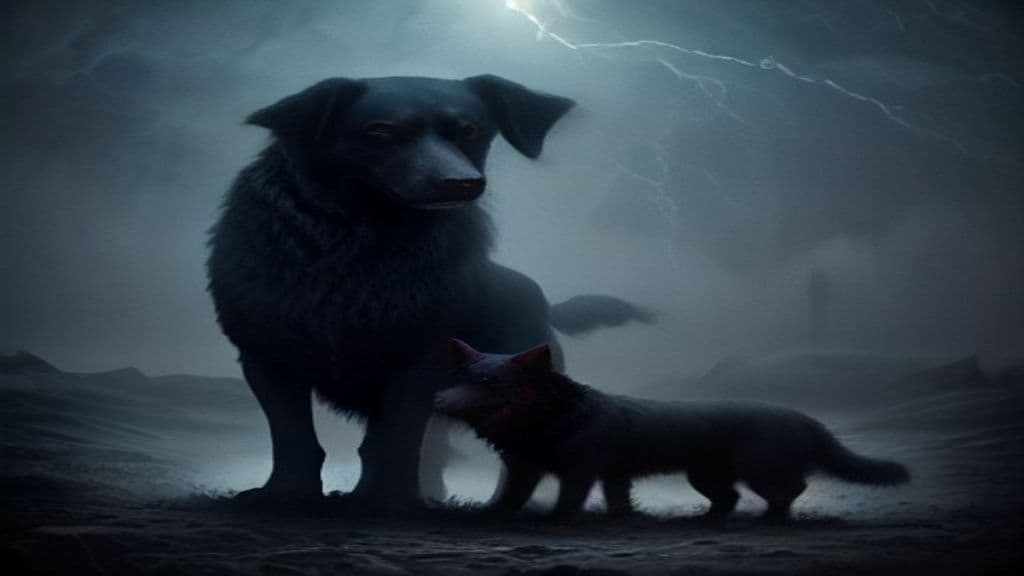
A spectral black dog of East Anglian legend, with glowing red or green eyes. Its appearance is an omen of death. Its howl has been heard on clifftops during storms for centuries.

Blanchefleur
Lesser

Blanchefleur

Blanchefleur is a recurring proper name and literary personage in High Medieval romance and later adaptations, functioning as an emblem of purity, idealized beauty, and floral/Marian imagery rather than a supernatural being. The name appears in multiple vernaculars (Old French, Norse, later modern retellings) attached to different human female characters—lovers, heroines, or hagiographic figures—whose roles vary by text.

Blenda
Lesser

Blenda

Blenda is the eponymous heroine of a Småland legend (Blendasägnen) who, according to local tradition, rallied the rural women of Värend to defeat a pillaging Danish force; the tale functions as an aetiological foundation for certain local social rights and ritual markers rather than describing a supernatural being.

Blóðughófi
Lesser

Blóðughófi

Blóðughófi (variant Blóðhófr) is a named mythic horse in Old Norse poetic tradition attested in þulur (name-lists) as the steed associated with the god Freyr, glossed literally as "Bloody Hoof." The attestations are primarily catalogic rather than narrative, and no extended mythic episodes or independent powers are directly ascribed to this horse in the surviving cited materials.

Borr
Ancient

Borr

Borr (Old Norse Borr, Börr, Burr; anglicized Bor/Bör/Bur) is a scarcely attested figure in Old Norse theogony: the son of Búri, husband of Bestla, and father of Odin, Vili, and Vé. He appears by name in verse 4 of the Völuspá and in chapter 6 of Gylfaginning but is otherwise functionally an ancestral name with no preserved deeds or attributes in the supplied sources.

Bound monster (motif)
Ancient

Bound monster (motif)

A mythic motif in Norse mythology describing powerful hostile beings who are physically or cosmologically restrained in the present but are prophesied to break free during Ragnarök to wreak destruction. The label is a modern scholarly summary applied to several canonical figures (Loki, Fenrir, Jörmungandr, Hel) rather than an Old Norse technical name.

Bragi
Lesser

Bragi

Bragi is a figure in Old Norse mytho-poetic tradition associated with skilled eloquence and poetry among the Æsir; Snorri presents him as a god of poetry and husband of Iðunn, while modern scholarship often treats the divine Bragi as a mythologized reflection of the historical 9th-century skald Bragi Boddason.

Brimir
Primordial

Brimir

In Old Norse mythic tradition the name Brimir appears in two closely related roles: as a name applied to a primordial jötunn (often equated with Ymir/Aurgelmir) whose body supplies the material of the world, and as the name of a beer‑hall or hall of plenty that Snorri interprets as an afterlife dwelling for virtuous survivors after Ragnarök.

Brokkr
Lesser

Brokkr

Brokkr is a dwarf and master smith's assistant in Norse mythic tradition, famed for operating the bellows while his brother (Eitri/Sindri) performed magical forging in the contest that produced Mjölnir, Draupnir, and Gullinbursti. He is best known from the Skáldskaparmál episode in which Loki, as a gadfly, tries to disrupt his bellows work and Brokkr later sews Loki's lips shut when Loki evades a wager.

Brynhildr (Brunhild / Brunhilda)
Greater

Brynhildr (Brunhild / Brunhilda)

Brynhildr (Old Norse) — also known as Brunhild or Brunhilda in Germanic tradition — is a named valkyrie and tragic heroine of the Sigurd/Brunhild cycle in Old Norse-Icelandic heroic poetry. She appears in the Poetic Edda and related heroic lays as a fateful, martial woman associated with the valkyrie class and the narrative of Sigurðr (Sigurd) and Guðrún.