
Askeladden originates in Norwegian oral folktale cycles and was collected and popularized in the 19th century by folklorists Peter Christen Asbjørnsen and Jørgen Moe. Older name-forms such as Askefis / Oskefisen (attested from the 15th century in tradition) identify the character as the household ember-tender—literally a person who blows on coals to stoke the fire. Asbjørnsen and Moe edited and standardized many tale names and forms (including smoothing some rustic name-forms into renderings like Askeladden or Askepot), a process later noted by scholars as altering some of the original social specificity of names like Askefis.
Descriptions in the tradition emphasize social and domestic markers rather than fixed supernatural dress: Askeladden is usually the youngest, smallest, and weakest of three brothers, often ash-smudged from sitting by the hearth and assigned the low-status task of tending embers. He may be portrayed as idle, contemplative, or performing mean household chores—physically diminished or mocked by his kin—but not endowed with a distinctive mystical form or costume.
Askeladden's 'abilities' are narrative traits: practical cleverness, tactical ingenuity, patience, boldness, and receptiveness to unconventional solutions. In tale motifs he outwits trolls, obtains enchanted objects, and completes impossible tasks through lateral thinking—examples include rescuing captives or retrieving magical items, entering enchanted realms (e.g., journeys comparable to 'East of the Sun and West of the Moon'), and turning apparently worthless objects into means of success. He commonly succeeds where his elder brothers' conventional or forceful approaches fail, and is frequently rewarded with marriage to a princess and a share of the kingdom.
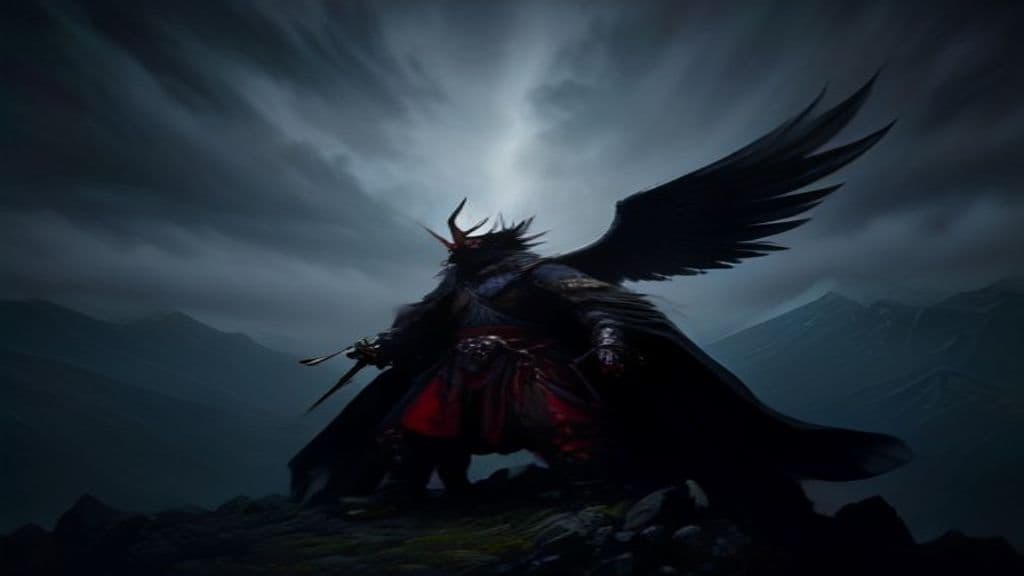
Tengu
Proud, warrior-like mountain spirits of Japan, associated with martial arts, pride, and the wild mountains. Neither fully good nor evil — they test and train warriors and monks, but punish the arrogant.

Kitsune
Fox spirits of Japanese mythology — intelligent, long-lived beings who gain additional tails (up to nine) as they age and grow in power. They serve as messengers of the god Inari and as powerful tricksters.

Troll (Germanic Tradition)
In Germanic folklore, a troll is a being that dwells in isolated areas of rocks, mountains, or caves, living together in small family units and rarely interacting with humans. (Note: - Power tier should be changed from Primordial to Ancient (trolls' origins from primordial forces don't necessarily imply cosmic-level power). - Ability description is not entirely accurate; it's stat)
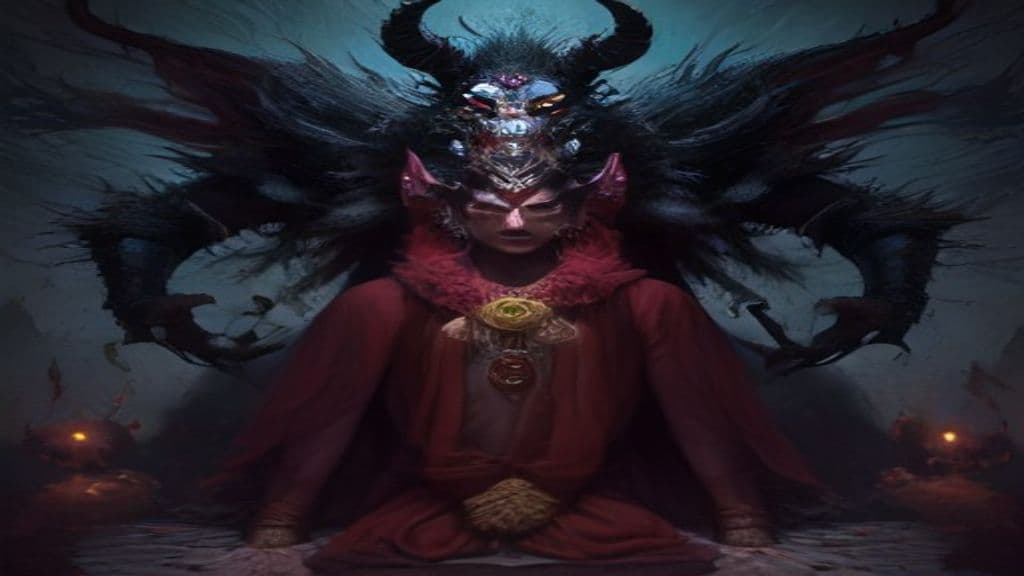
Rakshasa (Himalayan variants)
A Himalayan reception of the pan-Indian rakshasa motif: hostile or disruptive non‑human beings known from Sanskrit epic and Puranic literature, here noted where Himalayan sources and discussions intersect with the broader epic tradition. The supplied sources do not document distinct, well‑attested Himalayan folklore variants; the entry therefore presents primarily the epic/legendary profile as transmitted into Himalayan contexts in general references.
Adils
Adils (Old Norse Aðils; also Eadgils, Adillus, Athisl, Adhel) is a semi‑legendary sixth‑century Swedish king attested in Old Norse saga material and later medieval traditions. He appears in saga episodes as a storied royal figure involved in warfare, court acts, and marriage suits rather than as a supernatural being.
Agent Liberty
Agent Liberty is a fictional human operative persona in DC Comics and its television adaptation (Arrowverse). The identity—most prominently used by Benjamin 'Benjy/Ben' Lockwood—functions as a costumed, paramilitary/enforcer role tied to political movements (Sons/Children of Liberty) or official security details, driven by ideological 'liberty' rhetoric rather than supernatural agency.
Agilaz (Egil)
Agilaz (reconstructed Proto-Germanic) — commonly recorded in medieval sources as Egil or Ægil — is a legendary archer attested in Germanic heroic tradition. He appears as the brother of Völund (Wayland/Weland) in the Old Norse poem Völundarkviða and in the Thidreks saga, and his name is also inscribed on early medieval objects (Franks Casket, Pforzen buckle). The attested material presents him as a named heroic human archer within saga and inscriptional contexts rather than as a recurrent supernatural species.
Agnarr Geirröðsson
Agnarr Geirröðsson is a mortal prince attested only in the Poetic Edda poem Grímnismál; he aids Odin (disguised as Grímnir) during Geirröðr's torture and, after Odin reveals himself and King Geirröðr dies, Agnarr succeeds as king.
Agne
Agne (also attested Agni, Hogne, Agni Skjálfarbondi) is a semi-legendary king of Sweden in Old Norse saga tradition, preserved in the Ynglingatal corpus and prose expansions such as Snorri Sturluson's Ynglinga saga. He is portrayed as a mighty and famous warrior-king whose campaign in Finland, marriage to Skjalf, and death by hanging form a remembered episode connected to local place-names and a burial mound.
Agropelter
A North American "fearsome critter" of lumbercamp tall-tale tradition said to dwell in hollow conifer trees and hurl broken branches and splinters at unwary people; presented in folklore as an animal-like, mischievous or predatory woodland creature rather than a deity or spirit of formal cosmology.
Alf and Alfhild
Alf and Alfhild are legendary human figures from Old Norse/early Scandinavian narrative tradition preserved principally in Saxo Grammaticus' Gesta Danorum. The tale presents Alf as a Danish prince and Alfhild as a Geatish princess who becomes a shieldmaiden and leader of a fleet of female raiders; their story includes combat, recognition, marriage, and later dynastic conflict.
Alfred Bulltop Stormalong
A New England maritime tall-tale hero and giant seafarer, Stormalong functions in sailors' oral tradition and early-20th-century tall-tale collections as a repository for exaggerated seamanship, prodigious physical size, and impossible nautical exploits rather than as a literal supernatural being.
Algaut
Algaut (also rendered Algöt or Algaut Gautreksson) is a semi-legendary Geatish king of West Götaland recorded in Scandinavian saga and genealogical tradition. Saga summaries (via Snorri Sturluson's Heimskringla as reported in later compilations) record that he was the father of Gauthild and was burnt to death by his son-in-law, the Swedish king Ingjald Ill-ruler.
All-Flash
All-Flash (originally All-Flash Quarterly) is a Golden Age American comic-book magazine series published 1941–1947 that served as the first solo magazine vehicle for Jay Garrick, the original Flash. The title is a commercial/branding name later used as an English lexical phrase in unrelated technical and web contexts.
Almáttki áss
Almáttki áss is an epithet-attested divine figure invoked in an Icelandic legal oath recorded in Landnámabók (Hauksbók 268). In the sole attestation the phrase functions as an invoked áss (god) described with the adjective almáttki ('almighty') and serves as the divine guarantor or witness for an oath sworn on a temple ring. Scholarly sources debate whether the epithet refers to a named Norse god (Thor, Ullr, Odin, or Týr) or is a Christianizing formulation by a later author.
Alrek and Eirík
Alrek and Eirík (also rendered Alaric and Eric) are legendary Swedish kings from the Old Norse saga tradition who are presented as joint rulers and as members of the Ynglinga royal genealogies. They appear in saga narratives as sons and heirs of King Agni, famed for martial and athletic prowess, and as hosts who receive the hero Starkaðr after the sacrificial death of Vikar.
Community Record
- [1]Askeladden. Wikipedia: 'Askeladden' articlewiki
- [2]Wikidata: Askeladden. Wikidata item Q4586018wiki
- [3]Askeladden som stjal solvendene til trollet. USC Digital Folklore Archives: example Askeladden talefolk
- [4]Archive collection and related references (name usage examples). Archive.org holdings referencing 'ASKELADDEN' in cultural materialother