Norse Supernatural Beings

313 documented Norse supernatural beings from the Evil Eye grimoire, including 147 lesser and 56 greater in power tier.

page 2 of 6

Budli (Buðli)
Minor Spirit

Budli (Buðli)

Budli (Old Norse Buðli) is a legendary king attested in Norse saga and ballad material. He appears as a mortal royal figure, chiefly known as the father of Brynhild/Brynhildr in the Volsung-related tradition and in later Scandinavian ballads and name-lists.

Byggvir
Minor Spirit

Byggvir

Byggvir is a minor named attendant of the Vanir god Freyr attested in the Old Norse poem Lokasenna (prose introduction and stanzas 55–56). Scholarly commentary commonly reads him as an agricultural personification linked to barley or to mill-refuse (chaff), though the primary texts give only sparse narrative detail.

Bäckahäst
Lesser

Bäckahäst

A Scandinavian water-horse figure: a horse-shaped water spirit associated with streams, rivers, lochs and other watery edges. Presented in comparative folklore as a member of the wider water-spirit or ‘water-horse’ family that functions as a cautionary figure about the hazards of water and unknown horses at the water’s edge.

Bölþorn
Lesser

Bölþorn

Bölþorn (also attested as Bölþor) is a named jötunn in Norse mythic genealogies, recorded as the father of Bestla and thus an ancestor of Odin, Vili, and Vé. He appears only briefly in the extant poetic and prose Eddaic material and functions primarily as a genealogical forebear rather than an active narrative figure.

Böðvildr
Minor Spirit

Böðvildr

Böðvildr is a human princess of Germanic heroic legend, daughter of a king (Níðuðr / Niðhad / Niðung) whose fate is entwined with the smith Wayland (Völundr). In older poetic sources she is presented as a tragic figure—victim of the smith's revenge (murder of her kin and rape)—while later prose redactions (Þiðrekssaga) report that she bore Wayland a son (Viðga) and later married him.

Bøyg
Lesser

Bøyg

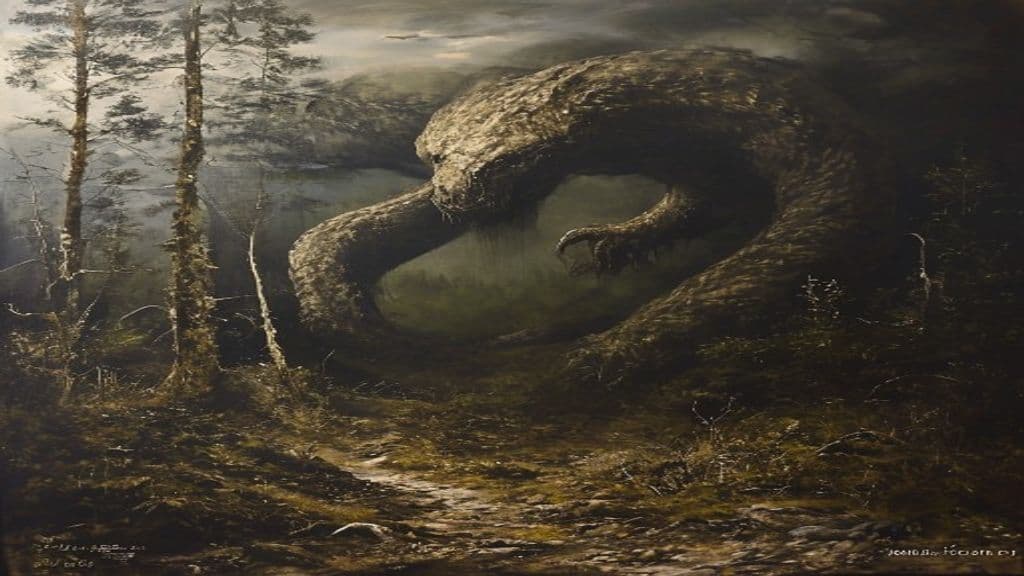
The Bøyg is a legendary Scandinavian (Norwegian) obstacle-being, most often portrayed in sources as a great, slimy serpent or troll-like presence that stands as an impediment to travellers; it is regionally associated with Telemark and Gudbrandsdalen and appears as a dramatic obstacle in Ibsen's Peer Gynt (and Grieg's incidental music).

Búri
Primordial

Búri

Búri is an Old Norse primordial divinity attested in the Prose Edda and a skaldic verse as an early ancestor of the Æsir. He is presented as a first-born godlike figure who is freed from salty rime by the primeval cow Auðumbla and is genealogically prior to later gods such as Borr and, by descent, the Æsir.

Býleistr
Lesser

Býleistr

Býleistr is an Old Norse mythic name attested as a brother of Loki. He appears only as a kin-term in skaldic and Eddic contexts and in Snorri Sturluson's prose lists; no independent deeds or narratives are preserved for him in the cited sources.

Bǫðvarr Bjarki
Greater

Bǫðvarr Bjarki

Bǫðvarr Bjarki is a legendary Scandinavian heroic figure associated with King Hrólf Kraki. A great warrior of human birth who bears or manifests an independent ursine spirit (hugr/hamr) that fights as a monstrous bear on his behalf, he appears in the Hrólfs saga kraka tradition and related medieval accounts.

Chernoglav
Lesser

Chernoglav

Chernoglav (Old Icelandic Tjarnaglófi; Polish Chernogłów/Chernoglov) is a sparsely attested local war or victory deity reported in medieval Old Icelandic accounts of Rügen (Jasmund). The Knýtlinga saga describes him as a god of victory who 'went with them on military campaigns' and records that his cult resisted Christianization longer than some others before being taken years later.

Christmas gift-bringer (tradition)
Lesser

Christmas gift-bringer (tradition)

A culturally variable class of midwinter personae across Europe (and diasporic regions) who deliver gifts to children or the poor during seasonal celebrations (Saints' feast days, Christmas Eve, Epiphany, Yule). Treated variously as saintly figures, household spirits, childlike or old-person figures, or secularized modern personae, they function in ritual exchange and moral pedagogy rather than as a single, uniform supernatural being.

Cosmic Man
Primordial

Cosmic Man

An archetypal primordial anthropomorphic figure appearing across many world mythologies and religious cosmologies whose body, actions, or nature are implicated in the generation or ordering of the world; in Jungian interpretation the figure also symbolizes the Self and collective unity.

Dag the Wise
Lesser

Dag the Wise

Dag the Wise (Old Norse Dagr spaki) is a legendary Swedish king in the Yngling dynasty attested in skaldic and saga sources. He is noted for understanding the speech of birds and for keeping a sparrow that gathered news; the bird's death prompted a vengeful expedition to Reidgotaland in which Dag was ambushed and killed.

Dagr
Lesser

Dagr

Dagr is the Old Norse personification of the day: a luminous being who rides across the sky on the horse Skinfaxi, bringing daylight in the mythic cosmology preserved in the Poetic Edda and Prose Edda. The lexical item Dagr functions both as the common noun for 'day' and as a proper name for this mythic actor.

Dames blanches
Lesser

Dames blanches

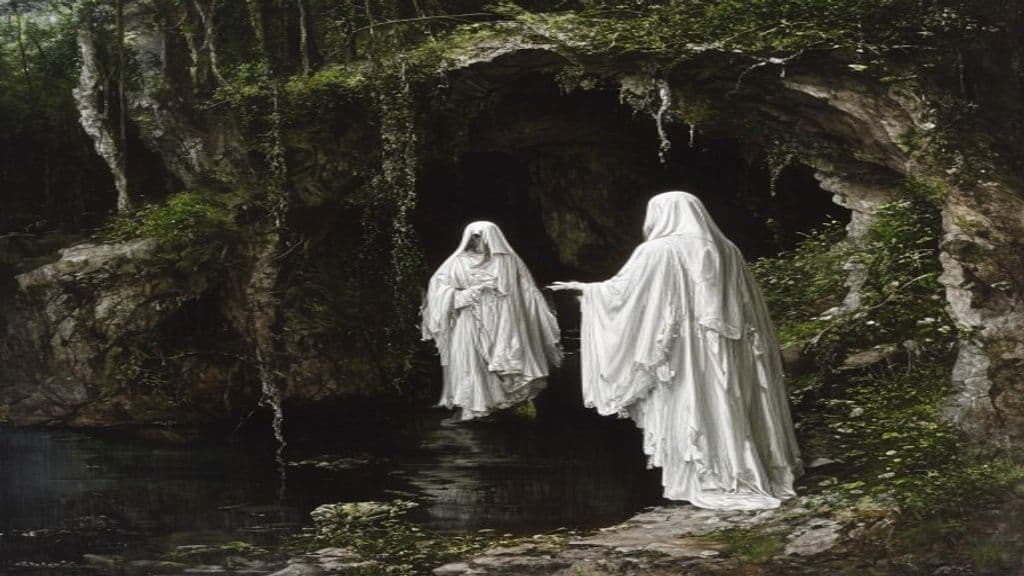
Female supernatural figures in French regional folklore, the Dames blanches ("white ladies") are liminal spirit-beings associated with bridges, ravines, caves, rivers and other narrow places. They demand deference from passersby (dance, kneeling) or act as nocturnal washerwomen omens of death in related traditions, with responses to them grounded in behavioral avoidance or compliance rather than formal rites.

Dan (king)
Minor Spirit

Dan (king)

No folkloric or supernatural entity called 'Dan (king)' is documented in the supplied sources. The term appears in reference works as a label that can denote historical or legendary kings of Denmark, biblical figures, or various personal and place names, but not as a distinct spirit, deity, or monster in the provided materials.

Deildegast
Lesser

Deildegast

A Norwegian folkloric ghost bound to boundary stones as postmortem punishment for those who moved or tampered with property markers; compelled to attempt to restore displaced stones but never succeeding, it serves as a social deterrent against moving borders.

Dellingr
Minor Spirit

Dellingr

Dellingr is an Old Norse divine figure personifying the coming of day (dawn) and is attested as the father of Dagr (Day) in medieval Eddaic and saga texts. His name appears in kennings and poetic formulas (notably "Delling's doors") that mark the threshold of sunrise; surviving sources treat him as an etiological/personified deity rather than a hostile spirit.

Deutsche Mythology
Ancient

Deutsche Mythology

A collection of mythological narratives representing the collective myths, legends, and beliefs of ancient Germanic cultures. (Note: 1. Power tier: Primordial (Deutsche Mythology as a collective mythological narratives does not have supernatural abilities and behaviors attributed to it; rather, it contains those of individual Germa)

Di sma undar jordi
Lesser

Di sma undar jordi

Di sma undar jordi are a Gotlandic class of small, subterranean 'hidden people' (Gutnish: Di sma undar jordi; Swedish: de små under jorden) who act as caretakers of farms, people, and animals so long as they are not angered. They belong to the regional underjordiska/vættir-like tradition and are normally invisible except under a peculiar viewing condition recorded in local tales.

Dietrich von Bern
Lesser

Dietrich von Bern

A legendary Germanic heroic figure formed by the folkloric transformation of the historical Ostrogothic king Theoderic the Great; he appears across medieval heroic poems and sagas as an exiled king of 'Bern' (medieval Verona), a great warrior, and opponent of both human and monstrous foes.

Disa
Lesser

Disa

Disa is a legendary Swedish saga heroine and wise woman whose clever solution to a king's impossible test averts a planned mass culling and leads to a policy of drawing lots and resettlement. In the saga tradition her counsel becomes associated with the Midwinter blót (Disablot) and the Disting, and later early modern authors and artists memorialized her role in lawgiving and ritual memory.

Dog King (Norse)
Ancient

Dog King (Norse)

In Norse tradition, the Dog King is a human figure made king by a dog. (Note: - Remove "Ancient" from the Power tier; given the context, it seems more likely to be a Lesser or local spirit. - Remove all mention of manipulation or coercion in the Abilities section; it's unclear )

Domalde (Dómaldi)
Lesser

Domalde (Dómaldi)

Domalde (Old Norse Dómaldi/Dómaldr) is a legendary Swedish king of the Yngling dynasty whose reign is associated with prolonged famine. In Old Norse sources his personal ill‑luck (ósgæssa), said to be caused by a curse from his stepmother, is presented as coterminous with the land's fertility; communal cultic escalation culminates in the king's sacrificial killing and the restoration of good harvests.

Domar (Dómarr)
Lesser

Domar (Dómarr)

Domar (Old Norse Dómarr, 'Judge') is a legendary Swedish king of the Yngling dynasty attested in medieval Scandinavian genealogical sources. He is presented as a mytho-historical ancestral ruler whose long and peaceful reign follows the sacrificial death of his father Domalde and whose own death was marked by cremation at Fyrisvellir and erection of a memorial stone at Uppsala.

Draugr
Lesser

Draugr

In Nordic folklore the draugr (plural draugar; anglicized draug) is an archaic term for a malevolent revenant — a dead person who returns and remains active in the world of the living. Accounts emphasize variability: traits, behaviours, and descriptions change between stories and across regions, especially in early medieval Icelandic sagas and surviving Norwegian folklore.

Drífa
Minor Spirit

Drífa

No folkloric or mythological account of a supernatural entity named Drífa is present in the provided sources. The string Drífa/Drifa appears in the materials as a modern Icelandic personal name, a fictional princess in a novel, and as a biological genus name; no indigenous cosmology, appearance, abilities, or rituals for a spirit called Drífa are documented in the source set.

Durinn
Ancient

Durinn

Durinn is an early named dwarf (Old Norse: dvergr) attested in the medieval Norse corpus; counted as the second-created dwarf after Mótsognir and associated in saga tradition with exceptional smithcraft, including a role in forging the magic sword Tyrfing.

Dvalinn
Lesser

Dvalinn

Dvalinn is an Old Norse mythic name attested in the Poetic Edda and several sagas applied to at least two distinct figures: a named dwarf among the dwarf-kind (craftsman, rune‑figure, leader in some lists) and one of the four harts/stags that feed among the branches of the world‑tree Yggdrasill. The corpus does not reconcile these uses of the same name into a single coherent biography.

Dwarf (folklore)
Lesser

Dwarf (folklore)

A type of supernatural, human-shaped being in Germanic tradition associated with subterranean places, craft (notably metalwork), and a liminal role between nature and culture. In Norse mythic sources dwarfs function as artisan-makers of powerful objects for gods and occasionally appear in folktales as magical servants bound to objects.

Dyggvi
Greater

Dyggvi

Dyggvi (Old Norse Dyggvi/Dyggve, glossed 'Useful, Effective') is presented in the Old Norse legendary-historical tradition as a Swedish king of the Yngling dynasty. He appears in genealogical and saga sources (Ynglingatal, Snorri Sturluson's Ynglinga saga, Historia Norwegiae, and the Íslendingabók succession list) and is said in later summary tradition to have died and become a concubine of Hel, the ruler of the dead.

Dáinn
Lesser

Dáinn

Dáinn is a named figure in Old Norse poetic tradition variously listed among the dwarfs (dvergar) and invoked as an elven name in other contexts. Attested as an artisan-name in Hyndluljóð and as an onomastic/rune-related name in Hávamál, the name also appears attached to a legendary sword (Dáinsleif) and to a deer-shaped constellation in Norse stellar lore.

Dís (dísir)
Greater

Dís (dísir)

In Norse/North Germanic tradition, a dís (pl. dísir) is a collective term for female supernatural beings whose roles range from protective ancestral spirits and fertility figures to fate‑linked women comparable to valkyries or norns; they are invoked in both private and public cult (notably the dísablót) and can be benevolent or hostile toward humans.

Dísir
Lesser

Dísir

In Norse tradition, the dísir are a class of female supernatural beings associated with fate, fertility, and the welfare of kin; they may be protective guardians of clans or ambivalent/hostile toward mortals and are venerated in rites called dísablót.

Dökkálfar and Ljósálfar
Greater

Dökkálfar and Ljósálfar

In the Prose Edda framework these are two contrasted classes of álfar (elves): Ljósálfar ('light-elves') associated with luminous, upper heavens and described as “fairer than the sun,” and Dökkálfar ('dark-elves') associated with subterranean dwelling and described as “blacker than pitch.” Scholarly sources debate whether Snorri’s binary reflects older Norse ideas or a later, possibly Christian-influenced ordering and whether dökkálfar overlap with svartálfar or dwarfs.

Dúrnir (Durnir)
Lesser

Dúrnir (Durnir)

Dúrnir (also spelled Durnir) is an Old Norse mythic proper name attested in skaldic verse and in later medieval name-lists. He is presented in the skaldic corpus and Dverga heiti as a dwarf-name but also appears in Snorri Sturluson’s Nafnaþulur among giant (jötunn) names, indicating fluid classification in the transmitted sources.

Eadgils (Aðils / Adils)
Lesser

Eadgils (Aðils / Adils)

Eadgils is a semi-legendary 6th-century Swedish king of the Yngling/Skilfing dynasty attested in Old Norse skaldic poetry and sagas and in the Anglo-Saxon epic Beowulf. Sources present him as a dynastic figure whose exile, restoration, and conflicts (notably with Onela/Áli and later associations with Hrólfr Kraki) explain succession and inter-kingdom violence; he is treated as a mortal ruler rather than a supernatural being.

Eanmund
Lesser

Eanmund

Eanmund is a semi-legendary Swedish prince of the Scylfing dynasty attested in the Old English epic Beowulf. Portrayed as a mortal claimant to the Swedish throne whose exile and death precipitate inter-kingdom conflict and later vengeance by his brother Eadgils, he functions as a genealogical and political figure within the Scandinavian heroic cycle rather than a supernatural being.

Edda (Norse Tradition)
Primordial

Edda (Norse Tradition)

The Edda is a collection of literary works containing Norse mythology and traditional sources, preserving the cultural heritage and mythological traditions of the Norse people. (Note: 1. Power tier: Downgrade to Ancient (Edda is a collection of literary works, not a mythological figure with Primordial power). 2. Summary: Expand to include the fact that it's a medieval Icelandic tex)

Eggþér
Lesser

Eggþér

A jötunn figure in the Old Norse poem Völuspá who sits upon a mound striking a harp and is portrayed as joyful at the onset of Ragnarök; presented as the herder associated with a female jötunn of Járnviðr who raises wolves descended from Fenrir.

Einar (Norse)
Greater

Einar (Norse)

A concept representing or embodying the idea of einherjar, elite warriors who ascend to Valhalla in Norse mythology. (Note: 1. The power tier should be Primordial, as Einar represents a concept connected to cosmic/mystical aspects of Valhalla. 2. The appearance description is vague; rephrase it to "No physical description )

Einherjar
Ancient

Einherjar

Warriors who died in battle and were brought to Valhalla by valkyries, playing a crucial role in the events leading up to Ragnarök. (Note: - Power tier should be Primordial since they are associated with a cosmic event (Ragnarök) and are not described as deities or regional powers. - Abilities: The einherjar don't actually engage in dail)

Einherjer
Minor Spirit

Einherjer

Einherjer is primarily attested in the provided corpus as a Norwegian Viking metal band whose name is taken from the Old Norse term Einherjar — the slain warriors said to dwell in Valhalla. The sources document the band's formation, recordings, festival appearances, and thematic use of Norse legend; the modern usage functions as a cultural reference to the mythic category rather than as an account of living supernatural beings.

Einherji (Einherjar)
Greater

Einherji (Einherjar)

Einherji (plural Einherjar) is a term from Norse mythic vocabulary attested in the supplied sources mainly as a cultural name and as a statted warrior-type in modern roleplaying/bestiary contexts. The provided materials do not include primary Old Norse myth-text descriptions, so the entries here collate only what those modern and secondary sources assert: a connection to Norse warrior-figures and modern reuse in gaming and Icelandic civic naming.

Eir
Lesser

Eir

Eir is an Old Norse female supernatural figure associated with healing and medical skill in medieval Icelandic sources. She appears in the Poetic Edda and Prose Edda (as an ásynja and as a valkyrie-name) and among the maidens of Menglöð on Lyfjaberg ('hill of healing'); attestations are sparse and scholars debate whether these refer to one coherent deity or multiple figures sharing a name.
Eitri
Lesser

Eitri

Eitri (also attested as Sindri) is an Old Norse dwarf smith celebrated in the Skáldskaparmál episode for forging three famous artifacts — Gullinbursti, Draupnir, and Mjöllnir — while working with his brother Brokkr. He is presented as a master craftsman whose work directly affects the gods, not as a deity.

Eldir
Minor Spirit

Eldir

Eldir is a named servant of the sea-being Ægir in Old Norse myth, attested in the poem Lokasenna where he stands outside Ægir's hall and speaks with Loki. His name, Old Norse Eldir, is glossed as 'fire-stoker' and marks him as a household attendant and threshold interlocutor rather than a deity.

Elf
Greater

Elf

An elf is a humanoid supernatural being from Germanic folklore, especially prominent in North Germanic (Norse/Icelandic) myth and in later early-modern Scottish and Scandinavian belief. Elves are typically depicted as magically powerful and unusually beautiful, ambivalent toward humans and capable of helping or harming them.

Elli
Greater

Elli

Elli is the Old Norse personification of old age attested in the Prose Edda (Gylfaginning). In the single surviving episode she is summoned from Útgarða-Loki’s hall and bests Thor in a wrestling-match, illustrating the inevitable weakening effect of advancing age even upon gods.

Elves (Middle-earth)
Primordial

Elves (Middle-earth)

In J. R. R. Tolkien's legendarium, the Elves are the Firstborn of Ilúvatar, a prime pre‑human race whose lives are long and whose spiritual destiny differs from Men. They dwell in Middle‑earth and in the Undying Lands of Valinor; slain Elves' spirits go to the Halls of Mandos in Aman, and many eventually yearn to sail from the Grey Havens to Valinor.

Eoten (ēoten)
Ancient

Eoten (ēoten)

Eoten (Old English ēoten) is the Old English term glossed as 'giant' and cognate with Old Norse jötunn. In Anglo‑Saxon and Norse literary traditions the word is used within a wider family of large non‑human beings (jötnar, þurs, risi, troll) that often occupy liminal or primeval roles in myth and saga.

Eotenas
Greater

Eotenas

Eotenas (Old English eotenas) are a race-class of other-than-human beings attested in Anglo-Saxon poetic contexts, notably Beowulf, where they appear among a catalogue of hostile or monstrous stocks. Philological traditions link the term to Old Norse jötnar/ettins (often rendered "giants" in modern summaries), but primary Old English lines give little concrete physical description.

Ermanaric
Lesser

Ermanaric

Ermanaric is a historically attested Greuthungian Gothic king of the fourth century who later becomes a central figure of Germanic heroic legend (Old English Eormenric, Old Norse Jǫrmunrekkr). Sources present him as a powerful, warlike ruler whose cruelty (notably the execution of Svanhild/Sunilda) provokes cycles of violent vengeance in later poetry and saga.

Eyfura
Minor Spirit

Eyfura

Eyfura is a legendary Norse princess attested in Hervarar saga and in Saxo Grammaticus’s Gesta Danorum; she marries the warrior Arngrim and is mother to twelve sons who are slain by the Swedish champion Hjalmar and his companion Orvar-Odd. Accounts vary on her parentage and the circumstances of her marriage, which serve dynastic and narrative functions in the sagas.

Eystein Halfdansson
Lesser

Eystein Halfdansson

Eystein Halfdansson (Old Norse: Eysteinn Hálfdansson) is presented in Norse king-list and saga tradition as a semi-legendary Norwegian petty king of the House of Yngling who ruled Romerike and acquired Vestfold by marriage. He is depicted as a dynastic ruler and Viking raider whose death is attributed in Snorri's Ynglinga saga to a magical act performed by King Skjöld of Varna.

Falhófnir
Lesser

Falhófnir

Falhófnir is a named horse in Old Norse sources listed among the steeds ridden by the Æsir when they go to make judgments at Yggdrasil. The name is glossed as "pale-hoofed" or "the one with the fallow hooves," but the surviving sources preserve only roster-like attestations rather than a narrative or cultic role.

Family Trees of the Norse Gods
Primordial

Family Trees of the Norse Gods

The complex relationships between Norse gods, as portrayed in the Eddas and other sources, reveal a network of family ties and kin connections that shape their interactions and powers. (Note: 1. Power tier should be Primordial (too general) -> change to Ancient=deity-level. 2. The statement that no sensory cues are explicitly described in the source material is misleading, as it implies no)

Fasolt
Lesser

Fasolt

A giant or knight in Norse mythology, Fasolt is involved in the creation of the world and appears alongside other supernatural beings. (Note: - Power tier should be Greater, not Lesser, given Fasolt's involvement in creation and appearance alongside supernatural beings. - Summary should mention his involvement in Das Rheingold more accurate)

Fenrir
Primordial

Fenrir

The monstrous wolf son of Loki, bound by the gods with a magical ribbon until Ragnarök — when he will break free and swallow Odin, and the world.

Fenrisúlfr (Fenrir)
Ancient

Fenrisúlfr (Fenrir)

Fenrisúlfr, commonly called Fenrir or Fenris, is a singular monstrous wolf in Norse myth who is bound up with the eschatological events of Ragnarök; sources describe him as a world-altering agent who is foretold to kill the chief god Odin and take part in the destruction of the present order.