
The supplied sources do not present a single, unified origin story under the Old English label ēoten. In the broader Norse corpus a primeval jötunn, Ymir, is named as a progenitor from whose body the world is formed; this reflects how members of the jötnar family can be woven into cosmogonic genealogies. Old English poetic usage employs ēoten as a word for a giant or monstrous opponent in heroic contexts, but the sources do not provide a detailed, distinct genealogy specifically under the ēoten label.
Medieval and scholarly sources emphasize great size and strength as primary attributes; detailed or consistent visual descriptions are uneven in the supplied material. Saga and poetic instances portray a range from enormous humanoid figures to monstrous or bestial variants in particular episodes, but the corpus does not define a single canonical appearance beyond largeness and imposing stature.
Across the Norse‑Germanic materials represented in the sources, members of the jötnar family (with which ēoten is linguistically associated) are depicted as possessing great physical strength, serving as antagonists or challengers to gods and heroes, and in some narratives functioning as ancestors of important monstrous figures (for example, some jötnar are linked to Ymir and to mythic offspring such as Jörmungandr, Fenrir, and Hel). The supplied sources note variation and do not ascribe a uniform catalogue of magical powers to ēoten; stories emphasize contest, cunning, ambush, and boundary‑dwelling behaviour rather than a fixed set of supernatural abilities.

Jann
The weakest class of djinn in Islamic tradition, associated with desert winds and taking the form of snakes or whirlwinds, dwelling in empty wilderness and posing little threat to those who know the proper invocations.

Troll (Germanic Tradition)
In Germanic folklore, a troll is a being that dwells in isolated areas of rocks, mountains, or caves, living together in small family units and rarely interacting with humans. (Note: - Power tier should be changed from Primordial to Ancient (trolls' origins from primordial forces don't necessarily imply cosmic-level power). - Ability description is not entirely accurate; it's stat)

Rusalka
Water spirits in Slavic folklore — the spirits of young women who died by drowning or suicide, bound to rivers and lakes. Beautiful and dangerous, they can bewitch men to their deaths.
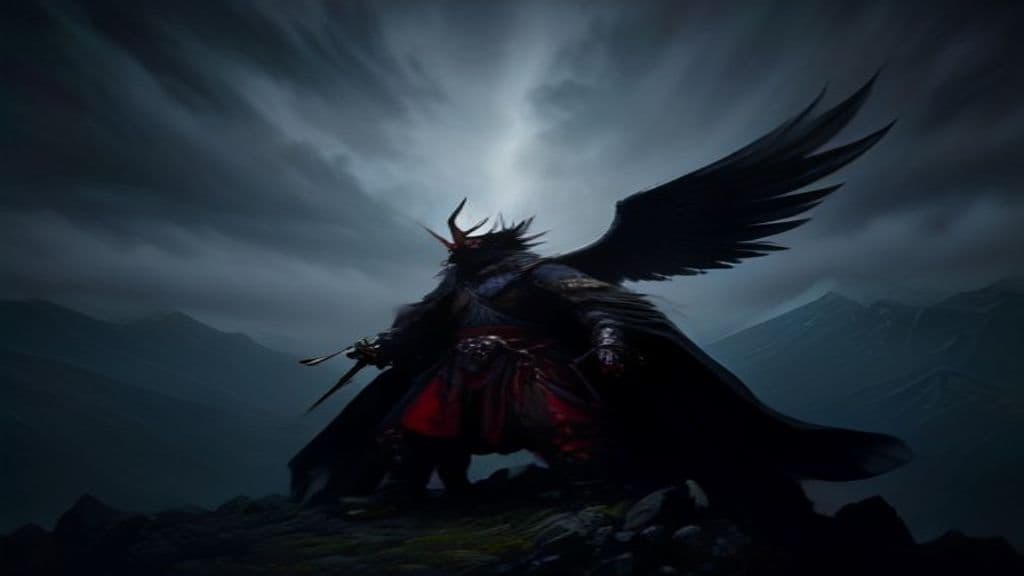
Tengu
Proud, warrior-like mountain spirits of Japan, associated with martial arts, pride, and the wild mountains. Neither fully good nor evil — they test and train warriors and monks, but punish the arrogant.
Abdiel
Abdiel (Hebrew עֲבְדִּיאֵל) is primarily a theophoric Hebrew personal name meaning "servant of El/servant of God," attested once in the Hebrew Bible (1 Chronicles 5:15). In later literature—most notably John Milton's Paradise Lost—Abdiel is reimagined as a faithful seraph who opposes Satan's revolt. The provided sources do not treat Abdiel as an autonomous folkloric spirit type or record rituals or wards associated with the name.
Abiel
Abiel is attested in the supplied sources only as a male given name — borne by several historical American individuals and listed as two minor biblical figures. The provided materials contain no evidence presenting Abiel as a supernatural, mythological, or folkloric entity.
Abigail
Abigail is a female figure in the Hebrew Bible portrayed in 1 Samuel 25 as the intelligent and beautiful wife of Nabal who intervenes to prevent David from committing violence; later tradition regards her as one of the Tanakh's seven female prophets and as a model of beauty and wisdom.
Abraun
Abraun is an attested name in German-language plant-legend scholarship (Der abraun, ein beitrag zur pflanzensagenkunde, 1916) and a short database entry (Wikidata) labels it as a spirit from German mythology. Surviving accessible documentation is extremely limited: the principal academic treatment is a 1916 contribution to pflanzensagenkunde (plant-saga studies), but the excerpts available here contain only bibliographic metadata and do not record tales, descriptions, or rituals.
Accolon
Accolon is a mortal knight of the Arthurian court, presented in the Post-Vulgate Merlin tradition and Malory's Le Morte d'Arthur as Morgan le Fay's paramour and instrument in a plot to supplant King Arthur; his tale centers on enchanted weapons (Excalibur and its scabbard), love-manipulation, and a tragic duel with Arthur.
Adils
Adils (Old Norse Aðils; also Eadgils, Adillus, Athisl, Adhel) is a semi‑legendary sixth‑century Swedish king attested in Old Norse saga material and later medieval traditions. He appears in saga episodes as a storied royal figure involved in warfare, court acts, and marriage suits rather than as a supernatural being.
Adsullata
Adsullata is attested as a Continental Celtic river goddess associated with the River Savus (modern Sava) in the Roman province of Noricum. Later traditions record her presence in Brittany as a goddess of hot springs and present her as an antecedent or origin-form of the Anglo‑Celtic sun goddess Sul.
Afaon fab Taliesin
Afaon fab Taliesin is a medieval Welsh warrior-counsellor, named as a son of the bard Taliesin and recorded among Arthur’s retinue in Welsh tradition. He appears in the Welsh Triads and in the tale Breuddwyd Rhonabwy (The Dream of Rhonabwy) as a notable martial figure and proverb-speaker rather than as a supernatural being.
Agilaz (Egil)
Agilaz (reconstructed Proto-Germanic) — commonly recorded in medieval sources as Egil or Ægil — is a legendary archer attested in Germanic heroic tradition. He appears as the brother of Völund (Wayland/Weland) in the Old Norse poem Völundarkviða and in the Thidreks saga, and his name is also inscribed on early medieval objects (Franks Casket, Pforzen buckle). The attested material presents him as a named heroic human archer within saga and inscriptional contexts rather than as a recurrent supernatural species.
Aglovale
Aglovale (also Agloval, Aglovan, Aglovaus, Acglavael) is a human knight of Arthurian romance, presented as the eldest legitimate son of King Pellinore and a Knight of the Round Table in the Vulgate/Post‑Vulgate cycles, Malory, and later adaptations. He brings his long‑lost brother Perceval to Camelot, takes part in military actions (including slaying Agrippa in one account), and his death is related in varying ways across traditions (accidental at Gawain's hand, deliberate murder by Orkney kin, or killed during Lancelot's rescue of Guinevere).
Agnarr Geirröðsson
Agnarr Geirröðsson is a mortal prince attested only in the Poetic Edda poem Grímnismál; he aids Odin (disguised as Grímnir) during Geirröðr's torture and, after Odin reveals himself and King Geirröðr dies, Agnarr succeeds as king.
Agne
Agne (also attested Agni, Hogne, Agni Skjálfarbondi) is a semi-legendary king of Sweden in Old Norse saga tradition, preserved in the Ynglingatal corpus and prose expansions such as Snorri Sturluson's Ynglinga saga. He is portrayed as a mighty and famous warrior-king whose campaign in Finland, marriage to Skjalf, and death by hanging form a remembered episode connected to local place-names and a burial mound.
Community Record
- [1]Jötunn. Wikipedia: Jötunnwiki
- [2]Jötnar (Wikidata). Wikidata: Jötnarother
- [3]Trolls & Jotnar (Norse Mythology Explained) [Archive.org video]. Archive documentary: 'Thurs, Eoten & Jotun'; 'Ymir - The first Jotun'; 'How to trick a Giant'; 'Trolls as evil spirits' (contents list)other
- [4]ēoten – Old English Wordhord. Old English Wordhord entry for ēoten (gloss: 'a giant')folk
- [5]Battle of Finnsburg. Wikipedia: Battle of Finnsburg (note on usage of 'eoten' in Old English contexts)wiki
- [6]Völuspá: Texts and Translations. Völuspá (Poetic Edda) material and stanza commentary referencing giants and mythic genealogyliterary
- [7]Aphelion serial: 'Six Thegn Quean' (Episodes Three & Four). Aphelion web serials (modern fictional usages and depictions of giant‑like figures)other
- [8]inga ǽrgeweorc: 'ēttins' (ingwine.neocities). ingwine.neocities.org: Old English notes on ettins/ēotenfolk
- [9]Paizo People: EOTEN the DEVOURER; Eoten - Giant of Antiquity. Paizo user pages demonstrating modern fantasy reuse of the name 'Eoten'other