Norse Supernatural Beings

313 documented Norse supernatural beings from the Evil Eye grimoire, including 147 lesser and 56 greater in power tier.

page 4 of 6

Hulder (Huldra)
Lesser

Hulder (Huldra)

The hulder (Norwegian huldra) is a class of Scandinavian 'hidden folk' — a forest-associated local spirit traditionally conceived as a race or kind rather than a single individual. They are counted among the rå (wardens/keepers) of particular natural places and are widely attested in Scandinavian toponyms and folk belief.
Huldra
Lesser

Huldra

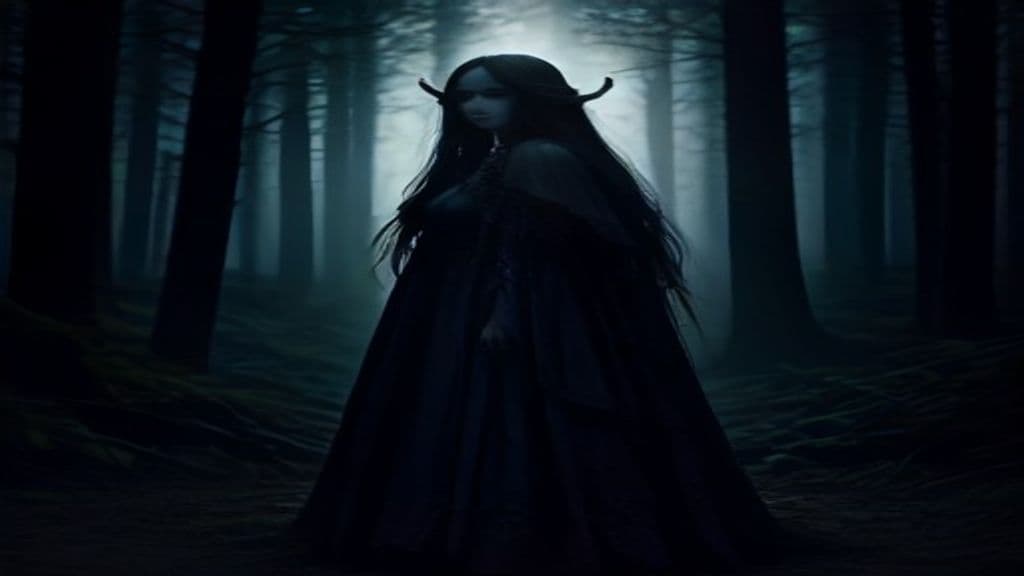
A seductive forest spirit of Scandinavian folklore — beautiful from the front but with a cow's tail or hollow back — who lures men into the wilderness, sometimes to their ruin.

Huldufólk (Hidden People)
Greater

Huldufólk (Hidden People)

Huldufólk is a broad, loosely defined category of place‑bound hidden people in Nordic and Insular Scots traditions—beings who live in a parallel, concealed layer of the landscape and who look and behave much like humans. They are tied to mounds, rocks, mountains, forests, and waters, and traditions emphasize respect, avoidance, and occasional interaction or retaliation when their habitat is disturbed.

Hvitserk
Lesser

Hvitserk

Hvitserk (Old Norse Hvítserkr, 'White-Shirt') is a figure from Norse legendary‑historical tradition presented as one of the sons of the legendary 9th‑century Viking Ragnar Lodbrok and his wife Aslaug. Attested in the Tale of Ragnar's Sons (Ragnarssona þáttr), he appears as a warrior and raider who traveled to Garðaríki and pillaged with the Rus; the saga tradition records that, when faced with an overwhelming foe, he chose to be burned alive on a pyre of human remains.

Háma (Hama / Heime / Heimir)
Lesser

Háma (Hama / Heime / Heimir)

Háma (also rendered Hama, Heime, Heimir) is a named figure of the Germanic heroic-legend tradition attested in Anglo‑Saxon and continental Germanic sources. He appears as a legendary warrior or retainer — often associated with the companion Witige — in poems such as Beowulf and Widsith and in later Germanic epic material (Alpharts Tod, Þiðreks saga). A single secondary source records a variant identification of the name with a mythic watchman figure linked to Heimdallr and the Bifrost; this identification is presented in the available material as a distinct, unverified tradition.

Högne
Lesser

Högne

Högne is a legendary human king of Östergötland attested in Old Norse sources (Heimskringla, the Volsunga saga, and the Poetic Edda). He appears in cycles of dynastic conflict, marriage-alliance narratives, and blood-feud where he fights, raids, and is ultimately slain in battle in some versions.

Höðr
Lesser

Höðr

Höðr (Old Norse Hǫðr) is a figure in Norse mythic corpus most famously known as the blind son of Odin whose unwitting striking of Baldr with a mistletoe dart—guided by Loki—results in Baldr's death; traditions vary between treating him as an Æsir god (Poetic and Prose Edda) and as a euhemerized human/hero (Saxo's Gesta Danorum).

Idis (Germanic)
Lesser

Idis (Germanic)

The idis (Old Saxon; pl. idisi) is a term for a divine or supernatural female being in the pre-Christian Germanic linguistic and poetic record. Cognate with Old High German itis and Old English ides, the term carries senses of a dignified or well‑respected woman and appears in poetic, folkloric, and comparative discussions alongside related female figures such as the Norse dísir.

Ilmr
Lesser

Ilmr

Ilmr is attested as a goddess (ásynja) name in the Old Norse poetic corpus: she appears in the Nafnaþulur list of ásynjur appended to Snorri Sturluson's Prose Edda and as an element in several skaldic kennings from the 10th–11th centuries. Her original nature and functions are not preserved; scholars have proposed competing etymologies (scent, noise/battle, or elm/tree) to account for her poetic usage.

Ingeld
Lesser

Ingeld

Ingeld (Old Norse Ingjaldr; Latin Hinieldus) is a legendary heroic prince of the pan‑Germanic Scylding/Heaðobard cycle known from early English and Norse literary sources. He appears as a warrior and dynastic actor whose narrative role centers on marriage diplomacy, feuding, and cycles of vengeance rather than any supernatural agency.

Ingjald Illråde
Lesser

Ingjald Illråde

Ingjald (Old Norse Ingjaldr), known by the byname Illråde ('ill-ruler' / 'ill-adviser'), is a semi-legendary early Swedish king attested in medieval saga-chronicles (notably Snorri Sturluson's Ynglinga saga and related lists). He is remembered for treacherous expansion — most famously the burning of rival kings in a hall — and for dying by self-immolation when confronted by a superior force.

Iðunn
Greater

Iðunn

Iðunn is an Old Norse goddess of the Aesir who keeps ash-wood box(es) of apples that restore the gods' youth. She is attested as wife of the skald-god Bragi and central to a myth in which her abduction by the jötunn Þjazi causes the gods to age until she is returned.

Jonakr's sons (Hamdir, Sörli, Erpr)
Lesser

Jonakr's sons (Hamdir, Sörli, Erpr)

Three brothers—Hamdir (Hamðr), Sörli (Sǫrli), and Erpr—of the Völsung lineage in Germanic heroic legend who, at their mother Guðrún's urging, attempt to avenge their half‑sister Svanhildr by attacking King Jörmunrekr/Ermanaric. Their deed and tragic deaths are attested across Norse poetic and saga sources and continental chronicles.

Joulupukki
Greater

Joulupukki

A Finnish Christmas figure representing the spirit of Yule and winter solstice, often conflated with Santa Claus. (Note: * Power tier should be Lesser or Minor Spirit, as there is no indication in the source material that Joulupukki is a powerful regional or deity-level entity. * Abilities are not described, but it's st)

Járnsaxa
Lesser

Járnsaxa

Járnsaxa is a named jötunn (giantess) in Old Norse sources attested chiefly as a lover of the god Thor and the mother of his son Magni; she also appears in lists of giantesses such as a set called the 'Nine Mothers of Heimdallr' and functions as an onomastic reference in skaldic diction.

Jörmungandr
Ancient

Jörmungandr

In Norse mythology, Jörmungandr is an unfathomably large sea-serpent, the Midgard Serpent or World Serpent, that dwells in the world sea and encircles Midgard, biting its own tail; Jörmungandr releasing his tail is described as one of the signs of the beginning of Ragnarök. The name has been reused in modern astronomy for near-Earth asteroid 471926 Jormungandr (provisional 2013 KN6), discovered 28 May 2013.

Jörð
Lesser

Jörð

Jörð (Old Norse: Jǫrð, anglicized Jörð) is the personification and theonymic incarnation of the Earth in Norse mythic-cosmology. Attested in the Poetic Edda, the Prose Edda, and Saxo's Gesta Danorum, she functions genealogically (notably as mother of Thor) and linguistically as the common noun for 'earth/land' used interchangeably with a named goddess-figure in skaldic poetry.

Jötunn (Jotun / Giant)
Ancient

Jötunn (Jotun / Giant)

A jötunn (Old Norse jǫtunn; plural jötnar) is a class of powerful non-human beings in Norse/Germanic myth that exist alongside gods, dwarfs, elves, and humans. They commonly dwell across boundaries (e.g., Jötunheimr) and appear ambivalently as adversaries, kin, spouses, and participants in cosmological narratives.

Kave
Greater

Kave

Kave (also attested as Kavet, Kaave, Kaveh; class-name Luonnotar/luonnottaret) is a polyvalent female spirit figure in Finnish and Karelian traditional belief, functioning both as an individual primordial woman and as a class of nature-women invoked in childbirth, healing, and cosmogonic accounts. Regional traditions vary: in some songs kapeet are lunar eaters, in others Kave frees or restores the sun and moon; she is commonly engaged through runic song and spells rather than fixed material cult.

King Hroðgar
Lesser

King Hroðgar

Hroðgar is a semi‑legendary early medieval Danish king of the Scylding dynasty known from Old English and Norse saga material. In the Beowulf tradition he is the generous lord of the mead‑hall Heorot whose court becomes the scene of Grendel's assaults and the hero Beowulf's intervention.

Kraken
Greater

Kraken

A legendary enormous sea monster from northern European (particularly Norwegian) maritime tradition, conceived as a deep‑water, tentacled hazard blamed for pulling down ships; later writers and naturalists often equated it with very large cephalopods (giant squid) or with other medieval sea‑monster names such as the hafgufa.

Lake monster
Lesser

Lake monster

A lake monster is a lake-dwelling creature in myth, folklore, and modern reports; treated as a recurring narrative motif (not a single species) that ranges from older kelpie-like horse or serpentine beings to modern reptile/plesiosaur-like sightings such as Nessie, Champ, and Ogopogo.

Landvættir
Lesser

Landvættir

Landvættir are place-bound spirits or 'land-beings' in Old Norse and Icelandic tradition whose favor was linked to the fertility and safety of particular locales. Attested in saga literature, law codes, and later folk practice, they are localized guardians or presences dwelling in stones, hills, skerries, and other landscape features and were addressed by offerings and social regulations.

Leeds Cross
Greater

Leeds Cross

A 10th-century stone sculpture reassembled into a cross, holding cultural significance as an artifact of Norse tradition. (Note: - Power tier should be Lesser (since it's described as a regional artifact and the abilities are more local/ cultural significance). - Appearance description is unnecessary since there is no original )

Liminal deity (category)
Greater

Liminal deity (category)

A scholarly category of gods and divine figures whose proper sphere is thresholds, borders, and transitions — places and moments where one state gives way to another. The term aggregates culturally specific deities (e.g., Janus, Hecate, Charon, Cheng'huang, Menshen, Jangseung, Bes) that function as guardians, psychopomps, or mediators at crossings of space, time, or condition.

Lindworm
Greater

Lindworm

The lindworm is a European serpent/dragon‑like monster attested across Northern, Western and Central Europe. Varieties range from limbless giant forest serpents in Scandinavian lore to two‑limbed or winged dragonic forms in Central European art and legend; it appears in both treasure‑guardian and cursed‑bridegroom narrative cycles.

Loki
Ancient

Loki

A complex figure in Old Norse myth: son of a jötunn and the female figure Laufey, resident among the Æsir, a shape‑changing trickster whose cunning alternately aids and undermines the gods and who is bound for his role in Baldr's death before breaking free to fight at Ragnarök.

Læraðr
Ancient

Læraðr

Læraðr (also Léraðr; anglicized Laerad) is a named sacred tree in Old Norse mythic geography described as standing over Odin’s hall/Valhöll. In the Poetic Edda (Grímnismál) and Prose Edda (Gylfaginning) it is the tree browsed by the goat Heiðrún and the stag Eikþyrnir; modern scholars sometimes identify it with or as an aspect/name of the central world-tree Yggdrasill.

Líf and Lífþrasir
Lesser

Líf and Lífþrasir

Two human individuals in Old Norse eschatology who are foretold to survive Ragnarök by hiding in Hoddmímis holt, subsisting on morning dew, and who repopulate the renewed world thereafter.

Magical creatures (The Chronicles of Narnia)
Greater

Magical creatures (The Chronicles of Narnia)

A collective classification for the many non-human sentient and semi-sentient beings that populate C. S. Lewis's fictional world of Narnia. The group includes enlarged talking animals and figures drawn from Greco‑Roman and northern mythic traditions (fauns, centaurs, dryads, etc.) and functions within the books as courtiers, warriors, prophets, and companions to human protagonists.

Mannus
Primordial

Mannus

Central figure in Germanic creation myths, entrusted with starting humanity; abilities and characteristics unknown. (Note: 1. Power tier should be Ancient (deity-level) as it's implied that Mannus has a significant role in the creation myth and is entrusted by the gods. 2. No information on appearance, sensory cues, wards)

Mara
Lesser

Mara

The nightmare spirit of Northern European tradition who rides sleeping people at night, causing suffocation, terror, and the sensation of an invisible weight on the chest.

Mare (folklore)
Lesser

Mare (folklore)

A nocturnal malicious spirit from Germanic and neighboring Slavic popular belief that afflicts sleepers and animals by 'riding' or pressing on chests, producing nightmares, sleep‑suffocation, night‑sweats, and exhausted animals. The mare overlaps with related Germanic night‑beings (alp, Mahr, Trute/Drude) and appears in varied regional tale forms and household practices.

Marmennill
Lesser

Marmennill

A sea-associated humanoid figure in Icelandic and broader Scandinavian tradition, attested chiefly in saga contexts as an otherworldly being accidentally caught by fishermen and notable for revealing hidden knowledge and prophesying events. Primary medieval attestations emphasize its role as an informant and its laughter at human folly rather than a consistent anatomical description.

Menglöð
Lesser

Menglöð

Menglöð is an Old Norse supernatural female figure attested in the poem-cycle Svipdagsmál as the guarded maiden whom the hero Svipdagr seeks to woo and wed. She resides in an enchanted hall protected by a giant sentinel, dogs, a clay wall and a wall of fire; surviving sources present her mainly in this narrative-ritual context rather than as a fully articulated cultic deity.

Merman
Lesser

Merman

A male sea‑humanoid figure, typically described as human above the waist and fish‑like below, attested across Greek, Norse/Icelandic, Mesopotamian‑influenced, and early modern sources as mythic sea‑beings, transformed humans, or catalogued maritime curiosities.

Monster (tradition)
Greater

Monster (tradition)

A broad cultural category for imagined creatures that transgress natural and social norms. In literature, mythology, religion, and popular culture, monsters mark otherness, danger, or omenatic significance rather than denoting a single, uniform being.

Muspilli
Ancient

Muspilli

An Old High German alliterative verse poem from a ninth-century Bavarian manuscript, describing the fate of souls in Norse cosmology. (Note: - Power tier should be Primordial (cosmic level) due to its description of Norse cosmology. - Origin story should clarify that the etymology is unclear and that many aspects of interpretation are disp)

Myling
Minor Spirit

Myling

The ghost of an unbaptized or abandoned infant in Scandinavian tradition, doomed to haunt the place of its death until it receives a proper Christian burial.

Mythologia Fennica
Primordial

Mythologia Fennica

A collection of Finnish myths and legends that includes various gods and goddesses, forming the foundation of Finnish mythology. (Note: - Power tier should be Ancient (deity-level) since it's a collection of gods and goddesses. - Summary needs to be more specific and accurate, e.g., "A collection of Finnish myths and legends compiled )

Mökkurkálfi
Greater

Mökkurkálfi

A sparsely attested name associated in modern reference works with a giant (jötunn) figure of Norse myth. Surviving modern summaries link the name to a being described as made of earthy material and associate it with the mythic motif of a giant who fights the thunder‑god Thor, but the primary evidence is minimal and internally inconsistent.

Napakivi (Finnish)
Natural feature

Napakivi (Finnish)

A traditional Finnish name for a standing stone in the middle of a field. (Note: 1. Power tier should be Primordial (Natural feature fits within this category, as it's an unaltered aspect of the environment). 2. Add sensory cues: The unique shape or positioning of the stone may pr)

Nibelung
Greater

Nibelung

A personal or clan name in Norse mythology associated with misty or ambiguous realms, also giving its name to the Middle High German epic Nibelungenlied. (Note: - Power tier: Primordial (given the ambiguous and multifaceted nature suggested by source material) - Appearance: Add a note that specific physical description does not exist, but may be implied by as)

Night Hag
Lesser

Night Hag

A cross-cultural folkloric figure invoked to explain the experience now called sleep paralysis: an unseen nightly visitor said to sit upon or press down on sleepers, causing immobility, a sensation of weight on the chest, terror, and frightening dreams. The figure occupies different cultural forms (mare, karabasan, kana tevoro, Mokthi/Makthi, etc.) but functions as a common explanatory 'slot' linking the sleeping body to spirits, jinn, or the recently dead.

Night raven
Lesser

Night raven

A class of nocturnal raven-shaped folkloric presences from central and northern Europe variously described as giant raven-like birds, skeletal flying revenants, or revenant souls manifesting in bird form; associated with death, unquiet burials, and used in cautionary tales about children at night.

Nisse (tomte / tomtenisse / tonttu)
Lesser

Nisse (tomte / tomtenisse / tonttu)

A Scandinavian household and farmstead spirit tied to a particular homestead; a small, human‑like custodian who performs chores, protects livestock and property in return for annual ritual food offerings (notably Yule porridge), and who can become dangerous if offended or neglected.

Nixie
Lesser

Nixie

A category of water spirit from Germanic and neighbouring European folklore associated with lakes, streams, ponds and waterfalls. Commonly described as shapeshifting and linked to enchanted music, nixies may be helpful or dangerous to humans depending on local tales.

Njörðr (Njord)
Ancient

Njörðr (Njord)

Njörðr is a Vanir deity in Old Norse religion associated with the sea, navigation, fishing, wind, wealth, and crop fertility. He resides in Nóatún, is counted among the Vanir who were incorporated into the wider Norse divine order after a truce with the Æsir, and is father of Freyr and Freyja. Sources describe him as linked to maritime well-being and as having an unhappy marriage with the goddess Skaði.

Norrœna Society

Norrœna Society

A publishing house that focused on Norse literature and culture, established in 1892. (Note: - Power tier: Remove (Primordial=cosmic) since the Norrœna Society was a publishing house, not a supernatural entity. - Abilities: Add "Publication of rare and expensive reprints" as an ability, suppo)

Norse Mythological Beings
Primordial

Norse Mythological Beings

Collection of supernatural entities from Norse mythology, including gods, goddesses, and other beings. (Note: 1. Power tier: Incorrectly listed as Primordial (cosmic entities like Yggdrasil), should be Ancient (deity-level). 2. Abilities: Should include control over thunder and lightning, but also specificall)

Norse Mythological Entities
Ancient

Norse Mythological Entities

A diverse range of beings, objects, and locations integral to the Norse cosmology, including gods, goddesses, giants, dwarves, and magical items. (Note: * Power tier: Change to "Ancient" is plausible given the described abilities, but it could be argued that some entities (gods) are even more powerful. Consider reevaluation. * Sensory cues: While ethe)

Norse gods
Ancient

Norse gods

A category of divine figures attested in Old Norse literature, inscriptions, place-names, and related evidence; members of the indigenous Norse/Germanic religious framework who appear in mythic narratives and were objects of worship and modern commemoration.

Nuckelavee
Ancient

Nuckelavee

The most terrifying creature of Orcadian folklore — a skinless, horse-headed demon of the sea whose breath spreads plague and whose presence causes crops to wither. It cannot cross fresh water.

Numbers in Germanic Paganism (Norse Tradition)
Ancient

Numbers in Germanic Paganism (Norse Tradition)

The concept of Numbers holds symbolic significance across various contexts within Germanic paganism, appearing in both mythology and the lunar calendar, and is considered a fundamental aspect of ancient Germanic folklore. (Note: - Power tier should be "Primordial" as cosmic-level significance is implied (e.g., appearing throughout surviving attestations of ancient Germanic folklore). - Abilities: add that these numbers are us)

Näcken
Lesser

Näcken

A shape-shifting water spirit of Scandinavian lakes and rivers who plays enchanting violin music to lure the unwary to drown, often appearing as a beautiful man or white horse.

Níðhöggr
Primordial

Níðhöggr

The corpse-gnawing dragon coiled around the roots of Yggdrasil, ceaselessly chewing the World Tree — and destined to survive Ragnarök and carry the dead on its wings.

Nøkk (Nixie)
Lesser

Nøkk (Nixie)

A class of freshwater-associated humanoid spirits from Germanic and Nordic folklore, variously called nixie, nix, neck, Nøkk, Näcken, or nykur. They are consistently tied to rivers, streams, reeds and other inland waters and are commonly described as humanoid and often shapeshifting.

Odin
Ancient

Odin

Odin (Old Norse: Óðinn) is the chief god of the Norse (Æsir) pantheon, a multifaceted deity associated with wisdom obtained by sacrifice, poetic inspiration, death and warfare, and rulership over the hall Valhöll where chosen slain warriors (einherjar) dwell. He appears throughout Germanic tradition from Roman-era accounts through the Viking Age and in later folklore as leader of the Wild Hunt.

Ohthere (Vendelcrow)
Lesser

Ohthere (Vendelcrow)

Ohthere (Old Norse Óttarr vendilkráka; modern Swedish Ottar Vendelkråka) is a semi-legendary Swedish king of the Scylfing house, placed by sources in the Germanic Heroic Age, possibly early 6th century (fl. c. 515–c. 530). Literary traditions present him as a warrior-king involved in Swedish–Geatish and Swedish–Danish conflicts; a burial mound in Vendel parish (Ottarshögen) has long been associated with his name. Some narrative details (notably a Danish death in the Limfjord and the story of a wooden "Vendelcrow" of humiliation) are attested only in Snorri's later Ynglinga saga and may represent literary elaboration.

Onela
Lesser

Onela

Onela is a semi-legendary Swedish king attested in early medieval Germanic sources (notably Beowulf and Norse saga summaries). He appears as a dynastic usurper and wartime opponent in the Scandinavian heroic-legend tradition whose actions (usurpation, killing of a rival prince, and eventual slaying in battle) structure episodes of vengeance and succession.