
The lexical and folkloric tradition of the mare traces to Old English mære and cognates across Germanic languages (Old Norse mara; Old High German mahr/mara; Low German mahrt/mårt), derived from reconstructed Proto‑Germanic *marōn. Scholars trace the root further to Proto‑Indo‑European *mer‑ associated with crushing/pressing; late medieval and regional German sources blur distinctions among mare, alp, and related night‑beings, with some texts describing the Mare as the Alp's mother. The tradition developed as a vernacular explanation for night oppression, nightmares, and related domestic phenomena, with regional tale variants and remedies attested in places such as Pomerania, Westphalia, Rügen and other Germanic areas.
Accounts vary regionally and in tales. The mare is often presented as a female being with magical abilities and occasional shapeshifting; some local tales depict it as a girl with a defective foot (e.g., a Pomeranian daughter of a smith). Folklore also links it to equine imagery — it 'rides' horses and is associated with mare‑locks (entangled manes/hair). In narrative episodes the mara may appear semi‑corporeal (able to be trapped in a househole or caught by painting its hands and setting it on an oak in a Pomeranian tale), though precise form and sex vary by account.
Primary behavior is nocturnal affliction: the mare sits, walks, or rides on peoples' chests while they sleep, producing nightmares, a suffocating sensation, cold sweats, and a state in which victims can groan yet are otherwise speechless and hard to awaken (a feature noted in German accounts). It also rides animals (notably horses), leaving them exhausted and sweaty, and tangles human and animal hair (marelocks; regional terms marflätor, marefletter, marefloker). Some traditions and scholars link these phenomena to witch‑like soul‑flight or shapeshifting spirits whose animal forms cause similar effects.
Weaknesses
- conditionbeing called by baptismal/given name (can awaken victim)
Wards
- ritualplugging holes in house (regional, German)
- conditionplacing an upside down pair of slippers by the bed (Pomerania)
- ritualboiling water in a newly bought jar plugged with a new cork (Quazow/Schlawe district remedy)
- ritualoffering a cold bowl and buttered bread the morning after a visit (Pomeranian variant of appeasement)
- mantraregional charms/prayers (e.g., Westphalian charm, medieval Münchener Nachtsegen examples)
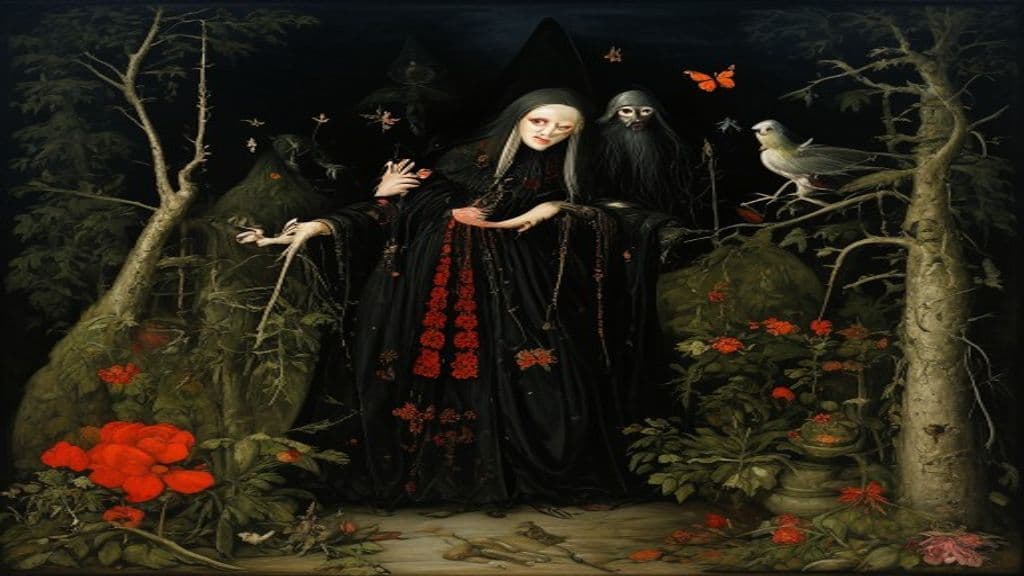
Drude
A female nocturnal spirit in German folklore associated with causing nightmares and the sensation of being pressed in sleep (Alpdruck). Treated as a kind of alp or witch-hag in southern German and alpine traditions, with household apotropaics and local counter-practices recorded.
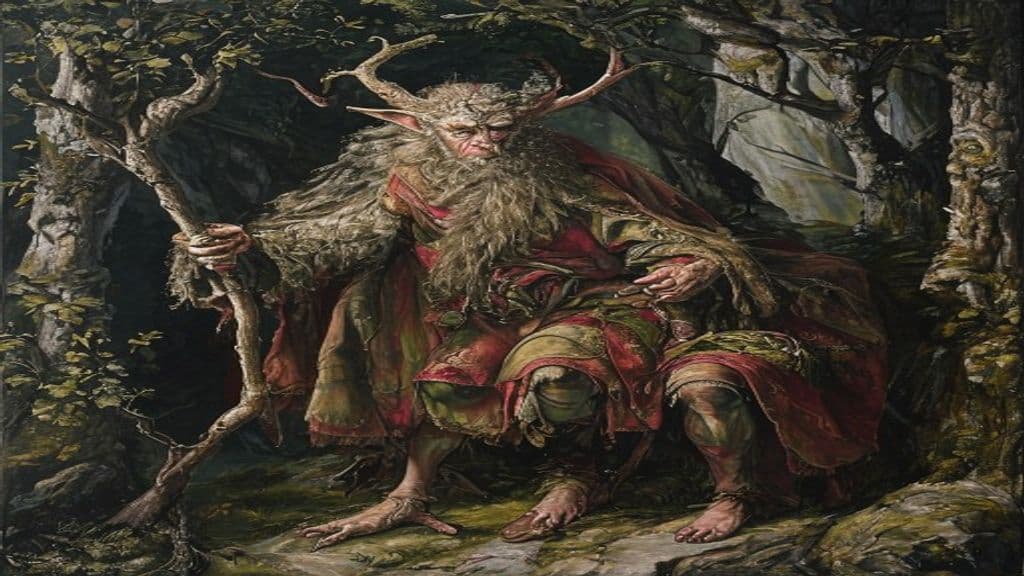
Alp
A German-speaking folkloric figure associated with nocturnal disturbance of sleepers. Historically tied to the broader Germanic family of 'elves' and treated variously as an eerie nature-being in medieval glosses and as a male nocturnal spirit in later folk accounts that sits on sleepers' chests and causes nightmares (Alptraum) and 'elf-pressure' (Alpdruck).
Abraun
Abraun is an attested name in German-language plant-legend scholarship (Der abraun, ein beitrag zur pflanzensagenkunde, 1916) and a short database entry (Wikidata) labels it as a spirit from German mythology. Surviving accessible documentation is extremely limited: the principal academic treatment is a 1916 contribution to pflanzensagenkunde (plant-saga studies), but the excerpts available here contain only bibliographic metadata and do not record tales, descriptions, or rituals.
Adils
Adils (Old Norse Aðils; also Eadgils, Adillus, Athisl, Adhel) is a semi‑legendary sixth‑century Swedish king attested in Old Norse saga material and later medieval traditions. He appears in saga episodes as a storied royal figure involved in warfare, court acts, and marriage suits rather than as a supernatural being.
Agilaz (Egil)
Agilaz (reconstructed Proto-Germanic) — commonly recorded in medieval sources as Egil or Ægil — is a legendary archer attested in Germanic heroic tradition. He appears as the brother of Völund (Wayland/Weland) in the Old Norse poem Völundarkviða and in the Thidreks saga, and his name is also inscribed on early medieval objects (Franks Casket, Pforzen buckle). The attested material presents him as a named heroic human archer within saga and inscriptional contexts rather than as a recurrent supernatural species.
Agnarr Geirröðsson
Agnarr Geirröðsson is a mortal prince attested only in the Poetic Edda poem Grímnismál; he aids Odin (disguised as Grímnir) during Geirröðr's torture and, after Odin reveals himself and King Geirröðr dies, Agnarr succeeds as king.
Agne
Agne (also attested Agni, Hogne, Agni Skjálfarbondi) is a semi-legendary king of Sweden in Old Norse saga tradition, preserved in the Ynglingatal corpus and prose expansions such as Snorri Sturluson's Ynglinga saga. He is portrayed as a mighty and famous warrior-king whose campaign in Finland, marriage to Skjalf, and death by hanging form a remembered episode connected to local place-names and a burial mound.
Alaisiagae
A group of Germanic female deities attested in Roman Britain, worshipped by continental auxiliary troops at a shrine near Vercovicium (Housesteads) on Hadrian's Wall. Epigraphic evidence records dedications to named members (Beda, Fimmilena, and in other lists Baudihillia and Friagabis) alongside Mars Thincsus and the numen of the emperor; modern scholarship interprets them variously as war/victory goddesses, as goddesses associated with assembly/justice, or as part of Matronae‑type fertility/ancestor cults.
Alberich
In Germanic heroic legend, Alberich is a dwarf associated with elven qualities and power. (Note: 1. Power tier: Reduce to Ancient as Alberich's abilities are not described beyond being a dwarf with elven qualities. 2. Origin story: Clarify that Alberich is mentioned in multiple Germanic texts, bu)
Alcis
A pair of youthful brother-deities worshipped by the Naharvali, attested only in Tacitus' Germania (c. 98 CE). They were venerated in a sacred grove under the care of a priest in female attire and are compared by Roman ethnography to the Graeco‑Roman Dioscuri (Castor and Pollux).
Alf and Alfhild
Alf and Alfhild are legendary human figures from Old Norse/early Scandinavian narrative tradition preserved principally in Saxo Grammaticus' Gesta Danorum. The tale presents Alf as a Danish prince and Alfhild as a Geatish princess who becomes a shieldmaiden and leader of a fleet of female raiders; their story includes combat, recognition, marriage, and later dynastic conflict.
Algaut
Algaut (also rendered Algöt or Algaut Gautreksson) is a semi-legendary Geatish king of West Götaland recorded in Scandinavian saga and genealogical tradition. Saga summaries (via Snorri Sturluson's Heimskringla as reported in later compilations) record that he was the father of Gauthild and was burnt to death by his son-in-law, the Swedish king Ingjald Ill-ruler.
Allerleirauh
Allerleirauh is the eponymous heroine of a Brothers Grimm fairy tale (Grimm no. 65; ATU 510B) who flees an enforced-marriage crisis by disguising herself in a mantle of many furs, takes menial service in another court, and later reveals her identity through three magnificent dresses and token objects to secure recognition and marriage.
Almáttki áss
Almáttki áss is an epithet-attested divine figure invoked in an Icelandic legal oath recorded in Landnámabók (Hauksbók 268). In the sole attestation the phrase functions as an invoked áss (god) described with the adjective almáttki ('almighty') and serves as the divine guarantor or witness for an oath sworn on a temple ring. Scholarly sources debate whether the epithet refers to a named Norse god (Thor, Ullr, Odin, or Týr) or is a Christianizing formulation by a later author.
Community Record
- [1]Mare (folklore) — Wikipedia. Wikipedia: Mare (folklore) — etymology, German and Pomeranian accounts, wards and remedies, relation to Alp/Drude.wiki
- [2]Research notes compiled from provided source excerpts. Compiled research notes supplied by user summarizing regional Germanic and Pomeranian variants, etymology, and ritual practices (includes mentions of Paul Devereux and Éva Pócs as cited in source material).other