Aurvandil is a legendary human figure in Norse folklore, from Scandinavia. Aurvandil is a named figure in medieval Germanic traditions attested across Norse, Old English, Old High German, Lombardic, and Old Danish/Latinized sources. In Norse material he figures in a cosmological episode in which Thor casts his frozen toe into the sky as the star Aurvandils-tá; in Old Danish/Latinized tradition (Saxo) a Horwendillus/Ørvendil bearing the same name appears as the father of Amlethus in a legendary-genealogical narrative.
In Norse sources Aurvandill (Aurvandill/Aurvandil) appears in a mythic episode in which the thunder-god Thor carries him across the Élivágar rivers in a basket; one of Aurvandill's toes freezes during the transit and Thor tosses that frozen toe into the sky, naming it Aurvandils-tá (the star). Cognate forms of the name are attested in other medieval Germanic languages (Old English Ēarendel, Old High German Aurendil, Lombardic Auriwandalo, and possibly Gothic auzandil). In Old Danish/Latinized tradition, Saxo Grammaticus uses the form Horwendillus/Ørvendil as the name of Amlethus' father, placing the figure in a legendary royal-genealogical context (Gesta Danorum). These attestations show the name migrated between cosmological myth and human-legend registers in medieval Germanic cultures.
Primary textual summaries provide little sustained physical description and instead emphasize narrative actions. The Norse episode implies a humanlike figure small enough to be borne in a basket by Thor during a river crossing; no definitive details of height, dress, or complexion are preserved in the cited synopses. One cataloging entry (Wikidata) labels Aurvandill as a “giant,” but that classification is terse and not expanded in the other supplied sources and therefore is recorded as a catalogue note rather than a primary descriptive trait.
The cited sources do not attribute ongoing supernatural powers to Aurvandil. He functions etiologically in Norse myth (a corporeal fragment of his body becomes a named star through Thor's agency) and as a legendary human/paternal figure in Saxo's account (father of Amlethus who is murdered by a kinsman). No independent magical abilities or recurrent supernatural behaviors are described in the provided materials.
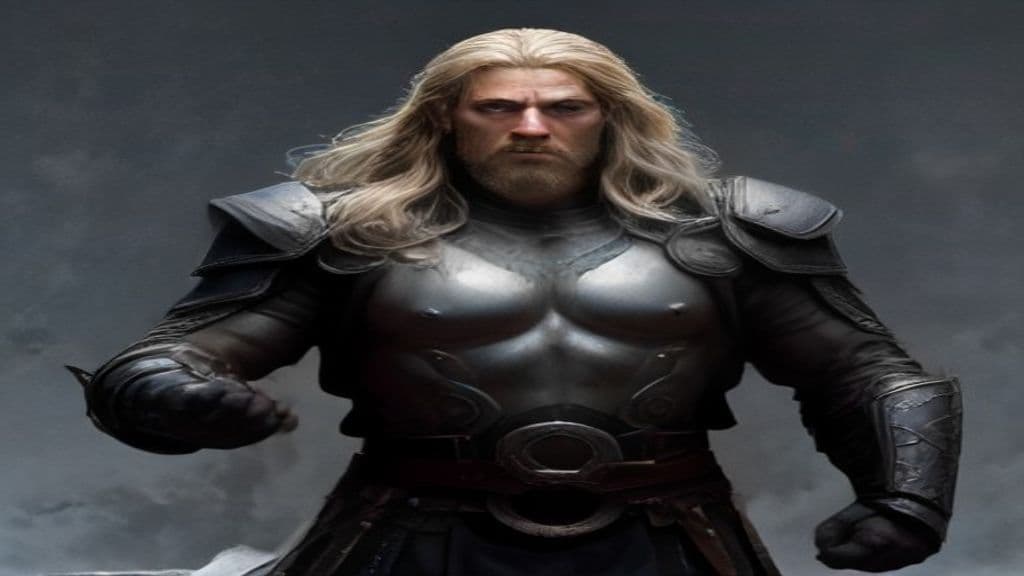
Thor (Þórr)
Thor (Old Norse Þórr) is a central god in the pre-Christian Germanic/Norse religious framework, primarily associated with thunder, storms, strength, protection, fertility, and the welfare of farmers. He is a hammer-wielding warrior who fights monstrous enemies (notably Jörmungandr) and is widely attested from Roman-era Germania through the Viking Age, with ongoing cultural presence in personal and place-names and weekday nomenclature (Thursday).

Amleth
Amleth (Old Norse: Amlóði; Latinized Amlethus) is a legendary medieval Scandinavian prince and saga-hero best known from Saxo Grammaticus' Gesta Danorum. He is a human protagonist whose story centers on feigned madness, cunning survival, exile to Britain, marriage, wealth-gathering, and eventual vengeance against his father's murderer; the tale later inspired the character of Shakespeare's Hamlet and numerous adaptations.
Abdiel
Abdiel (Hebrew עֲבְדִּיאֵל) is primarily a theophoric Hebrew personal name meaning "servant of El/servant of God," attested once in the Hebrew Bible (1 Chronicles 5:15). In later literature—most notably John Milton's Paradise Lost—Abdiel is reimagined as a faithful seraph who opposes Satan's revolt. The provided sources do not treat Abdiel as an autonomous folkloric spirit type or record rituals or wards associated with the name.
Abiel
Abiel is attested in the supplied sources only as a male given name — borne by several historical American individuals and listed as two minor biblical figures. The provided materials contain no evidence presenting Abiel as a supernatural, mythological, or folkloric entity.
Abigail
Abigail is a female figure in the Hebrew Bible portrayed in 1 Samuel 25 as the intelligent and beautiful wife of Nabal who intervenes to prevent David from committing violence; later tradition regards her as one of the Tanakh's seven female prophets and as a model of beauty and wisdom.
Abraun
Abraun is an attested name in German-language plant-legend scholarship (Der abraun, ein beitrag zur pflanzensagenkunde, 1916) and a short database entry (Wikidata) labels it as a spirit from German mythology. Surviving accessible documentation is extremely limited: the principal academic treatment is a 1916 contribution to pflanzensagenkunde (plant-saga studies), but the excerpts available here contain only bibliographic metadata and do not record tales, descriptions, or rituals.
Accolon
Accolon is a mortal knight of the Arthurian court, presented in the Post-Vulgate Merlin tradition and Malory's Le Morte d'Arthur as Morgan le Fay's paramour and instrument in a plot to supplant King Arthur; his tale centers on enchanted weapons (Excalibur and its scabbard), love-manipulation, and a tragic duel with Arthur.
Adils
Adils (Old Norse Aðils; also Eadgils, Adillus, Athisl, Adhel) is a semi‑legendary sixth‑century Swedish king attested in Old Norse saga material and later medieval traditions. He appears in saga episodes as a storied royal figure involved in warfare, court acts, and marriage suits rather than as a supernatural being.
Adsullata
Adsullata is attested as a Continental Celtic river goddess associated with the River Savus (modern Sava) in the Roman province of Noricum. Later traditions record her presence in Brittany as a goddess of hot springs and present her as an antecedent or origin-form of the Anglo‑Celtic sun goddess Sul.
Afaon fab Taliesin
Afaon fab Taliesin is a medieval Welsh warrior-counsellor, named as a son of the bard Taliesin and recorded among Arthur’s retinue in Welsh tradition. He appears in the Welsh Triads and in the tale Breuddwyd Rhonabwy (The Dream of Rhonabwy) as a notable martial figure and proverb-speaker rather than as a supernatural being.
Agilaz (Egil)
Agilaz (reconstructed Proto-Germanic) — commonly recorded in medieval sources as Egil or Ægil — is a legendary archer attested in Germanic heroic tradition. He appears as the brother of Völund (Wayland/Weland) in the Old Norse poem Völundarkviða and in the Thidreks saga, and his name is also inscribed on early medieval objects (Franks Casket, Pforzen buckle). The attested material presents him as a named heroic human archer within saga and inscriptional contexts rather than as a recurrent supernatural species.
Aglovale
Aglovale (also Agloval, Aglovan, Aglovaus, Acglavael) is a human knight of Arthurian romance, presented as the eldest legitimate son of King Pellinore and a Knight of the Round Table in the Vulgate/Post‑Vulgate cycles, Malory, and later adaptations. He brings his long‑lost brother Perceval to Camelot, takes part in military actions (including slaying Agrippa in one account), and his death is related in varying ways across traditions (accidental at Gawain's hand, deliberate murder by Orkney kin, or killed during Lancelot's rescue of Guinevere).
Agnarr Geirröðsson
Agnarr Geirröðsson is a mortal prince attested only in the Poetic Edda poem Grímnismál; he aids Odin (disguised as Grímnir) during Geirröðr's torture and, after Odin reveals himself and King Geirröðr dies, Agnarr succeeds as king.
Agne
Agne (also attested Agni, Hogne, Agni Skjálfarbondi) is a semi-legendary king of Sweden in Old Norse saga tradition, preserved in the Ynglingatal corpus and prose expansions such as Snorri Sturluson's Ynglinga saga. He is portrayed as a mighty and famous warrior-king whose campaign in Finland, marriage to Skjalf, and death by hanging form a remembered episode connected to local place-names and a burial mound.
Community Record
- [1]Aurvandill - Wikipedia. Wikipedia: Aurvandill article (summary of Norse episode and continental name-forms)wiki
- [2]Aurvandill - Wikidata. Wikidata entry noting Aurvandill and listing a catalogue property labeling him "giant"other
- [3]Rambles.NET — The Northman (summary of Saxo). Rambles.NET summary of Saxo's Gesta Danorum describing Horwendillus/Ørvendil as father of Amlethus and his murder in the legendary accountliterary
- [4]Éala Éarendel: A study in names. Discussion of the Old English Ēarendel and cognate Germanic name-formsother
- [5]Germanic Astronomy (Hrungnir/Astronomy page). Online summary situating the Aurvandill toe/star episode within Germanic astronomical/mythic motifsother