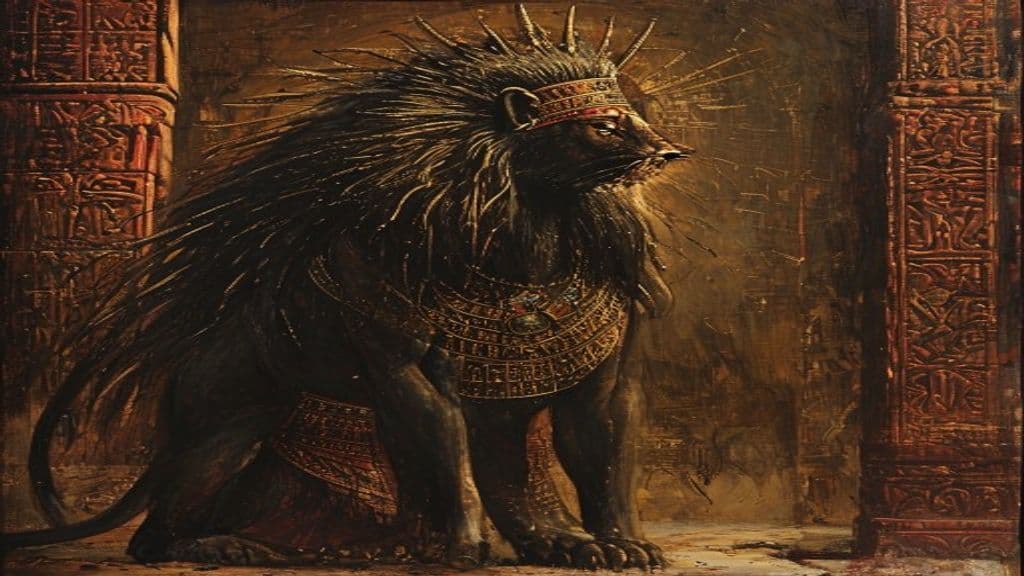
Inanna is attested from the early Uruk period as the patron goddess of the Eanna temple in Uruk; she is presented in mythic tradition as a principal divine personage who holds the title rendered 'Queen of Heaven'. In the mythic corpus she is the recipient of the mes — the foundational decrees or arts of civilization — granted to her by the god Enki in the tale often called 'Inanna and Enki, the Transfer of the Arts of Civilization'. Textual and historical evidence shows a process of syncretism over time: scholars report that the Sumerian Inanna and the East Semitic Ishtar, once distinct in origin, were conflated in the Akkadian period (commonly dated to and after the era of Sargon) so that the two names and traditions became effectively merged across Mesopotamia.
Direct anthropomorphic descriptions are scarce in the provided sources; instead Inanna is principally known through recurrent iconography and symbols. Her most prominent attributes are the lion (a symbol of strength and war) and the eight-pointed star (associated with the planet Venus). Literary texts and later iconographic traditions associate her with royal regalia and weapons in martial contexts and with sensual/regal dress in love and fertility contexts. Ancient cult practice also distinguished phases of the goddess tied to Venus's appearances—references to 'morning Inanna' and 'evening Inanna' reflect celestial associations rather than a single fixed pictorial type.
Myths present Inanna as a wide-ranging sovereign deity who presides over love, sexual matters, procreation, war, political authority and divine law. She appears as an active and at times aggressive agent of divine will: narratives recount her destroying Mount Ebih for opposing her, punishing the gardener Shukaletuda after he raped her, and exacting retribution on the bandit woman Bilulu for killing Dumuzid. She is portrayed as the possessor of the mes—divine decrees that underpin civilization—which frames her role in conferring cultural and political prerogatives. Inanna undertakes a celebrated descent into the underworld where she is judged and struck dead, and only after intercession (notably by Ninshubur and Enki) is she restored; this death-and-return cycle feeds into seasonal and cultic symbolism. Several myths describe her assuming the domains or cultic prominence formerly attributed to other deities, a motif reflecting shifting religious and political authority.
Weaknesses
- conditionvulnerability in the underworld (struck dead by the judges of the underworld during her descent)
Wards
None recorded.
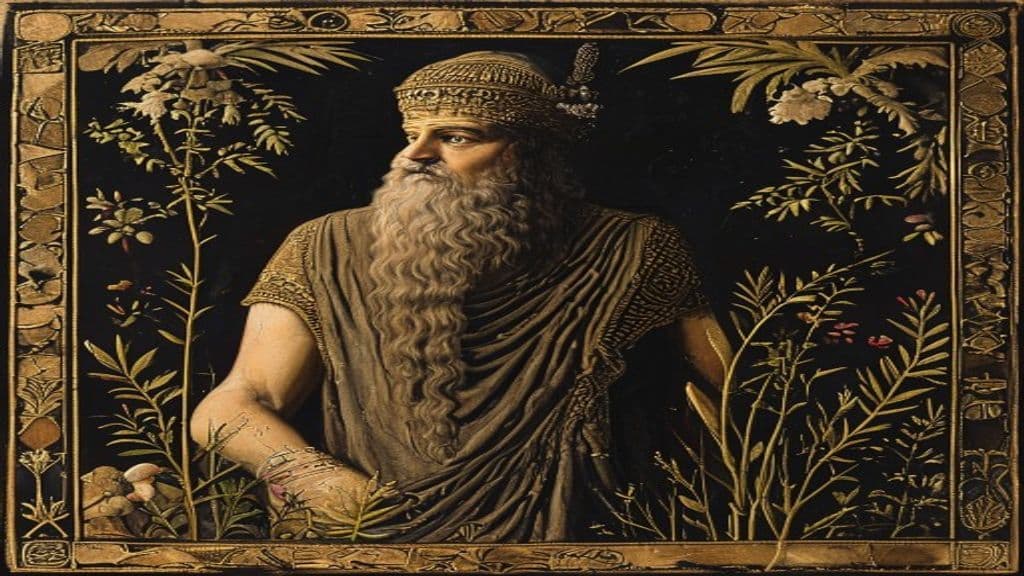
Dumuzid (Tammuz)
Dumuzid (Sumerian Dumuzi; Akkadian Duʾūzu/Dûzu; later Tammuz) is an ancient Mesopotamian deity associated with shepherding, plant fertility, and seasonal renewal. He functions as the primary consort of the goddess Inanna/Ishtar, an etiological figure for summer barrenness and autumnal return, and appears in king lists as an antediluvian/early ruler.
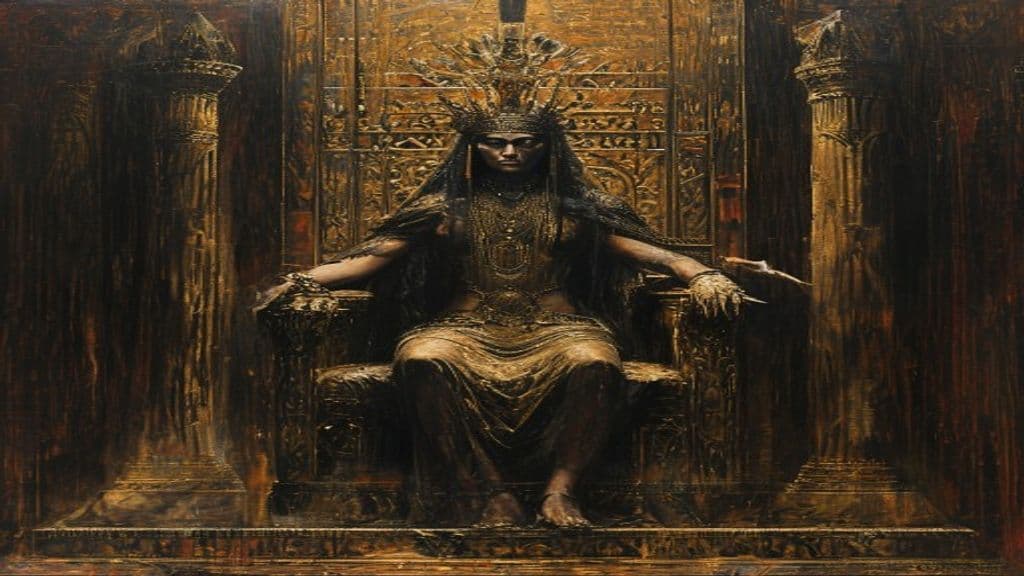
Ereshkigal
Ereshkigal is the Mesopotamian goddess-queen of the netherworld (Kur/Irkalla), portrayed in literary myths as sovereign of the Land of the Dead who judges and controls access to the underworld. She appears prominently in narrative texts (notably the Descent of Inanna and the Nergal marriage myth) though archaeological cult evidence for widespread popular worship is limited.
'Ain Samiya Goblet
Silver cup from the Middle Bronze Age I, discovered in a tomb at Ain Samiya. (Note: 1. Power tier should be "None", but add a note explaining that historical artifacts don't fit into the typical power tier classification. 2. Add a description of its appearance based on it being a sil)
A'annepada
A'annepada (Sumerian cuneiform 𒀀𒀭𒉌𒅆𒊒𒁕; also romanized Aanépàdda) is attested as a historical ruler of the First Dynasty of Ur, flourishing c. 2350 BC. He is recorded in dedicatory and foundation inscriptions as king of Ur and as son of Mesannepada, credited with temple-building and dedication to deities such as Ninhursag and Inanna.
Abu
Abu is a poorly understood Mesopotamian god attested in modern reference summaries. Secondary literature tentatively links him with vegetation and snakes and records that he was often paired with a deity written gu2-la2, but primary details about his cult, iconography, and myths are lacking in the cited sources.
Abzû
Abzû (Sumerian abzû; Akkadian Apsû) is the primordial freshwater abyss in Sumerian–Akkadian cosmology: the deep fresh waters that underlie and surround the earth, source of springs, rivers and ritual holy waters, and a creative principle whose mingling with the salt sea (Tiamat) figures in Mesopotamian cosmogony.
Abī-simtī
Abī-simtī (also rendered Abi-simti, Abisimti) is a named woman attested in third-millennium BCE Mesopotamian documentary and literary texts. She appears in administrative account records as a provider of animals and donor to temple cults and in Sumerian love-song literature as the named beloved/consort addressed by a royal speaker.
Adad
Adad (also Hadad, Haddad; Sumerian Iškur) is the storm- and rain-deity attested in ancient Mesopotamian and Canaanite religious contexts. Sources identify him as a principal weather god whose domain is storms and rainfall and whose name appears across multiple Near Eastern languages and sites, including Ebla (as Hadda, c. 2500 BCE).
Adapa
Adapa is a mythic figure from ancient Mesopotamian (Sumerian and Akkadian) literature: a mortal fisherman and temple sage of Ea at Eridu endowed with exceptional wisdom. He appears in a fragmentary tale in which he breaks the wings of the south wind and is summoned to the divine court; his name was later invoked in exorcistic and ritual contexts as an authoritative identity.
Adonis
Adonis is a mythic mortal youth in ancient Greek tradition, beloved by goddesses (notably Aphrodite and Persephone) whose death and seasonal return are the focus of the women’s midsummer festival Adonia. The cultic practices—planting short-lived 'gardens of Adonis' on rooftops, ritual lamentation, and casting an effigy and withered plants into the sea—symbolically link him to vegetation cycles and Near Eastern dying-and-regenerating god traditions.
Adrammelech
Adrammelech is attested in ancient Semitic textual tradition as a local god of 'Sepharvaim.' The name is commonly glossed as "Magnificent king." In modern times the name has been reused in diverse fictional, musical, and online contexts, but those are creative reworkings rather than continuations of the brief ancient attestation.
Aga of Kish
Aga of Kish (Aga, Agga, Akka) is an Early Dynastic Mesopotamian king recorded in the Sumerian King List, the Tummal Inscription, epigraphic objects, and the Sumerian poem "Gilgamesh and Aga." He functions in texts as a historical/legendary political actor who attempted hegemonic demands on Uruk and was ultimately captured and released by Gilgamesh.
Agasaya
Agasaya is presented in modern secondary sources as a little-attested Semitic war goddess who, according to some summaries, was later absorbed as the warrior aspect of the major Mesopotamian goddess Ishtar. The attestation in available materials is sparse and much inferences about her name, attributes, and later influence are explicitly marked speculative in those sources.
Agum II (Agum‑Kakrime)
Agum II (called Agum‑Kakrime in the inscriptionary tradition) is a Kassite-era Babylonian king known from the Agum‑Kakrime Inscription and later copies. He appears in Akkadian inscriptional and king-list traditions as a royal restorer who recovered and reinstalled the cult statue of Marduk and refurbished the É-sagila, presenting himself as a legitimate shepherd‑king and temple benefactor.
Community Record
- [1]Inanna - Wikipedia. Wikipedia contributors, 'Inanna', Wikipedia, The Free Encyclopediawiki
- [2]Inanna And Enki - The Transfer Of The Arts Of Civilization from Eridu to Erech. 'Inanna and Enki — The Transfer of the Arts of Civilization' (summary of Sumerian myth)other
- [3]Inanna of Zabalam - Wikipedia. Wikipedia contributors, 'Inanna of Zabalam', Wikipedia, The Free Encyclopediawiki
- [4]Inanna's Descent (teaching/summary). Summary of the 'Descent of Inanna' myth (University resource)literary
- [5]Gateways to Babylon — Lady Inanna. GatewaysToBabylon.com, 'Lady Inanna' (summary of myth and cult)other
- [6]The Goddess Inanna (overview). F. Smitha, 'The Goddess Inanna' (overview of myths and symbolism)other