
Sources link the personal name Jenny/Jinny to regional storytelling practices and linguistically relate the epithet Greenteeth to older names for similar water‑beings (grindylow, forms recorded as 'Grendith' or 'Grinteeth'). The figure appears in local oral and literary sources in northwestern and northern England as a personification of treacherous pond surfaces and drowning risk; in at least one 19th‑century poetic/musical text she is described as a 'goddess of death' in Lancashire folklore. The material supports a likely linguistic and typological derivation from older river‑hag traditions rather than a single authored origin.
Traditional descriptions portray her as green‑skinned with long, dripping hair and sharp, conspicuous teeth; the name 'Greenteeth' evokes algae and pondweed associated with stagnant water. Literary and modern retellings supply variant details (for example, 'teeth like a shark's but green', 'dripping green hair like waterweed', or large round/piercing eyes) but such features are more characteristic of later literary or variant formulations rather than a unified core description.
Across sources her principal ability is physical predation at water's edge: luring, seizing, and drowning children or the elderly. The figure also functions conceptually to explain how a misleading mat of duckweed or pondweed can hide deep or treacherous water. Comparative references in sources note analogous powers (singing, enticement, change of form) in other cultures' water‑beings (e.g., Storm Hag, Qallupilluit, rusalka, kappa), but the supplied English tradition does not reliably ascribe shape‑changing or sonic sorcery to Jenny herself — those details belong to variants or analogues.
Weaknesses
- otherno documented supernatural vulnerabilities
- conditionpractical exposure — the figure functions primarily as a hazard personification (its 'weakness' is that storytelling and avoidance remove its efficacy)
Wards
- othernarrative warning / cautionary storytelling
- otherlandscape literacy: recognition of duckweed/pondweed as treacherous

Rusalka
Water spirits in Slavic folklore — the spirits of young women who died by drowning or suicide, bound to rivers and lakes. Beautiful and dangerous, they can bewitch men to their deaths.
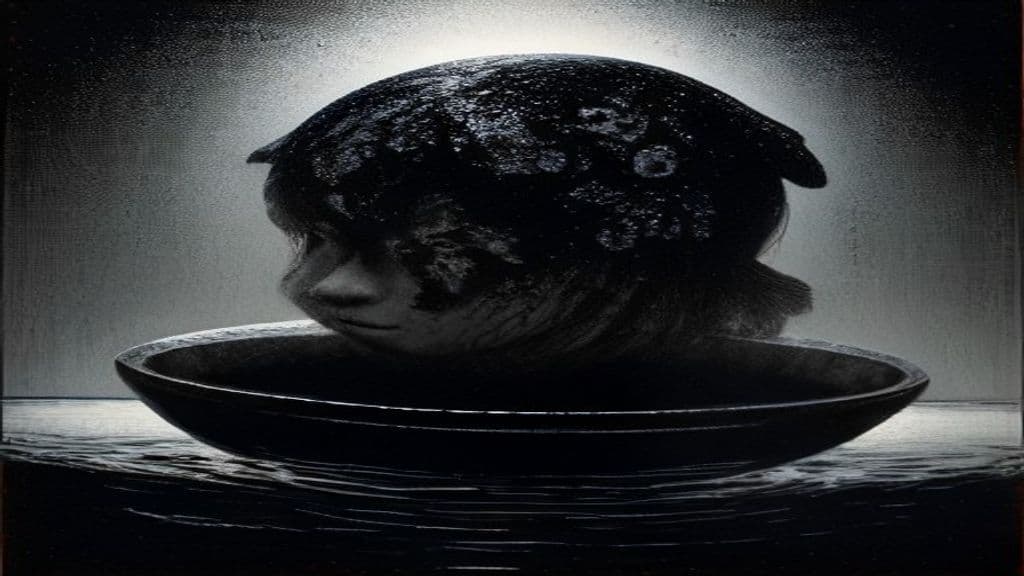
Kappa
A water-dwelling imp of Japanese folklore with a bowl of water on its head. Mischievous but bound by strict codes of politeness; dangerous near rivers.
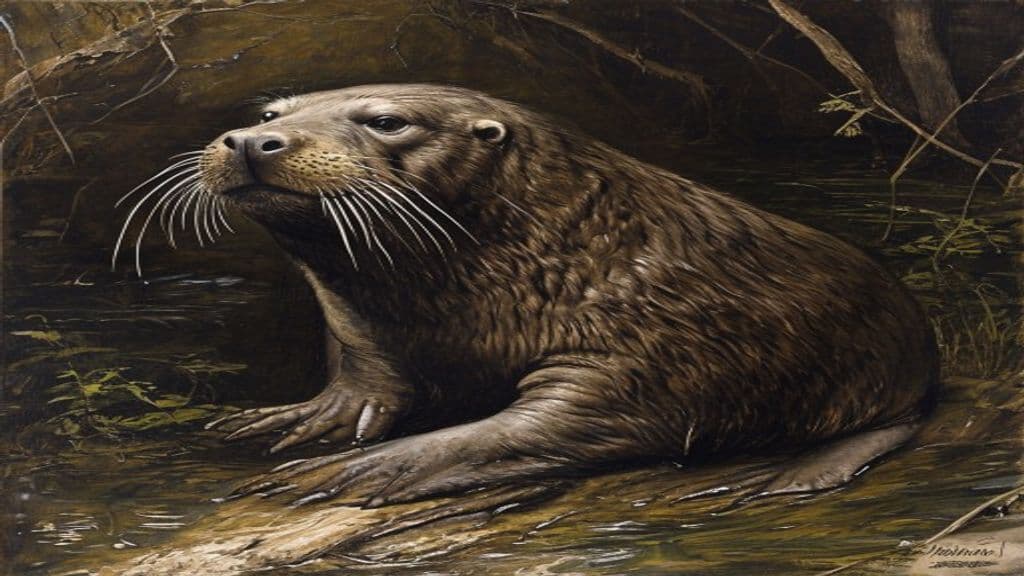
Bunyip
A class of Aboriginal Australian water-being from southeastern Australia associated with swamps, billabongs, creeks, riverbeds and waterholes. Bunyip stories warn people away from dangerous waters and in some traditions enforce resource-use norms and child safety.

Qallupilluit
A shoreline-dwelling supernatural being in Inuit oral tradition that inhabits the liminal space between sea and ice. Presented primarily as a cautionary figure, the Qallupilluit lures and steals children who approach hazardous sea-ice edges.
Abdiel
Abdiel (Hebrew עֲבְדִּיאֵל) is primarily a theophoric Hebrew personal name meaning "servant of El/servant of God," attested once in the Hebrew Bible (1 Chronicles 5:15). In later literature—most notably John Milton's Paradise Lost—Abdiel is reimagined as a faithful seraph who opposes Satan's revolt. The provided sources do not treat Abdiel as an autonomous folkloric spirit type or record rituals or wards associated with the name.
Abiel
Abiel is attested in the supplied sources only as a male given name — borne by several historical American individuals and listed as two minor biblical figures. The provided materials contain no evidence presenting Abiel as a supernatural, mythological, or folkloric entity.
Abigail
Abigail is a female figure in the Hebrew Bible portrayed in 1 Samuel 25 as the intelligent and beautiful wife of Nabal who intervenes to prevent David from committing violence; later tradition regards her as one of the Tanakh's seven female prophets and as a model of beauty and wisdom.
Accolon
Accolon is a mortal knight of the Arthurian court, presented in the Post-Vulgate Merlin tradition and Malory's Le Morte d'Arthur as Morgan le Fay's paramour and instrument in a plot to supplant King Arthur; his tale centers on enchanted weapons (Excalibur and its scabbard), love-manipulation, and a tragic duel with Arthur.
Adsullata
Adsullata is attested as a Continental Celtic river goddess associated with the River Savus (modern Sava) in the Roman province of Noricum. Later traditions record her presence in Brittany as a goddess of hot springs and present her as an antecedent or origin-form of the Anglo‑Celtic sun goddess Sul.
Afaon fab Taliesin
Afaon fab Taliesin is a medieval Welsh warrior-counsellor, named as a son of the bard Taliesin and recorded among Arthur’s retinue in Welsh tradition. He appears in the Welsh Triads and in the tale Breuddwyd Rhonabwy (The Dream of Rhonabwy) as a notable martial figure and proverb-speaker rather than as a supernatural being.
Aglovale
Aglovale (also Agloval, Aglovan, Aglovaus, Acglavael) is a human knight of Arthurian romance, presented as the eldest legitimate son of King Pellinore and a Knight of the Round Table in the Vulgate/Post‑Vulgate cycles, Malory, and later adaptations. He brings his long‑lost brother Perceval to Camelot, takes part in military actions (including slaying Agrippa in one account), and his death is related in varying ways across traditions (accidental at Gawain's hand, deliberate murder by Orkney kin, or killed during Lancelot's rescue of Guinevere).
Agravain
Agravain is a literary knight of Arthurian romance cycles: one of the sons of King Lot of Orkney, a member of the Round Table, and a recurring figure in French and English medieval prose and verse. He is portrayed as a skilled but morally problematic courtly knight whose jealousy, malice, and intra-familial violence drive key narrative conflicts (notably the slaying of Lamorak and the exposure of Guinevere).
Albanactus
Albanactus is a legendary eponymous founder-king in medieval pseudo-historical chronicles (not a supernatural being). In Geoffrey of Monmouth’s narrative he is the youngest son of Brutus who receives Alba/Albany as his share, rules briefly, and is killed by Humber, king of the Huns; the figure serves as a medieval reverse-etiology to explain the name of the land and to support later political claims.
Aldroen
Aldroen is a legendary early medieval king of the Bretons of Armorica appearing in Geoffrey of Monmouth and later medieval chroniclers. Presented as a dynastic and martial founder-figure (son of Salomon) in pseudo-historical accounts, he is credited in tradition with military action in 5th-century Brittany and involvement in British-Breton affairs rather than any supernatural role.
Alice (Alice's Adventures in Wonderland)
Alice is the fictional little girl protagonist of Lewis Carroll's 1865 novel Alice's Adventures in Wonderland. Portrayed as a curious child who follows a White Rabbit down a rabbit hole, she serves as the reader's point of entry into the dreamlike realm of Wonderland and is not described in the provided sources as a supernatural being.
Allison Gross
A witch-figure from a Scottish/English ballad (Child 35) who courts a man with gifts and, when rebuffed, transforms him into a wyrm bound to a tree; in some versions the Seelie Queen later restores him. Presented in ballad tradition as a powerful but contestable supernatural suitor and punishor.
Community Record
- [1]Jenny Greenteeth. Wikipedia: 'Jenny Greenteeth' articlewiki
- [2]Jenny Greenteeth (Wikidata). Wikidata entry Q1512208other
- [3]Jenny Greenteeth (archive recording and page). Archive.org collection 'Jenny Greenteeth' (2008)folk
- [4]Avak Avakyan — Hymn to Jenny Greenteeth (archive entry). Archive.org description citing John Higson noting 'a name of goddess of death in Lancashire’s folklore'folk
- [5]Necessary Fiction — 'Jenny Greenteeth' (short fiction). Contemporary short fiction retellingliterary
- [6]The Dark Magazine — 'Jenny Greenteeth'. Modern literary retelling / publicationliterary
- [7]David Renton — 'JENNY GREENTEETH: ECO‑HORROR AND INDUSTRY' (MIR Online). Contemporary commentary on cultural survival and reinventionother