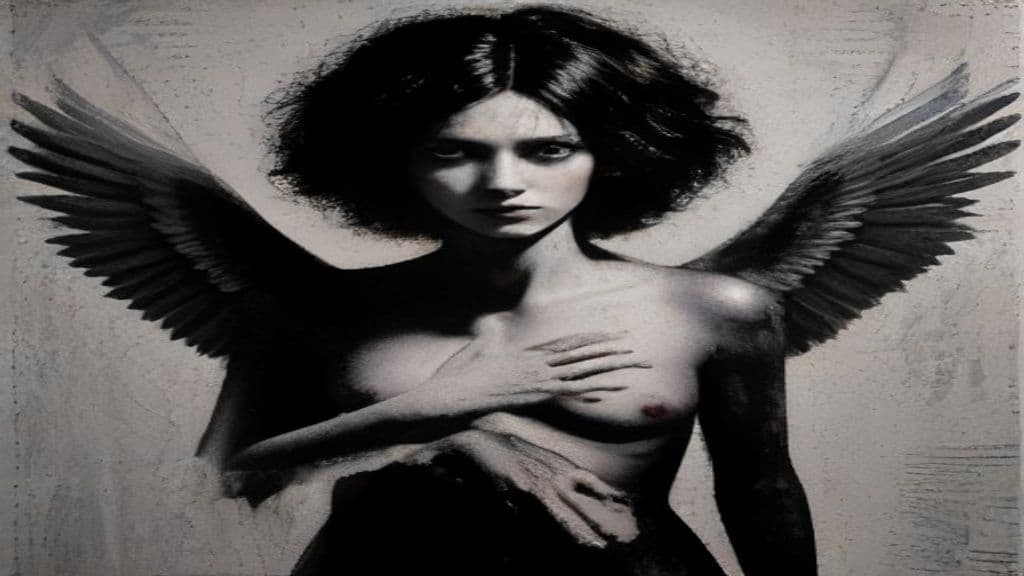
The narrative first appeared in print as a 1968 piece cited as 'The Hand' by N. B. Shein in the Insect Trust Gazette; a widely cited, more detailed and embellished retelling followed in 1972 by Tim Craig (Studio International), which added biographical and performance specifics. Subsequent circulation through fanzines, gallery texts, music collaborations (eg. Coil/Nocturnal Emissions references) and exhibition projects treated 'the estate of John Fare' as a curatorial or fictional device. Institutional responses (notably Avrom Isaacs/Isaacs Gallery) deny Fare's historicity; the corpus treats him as a mythic persona used to explore questions about bodily sacrifice and authenticity rather than a verified historical individual.
Accounts that form part of the legend provide fleshed‑out biographical and theatrical details (e.g., birth in 1936 in Toronto, study in London and Copenhagen) and theatrical trappings (a birth certificate displayed under glass at gallery entrances). One emulative performance report describes an eccentric stage appearance—zippered trousers and a brain diagram tattoo on a shaved scalp—but sources mark such costume details as derived from later emulations or embellishments rather than independently corroborated factual description of a historical person.
Within the circulated narratives Fare's defining 'ability' is performing extreme self‑mutilatory works using mechanical or 'robotic' surgical apparatus: progressive staged amputations (lists of specific removals appear in the embellished accounts), preservation of removed parts in alcohol, and an alleged onstage beheading in one version. These actions are elements of the legend and of emulative performances that invoke the Fare story; institutional and archival sources deny their factual occurrence, and the tale functions primarily as a conceptual touchstone in debates around body art and martyrdom.
Weaknesses
- conditioninstitutional refutation/archival clarification
Wards
- ritualgallery correspondence and public denial

Rusalka
Water spirits in Slavic folklore — the spirits of young women who died by drowning or suicide, bound to rivers and lakes. Beautiful and dangerous, they can bewitch men to their deaths.
Baba Yaga
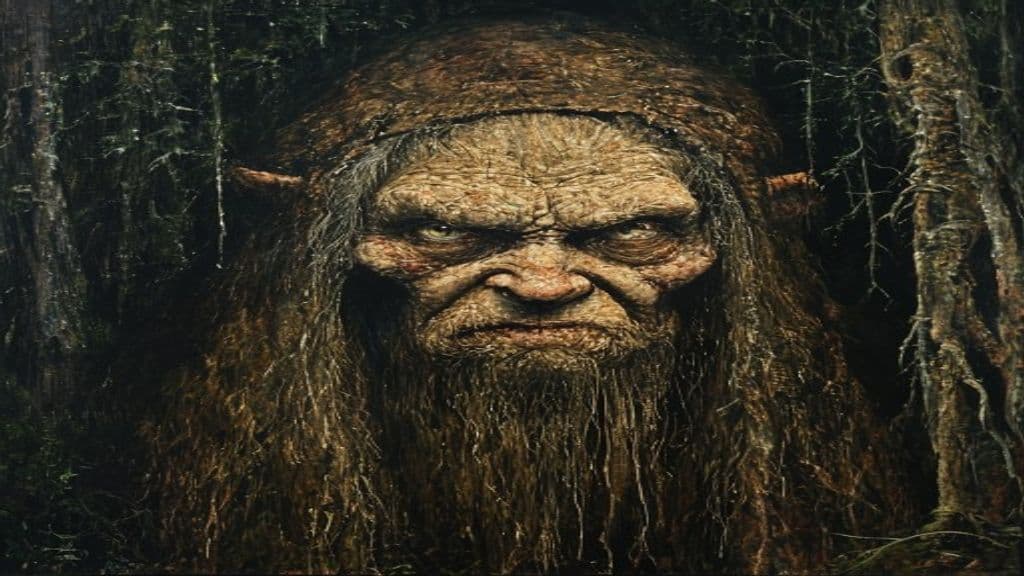
Baba Yaga is an ambivalent female figure of East Slavic folktale tradition, depicted variously as a fearsome, child-eating crone or as a helpful, maternal donor. She is associated with the deep forest, a hut described as standing on chicken legs, and the motific accoutrements of a mortar and pestle.
3-D Man
3-D Man is a Marvel Comics superhero identity associated with a 1950s-era origin in which the body of Chuck Chandler can materialize in three-dimensional existence when activated by his brother Hal via a pair of glasses. The mantle was later assumed by Delroy Garrett (formerly Triathlon) in modern continuity.
5 Ronin
5 Ronin is a 2011 Marvel Comics five-issue limited series that reimagines five Marvel superhero archetypes as rōnin (masterless samurai) in a fictionalized post‑Sekigahara feudal Japan. The work places Wolverine, Hulk, Punisher, Psylocke, and Deadpool analogues into period roles to explore displacement, revenge, and identity in an era of political upheaval.
58 Concordia
58 Concordia is a fairly large main-belt asteroid orbiting the Sun, discovered in 1860 and named after the Roman goddess Concordia. Astronomical sources classify it as a C-type (carbonaceous) body with a multi-year orbital period and measurable rotation and pole orientations.
9MOTHER9HORSE9EYES9
An anonymous Reddit screen name and online persona used by the author of the Interface series, a multipart speculative-horror narrative posted in short installments across Reddit in 2016. The name functions as the signature of an authorial identity and as a focal label for a fandom that created archives, a subreddit, and a wiki documenting the story and its fictional phenomena (notably entities called "flesh interfaces").
A.R.G.U.S.
A.R.G.U.S. is a fictional clandestine United States government agency in the DC Comics universe that investigates, contains, and manages superhuman, meta-human, and supernatural incidents and assets. Introduced in The New 52 continuity, it functions as an institutional actor providing intelligence, logistical support, covert task forces (notably Task Force X / the Suicide Squad), and a dedicated magic division across comics and media adaptations.
Abena Mansa
A name attested in a single contemporary Ghanaian blog anecdote as a 'mysterious being'; available sources do not establish Abena Mansa as a coherent, traditional supernatural figure or provide corroborating ethnographic detail.
Abin Sur
Abin Sur is a fictional extraterrestrial Green Lantern from the planet Ungara in DC Comics. A former history professor turned Green Lantern of Space Sector 2814, he discovered and investigated a prophecy tied to the "Blackest Night," died wounded on Earth and chose Hal Jordan as his ring-successor, and was later reanimated as a Black Lantern in the Blackest Night storyline.
Abishai
Abishai is a personal name attested in several distinct sources: a biblical individual described as the eldest son of Zeruiah (sister of King David); a Semitic chief named in an inscription at Beni-Hasan in Middle Egypt; and modern cultural uses including a named monster in Dungeons & Dragons and as an artist/stage name. The supplied materials do not present Abishai as a supernatural being within a living cosmology.
Abraham Cornelius
Abraham Cornelius is a fictional human scientist in Marvel Comics, a senior Weapon X technician who helped develop the technique to bond adamantium to bone and who features in Wolverine's origin and later storylines, including Death of Wolverine.
Absorbing Man
A fictional Marvel Comics character (Carl "Crusher" Creel) whose body acquires the physical properties of materials or energies he touches. Debuting in Journey into Mystery #114 (March 1965), created by Stan Lee and Jack Kirby, he is presented as a mortal supervillain/occasional antihero who challenges heroes such as Thor, Hulk, Spider-Man, and the Avengers.
Ace Lightning
Ace Lightning is the titular playable character of the fictional in‑universe video game Ace Lightning and the Carnival of Doom. In the television series, game characters come to life in the real‑world town after a lightning strike and electrical surge; Ace functions as a superheroic 'Lightning Knight' from the Sixth Dimension who recruits a human sidekick to pursue game objectives (recovering pieces of the Amulet of Zoar) in the human world.
Ace West
Ace West (Wallace Daniel "Ace" West) is a contemporary American comic-book character in DC Comics continuity, a young speedster who channels the metaphysical Speed Force and occupies legacy-hero roles such as Kid Flash and Ace. Introduced in New 52-era stories as a biracial reinterpretation of Wally West and later retconned in DC Rebirth as a distinct Wallace West, son of Daniel West (Reverse-Flash), he appears across present-day and alternate/future timelines and participates in team and sacrifice narratives tied to the Speed Force.
Community Record
- [1]John Fare. Wikipedia article 'John Fare' (accessed source corpus)wiki
- [2]The Last Piece by John Fare — GB Agency (exhibition page). GB Agency exhibition page for 'The Last Piece by John Fare' (used as curatorial/fictional device)other
- [3]Four Compositions for an imaginary performance by the legendary John Fare | Nocturnal Emissions. Nocturnal Emissions release invoking John Fareother
- [4]1964 - Performance Artist using Robotic Props - John Fare (Canadian). Cyberneticzoo entry discussing Fare narrative in robotic/artist contextsother
- [5]John Fare archive page. Earthly Delights page compiling material on John Fare and related itemsother