
Kaval Deivam are rooted in an indigenous Dravidian/Tamil folk pantheon predating or existing outside the Sanskritic Agamic temple hierarchy. As a class, they emerged as local guardian figures tied to particular villages and liminal sites (village edges, cremation grounds) and in many places underwent varying degrees of syncretism or assimilation with broader Hindu/Shakti traditions. Individual exemplars such as Karuppasamy, Sudalai Madan, Isakki and Angalamman are treated as local ancestral or protective spirits whose cult histories are specific to each village; for example, Sudalai Madan is described in sources as a guardian associated with cremation grounds and Karuppasamy as the mounted guardian at village edges.
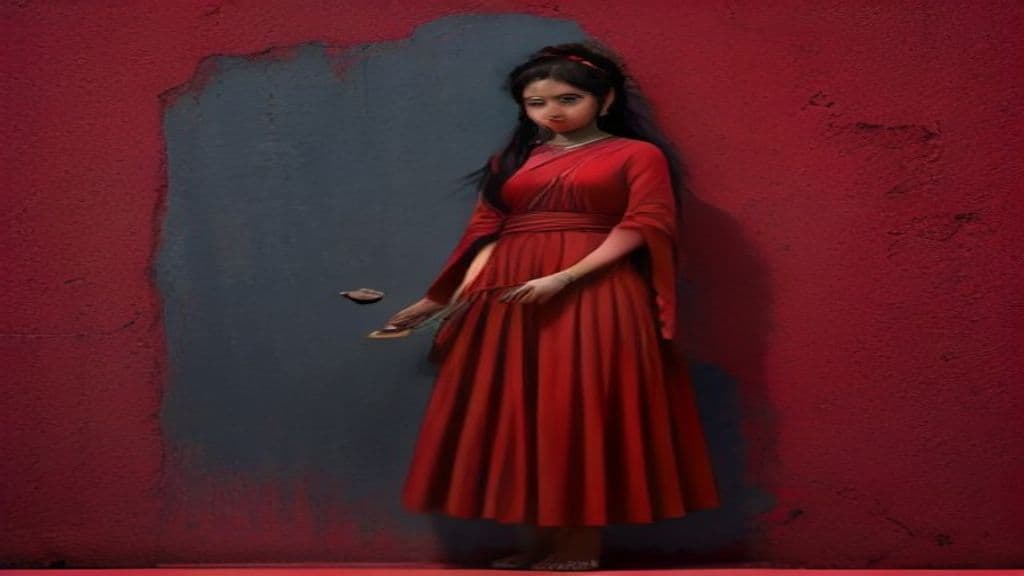
Appearances vary by named guardian but share common motifs of fierceness, armament and liminality. Many kaval deivam are depicted with weapons and aggressive mien to embody protective power: Karuppasamy is often shown as a moustached, powerful male figure armed with a curved billhook (aruval) and mounted on a horse; Angalamman/Angala Parameswari appears in fierce Mother Goddess form holding trident or sword; Isakki is commonly portrayed as a young woman in red dress. Iconography frequently places these images at village perimeters or small shrines rather than in Agamic temple interiors, and animals (notably horses) and martial accoutrements are salient attributes.
As a class, kaval deivam function to ward off epidemics, evil spirits and misfortune, to protect people, livestock and fields, to patrol and guard village boundaries, and to enforce communal norms—using a fierceness that is interpreted as protective power rather than simple malice. They are invoked to destroy harmful forces, restore justice and order, and to deter wrongdoing. Their temperament and specific actions vary by local tradition: they may be benevolent toward devotees who propitiate them and violent toward those judged guilty or threatening the village. Some, like Sudalai Madan, are specifically associated with cremation‑ground liminality and epidemic warding.
Weaknesses
None recorded.
Wards
- ritualcommunity festival propitiation (Kodai / village festivals)
- ritualMasi Peruvizha (Angalamman festival in the Tamil month of Masi)
- substancenon-vegetarian offerings (goat, rooster) and local drinks (toddy) in some local traditions
- ritualpongal offerings (in some Karuppasamy/temple contexts)
- ritualpooja, processions and community vows
Adi Vinayaka
Adi Vinayaka (Ādi Vināyaka; also called Nara Mukha Vinayaka) is a named iconographic and devotional form of the Hindu god Ganesha portraying the deity with a human head, described in sources as the form before the episode of decapitation by Shiva. It is rarely worshipped and appears in a small number of South Indian shrines and in devotional/musical repertoires.
Agastya
Agastya (also Agathiyar/Agasti) is a revered Vedic and later-period Indian rishi (sage) figure credited in textual traditions as an inspired seer, ascetic, teacher, culture-founder, and attributed author of Vedic, Puranic and Tamil works; in South Indian tradition he is associated with origins of Tamil grammar and Siddha medicine and is identified astronomically with the star Canopus.
Agiya Baital
The fire-form of the Vetala — a cremation ground spirit of UP and Bihar that manifests as a wandering flame rather than a corpse-inhabitor, leading night travellers off roads and into marshland or flames with a dancing fire that seems always just ahead.
Agniveśa
Agniveśa is a legendary rṣi (sage) in the Ayurvedic textual tradition, traditionally credited as the pupil of Punarvasu Atreya and as the attributed author of the lost Agniveśa Saṃhitā / Agniveśatantra. Later Ayurvedic compilers, notably Charaka, are described in the sources as having compiled, edited, and modified material attributed to Agniveśa into texts such as the Charaka Saṃhitā.
Ahiravan (Mahiravan)
Ahiravan (also Mahiravan) is a rakshasa-king of Patala in Ramayana-derived narratives who abducts Rama and Lakshmana to sacrifice them to a goddess. Presented as a brother or trusted ally of Ravana in eastern Ramayana recensions, he is defeated and beheaded by Hanuman with divine aid.
Aiyanar
Aiyanar (Aiyaṉār, ஐயனார்) is a Tamil rural tutelary deity venerated chiefly in village contexts of Tamil Nadu and among Tamil communities in Sri Lanka. Portrayed as a martial guardian often mounted on a horse or elephant and accompanied by attendant spirits, he functions primarily to protect village boundaries, people, and livestock and has later been syncretized with the Sanskritic Sastha tradition.
Aiyyanar
Aiyyanar (also spelled Aiyanar) is a Tamil rural village deity venerated in South India and Sri Lanka, primarily among rural Tamil communities. He is associated in material culture with large, colorful roadside and temple statues often shown with companions and mounted on horses or elephants, and functions as a local protective/patronal figure within village devotional practice.
Akṣayakumāra
Akṣayakumāra appears in the Ramayana as the youngest son of Rāvaṇa and a warrior sent to oppose Hanuman in the Ashoka Vatika episode; described as about sixteen, he fights bravely from a chariot and is killed by Hanuman.
Alakh Niranjan
A doctrinal and devotional formula in the Nath-yogi tradition denoting the unseen, unblemished ultimate reality (Nirguna Brahman/Atman). Used as a salutational invocation, theological name, and signifier of realised Self rather than a personified supernatural being.
Alakshmi
Alakshmi is an inauspicious female supernatural figure in Hindu tradition, presented as the negation or shadow-counterpart of the prosperity-goddess Lakshmi. She personifies poverty, grief, jealousy and social discord and is managed in domestic ritual and festival practice.
Alamelu
Alamelu (also Alamelu Manga / Alarmel Mangai) is a South Indian devotional name for the goddess Padmavati, identified in sources as an avatar of Lakshmi and the consort of Venkateswara; the name is also used widely as a female personal name and in titles of cultural works in Tamil and Telugu contexts.
Aleya
Ghost lights of the Sundarbans delta — flickering flames over swamp water said to be the souls of dead fishermen, luring the living off safe paths into drowning waters.
Community Record
- [1]Village deities of South India (Wikipedia). Wikipedia: 'The village deities of Southern India are the numerous spirits and other beings venerated as part of the Dravidian folk tradition in villages throughout South India.'wiki
- [2]Karuppasamy entry / description (Archive excerpt). Archive: 'At the edge of many Tamil villages... you may find a powerful-looking deity standing with a moustache, weapons and a horse. His name is Karuppasamy... For generations, rural communities have worshipped Karuppasamy as a Kaval Deivam — a guardian deity.'other
- [3]Angalamman (Archive/Angalamman source). Archive: 'Her fierce appearance does not simply represent anger. It symbolizes the power to protect devotees, destroy harmful forces, and restore justice and order.'other
- [4]Sudalai Madan (Wikipedia). Wikipedia: Sudalai Madan is described as belonging to the native Tamil folk pantheon and functioning as a kaval deivam associated with cremation grounds.wiki
- [5]Sudalai Madan : Guardian of Cremation Grounds - Mythlok. Mythlok: 'Unlike Sanskritized Hindu, Sudalai Madan belongs to the native Tamil folk pantheon, where he functions as a kaval deivam.'folk
- [6]Isakki (Wikipedia). Wikipedia: Isakki is described as a female village deity usually portrayed as a young woman wearing a red dress and considered among village guardian figures.wiki
- [7]Tamil Villages – The Ancient Spiritual Heart of Tamil Nadu, Part 2. Blog: discusses village-centred worldview, guardianship of boundaries, and the role of village deities in social cohesion and ritual life.other
- [8]Vadhandhi (Season 2) review (contextual cultural reference). High On Films: referenced as a modern media example noting Muneeswaran and other guardian figures in contemporary cultural contexts.other