
In Maya cosmological contexts Kʼawiil functions as a lightning deity involved in creation: lightning deities are implicated in myths that fashion the earth from primordial waters and release life. Sources link Kʼawiil (classic glyphic name read kʼawiil) to cosmogenic lightning figures (the broader 'Heart of the Sky' lightning deities in regional mythic traditions), and later Yucatec sources infer a role under the name Bolon Dzacab in New Year ritual contexts. The scholarship treats these associations as part of a network of lightning/creation figures rather than asserting a single uniform origin narrative.
Iconographically Kʼawiil is identified by a zoomorphic head with large eyes, a long upturned snout, and a distinctive attenuated serpent foot in place of one leg. A forehead device—rendered as a torch, stone celt, or cigar—projects from his brow and symbolizes the spark of life. In ritual and codical imagery Kʼawiil's head can appear as a held emblem (axe or scepter‑like object) and an infant form (unen k'awiil) is depicted being held by rulers and nobles. Ceramic scenes also show complex composite imagery, including an instance where an aged figure emerges from the serpent foot.
Kʼawiil personifies lightning and raw divine power and is implicated in both creative and potentially destructive processes. Textual and iconographic evidence connects him to making maize and cacao seeds available to humans (for example, lightning/rain gods opening a sacred mountain where seeds were kept) and to legitimizing political authority—kings display or present Kʼawiil imagery (including presentation of his head) in accession and period‑ending (k'atun) ceremonies. The serpent‑foot motif in imagery suggests a generative capacity (another being emerging), though sources treat the precise meaning of those scenes as uncertain or ritualistic rather than narratively fixed.
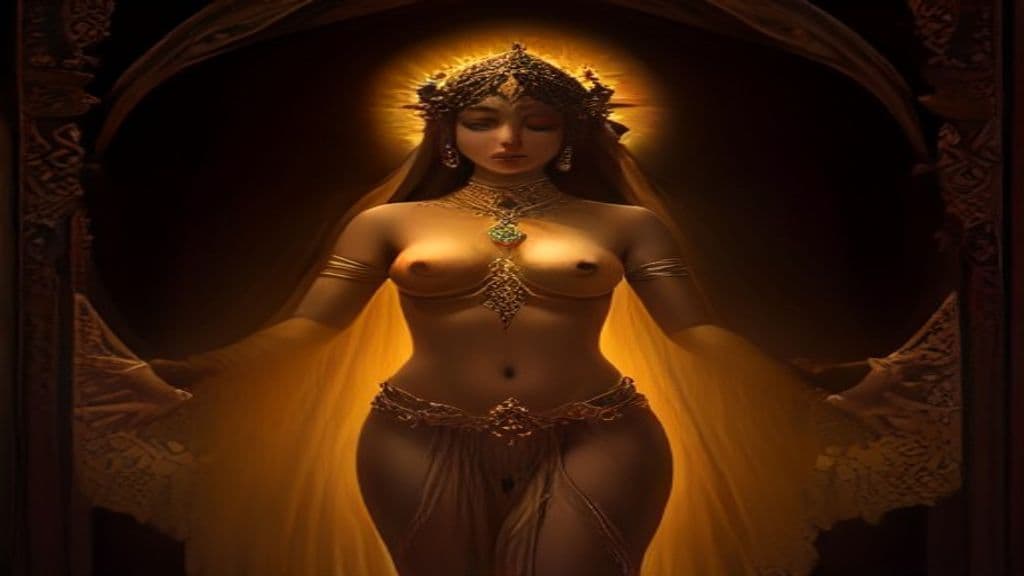
Apsara
Celestial dancers and water nymphs of Hindu cosmology — beautiful semi-divine beings who dance at the court of Indra and, by his command, descend to earth to distract sages from excessive asceticism.
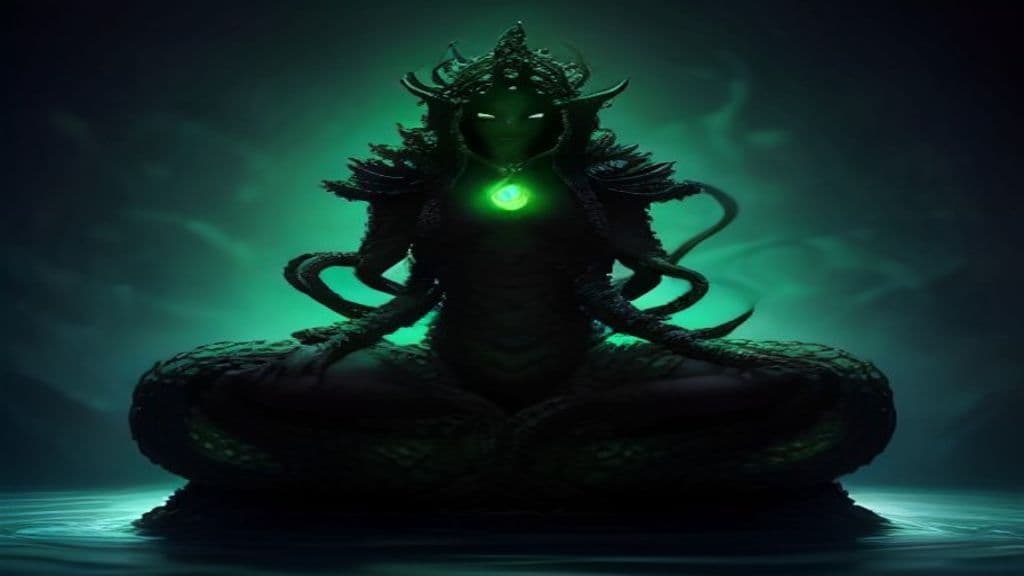
Naga
Divine serpent beings of Hindu, Buddhist, and Jain cosmology — powerful guardians of water, earth, and underground treasures. Revered as deities in South and Southeast Asia.

Mahapreta
The 'great ghost' — in Bihar and UP folk classification, a Mahapreta is a preta of exceptional power, born from a death involving multiple injustices simultaneously: wrongful killing, incomplete rites, and unresolved family debt combined. It commands lesser spirits and can cause harm across an entire lineage.

Vetala
A spirit that inhabits and reanimates corpses, possessing supernatural knowledge and the power to prophesy. One of the most feared beings in Shaiva tradition.

Preta (Hungry Ghost)
A post-mortem supernatural being associated with extreme, unremitting hunger and thirst. In Hindu usage the Sanskrit term can mean a deceased person, while Buddhist traditions develop the category into a distinct realm of hungry spirits whose condition illustrates karmic consequences for demeritorious action.
Acat
Acat is a Maya deity associated with the craft and ritual of tattooing, described in the cited sources as being invoked in relation to the tools, inks, and workspaces of tattoo artists and as steadying the artists' hands so tattoos made in the image of gods could confer those gods' power.
Acolnahuacatl
Acolnahuacatl is a name attested in central Mexican sources both as a historical Tepanec ruler of Azcapotzalco and, in several modern compilations and trivia lists, as a minor chthonic or underworld-associated figure (often given the variant Acolmiztli). The evidence in the provided material is divided: the historical/genealogical reading is supported by standard reference entries, while the deity reading appears mainly in secondary online god-lists and quizzes and is not substantiated by detailed primary ritual or mythic texts in the supplied set.
Ah Muzen Cab
Ah Muzen Cab is a Yucatán Maya divine figure associated with bees and honey, attested in summary sources as protector of Melipona bees and as a participant in Chilam Balam creation and ritual chapters. He is also linked in secondary accounts to the upside-down 'Descending' or 'Diving God' image found in Maya iconography at sites such as Tulum.
Ahuiateteo
Ahuiateteo (Āhuiatēteoh; also rendered Mācuīltōnalequeh) are a quintet of Aztec deities associated with excess, pleasure, and the dangers that accompany over‑indulgence. They appear in calendrical and codical contexts, are invoked in divinatory practice, and are thematically linked to pleasures (feasting, drinking, gambling, sex, music) and the misfortunes that follow excess.
Ahuitzotl
Ahuitzotl is both the personal name of the eighth tlatoani (ruler) of Tenochtitlan (reigned ca. 1486–1502) known for military expansion and monumental rebuilding, and an onomastic term in Nahuatl for an aquatic animal/legendary creature (commonly glossed 'water thorny' and often associated with an otter or water opossum). The sources treat these registers—historical ruler and animal-name—as related but distinct uses of the same Nahuatl lexeme.
Akateko
Akateko (赤手児, lit. 'red child's hand') is a yōkai from Japanese folklore commonly told as a small, red, disembodied child's hand that appears from trees—especially the Japanese honey locust—and startles travelers; in some regional variants it is accompanied by a specter of a young woman or manifests as paired foot- or leg-like apparitions. Accounts vary between mostly harmless trickster apparition and a violent variant that attacks humans.
Akna
Akna is a female figure named in modern secondary sources as associated with childbirth and motherhood. The provided materials conflate brief mentions linking the name to both Maya and Inuit maternal goddesses; primary Maya iconographic or epigraphic evidence for a distinct Maya Akna is not supplied in the sources.
Alicante
Alicante is attested in available reference sources as the proper name of a mythological snake identified with Mexico. The surviving entries provide only the name and a categorical label (mythological snake) without accompanying narrative, attributes, or ritual context.
Alux (aluxoʼob)
The alux (plural aluxoʼob or aluxob) is a small, place-bound sprite or spirit in Maya tradition of the Yucatán Peninsula, Belize, and Guatemala, conceived as knee-high, miniature, traditionally dressed Maya-like beings created by ancient gods and normally unseen but able to assume physical form to communicate or frighten humans.
Anteater (tradition)
In the provided sources, 'Anteater' refers to the real-world mammals of the suborder Vermilingua and to modern cultural/technical items named after that animal (games, software, student media). There is no documentation in these materials of an anteater as a supernatural entity within a traditional cosmology.
Atabey
Atabey is a principal Taíno ancestral mother-spirit (a zemi) associated with fresh water, fertility, and prime matter; she appears in early ethnohistorical transmissions with multiple names and manifestations ranging from nurturing mother to violent storm-mother.
Atlacoya
Atlacoya is named in modern compilations as a figure from Aztec tradition associated with drought; some modern databases alternately classify the name under water-deity categories. The supplied sources do not provide primary-codex citations, iconography, etymology, or detailed ritual texts.
Community Record
- [1]Kʼawiil (Wikipedia). Wikipedia contributors, 'Kʼawiil,' Wikipedia, The Free Encyclopediawiki
- [2]K'awiil (Wikidata). Wikidata entry Q5575902other