
Epigraphic and monumental programs at Copán identify Kʼinich Yax Kʼukʼ Moʼ as the founding kʼul ajaw of the Copán dynasty, installed in 426 CE and memorialized as the first position on dynasty lists such as Altar Q. Later Copán rulers retrojected prestigious foreign connections onto him (notably Teotihuacano visual motifs) as part of a legitimizing strategy. Bioarchaeological strontium isotope analysis of the individual interred in the Hunal tomb indicates formative years near Tikal in the Petén Basin, complicating a simple Teotihuacan-origin narrative and showing the historical-ideological character of later origin claims.
On Copán monuments Kʼinich Yax Kʼukʼ Moʼ is commonly depicted with regalia that includes a prominent 'goggle-eyed' headdress motif — an element visually comparable to highland/northern-central Mexican rain-deity iconography cited in scholarship. The Hunal tomb (Temple 16) burial assemblage attributed to him included elite grave goods such as jade and shell jewelry and a headdress-like regalia element consistent with the monumentary representations.
Sources treat Kʼinich Yax Kʼukʼ Moʼ as a historical political actor rather than a supernatural agent: he is recorded as the founder and first king of Copán (installed 426 CE, ruled until c.437 CE), a dynastic legitimizer whose image and name anchor later rulers' authority. The inscriptions attribute to the founder the installation of other regional rulers in the historical record (for example, sources report he installed a ruler at Quiriguá in the retrospective narrative). Osteological evidence for healed fractures in the skeleton attributed to him has been interpreted as indicating participation in elite activities (surmised ballcourt injuries), but this is an archaeological inference rather than a claim of supernatural ability.
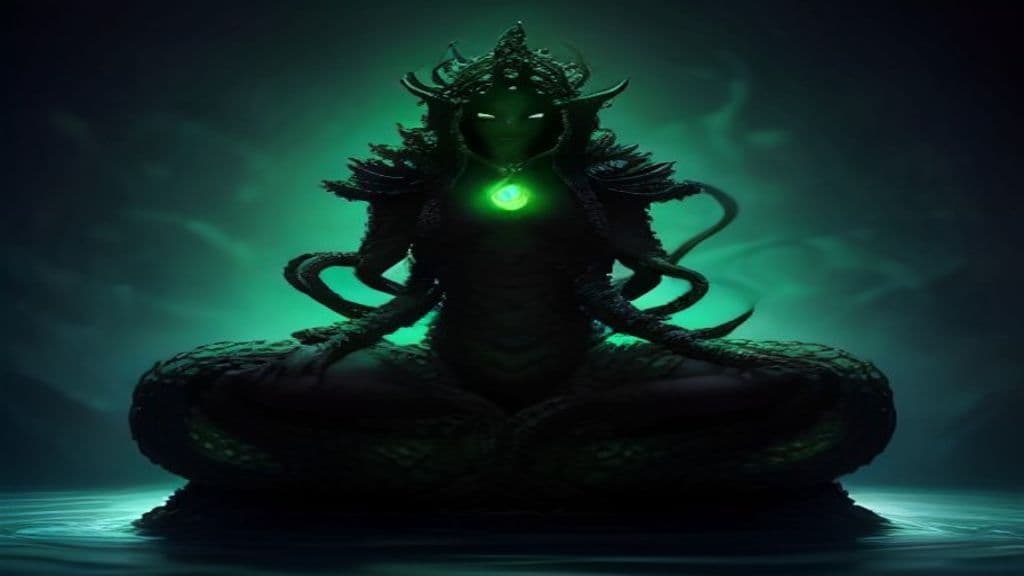
Naga
Divine serpent beings of Hindu, Buddhist, and Jain cosmology — powerful guardians of water, earth, and underground treasures. Revered as deities in South and Southeast Asia.
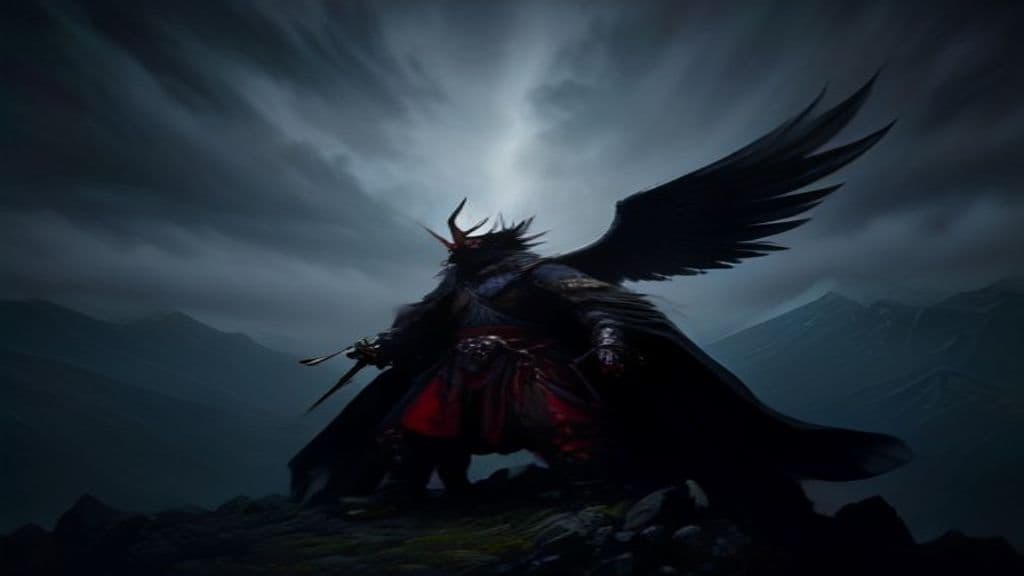
Tengu
Proud, warrior-like mountain spirits of Japan, associated with martial arts, pride, and the wild mountains. Neither fully good nor evil — they test and train warriors and monks, but punish the arrogant.

Domovoi
The house spirit of Slavic tradition — a small, invisible guardian of the home bound to a specific dwelling and its family. Protective when respected; dangerous when insulted or forgotten.
Acat
Acat is a Maya deity associated with the craft and ritual of tattooing, described in the cited sources as being invoked in relation to the tools, inks, and workspaces of tattoo artists and as steadying the artists' hands so tattoos made in the image of gods could confer those gods' power.
Ah Muzen Cab
Ah Muzen Cab is a Yucatán Maya divine figure associated with bees and honey, attested in summary sources as protector of Melipona bees and as a participant in Chilam Balam creation and ritual chapters. He is also linked in secondary accounts to the upside-down 'Descending' or 'Diving God' image found in Maya iconography at sites such as Tulum.
Akna
Akna is a female figure named in modern secondary sources as associated with childbirth and motherhood. The provided materials conflate brief mentions linking the name to both Maya and Inuit maternal goddesses; primary Maya iconographic or epigraphic evidence for a distinct Maya Akna is not supplied in the sources.
Alux (aluxoʼob)
The alux (plural aluxoʼob or aluxob) is a small, place-bound sprite or spirit in Maya tradition of the Yucatán Peninsula, Belize, and Guatemala, conceived as knee-high, miniature, traditionally dressed Maya-like beings created by ancient gods and normally unseen but able to assume physical form to communicate or frighten humans.
Anteater (tradition)
In the provided sources, 'Anteater' refers to the real-world mammals of the suborder Vermilingua and to modern cultural/technical items named after that animal (games, software, student media). There is no documentation in these materials of an anteater as a supernatural entity within a traditional cosmology.
Awilix
Awilix is a principal deity of the Postclassic Kʼicheʼ Maya centered at Qʼumarkaj, serving as a lunar and night-associated patron of the Nijaʼibʼ lineage. The deity is linked with the moon, night, the Underworld, sickness and death, and is a patron of the Mesoamerican ballgame; sources record both feminine and possibly masculine identifications.
Bacab
In Yucatec Maya tradition the Bacab are a fourfold office of aged interior-earth deities who stand at the four cardinal points as holders of the world, associated with subterranean waters, thunder, rain, calendrical Year Bearer days, divination, and curing rituals.
Balam
Balam is a name that appears in modern secondary demonological compilations and in English-language reference listings as a demon-name; the supplied sources do not provide primary traditional descriptions, rites, or a sustained cosmology for a demon called Balam. The same lexical form (B'alam/Bahlam) is also a Maya-language word meaning 'jaguar' and occurs widely in Maya personal and place names, a distinct and unrelated usage.
Camazotz
Camazotz is a bat-associated spirit in Late Post‑Classic Kʼicheʼ Maya narrative (notably the Popol Vuh) and a recurring bat motif in Classic Maya iconography. In the Popol Vuh Camazotz appears as bat-like beings serving the lords of Xibalba who attack the Hero Twins; Classic imagery links leaf‑nosed bats to night, death, disease, and nahual (way‑spirit) functions.
Chaac
Chaac is the Maya god of rain, thunder, and lightning, a central agricultural deity who produces storms by striking clouds with a lightning axe. He appears as both a singular figure and as multiple directional Chaacs, is associated with subterranean waters (cenotes and caves), and is the focus of communal rain-request rituals and specialist rainmaker practices.
Chahk (Chac) — Classic Maya palace deity/manifestation
A Classic Maya divine figure depicted in late 8th-century palace art and associated with elite ritual contexts. In the provided sources the figure appears as a small, held effigy described as “a god of royalty,” notable for a serpent leg, grotesque head, and a smoking torch on its brow; textual references on the panel refer to an undefined ritual completed in 795.
Chaneque
Chaneques are small, place-bound sprite-like beings in Mexican and wider Mesoamerican folklore, described as owners or inhabitants of particular dangerous places and as guardians of nature and households. Traditions portray them ambivalently: they may protect harvests and homes when propitiated, yet can mislead travelers, displace souls, cause illness, or physically harass people in some accounts.
Community Record
- [1]Kʼinich Yax Kʼukʼ Moʼ — Wikipedia. Wikipedia contributors. "Kʼinich Yax Kʼukʼ Moʼ". Wikipedia, The Free Encyclopedia.wiki
- [2]Copan — World Archaeology (feature). World Archaeology. "Copan" (feature summarizing Copán and its founding by Kʼinich Yax Kʼukʼ Moʼ).other
- [3]Dynasty Founder Yax K’uk’ Mo’ According to the Inscriptions — Expedition Magazine (Penn Museum). Expedition Magazine, Penn Museum. "Dynasty Founder Yax K’uk’ Mo’ According to the Inscriptions."academic
- [4]Copán's Dynastic History: Altar Q — Expedition Magazine (Penn Museum). Expedition Magazine, Penn Museum. "Copán's Dynastic History: Altar Q."academic