
The sources provided do not record a detailed mythological origin narrative for the Kola Sanni Yaka spirits. Within the tradition, the term designates a roster of ritual personae associated with particular illnesses and the formalized exorcistic dances (Sanni yakuma / Daha ata sanniyas) through which those spirit-causes are called, named, negotiated with, and expelled.
In practice the spirits are represented by masked performers: the ritual consists of 18 masked dances, each depicting a particular illness or ailment. The available sources do not supply further descriptive detail of individual masks or visual features beyond this functional, performative representation.
These spirits are believed to cause and affect human sickness and ailments. In ritual interaction they can be summoned, identified, addressed in speech or performance, commanded not to trouble humans, and banished. They are treated as part of a broader class of supernatural agents (evil eye, demons, sorcery) implicated in illness within Sri Lankan popular belief.
Weaknesses
- ritualSanni yakuma / Daha ata sanniyas (ritual banishment)
Wards
- ritualSanni yakuma (call the demons, tell them not to trouble humans, and banish them)
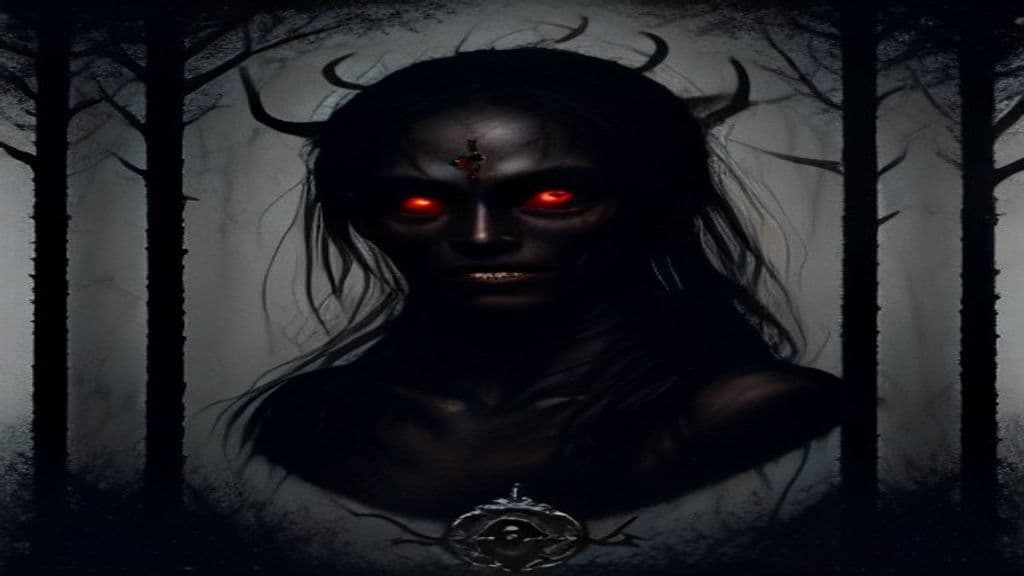
Pishacha
Flesh-eating spirits of Hindu mythology that haunt cremation grounds and are associated with disease, madness, and possession. The lowest class of demon in the Vedic hierarchy.

Pishacha-graha
The possessing variety of pishacha described in classical Ayurvedic and tantric texts — a grasping spirit (graha) that seizes the body of a victim, producing symptoms of madness and compulsion.
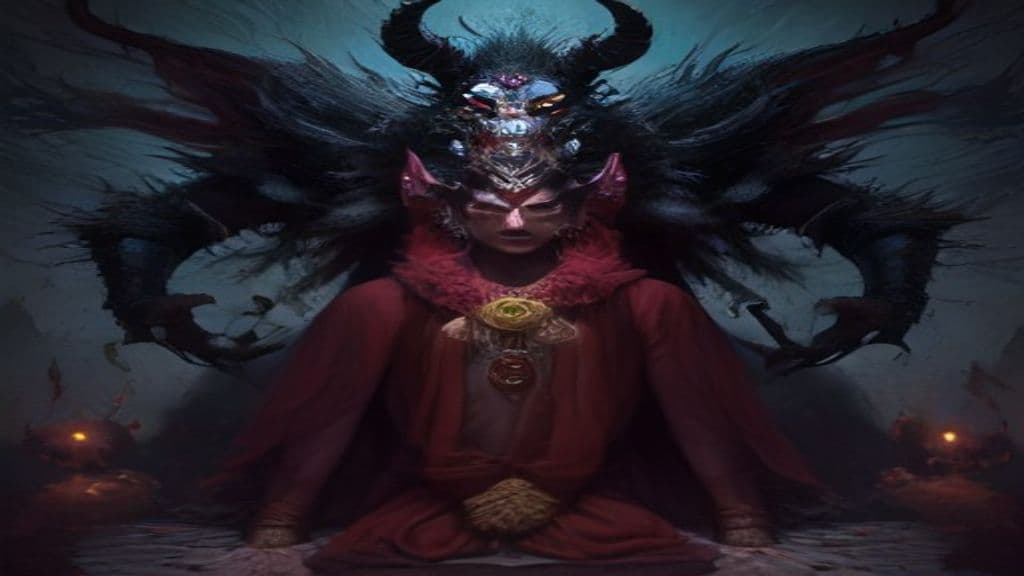
Rakshasa (Himalayan variants)
A Himalayan reception of the pan-Indian rakshasa motif: hostile or disruptive non‑human beings known from Sanskrit epic and Puranic literature, here noted where Himalayan sources and discussions intersect with the broader epic tradition. The supplied sources do not document distinct, well‑attested Himalayan folklore variants; the entry therefore presents primarily the epic/legendary profile as transmitted into Himalayan contexts in general references.

Preta (Hungry Ghost)
A post-mortem supernatural being associated with extreme, unremitting hunger and thirst. In Hindu usage the Sanskrit term can mean a deceased person, while Buddhist traditions develop the category into a distinct realm of hungry spirits whose condition illustrates karmic consequences for demeritorious action.

Bhoot (bhoota)
A bhoot (also bhoota, bhoot, bhut) is the culturally specific term across parts of the Indian subcontinent for a perturbed, restless spirit generally understood to be the ghost of a deceased person. Sources describe bhoots as arising when a person's death or post-death circumstances prevent them from moving on — for example violent death, unresolved affairs, or failures in funerary rites — and the term appears frequently in modern South Asian media and discussions.

Lamia
In ancient Greek mythology, Lamia is described as a child-eating monster who, in later tradition, came to be regarded as a type of night-haunting spirit or 'daimon'. The supplied sources do not provide a full physical description or detailed mythic genealogy, and some modern fictional portrayals recast her with serpentine features which are not attested in the provided classical summary.
Dhadu Monara
In Sri Lankan folklore, Dhadu Monara is a legendary pre-historic aircraft associated with King Ravana's reign. The Department of Archaeology has rejected the story as fiction due to lack of evidence. (Note: 1. Power tier should be Ancient, not Primordial, as it's described as a mode of transportation used by King Ravana, implying deity-level abilities. 2. The Department of Archaeology has rejected the st)
Dēdimunda Dēyiyō
A locally venerated Sinhalese Buddhist guardian deity of Sri Lanka, regarded as a principal protector of the Buddha Śāsana and a tutelary figure invoked for healing, protection from spirits and epidemics, and assistance with fertility. His cult is institutionally centered at the Aluthnuwara Sri Dadimunda Devale and other regional devalayas.
Gamarala
No information about a village guardian spirit named Gamarala is present in the supplied source. The single available source concerns an unrelated Sri Lankan cricketer and contains no material on this entity.
Kalladi
Kalladi is primarily attested in the provided documentary record as a social and geographic name (a sub‑caste in Kerala and place‑names in Sri Lanka), not as a clearly documented supernatural entity in Tamil folk belief. A single blog source mentions a related place‑linked spirit name 'Kalladikode Neeli', but the supplied official and archival sources do not describe a distinct folkloric being called 'Kalladi'.
Kalu Kumara
Kalu Kumara (literally given in the prompt as “Black Young Man” spirit) is an entity named by the user as part of Sri Lankan tradition. The supplied source excerpts in the research packet do not contain descriptions, origin stories, rituals, or other substantive information about this named spirit.
Kassapa (name-group: Buddha, ascetics, and rulers)
Kassapa appears in South and Southeast Asian sources as a personal name borne by distinct figures: a canonical Buddha (Kassapa / Kassapa Dasabala), a set of ascetic brothers (Uruvelā‑Kassapa, Nadi Kassapa, Gaya Kassapa) who led monastic followings, and historical rulers (e.g., Kassapa II of Anuradhapura, Kumara Kassapa of Pagan). The supplied material treats Kassapa as reused personal/name‑title across religious and secular contexts rather than a single supernatural spirit.
Kola kanda
Kola kanda is a traditional Sri Lankan herbal congee (porridge) used as a breakfast food and in folk medicinal practice. Sources provided do not support treating 'Kalu Kandha' as a supernatural being; instead the documented term in the sources is the culinary/medicinal preparation 'Kola kanda'.
Mahasona
Mahasona (also Maha Sohona, Mahā Sōnā) is a major cemetery-associated spirit in Sinhalese/Sri Lankan folklore described in sources as "the greatest demon" or "god or demon of the cemetery." He is feared as an agent of sudden death and disease and figures prominently in Sinhalese exorcism ceremonies and in ritual mask traditions.
Maliyadeva
Maliyadeva is a revered early Sri Lankan Buddhist monk and arahant preserved in Theravādin chronicle tradition. Credited in summaries of the Mahavamsa with arahantship and high psychic powers (abhiññā), he is associated in local tradition with specific meditation sites and modern commemorations in Sri Lanka.
Naga People (Lanka)
A class of super-humans inhabiting a subterranean world in Sri Lankan tradition, often depicted as serpents. (Note: 1. Power tier should be Primordial instead of Ancient, given their association with serpent symbolism and cosmic significance in Sri Lankan and Indian mythology. 2. Add sensory cues based on source ma)
Nittaewo
A figure of Sri Lankan Veddah and broader folk tradition: a legendary small, bipedal, hairy hominid/cryptid said to have lived in forests and caves of Sri Lanka, described in oral testimony as antagonistic to Veddah people and allegedly exterminated by them in the recent past.
Riri Yaka (Riri Deviyo)
Riri Yaka (also rendered Riri Deviyo) is a named entity in Sri Lankan folkloric queries but the supplied source excerpts do not provide descriptive material about its nature, appearance, powers, or cult. Available excerpts reference Sri Lankan ritual calendar items (Esala Poya, Vassa) but do not substantively discuss Riri Yaka.
Community Record
- [1]Kola Sanni Yaka (Kola Sanni Yaka ritual spirits) - Wikipedia. Wikipedia, 'Sanni yakuma' entry (Kola Sanni Yaka ritual spirits)wiki
- [2]Exorcism and spirit rituals in Sri Lanka | Facts and Details. Facts and Details, 'Exorcism and spirit rituals in Sri Lanka' (discussion of belief in evil eyes, demons and bad spirits)folk