
The name appears in Hebrew as לִילִית (līlīṯ) in Isaiah 34:14 and is treated in later Jewish aggadic, mystical, and magical texts as a night‑demon or, in some medieval stories (e.g., Alphabet of Sirach), as a first wife of Adam who left Eden rather than submit. Scholarly and textual materials supplied trace Lilith into a wider Near Eastern taxonomy: Akkadian terms lili, līlītu and the masculine lilû/arda‑lilî family of wind/night spirits share lexical and functional affinities with the Jewish Lilith traditions, and some medieval and Aramaic sources conflate her with Babylonian infant‑threatening demonesses such as Lamaštu. Modern scholarship and the supplied summaries note disputes about direct etymological continuity (and alternative readings of Isaiah's 'lilit' as a night‑bird), so the figure as attested is a syncretic product of Hebrew textual citation, later Jewish folklore, and continuities with Mesopotamian demonological categories.
Primary textual material in the supplied documentation emphasizes Lilith's name and function more than consistent physical description. Jewish amulets and incantation bowls from late‑antique Mesopotamia are identified as providing early visual depictions, but canonical texts cited do not supply a unified iconography; medieval narratives personalize her as a dangerous female figure and later popular or speculative sources attach hybrid or monstrous imagery (e.g., composite demoness motifs) that are not uniformly attested in the primary texts summarized. Therefore appearances range in the sources from nameless night‑spirit to individualized female demon; detailed, consistent physical features are not preserved in the supplied excerpts.
Across the supplied material Lilith is associated with nocturnal predation: harming or stealing infants, threatening pregnant women and nursing mothers, and attacking sleeping people. In some medieval mystical texts she is portrayed as sexually active (later traditions pair her with figures such as Samael) and as a temptress or succubus‑like presence; in Mesopotamian parallels the līlītu/lilû family also function as disease‑bearing wind‑spirits. Rabbinic warnings and magical inscriptions reflect a belief she could seize solitary sleepers or endanger households. The supplied sources also stress scholarly ambivalence about continuity between animal/night‑bird readings and agentive demon readings of early biblical occurrences.
Weaknesses
- conditionavoid sleeping alone (rabbinic precaution)
Wards
- ritualamulets and incantation bowls (inscribed protective objects)
- conditionsocial precaution (not sleeping alone in a house)
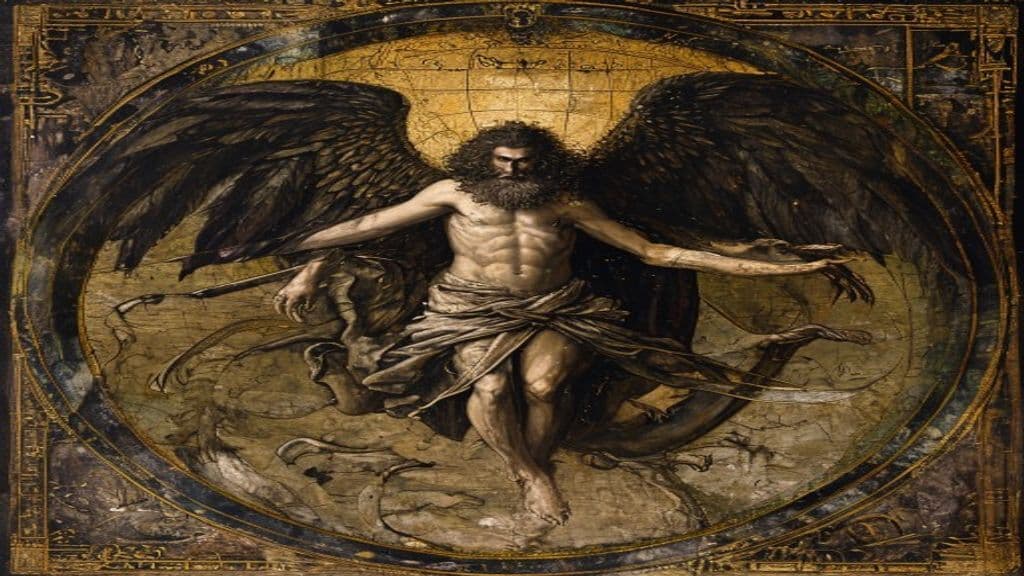
Samael
An angelic figure in Jewish textual traditions whose roles include accuser/adapter (Satanic function), tempter, destroyer/angel of death, and, in later mystical texts, leader of demonic or qlippothic forces. Samael is presented variously across Second Temple literature, midrashim, and Kabbalah; his destructive functions are often framed as serving divine purposes rather than as an independent absolute evil.

Lilitu / Lilith
Lilitu (Mesopotamian) and later Lilith (Hebrew/Jewish folklore) are feminine night-associated supernatural figures whose identity shifts between goddess, underworld queen, and demoness across sources. In Mesopotamian iconography (e.g., the Burney Relief) the figure combines divine regalia with nocturnal and avian features; in medieval Jewish folklore a fuller character, Lilith, develops from the Hebrew term lilit attested in Isaiah 34:14.
'Ain Samiya Goblet
Silver cup from the Middle Bronze Age I, discovered in a tomb at Ain Samiya. (Note: 1. Power tier should be "None", but add a note explaining that historical artifacts don't fit into the typical power tier classification. 2. Add a description of its appearance based on it being a sil)
A'annepada
A'annepada (Sumerian cuneiform 𒀀𒀭𒉌𒅆𒊒𒁕; also romanized Aanépàdda) is attested as a historical ruler of the First Dynasty of Ur, flourishing c. 2350 BC. He is recorded in dedicatory and foundation inscriptions as king of Ur and as son of Mesannepada, credited with temple-building and dedication to deities such as Ninhursag and Inanna.
Aaron
Aaron is a central human figure in Israelite sacred literature: the elder brother of Moses, the first high priest (progenitor of the Aaronide priesthood), and a spokesman/prophet who mediates between Israel and God in Exodus–Deuteronomy narratives. His role in the texts establishes hereditary priestly authority, ritual functions (sacrifices, blessing, use of Urim and Thummim), and institutional norms for Israelite cultic life.
Abaddon
In Hebrew scripture Abaddon is primarily a noun meaning 'destruction' or a section/condition of the underworld paired with Sheol; in the New Testament Book of Revelation Abaddon is personified as an angelic figure (Greek Apollyon) described as the king of an army of locusts released from the abyss during the apocalypse.
Abagtha
Abagtha (Hebrew: אבגתא, ’Ǎḇaḡṯā) is a named human court official in the Hebrew Bible’s Book of Esther, listed among seven chamberlains who ministered before King Ahasuerus and were commanded to bring Queen Vashti before the king. He is attested only in Esther 1:10 and is presented as an institutional palace attendant rather than a supernatural being.
Abdiel
Abdiel (Hebrew עֲבְדִּיאֵל) is primarily a theophoric Hebrew personal name meaning "servant of El/servant of God," attested once in the Hebrew Bible (1 Chronicles 5:15). In later literature—most notably John Milton's Paradise Lost—Abdiel is reimagined as a faithful seraph who opposes Satan's revolt. The provided sources do not treat Abdiel as an autonomous folkloric spirit type or record rituals or wards associated with the name.
Abel
Abel is the second son of Adam and Eve in the Genesis narrative, a shepherd whose accepted offering and subsequent murder by his brother Cain form the biblical account of the first death. Later interpretive traditions expand his role, treating him as an archetypal righteous victim, a postmortem avenging or adjudicating figure, and in some systems (notably Mandaean) identifying him with an angelic lightbeing.
Abiathar
Abiathar (Hebrew: אֶבְיָתָר, ʾEḇyāṯār) is a named human priestly figure in the Hebrew Bible. He is presented as a survivor of the Nob massacre who fled to David with priestly regalia, served as a priest and counselor in David's court, and was later deposed and sent to Anathoth by Solomon for supporting Adonijah.
Abiel
Abiel is attested in the supplied sources only as a male given name — borne by several historical American individuals and listed as two minor biblical figures. The provided materials contain no evidence presenting Abiel as a supernatural, mythological, or folkloric entity.
Abigail
Abigail is a female figure in the Hebrew Bible portrayed in 1 Samuel 25 as the intelligent and beautiful wife of Nabal who intervenes to prevent David from committing violence; later tradition regards her as one of the Tanakh's seven female prophets and as a model of beauty and wisdom.
Abijah of Judah
Abijah (also Abijam or Abiah) is presented in the biblical and later interpretive traditions as a short-reigning human king of Judah from the Davidic line. He is portrayed as a dynastic successor whose military actions (notably the battle at Mount Zemaraim) and moral evaluation in rabbinic literature are interpreted theologically in relation to the Davidic covenant.
Abimelech
Abimelech is a Hebrew personal name and occasionally a regnal title attested in the Hebrew Bible and later traditions. It appears as the name/title of Philistine rulers in the patriarchal narratives (the "king of Gerar" who interacts with Abraham and Isaac) and as the personal name of Abimelech son of Jerubbaal (Gideon) in Judges, a dynastic usurper whose brief rule ends in violent death.
Community Record
- [1]Lilith (Wikipedia). Wikipedia, 'Lilith' article (supplied excerpts)wiki
- [2]Wikidata entry: Lilith. Wikidata entry for Lilith (supplied)other
- [3]Biblioteca Pleyades: Sumer/Anunnaki (pages citing composite imagery). Biblioteca Pleyades (secondary site cited in supplied materials) — supplies derivative iconographic descriptions noted as uncertainfolk
- [4]Biblioteca Pleyades: Sumer/Anunnaki (additional imagery commentary). Biblioteca Pleyades (secondary site cited in supplied materials) — supplies derivative iconographic descriptions noted as uncertainfolk